Canonical chapter of the Cathedral of Grenoble
Ecclesie Gratianopolitane / Notre Dame de Grenoble
(Grenoble, Isère)
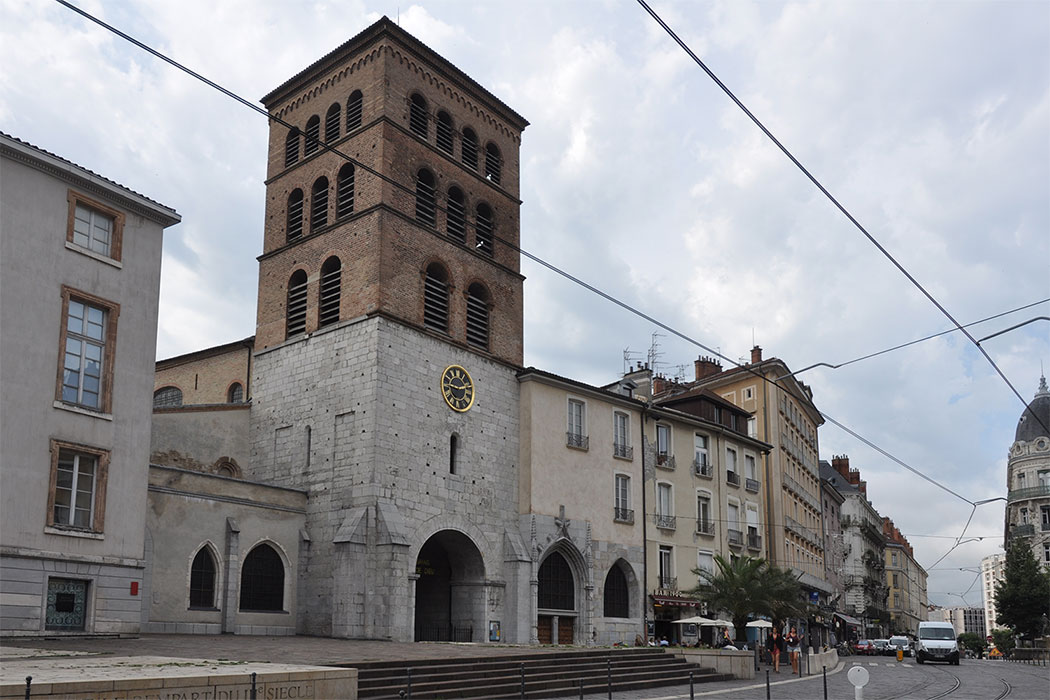

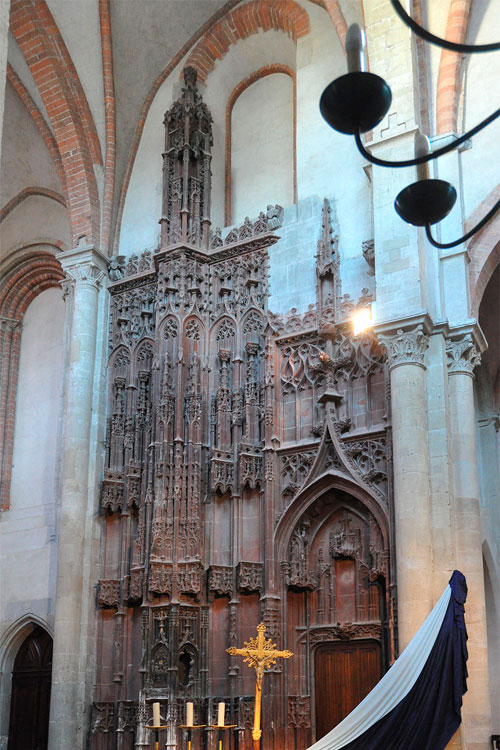
The ancient diocese of Grenoble had its centre in this city, where an important episcopal complex developed, made up of several buildings. The site was also occupied by a regular community of canons which, over time, became secularised. The present cathedral is the result of successive alterations, demolitions and reconstructions carried out over the centuries. Nevertheless, some elements of the former buildings that formed part of this complex are still preserved.
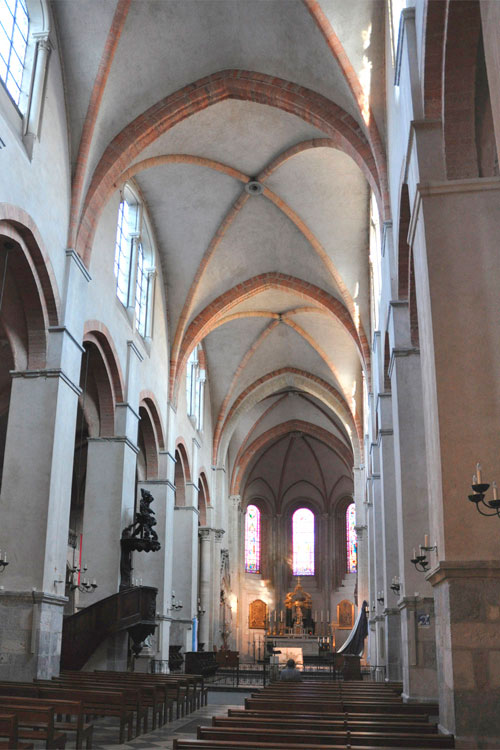
The diocese of Grenoble is of very ancient origin. Its founder and first bishop is considered to have been Saint Domninus, who attended the Council of Aquileia in 381. The cathedral was the seat of a community of canons, first documented around the year 1040. Saint Hugh, bishop of Grenoble from 1080 to 1132, reorganised the canonical chapter in order to correct improper practices related to observance. In 1136, Pope Innocent II approved the new customs, making regular life obligatory and stipulating that the bishop was to be chosen from among monks or regular canons.
It is known that at that time, or perhaps earlier, the cathedral canons followed the Rule of Saint Augustine. In the mid-14th century, disputes arose within the chapter concerning the observance of the rule, a conflict that even led to episodes of violence. Eventually, after repeated petitions, the cathedral chapter was secularised in 1557, a decision confirmed by a bull of Pope Paul IV.
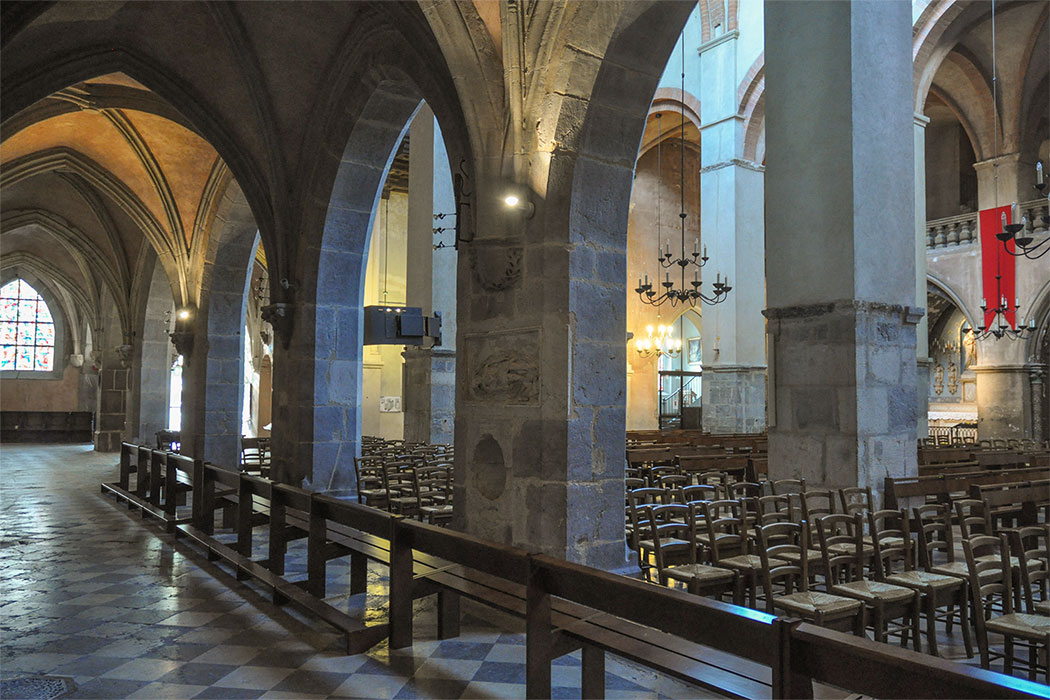
The cathedral was built alongside the city wall, erected in the 3rd century, near the Viennoise gate. Attached to this wall were two churches, the episcopal palace, the baptistery and other ancillary buildings, including the common quarters of the canons. This group of episcopal buildings underwent profound changes over time.
The cathedral is dedicated to Notre-Dame; between it and the city wall stands the church of Saint-Hughes, formerly dedicated to Saint-Vincent. In front of it stood the baptistery, which was also modified several times before being ultimately demolished. From 1989 onwards, during the construction of a tramway line, very early archaeological remains were discovered and studied, among which a 5th-century baptistery stands out, which appears to have remained in use during the Carolingian period, albeit in a modified form.
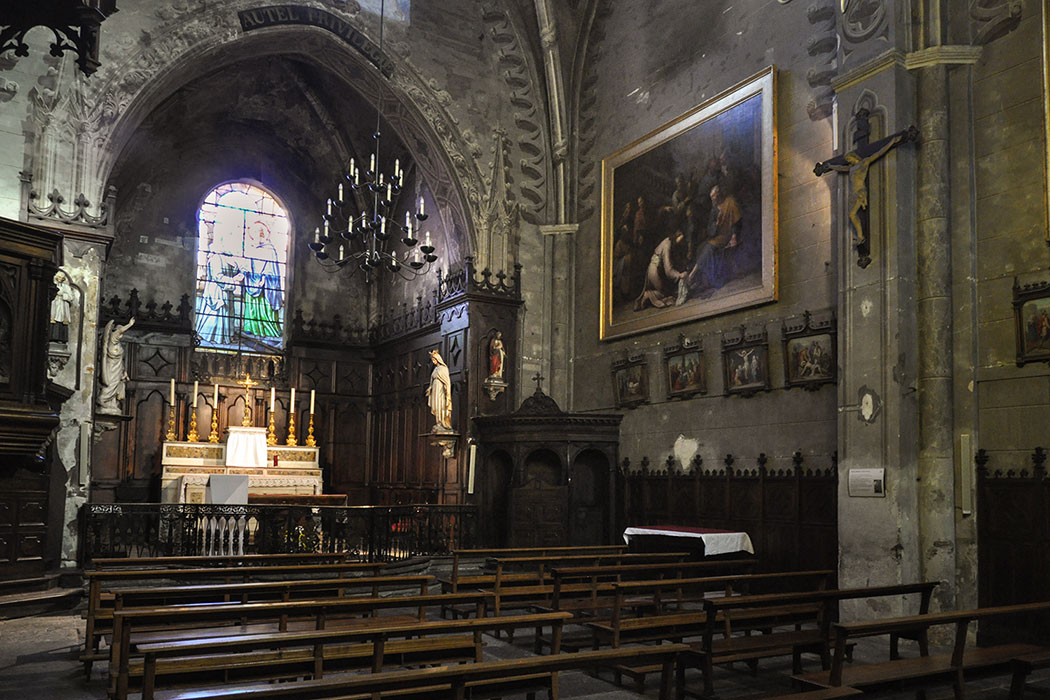
Church of Saint-Hughes
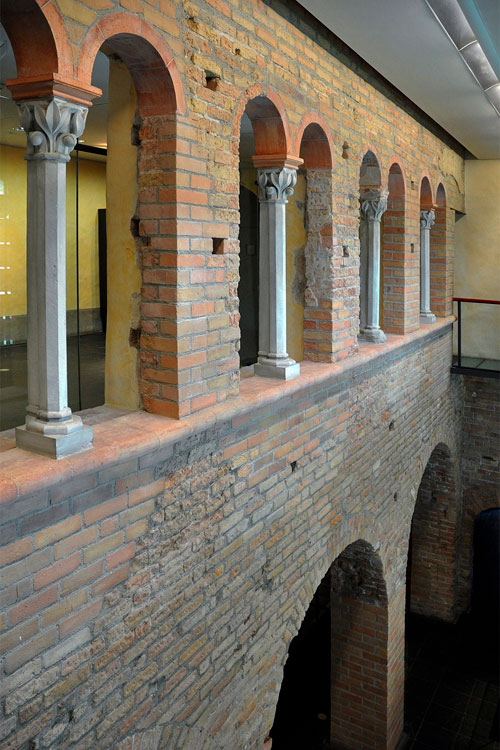
Reconstruction of the facade of the 13th century episcopal palace
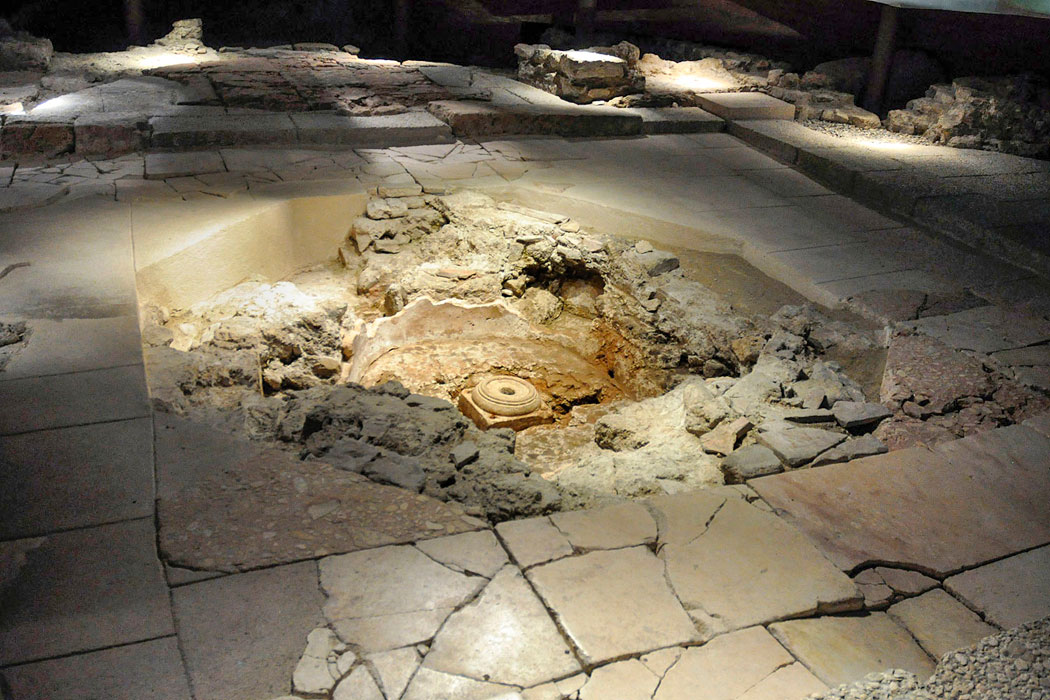
5th century baptistery
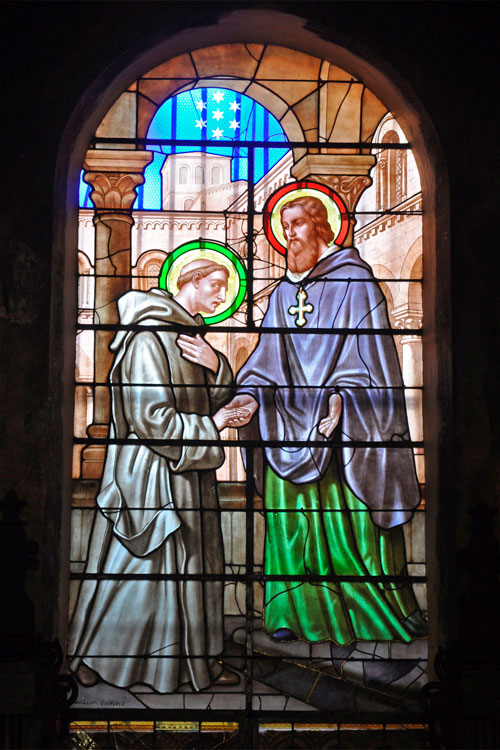
Modern stained glass window with Saint Bruno and Saint Hugh
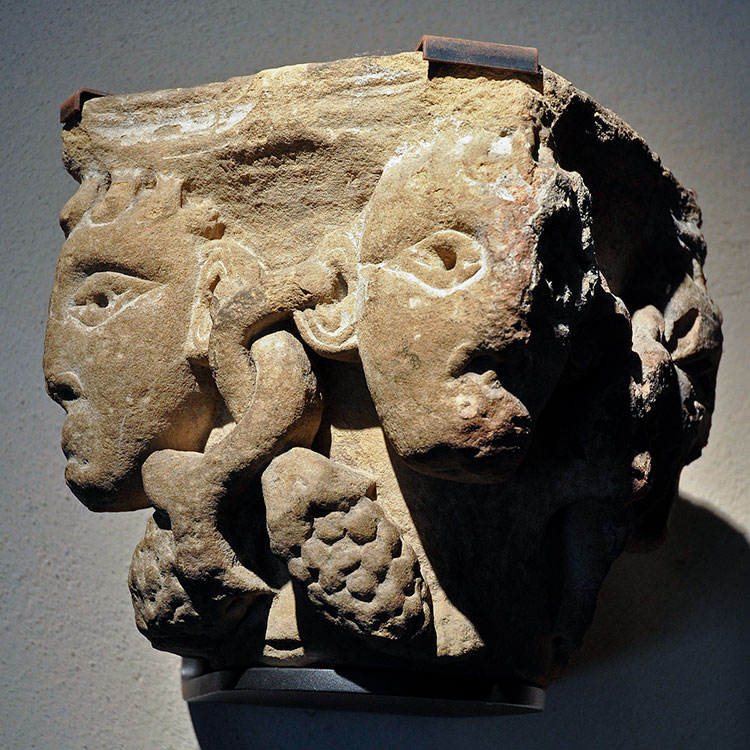
Cloister capital (12th century)
Musée de l'Ancien Évêché
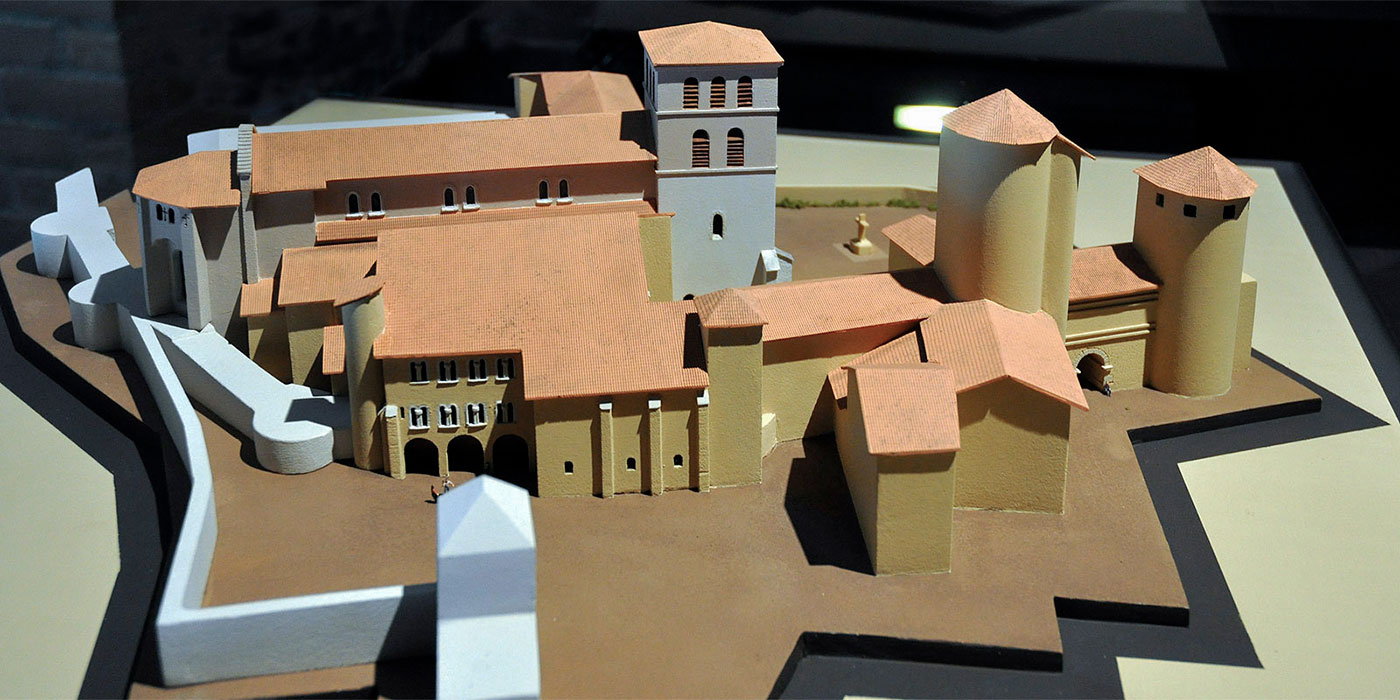
Model of the 14th century cathedral
Musée de l'Ancien Évêché
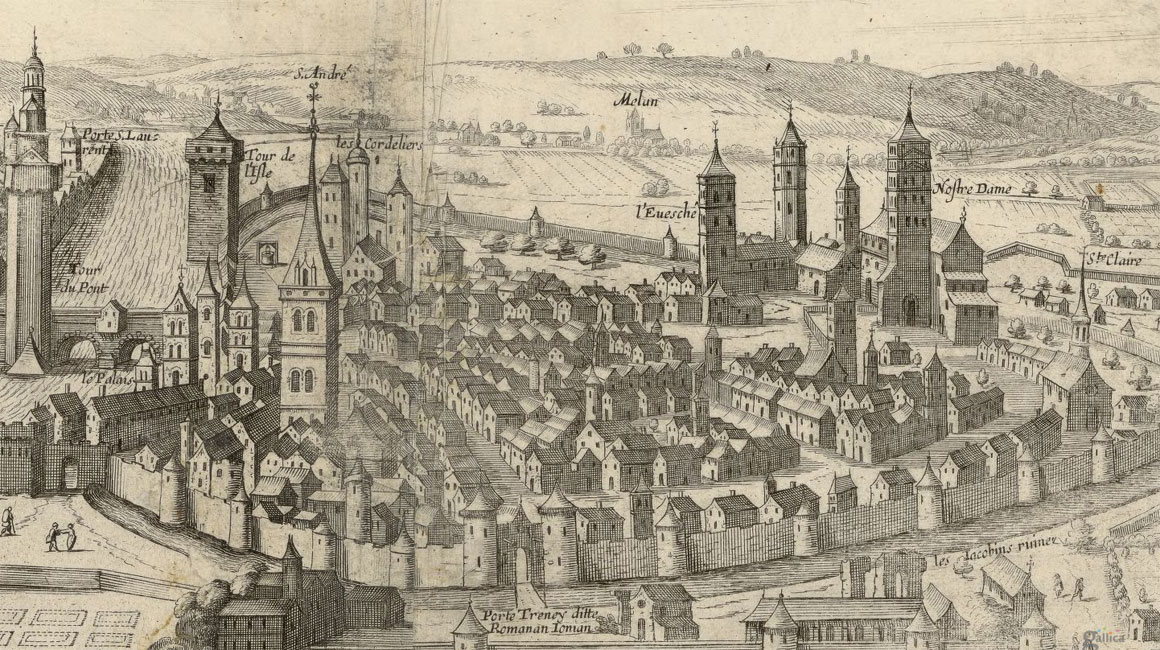
The cathedral and episcopal palace
Detail of L'Ancienne ville de Grenoble (1644)
Bibliothèque nationale de France
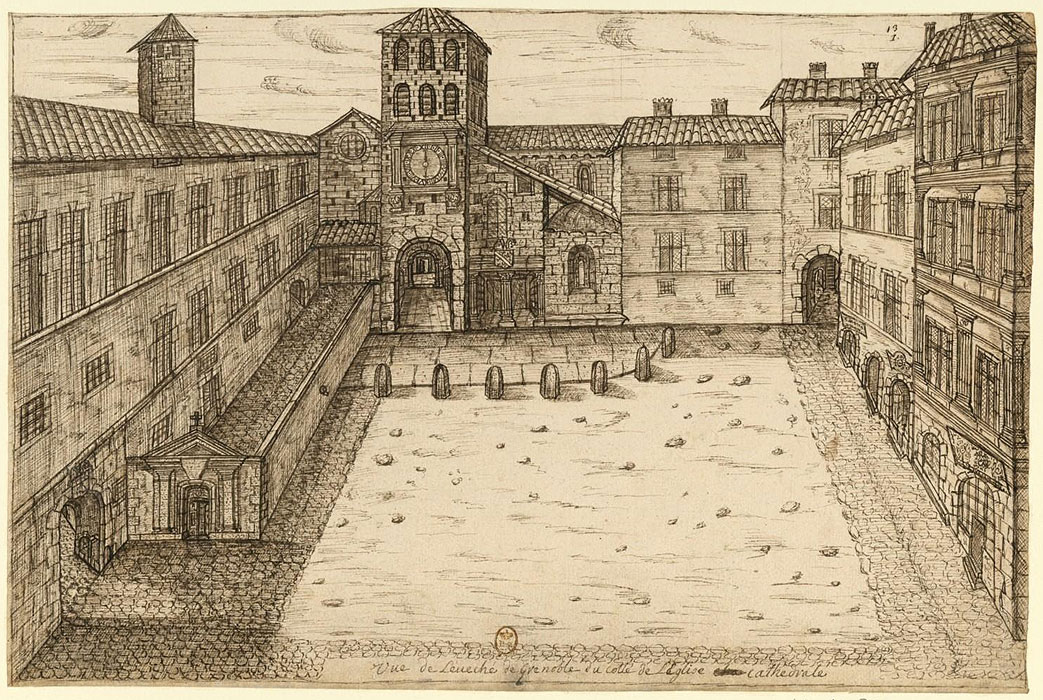
Cavin (s. XVII)
Bibliothèque nationale de France
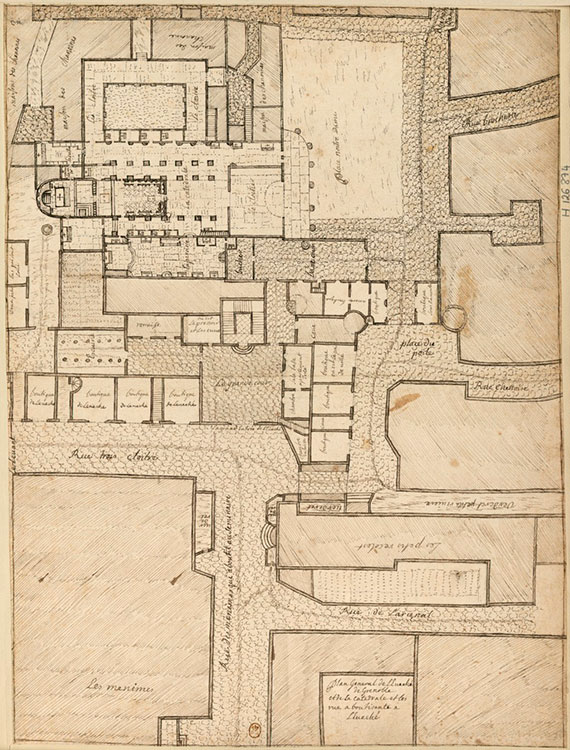
Cavin (s. XVII)
Bibliothèque nationale de France
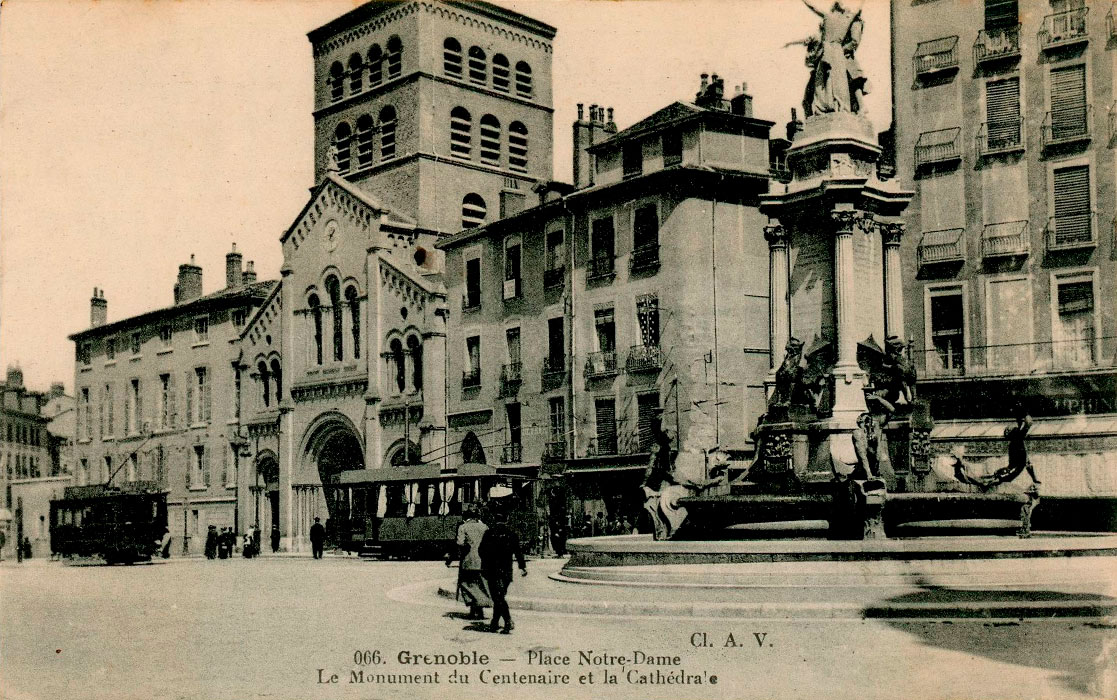
Old neo-Romanesque facade
Old postcard, private collection
- AUBERT, R. (1988). Dictionnaire d'histoire et de géographie ecclésiastiques. Vol. 22. París: Letouzey et Ané
- BAUCHERON, François (1998). Autour du groupe épiscopal de Grenoble: Deux millénaires d'histoire. Alpara
- BESSE, J.-M.; i altres (1939). Abbayes et prieurés de l'ancienne France. Vol. 9: Province ecclésiastique de Vienne. Abbaye de Ligugé
- MARION, Jules (1869). Cartulaires de l'église cathédrale de Grenoble, dits Cartulaires de Saint-Hugues. París: Imp. Impériale
- MONTJOYE, Alain de (2010). Les vestiges du premier groupe cathédral de Grenoble et leur présentation muséographique. Bulletin du centre d’études médiévales d’Auxerre / BUCEMA. Hors série n° 3
- PILOT DE THOREY, Em. (1889). Notice historique sur le chapitre de l'église cathédrale de Grenoble. Bulletin de la Société de statistique de l'Isère. Vol. XIV. Grenoble
- PRUDHOMME, Auguste (1888). Histoire de Grenoble. Grenoble: Gratier
- SAINT-MAUR, Congregació de (1865). Gallia Christiana in provincias ecclesiasticas distributa. Vol. 16. París: Firmin Didot
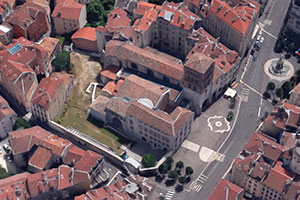
The present cathedral of Grenoble stands in the centre of the city, within the former episcopal complex