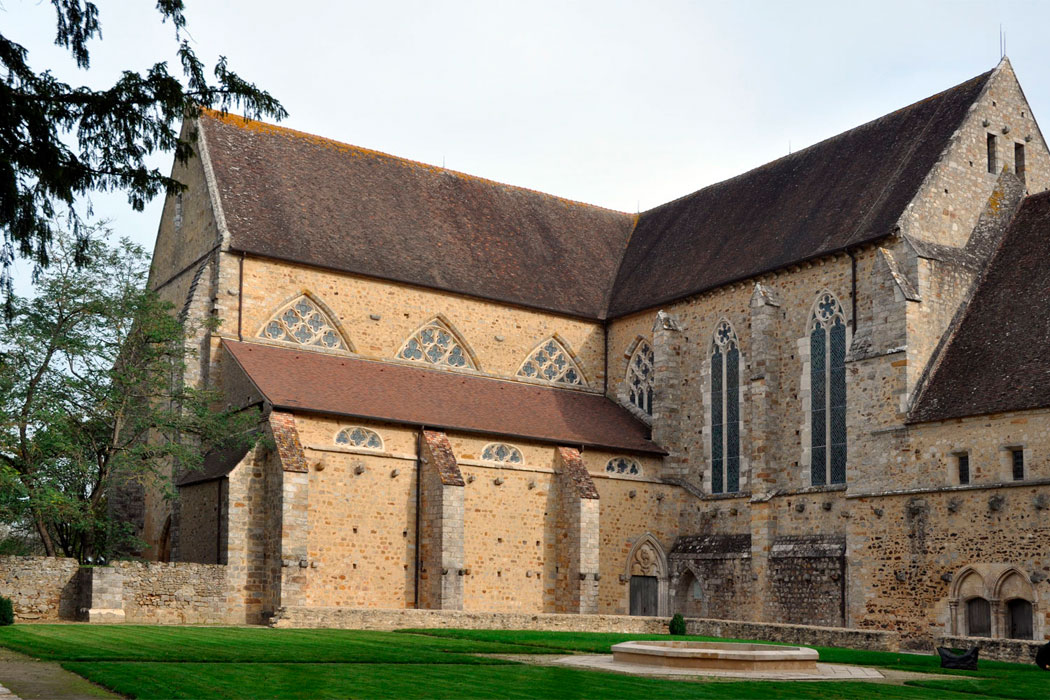

The Cistercian Abbey of Notre-Dame de l’Épau was founded at the initiative of Berengaria of Navarre (c. 1165-1230), daughter of Sancho VI of Navarre and queen consort of England through her marriage to Richard the Lionheart (1157-1199). After being widowed, she retired to Le Mans, to the comital castle of Maine, which at that time belonged to the royal house. From there she promoted the establishment of the monastery, formally founded in 1229. The first monks arrived the following year from the abbey of Cîteaux (Côte d'Or).
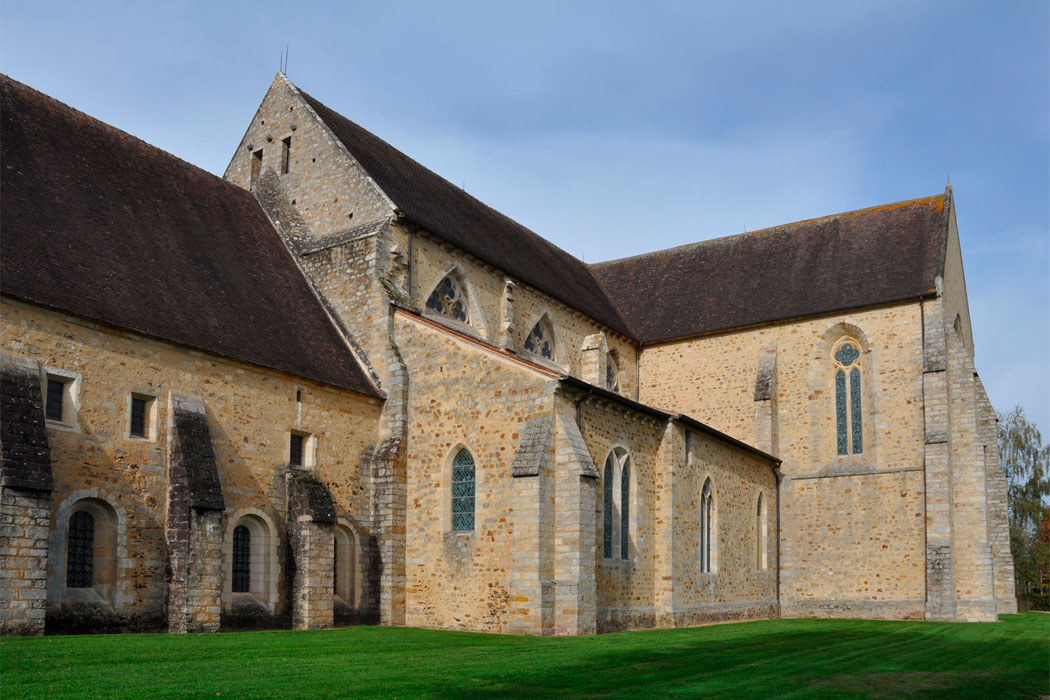
Church apses
The founder granted the Cistercians lands at L’Épau, near Le Mans. Berengaria died in 1230 and, in 1234, was buried in the chapter house of the abbey she had founded. It was during this period, in the second quarter of the thirteenth century, that much of the monastic complex surrounding the cloister was erected and construction of the church also began. In 1240, L’Épau took part in the foundation of the abbey of La Clarté-Dieu (Indre-et-Loire). In 1364, the instability caused by the Hundred Years' War led the community to abandon the monastery temporarily and withdraw to the city.
The following year, the house was destroyed by the inhabitants of Le Mans themselves, who feared that, because of its proximity, it might be used as a stronghold against the city. During the first half of the fifteenth century, the monastery was almost entirely restored. Building activity continued over the following centuries. In 1440, Thomas des Capitaines was appointed commendatory abbot, although the commendatory system was not definitively established until the end of that century. In 1672, the founder’s tomb was transferred to the church.
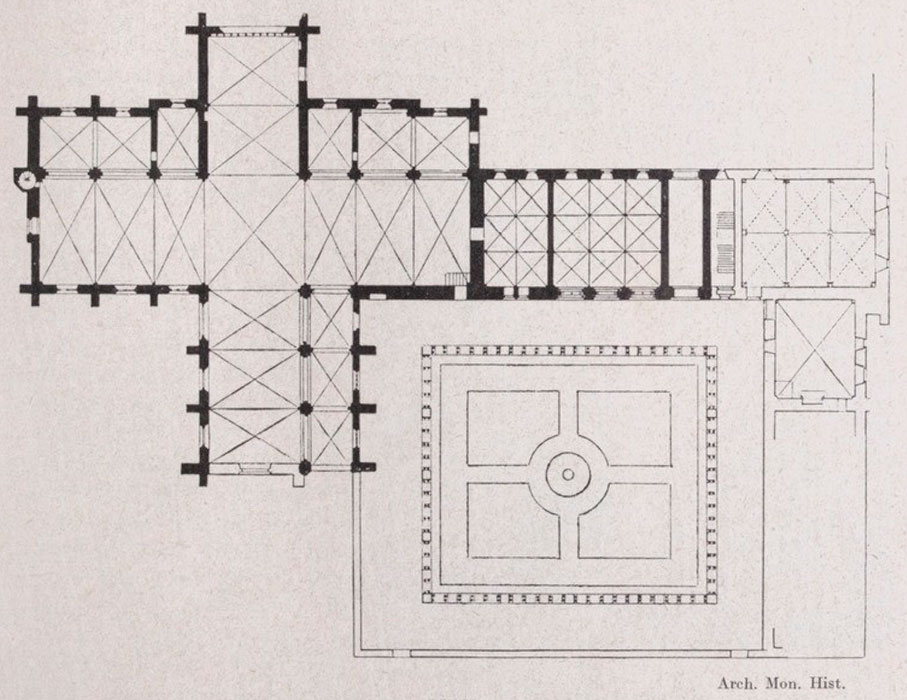
Monastery floor plan
Published in Congrès archéologique de France (1961)
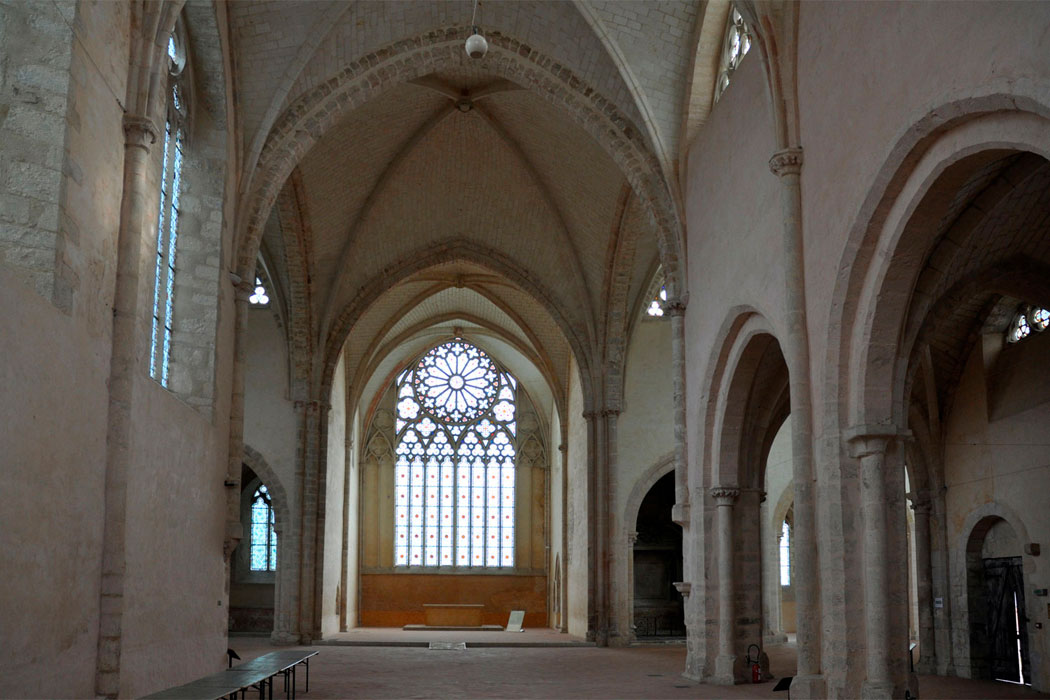
Main nave
Conventual life came to an end as a result of the French Revolution. In 1790, the community numbered only seven monks. In 1791, the site was sold and converted into an agricultural estate. In 1821, the royal tomb was transferred to the cathedral of Le Mans, from where it returned to the abbey in 1970. Since 1958, the complex has been publicly owned. The monastery of L’Épau still preserves a considerable part of its Cistercian structures.
Affiliation of L'Épau
According to Originum Cisterciensium (L. Janauschek, 1877)
The church has a very short nave of only three bays. The transept is particularly developed in relation to the nave. The chevet consists of a large central apse and three further apses on each arm of the transept, all rectangular in plan. The cloister has not survived, although several medieval rooms remain on its eastern side, including the chapter house, sacristy and monks’ room and, above them, the dormitory range. On the north side of the cloister stands the church, while to the south there are other minor buildings.
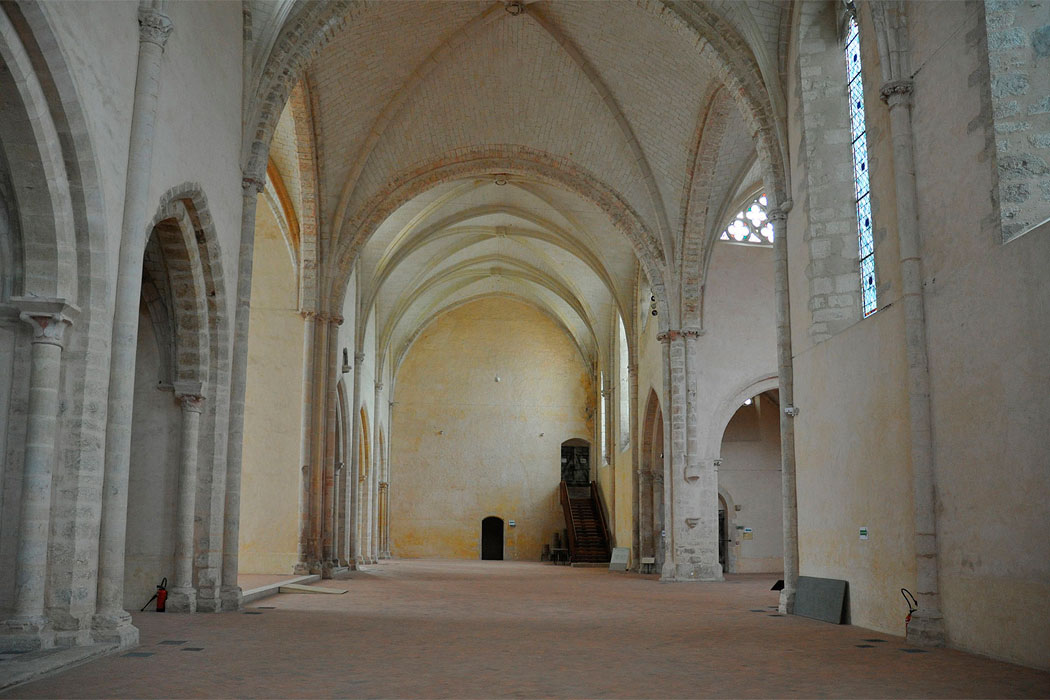
Transept with the staircase to the bedroom
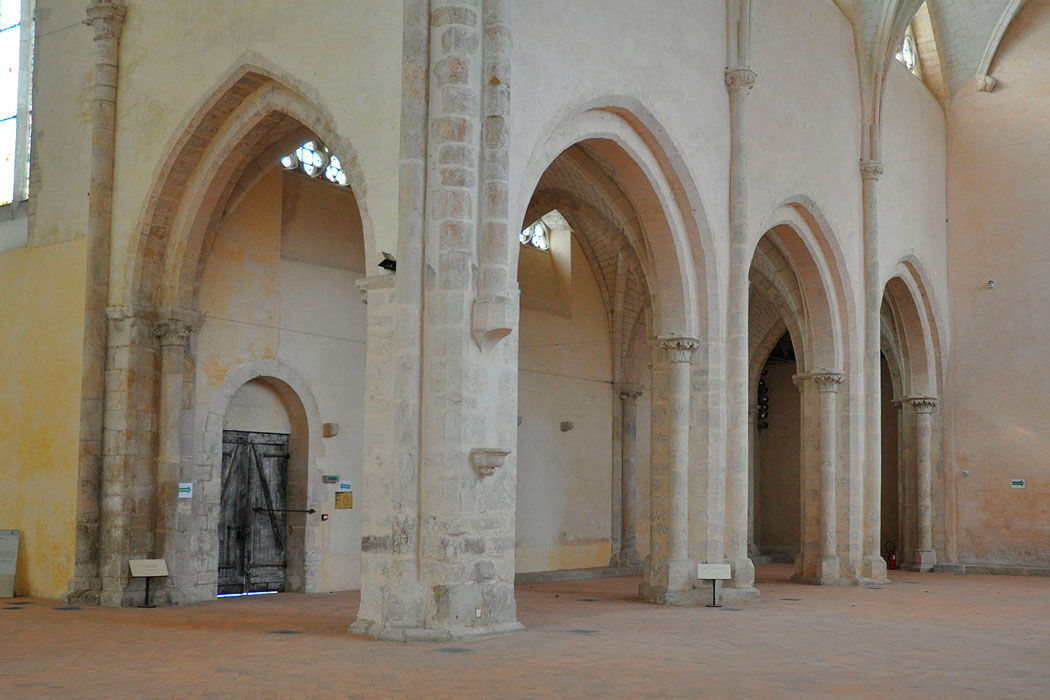
Side-aisle
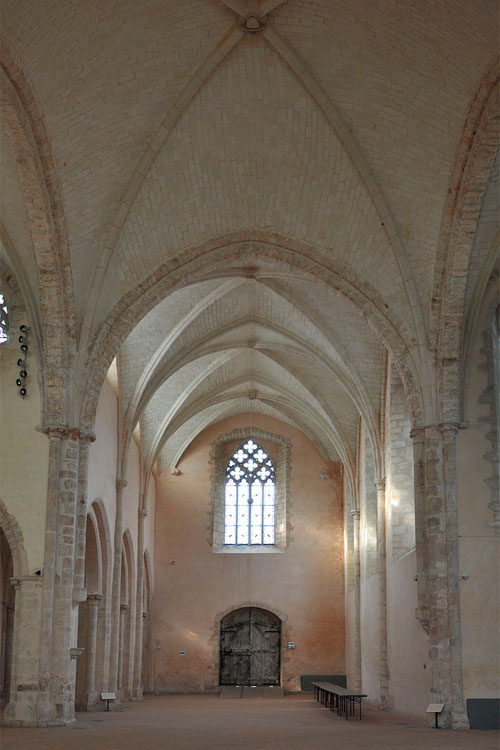
Main nave
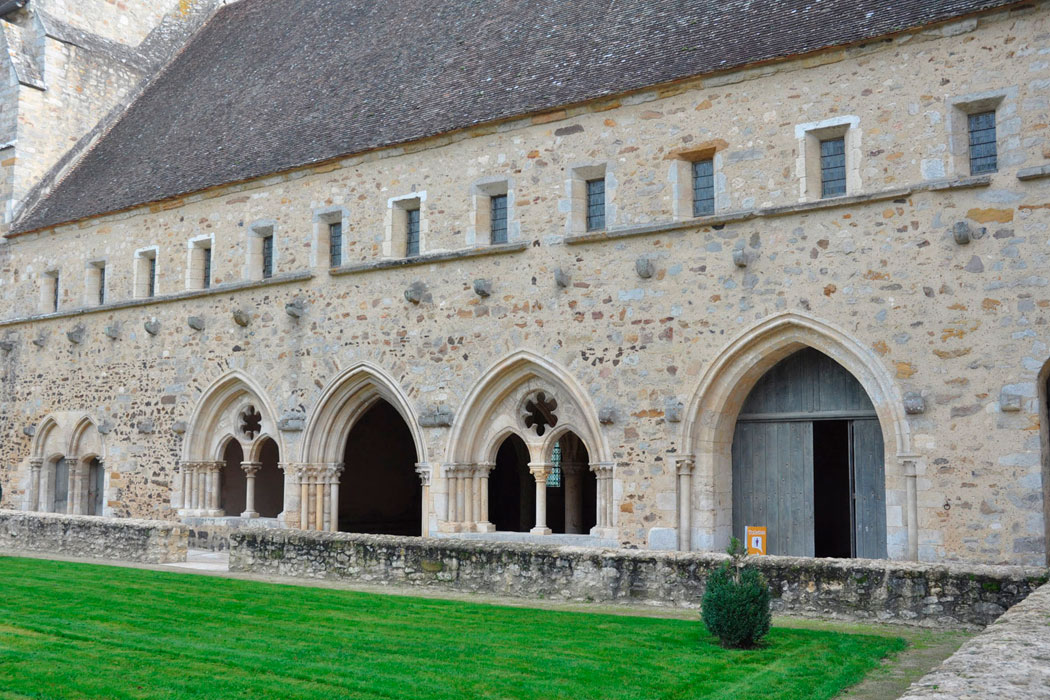
Facade of the chapter house
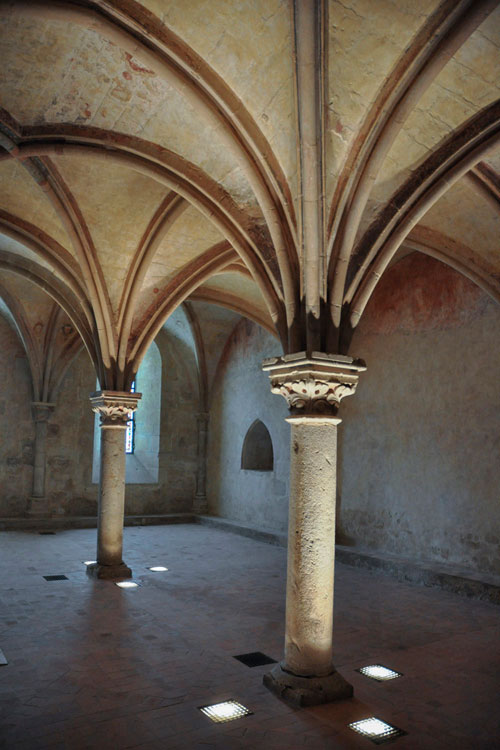
Sacristy
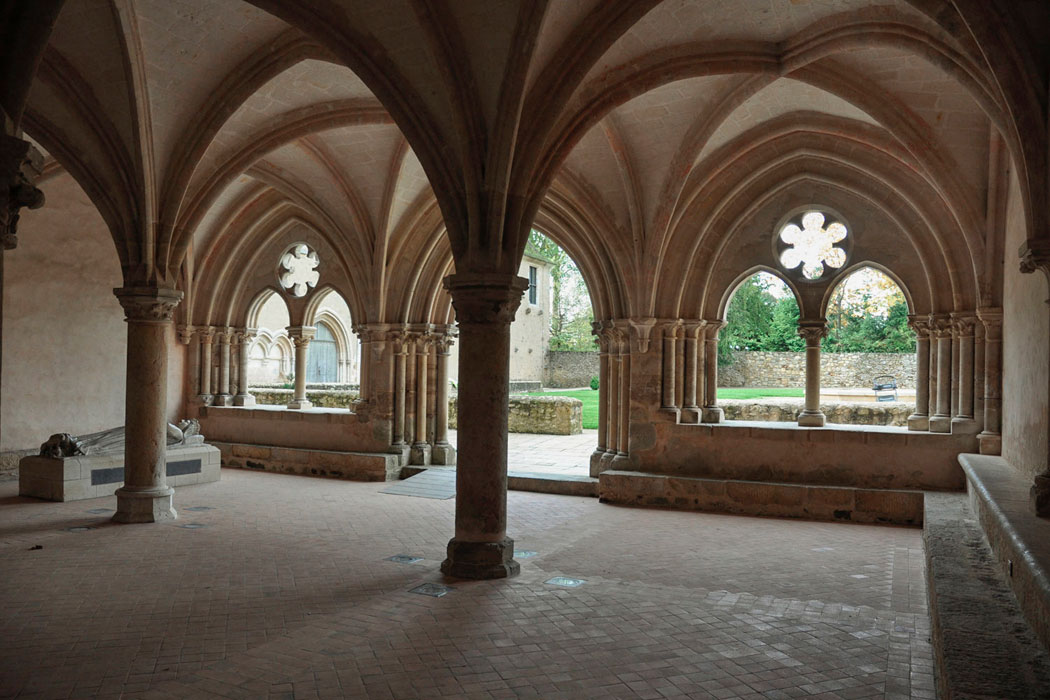
Chapter house
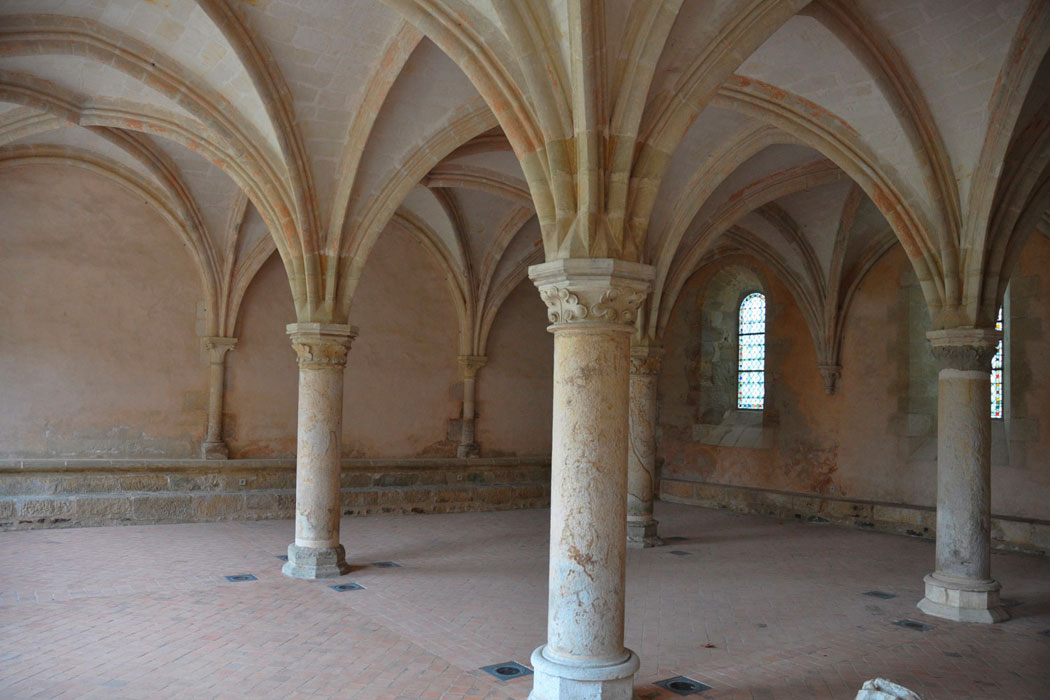
Chapter house
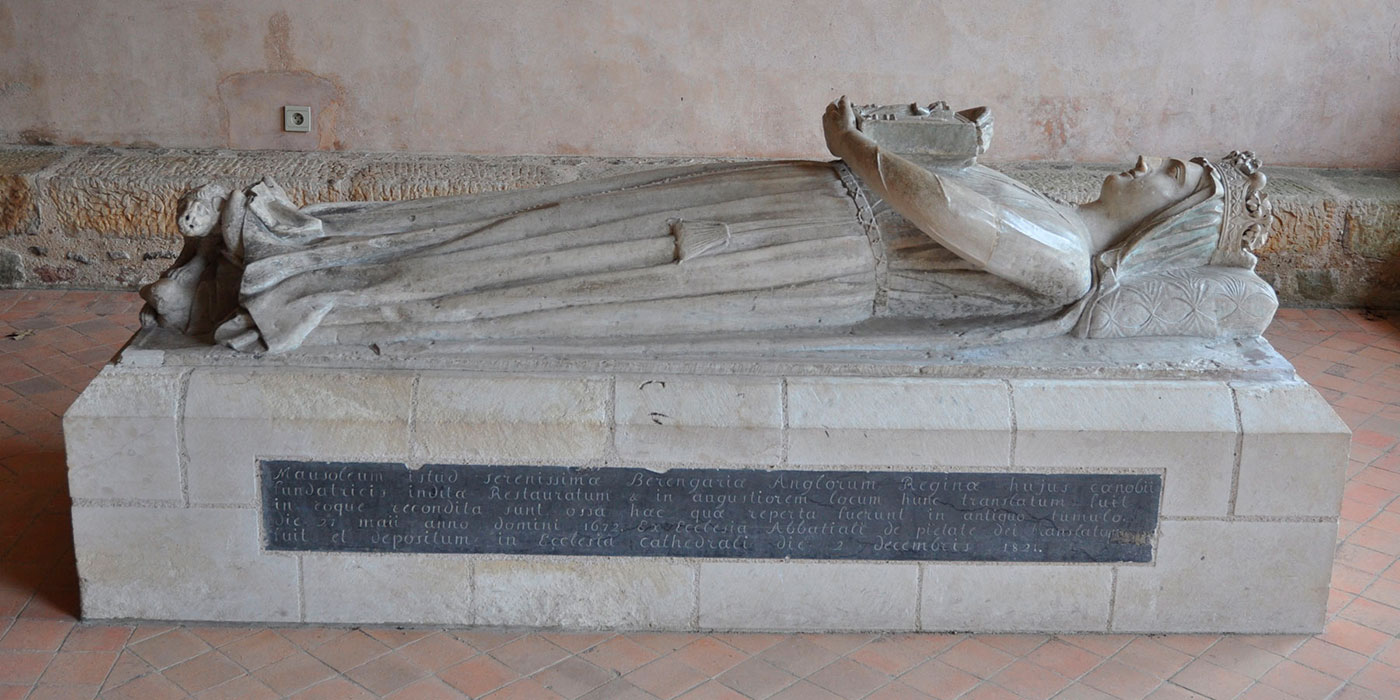
Tomb of Berengaria of Navarre, the founder
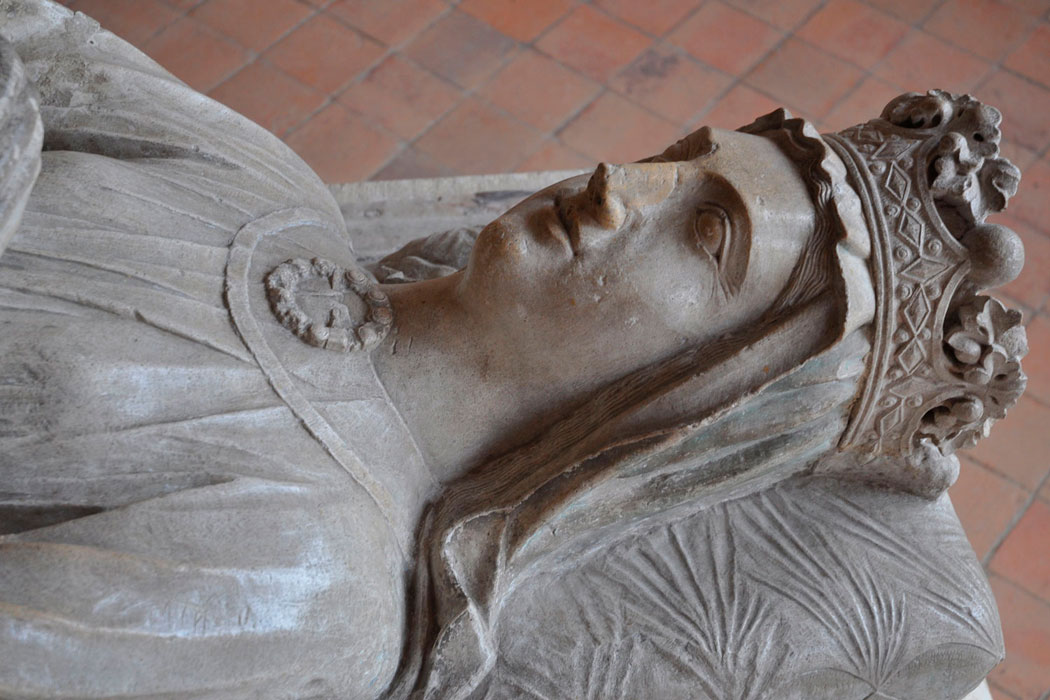
Tomb of Berengaria of Navarre, the founder
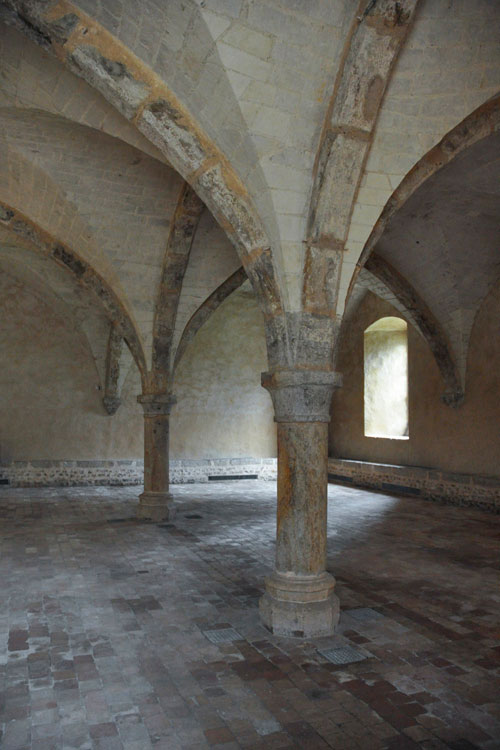
Monks’ room
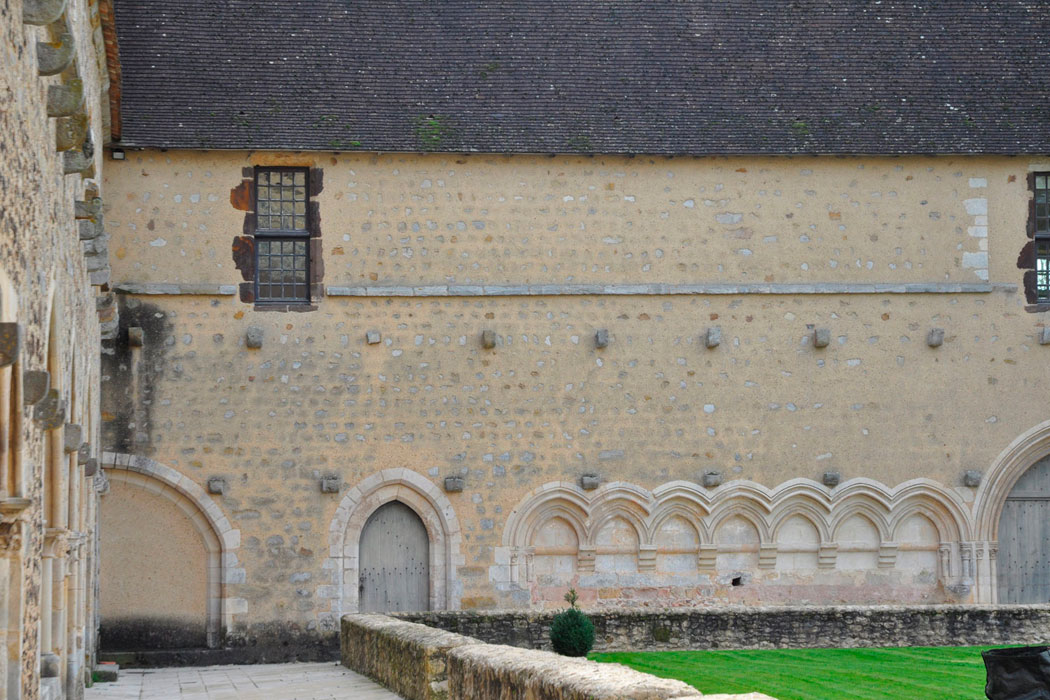
South facade of the cloister
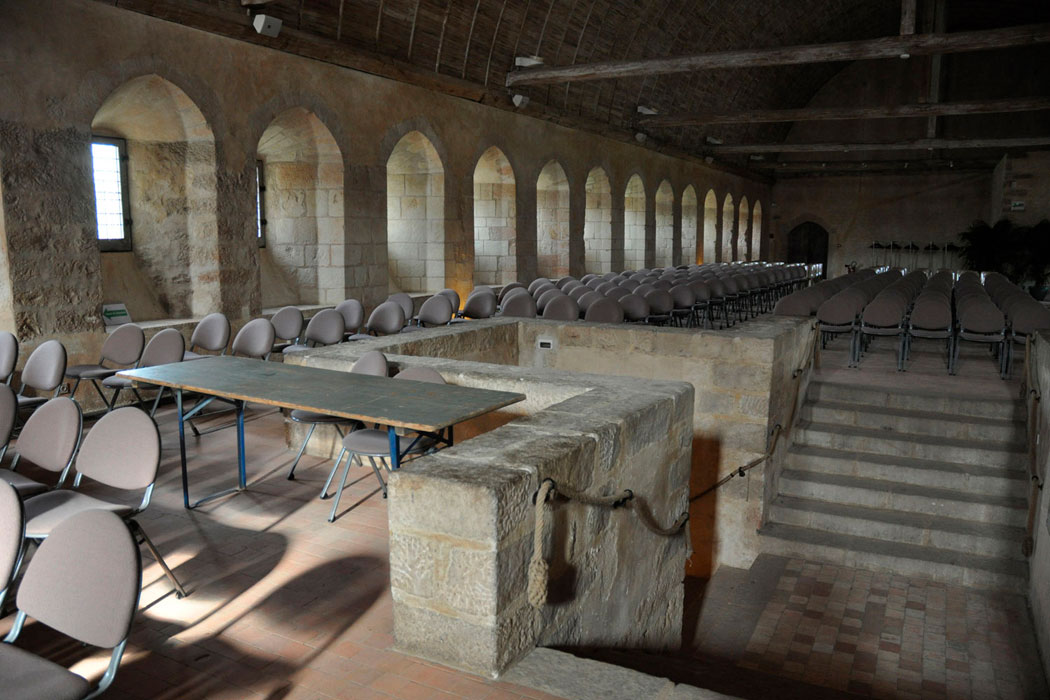
Dormitory
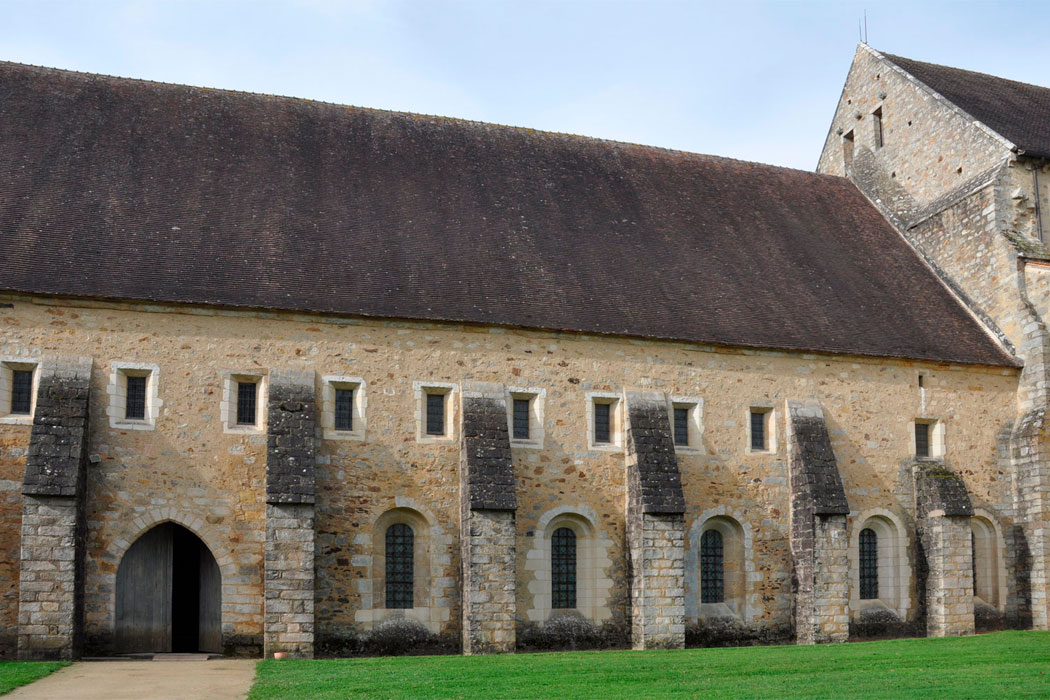
East facade
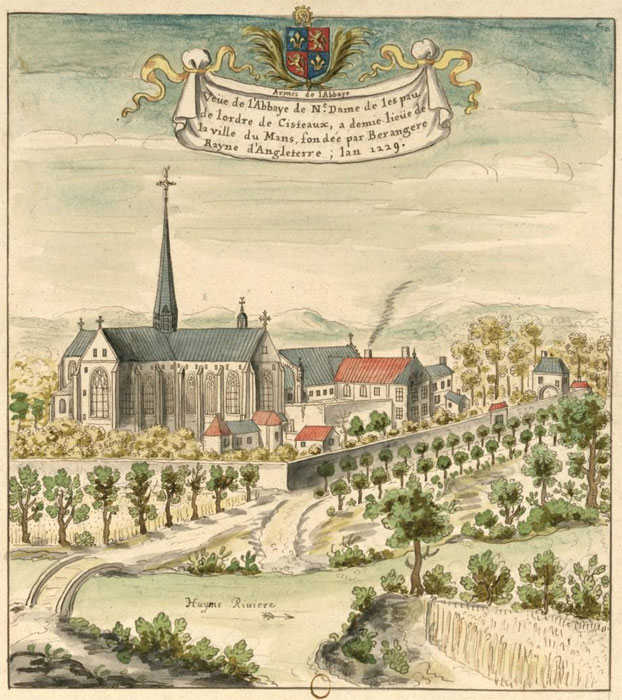
Veüe de l'Abbaye de N.e Dame de lespau de lordre de Cisteaux
Louis Boudan, 1695
Bibliothèque nationale de France
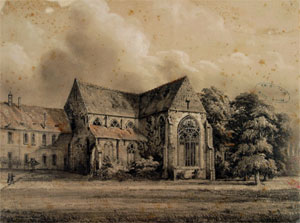
Louis Moulin (1854)
Réseau des médiathèques de la Ville du Mans
- AUBERT, Marcel (1961). Abbaye de l'Épau. Congrès archéologique de France. 119 ss. Maine. Société française d'archéologie
- AUBERT, R. (1963). Dictionnaire d'histoire et de géographie ecclésiastiques. Vol. 15. París: Letouzey et Ané
- BESSE, Jean-Martial (1920). Abbayes et prieurés de l'ancienne France, vol. 8, Tours. París : Picard
- BRÉAU, Jules; i altres (1999). L’Abbaye de l’Épau. Rennes: Ouest-France
- CORRIOL, Vincent (2013). Heurts et malheurs d’une abbaye : l’abbaye de l’Épau à la fin du Moyen Âge (v. 1350-v. 1450). Annales de Bretagne et des Pays de l’Ouest, núm. 120/3
- FROGER, L; Ricordeau, A. (1893-94). L'abbaye de l'Épau du XIIIe au XVe siècle. Revue historique et archéologique du Maine, vols. 34-35
- JANAUSCHEK, Leopoldus (1877). Originum Cisterciensium. Vol. 1. Viena
- MEUNIER, Hugo (2014). Abbaye de l’Épau. Sondage dans le logis abbatial. Yvré l’Evêque (Sarthe). Capra
- SAINT-MAUR, Congregació de (1856). Gallia Christiana in provincias ecclesiasticas distributa. Vol. 14. París: Typographia Regia
- SCHMUCKLE-MOLLARD, Christiane (1991). Sarthe. Découvertes à l'abbaye de l'Épau. Bulletin Monumental. Vol. 149 N°2
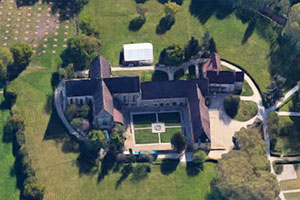
The monastery is situated in the commune of Yvré-l'Évêque, on the eastern outskirts of Le Mans