

The site of Cluny had been the property of the County of Mâcon since 824. At the beginning of the 10th century, the county was held by William the Pious (c. 875–918), Duke of Aquitaine, who founded a monastery there. By a charter of donation dated 11 September 909 or 910, he granted the village of Cluny to Berno (c. 850–927), whom he entrusted with the direction of the new community.
Berno was a prestigious monk who had been trained at Saint-Martin d’Autun Abbey (Saône-et-Loire) and who already headed the abbeys of Baume-les-Messieurs and Saint-Pierre de Gigny (both in the Jura). He became the first abbot of Cluny (910–926), where monks from these centres settled. The estate donated by William already included a chapel, lands, vineyards, orchards, meadows, woods, mills and other resources, which facilitated the establishment of the community.
The monastery was placed under the Rule of Saint Benedict and, from its foundation, came under the direct protection of the Holy See, outside the authority of local powers. This position was confirmed and defined more precisely by Pope John XI’s privilege of 931, which allowed any monk to break his vow of stability with his monastery and move to Cluny, while also confirming the free election of the abbot and the direct protection of the Holy See. This privilege contributed decisively to the expansion of the Cluniac reform.
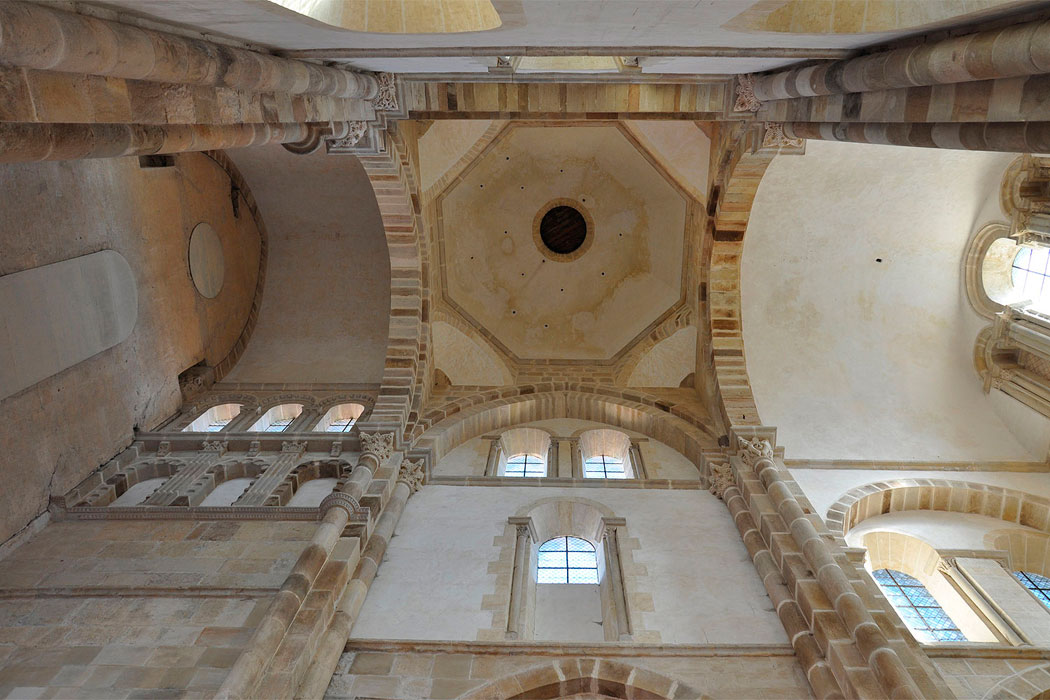
Main transept
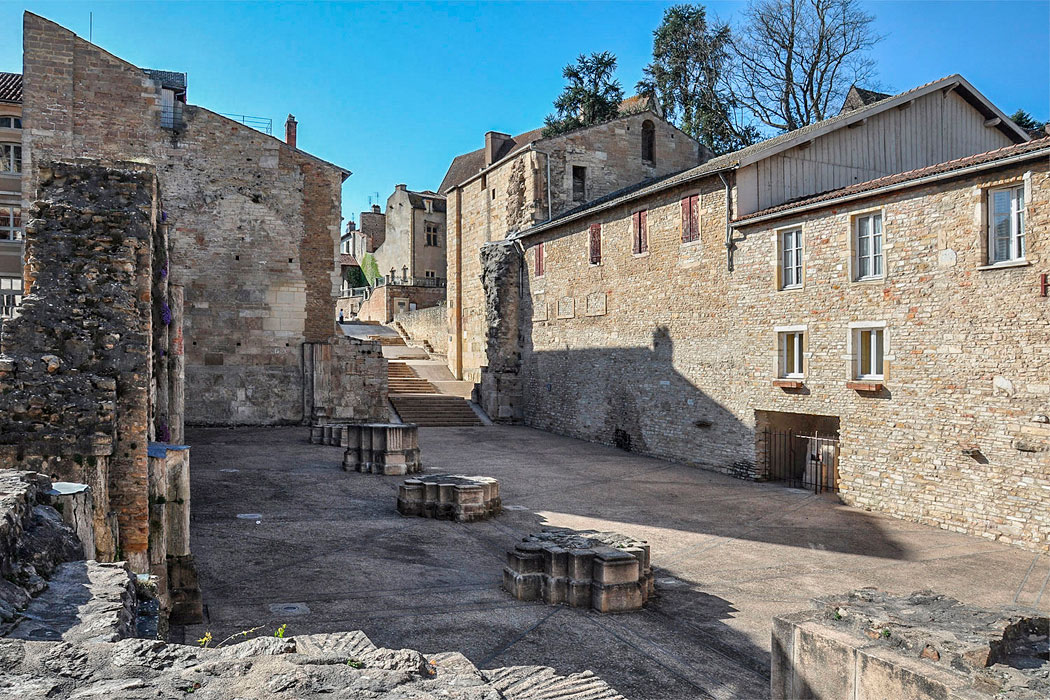
Remains of the narthex
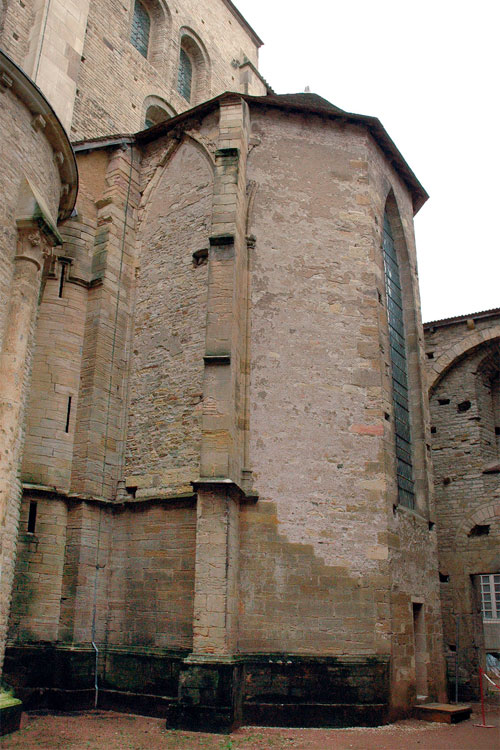
Main transept. Chapel of Saint-Martial
The first monastic church, known as Cluny I according to the nomenclature established by the historian Kenneth John Conant (1894–1984), was built shortly after the foundation. At the same time, Cluny began to extend its influence through other establishments. Berno, or people appointed by him, became abbots of, among others, Notre-Dame de Déols (Indre, 917), Saint-Pierre de Souvigny (Allier, c. 915) and Saint-Pierre-et-Saint-Paul de Sauxillanges (Puy-de-Dôme, 927).
The early period of Cluny was marked by its great abbots, who turned the abbey into an increasingly powerful and influential monastic centre. Berno was succeeded by Saint Odo (927–942). Maiolus (abbot 954–994) promoted the construction of a new monastic church, Cluny II, built between 963 and 981 to replace the first, which had become too small. During his abbacy, relics attributed to the apostles Peter and Paul arrived at Cluny, reinforcing its appeal as a centre of devotion. Maiolus was succeeded by Saint Odilo (994–1049), who continued the expansion and reform of establishments associated with Cluny. During his long abbacy, the Cluniac network was consolidated and the abbey became one of the principal centres of monastic reform in the West.
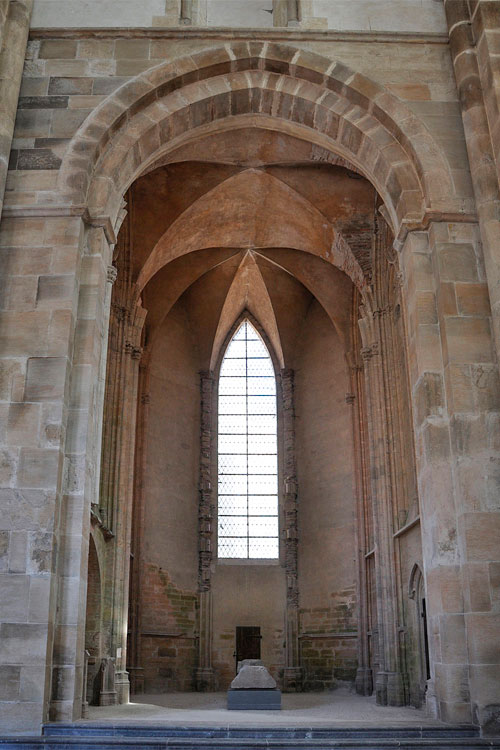
Main transept. Chapel of Saint-Martial
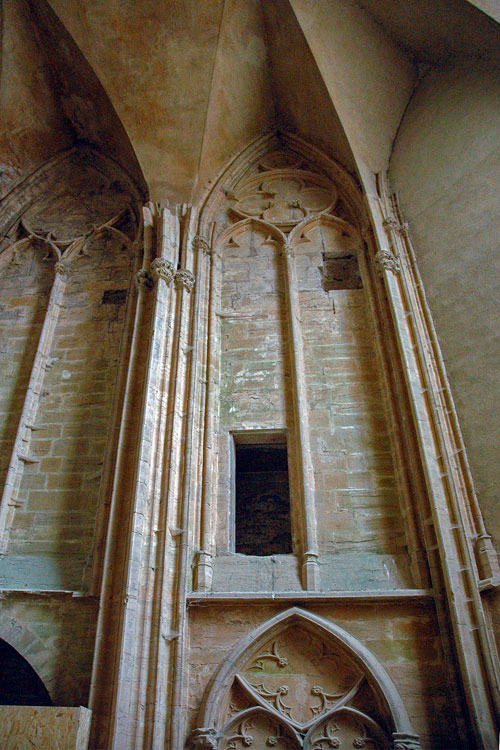
Main transept. Chapel of Saint-Martial
During Odilo’s abbacy, Cluny took part in the reform of several establishments, including Saint-Honorat de Lérins (Alpes-Maritimes), and incorporated houses such as the priory of Paray-le-Monial (Saône-et-Loire) into its network. Cluny’s influence expanded still further under Hugh of Semur (1049–1109), when numerous abbeys and priories in present-day France and other European territories entered its orbit. The Cluniac network spread particularly through the Iberian and Italian peninsulas and the British Isles.
Hugh of Semur promoted the construction of a third church, Cluny III or Maior ecclesia. According to tradition, the monk Gunzo, former abbot of Baume, had a vision in which Saints Peter, Paul and Stephen revealed to him the design of a new church of great proportions and entrusted him with persuading Hugh of Semur of the need to build it. Whatever the case, in 1088 the foundation stone was laid for a building of extraordinary dimensions for its time. Its construction was supported by leading political and ecclesiastical figures. In 1095 Pope Urban II consecrated the altars of the new building, which was still under construction, and in 1130 Pope Innocent II solemnly consecrated the church. The complex was subsequently completed with a large narthex, finished around 1220.
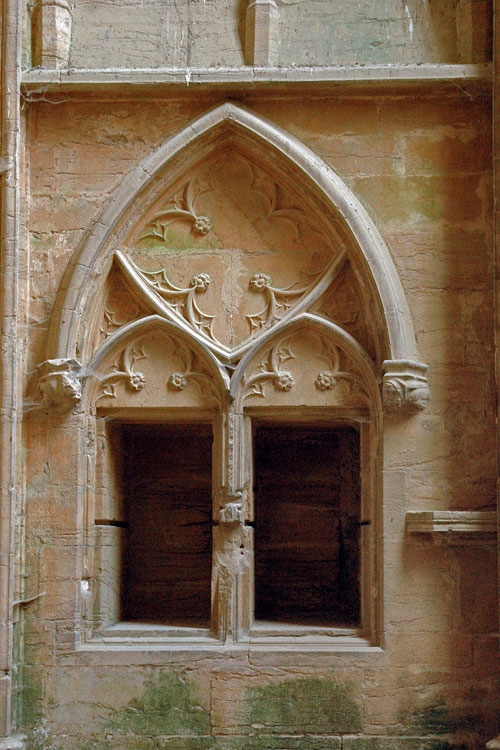
Main transept. Chapel of Saint-Martial
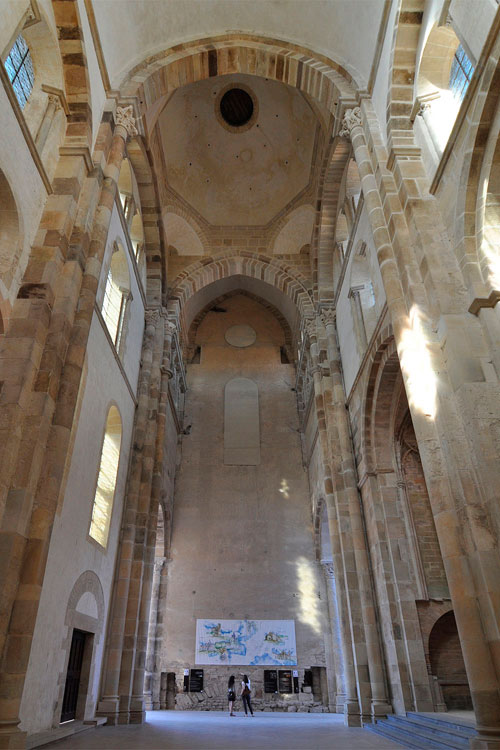
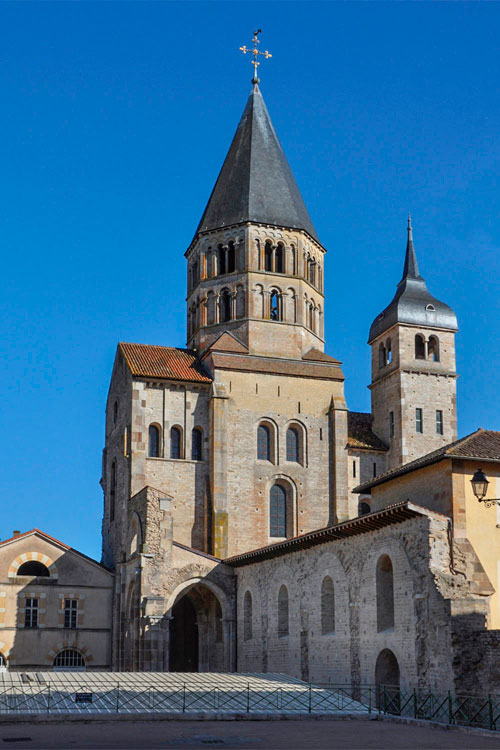
Main transept
The last of Cluny’s great abbots during its age of splendour was Peter the Venerable (1122–1156). The Cluniac network had reached a vast extent and comprised a very large number of monasteries and priories, making its administration extremely difficult. This complexity was compounded by economic and political difficulties, competition from other monastic reform movements, particularly the Cistercians, and internal problems concerning observance. From the 13th century onwards, the need to organise and control dependent houses favoured an increasingly centralised structure, making it possible to speak properly of the Order of Cluny.
The crisis deepened during the later Middle Ages. The Hundred Years’ War affected several Cluniac establishments, while the Wars of Religion also disrupted the mother house. In 1516 the commendatory system was introduced, allowing abbots from outside the community to be appointed and, in many cases, encouraging a lack of interest in the internal management of the abbeys, with the consequent deterioration of community life and revenues. At the same time, various reform attempts were undertaken, similar to those affecting other monastic orders, which also involved the rebuilding and renovation of parts of Cluny’s monastic buildings.
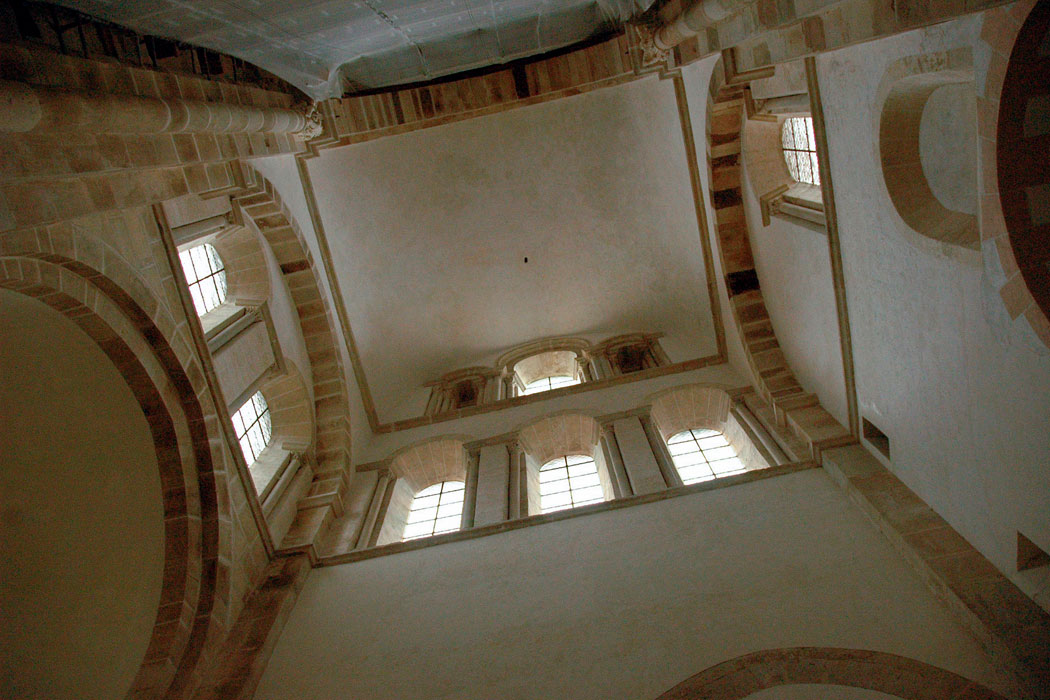
Main transept
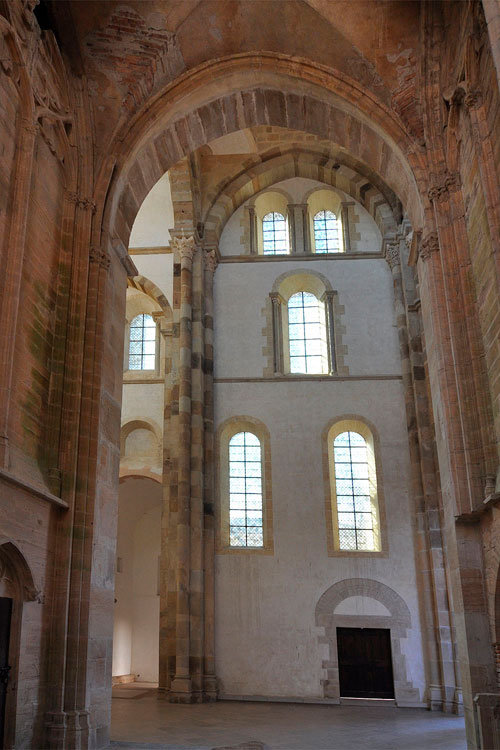
Main transept
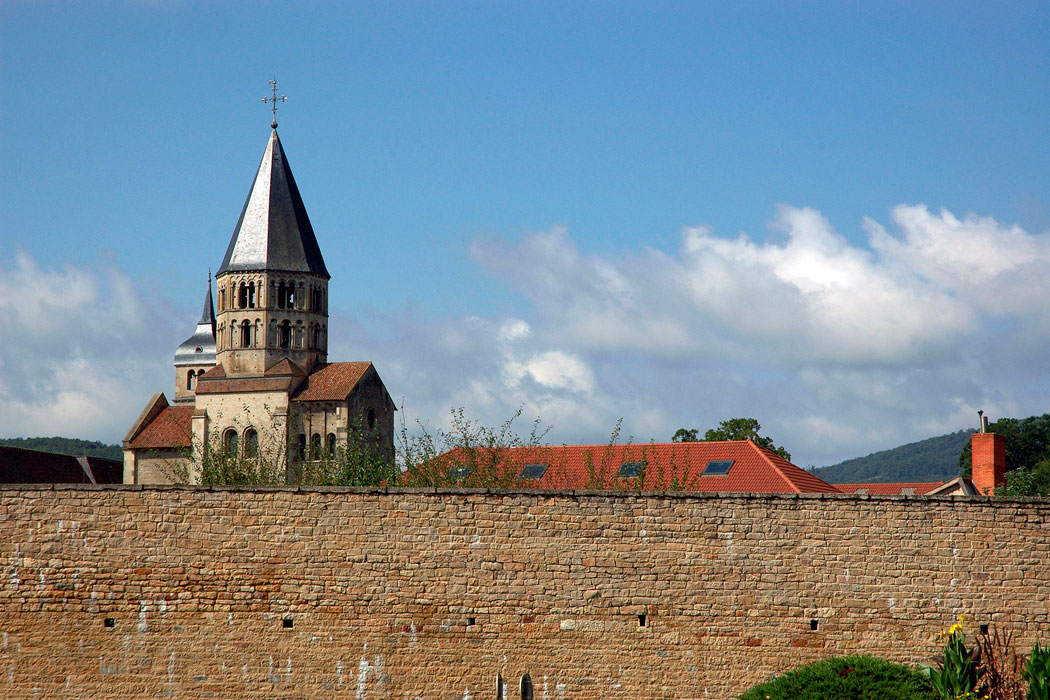
The house survived in these conditions until the revolutionary period. The community was suppressed and the monks left the abbey in 1791. Subsequently, the movable possessions were dispersed and the abbey was sold as a national property in 1798. The great medieval church was progressively dismantled and turned into a quarry for building materials. Today, only a few remains survive, including the bases of the two western towers and the southern part of the great transept, with its tower. Nearby stands the Chapel of Jean de Bourbon, originally located at the southern end of the second transept.
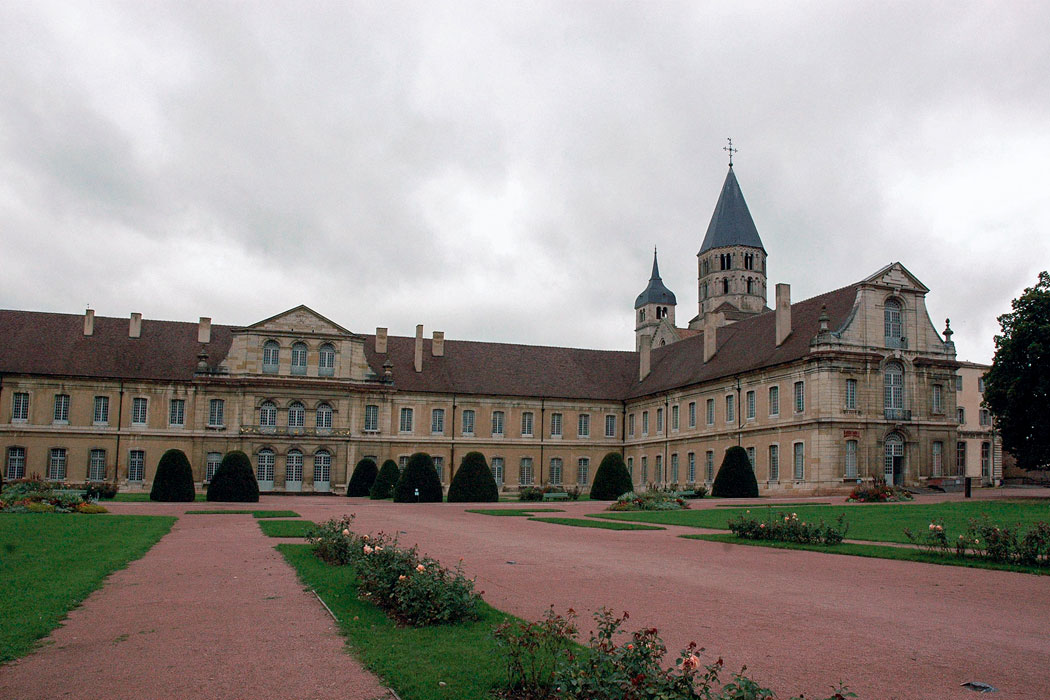
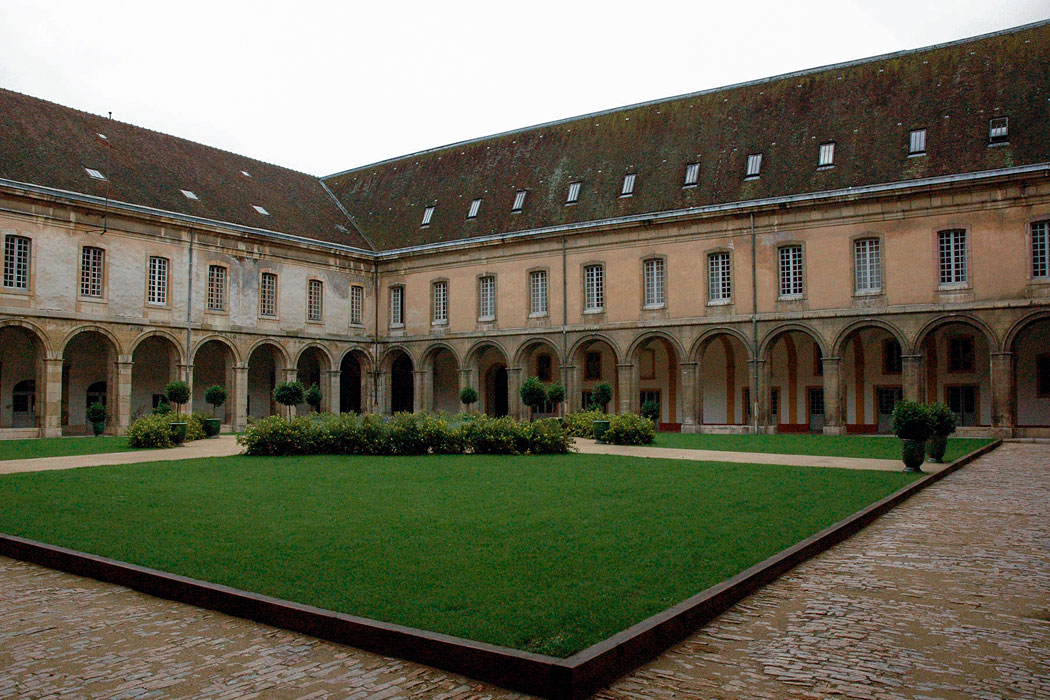
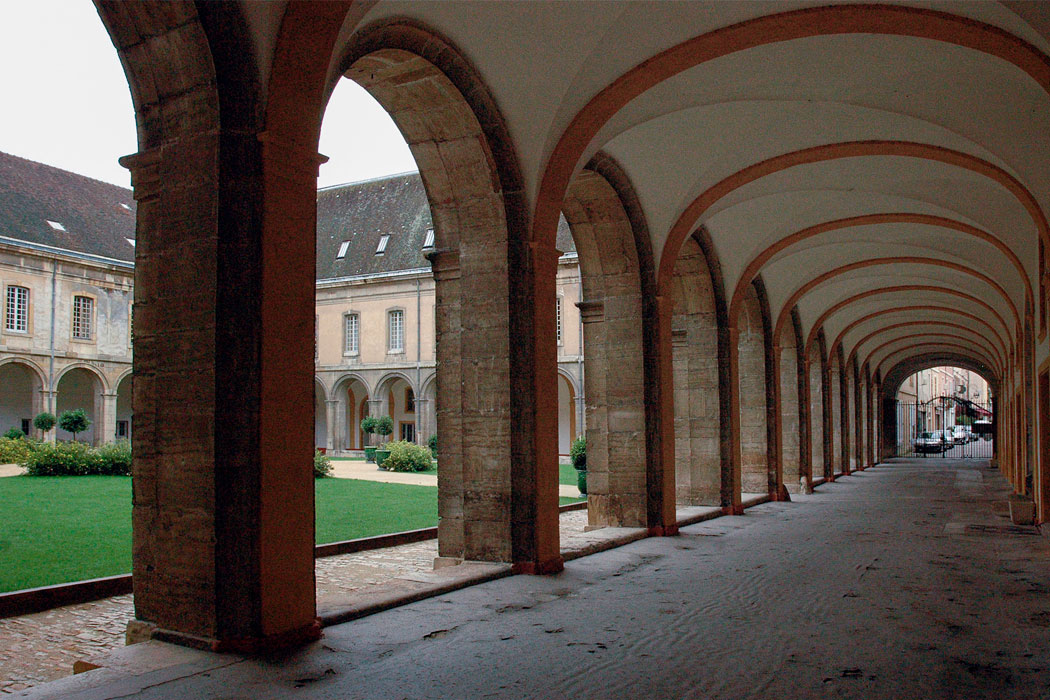
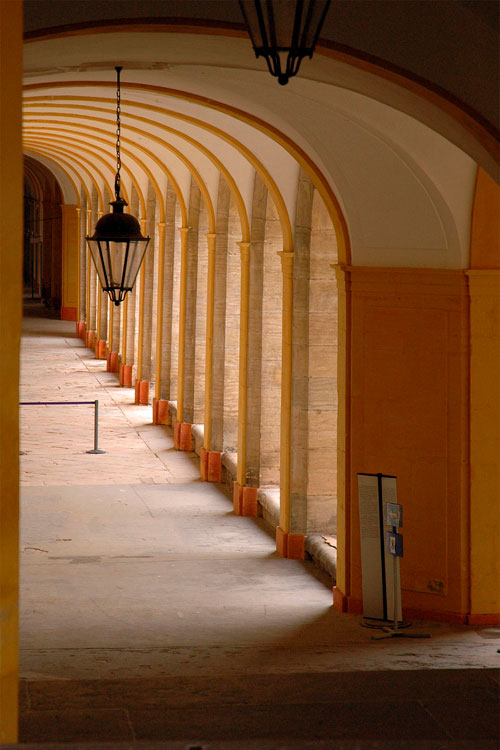
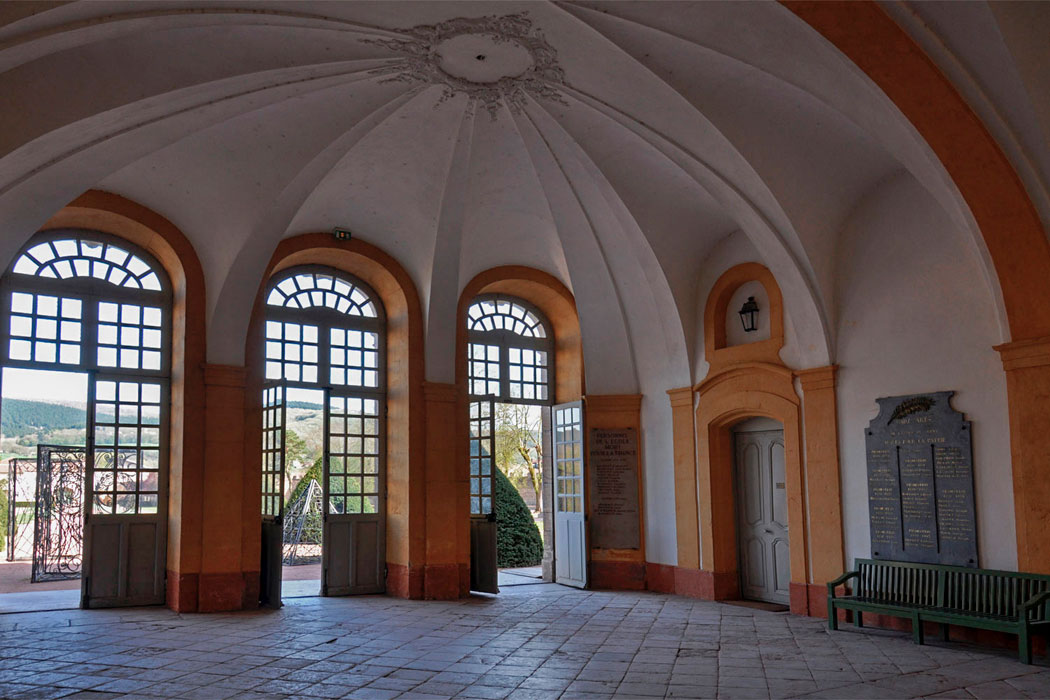
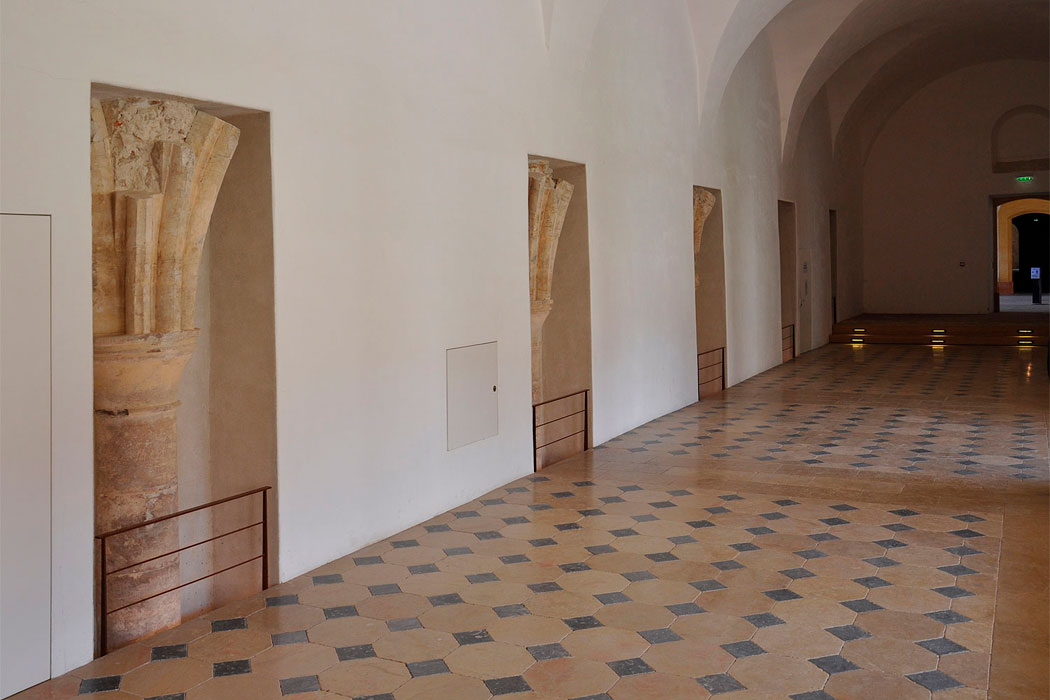
On the south side of the church, the 18th-century cloister survives, together with various monastic buildings. Other structures have also survived, including the Farinier, a Gothic granary where important capitals from the choir of Cluny III are displayed. Farther away stands the so-called Gelasius Palace, named after Pope Gelasius II, who died in exile at Cluny in 1119 and was buried there. The building, which has undergone several restorations, preserves a 14th-century gallery. Some elements of the fortifications surrounding the monastery also survive.
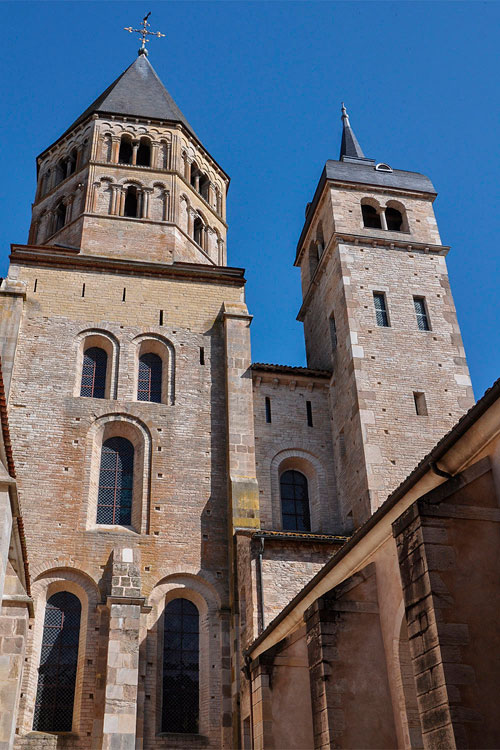
Main transept
Attached to the south of the second transept
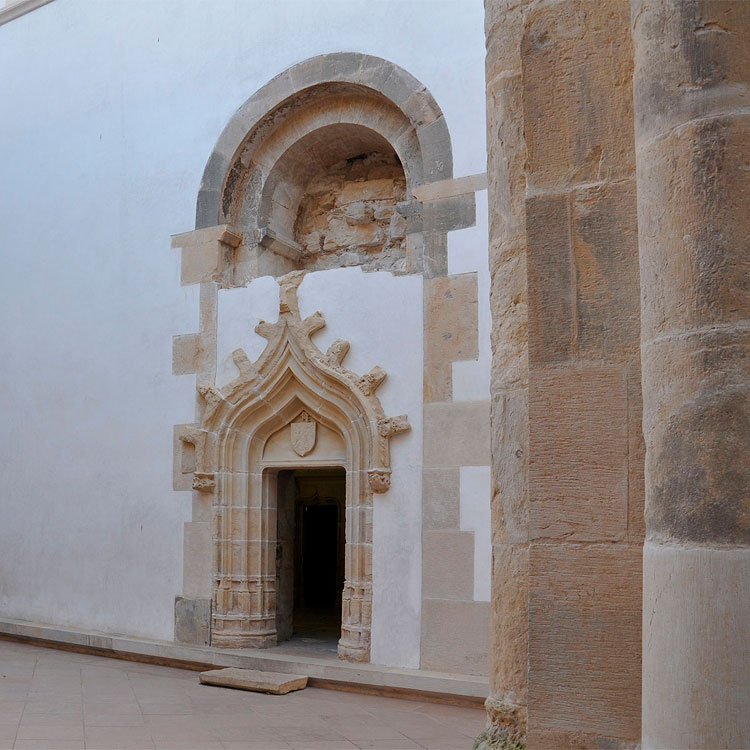
Chapel of Jean de Bourbon (c. 1460)
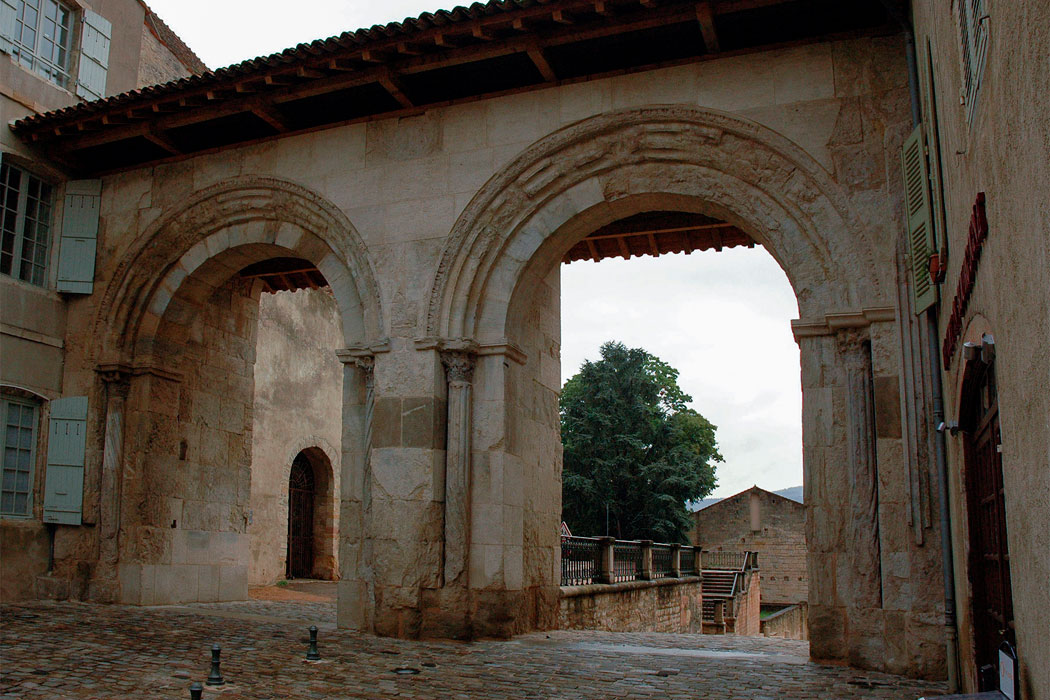
Portal
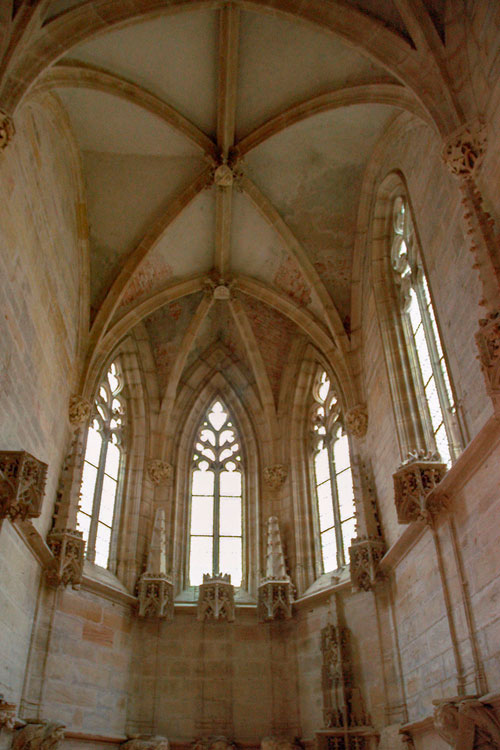
Chapel of Jean de Bourbon
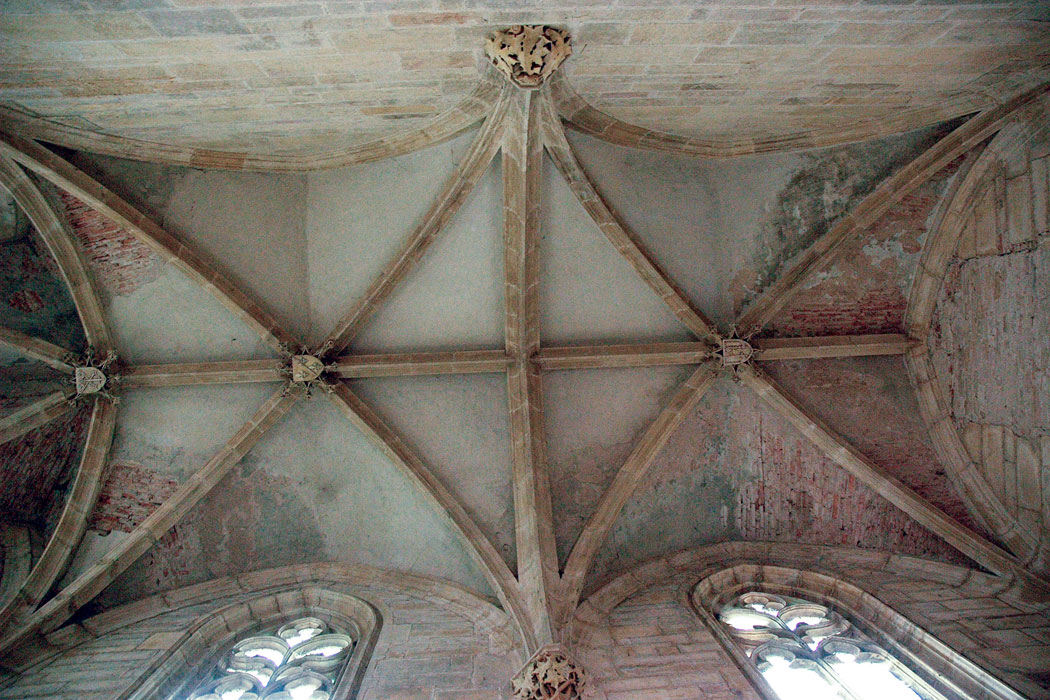
Chapel of Jean de Bourbon
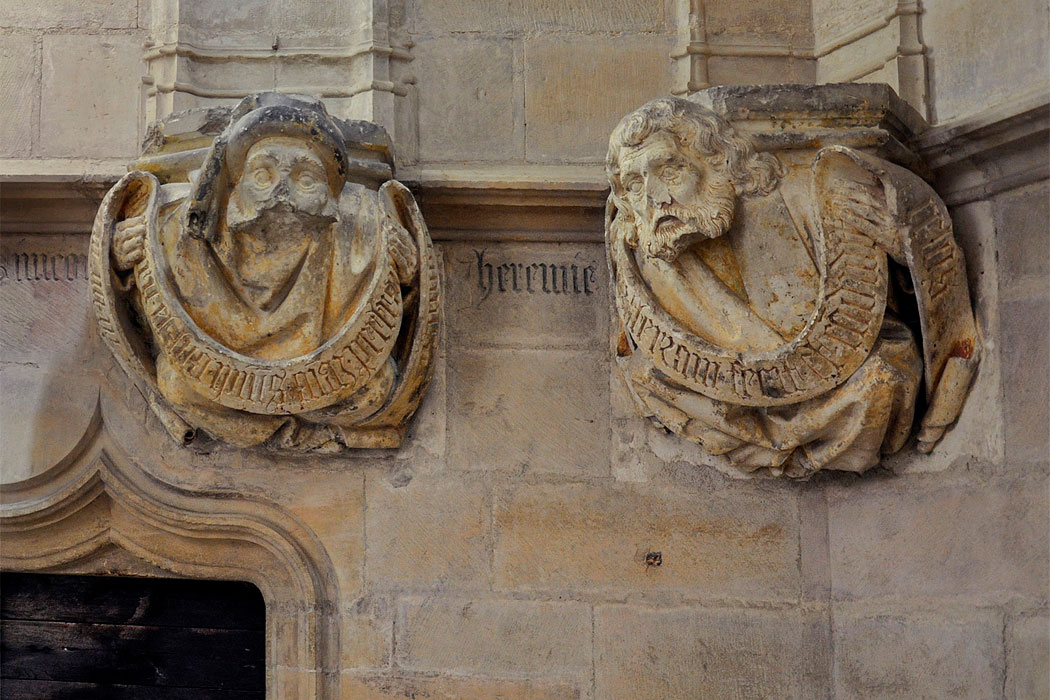
Chapel of Jean de Bourbon
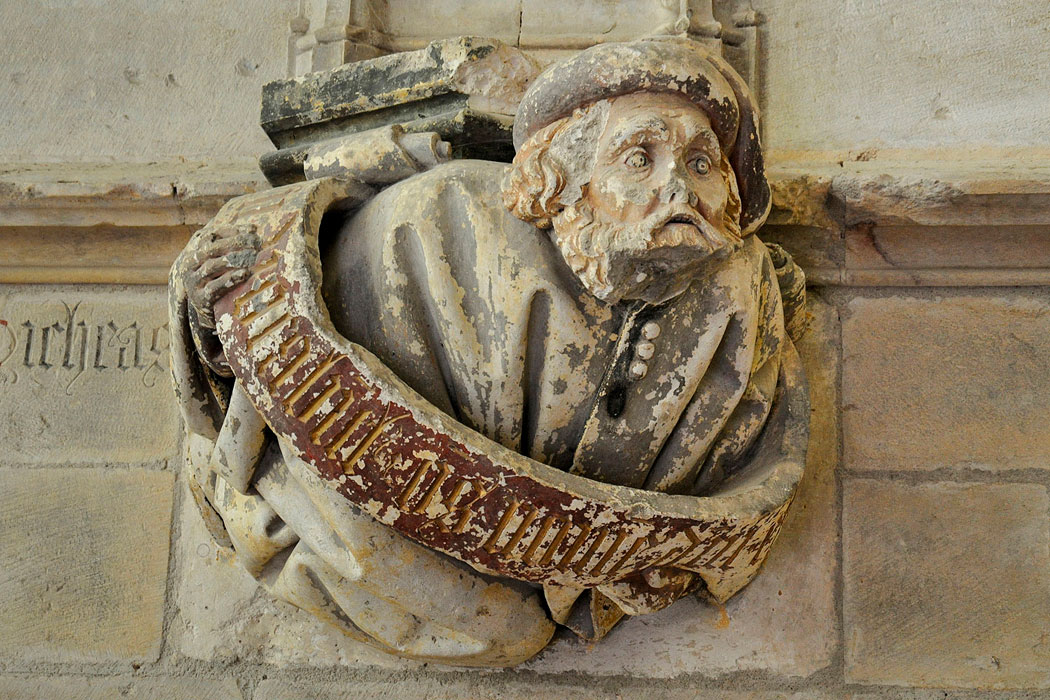
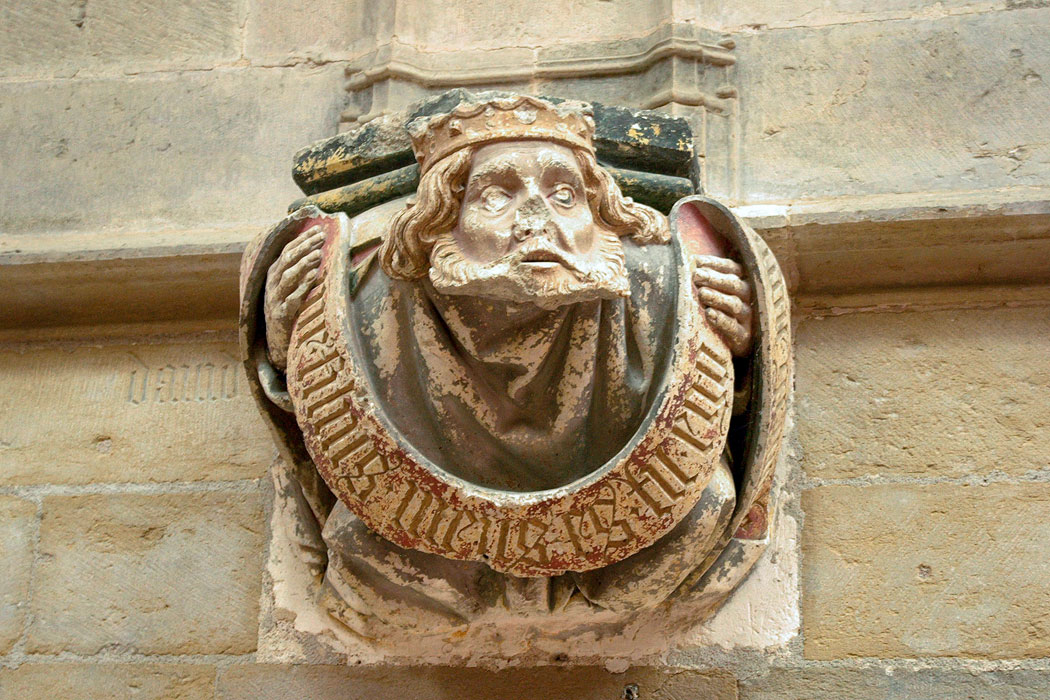
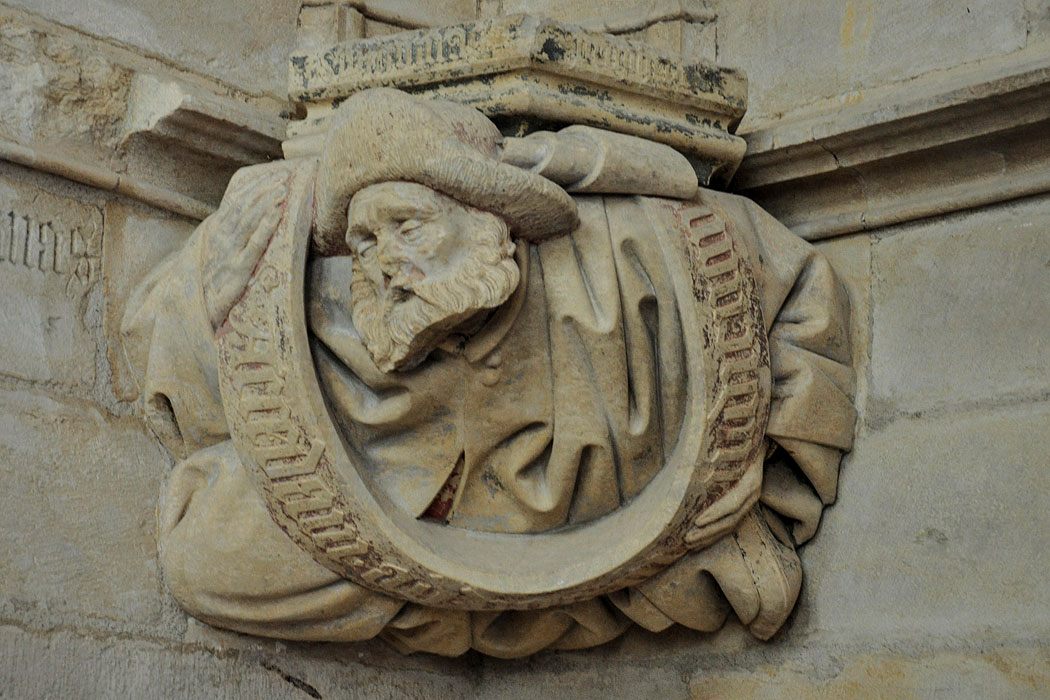
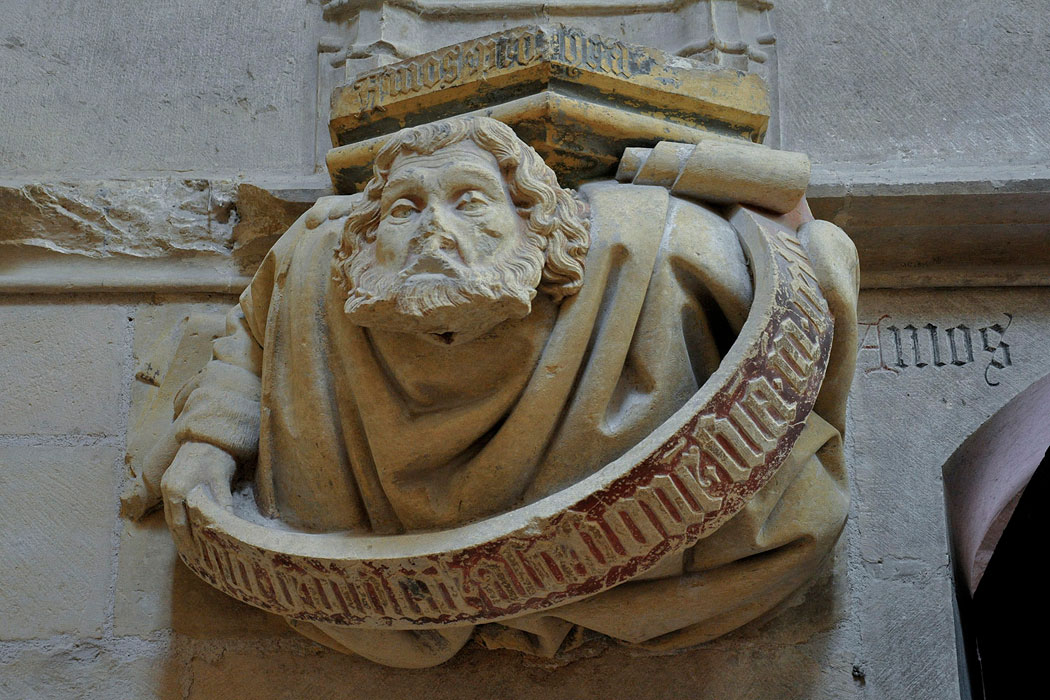
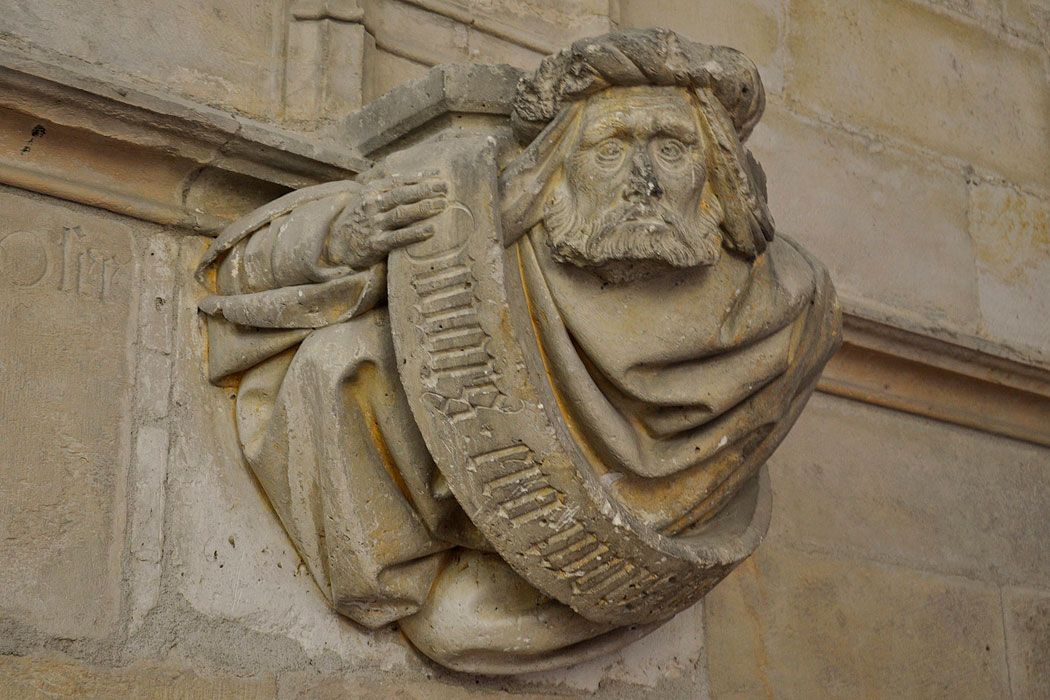
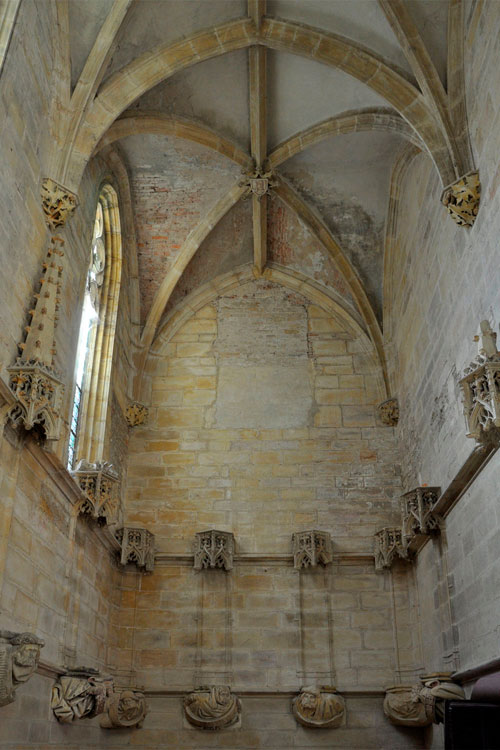
Chapel of Jean de Bourbon
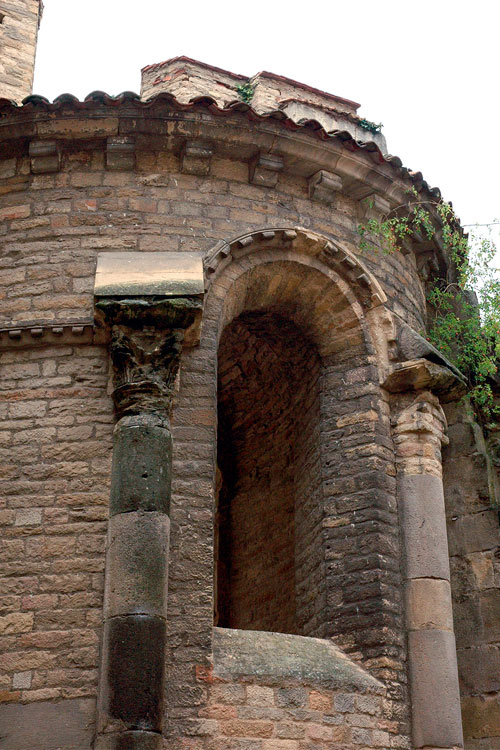
Chapel of Saint-Léger (12th century)
South of the second transept
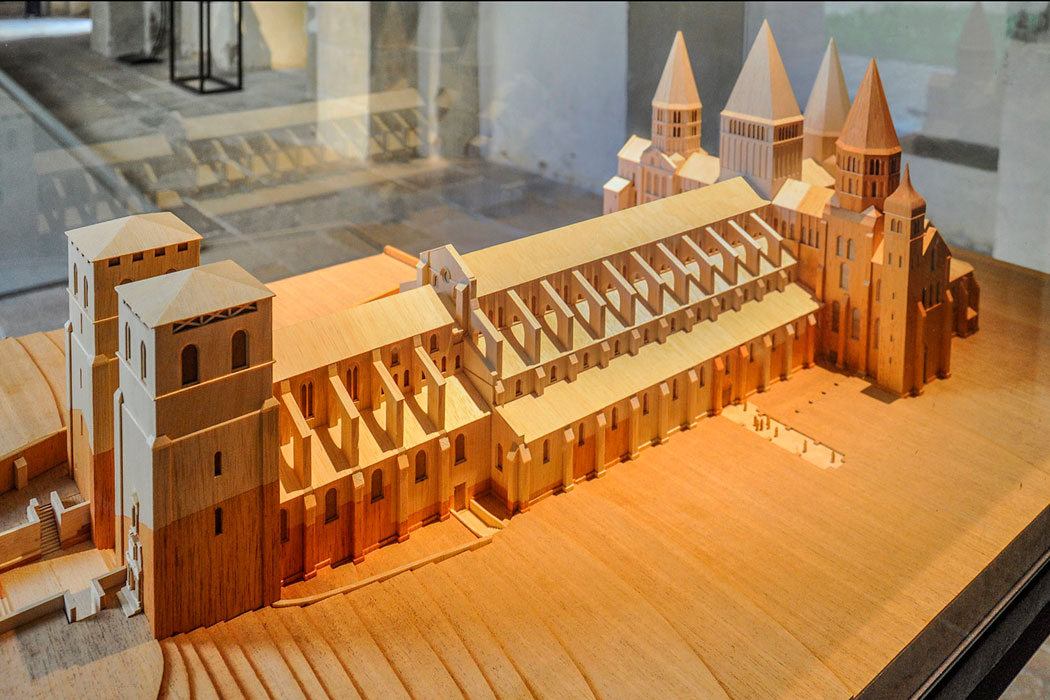
Model of the church of Cluny III

View of the church of Cluny
Étienne Martellange (1617)
Bibliothèque nationale de France
(Maior ecclesia)
For several centuries, Cluny III was the largest church in Western Christendom, measuring about 187 m in length, including the narthex. The basilica had five aisles and two transepts of different dimensions. To the west was a large three-aisled narthex with five bays, flanked by two towers. The main body of the church, with five aisles, extended to the great transept; farther east, two choir bays separated it from the second transept. Both transepts had chapels opening onto their eastern walls. The east end consisted of a deep presbytery surrounded by an ambulatory opening onto five radial chapels.
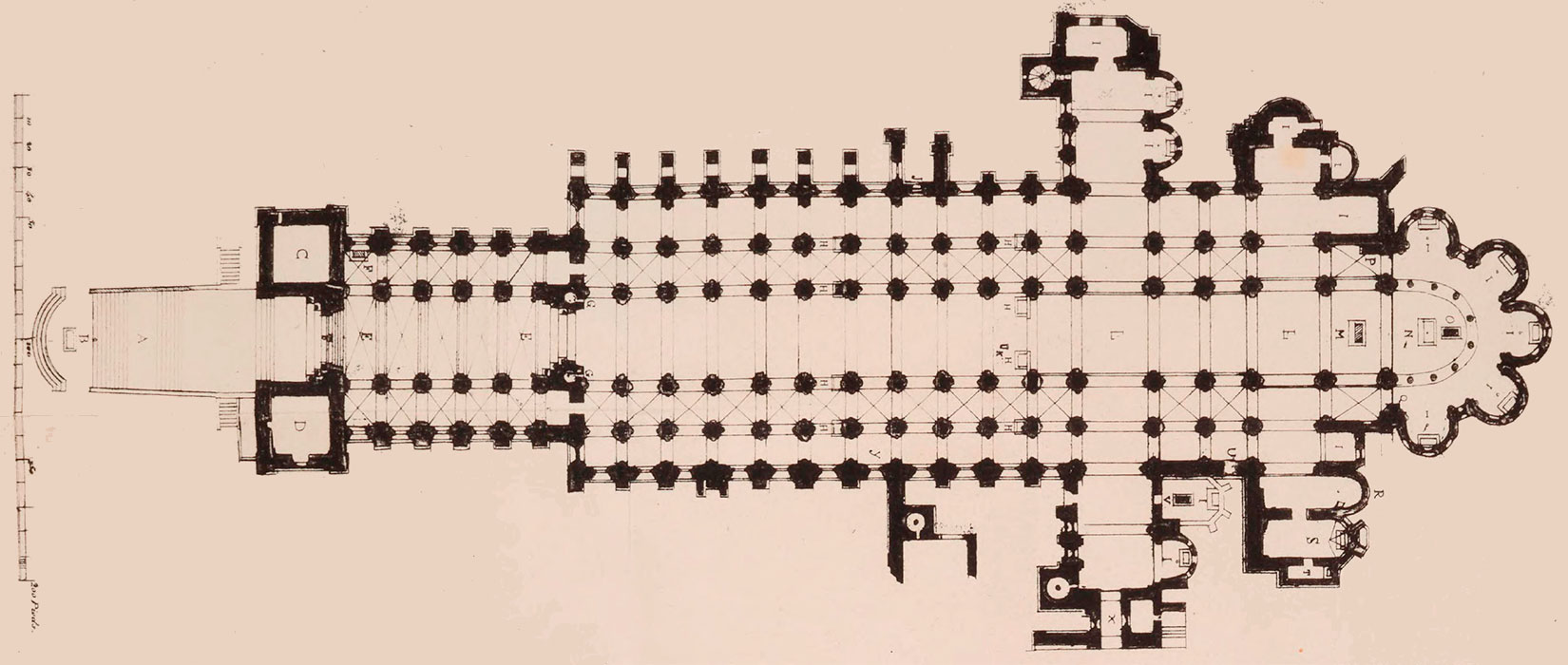
Cluny III floor plan
Published in Essai historique sur l'abbaye de Cluny (1839)
To the south of the monastic complex is the building known as Farinier where, among other pieces,
eight capitals (A-H) from the presbytery of the church of Cluny III are exhibited
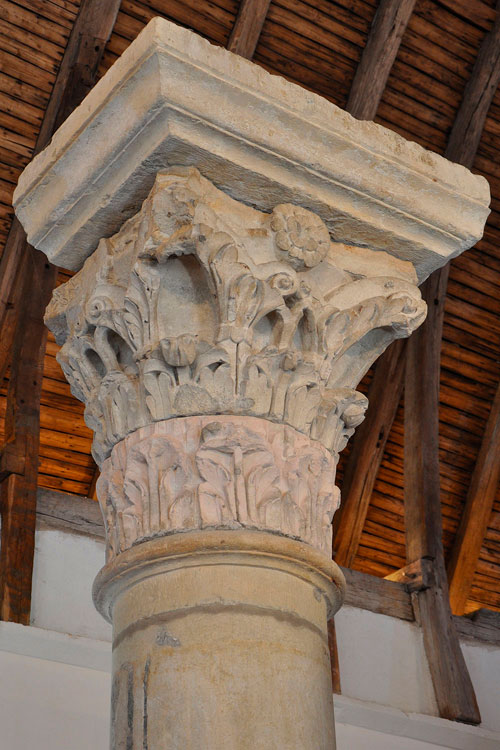
Corinthian capital (A)
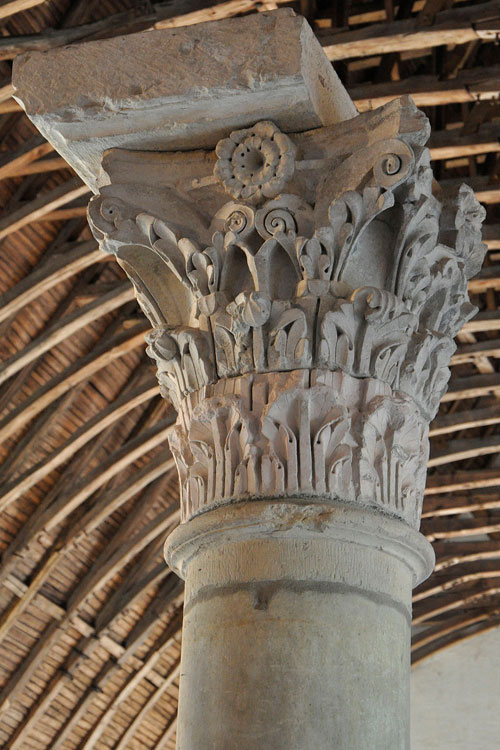
Corinthian capital (A)
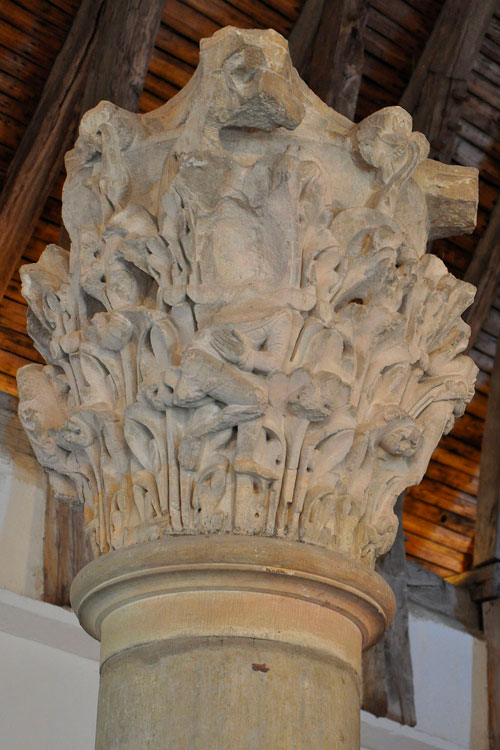
Seasons' capital (B)
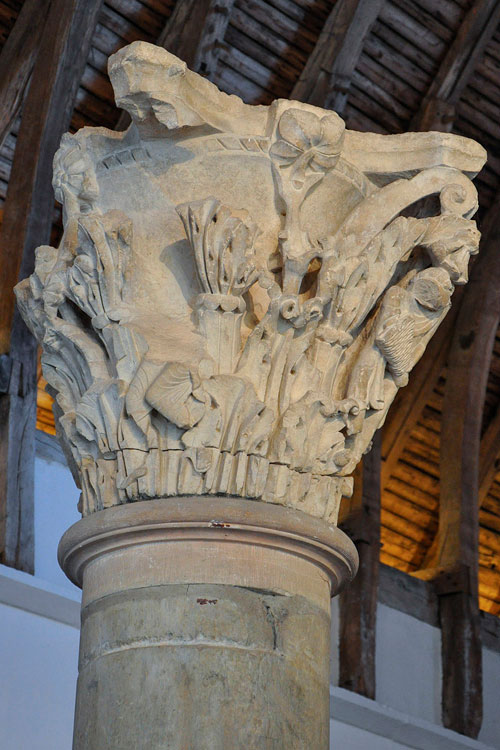
Capital of winds (C)
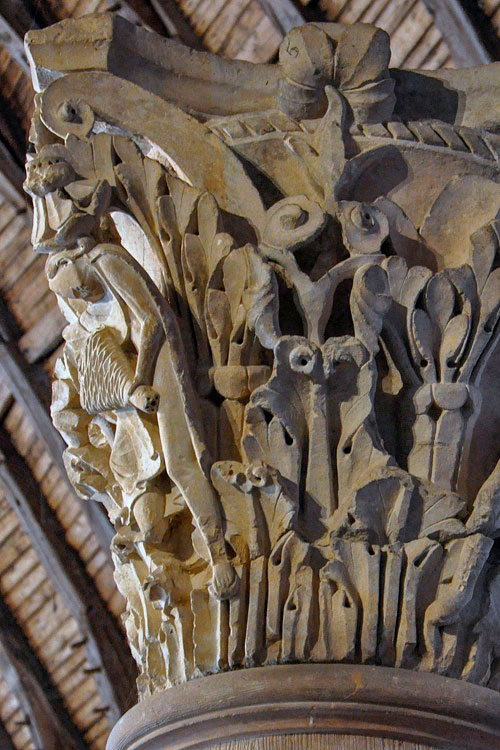
Capital of winds (C)
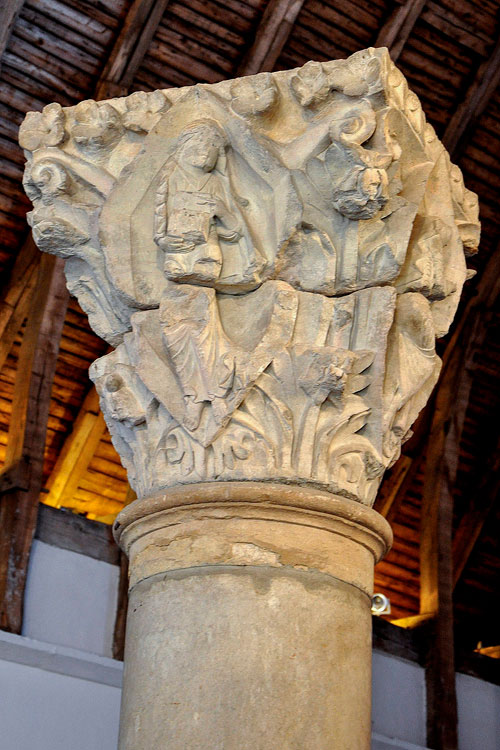
Virtues capital (D)
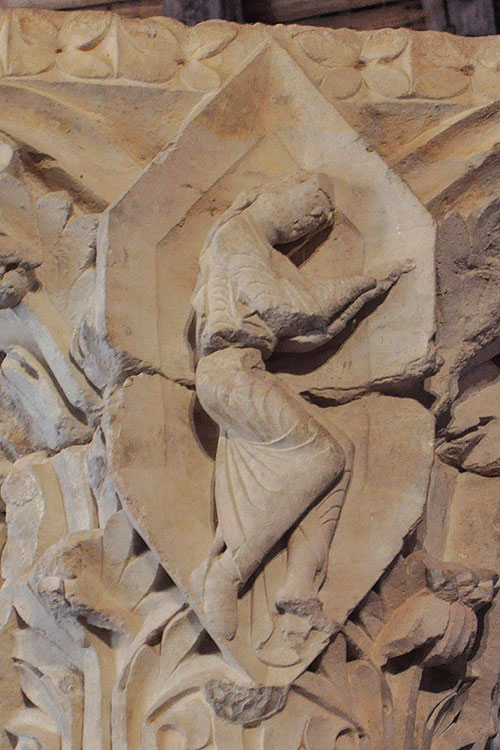
Virtues capital (D)
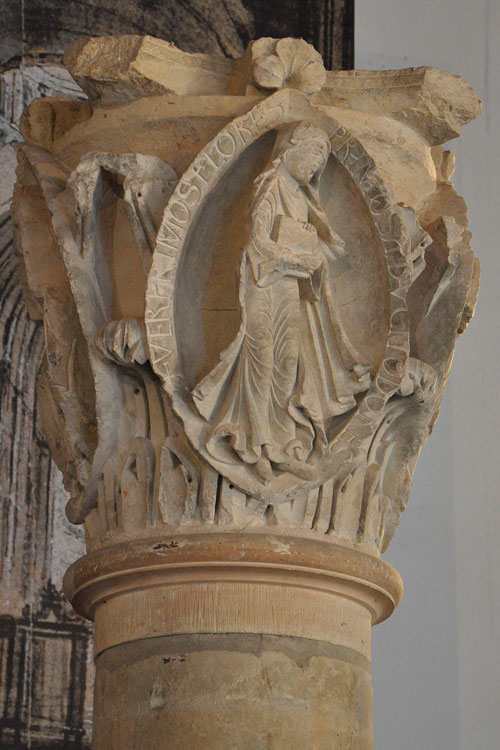
Capital of the arts (E)
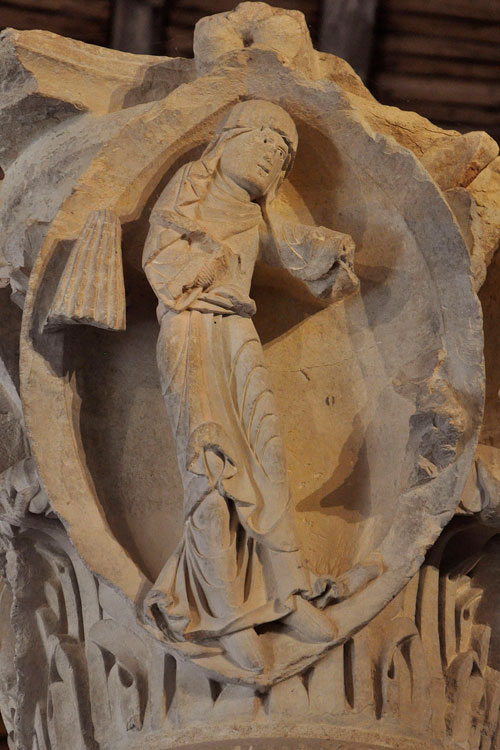
Capital of the arts (E)
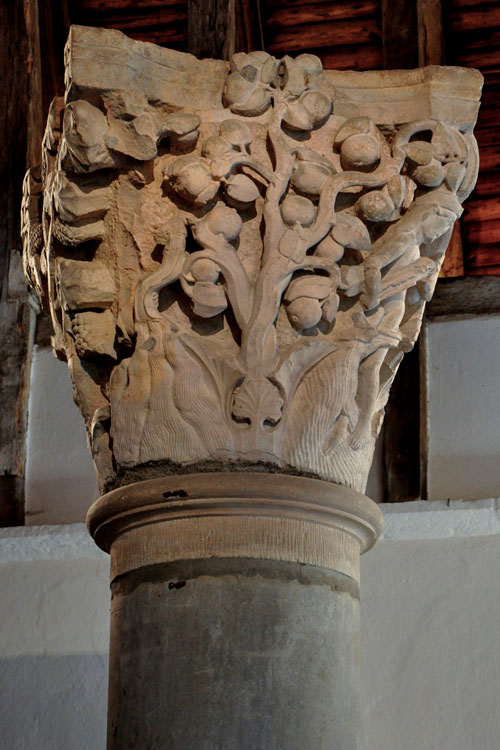
Capital of the rivers of Paradise (F)
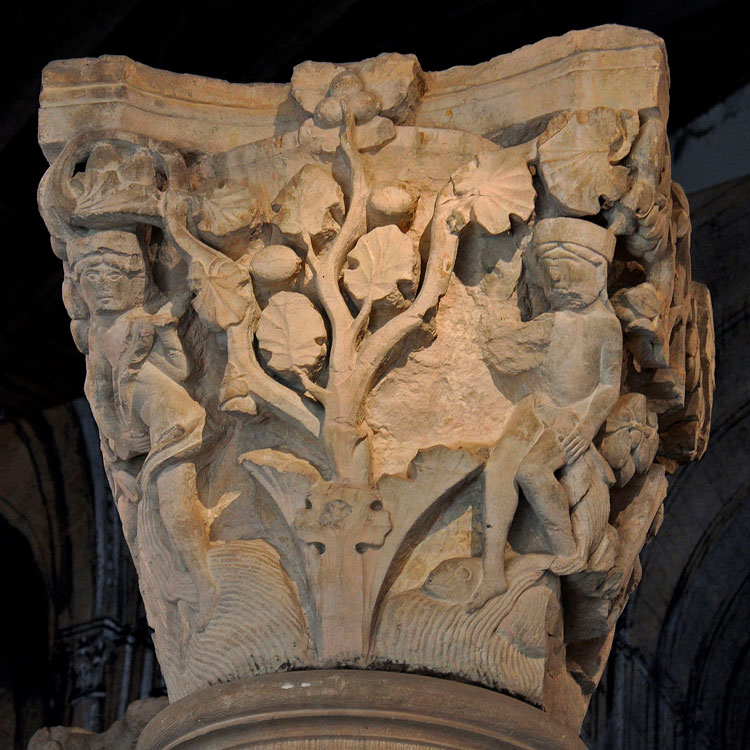
Capital of the rivers of Paradise (F)
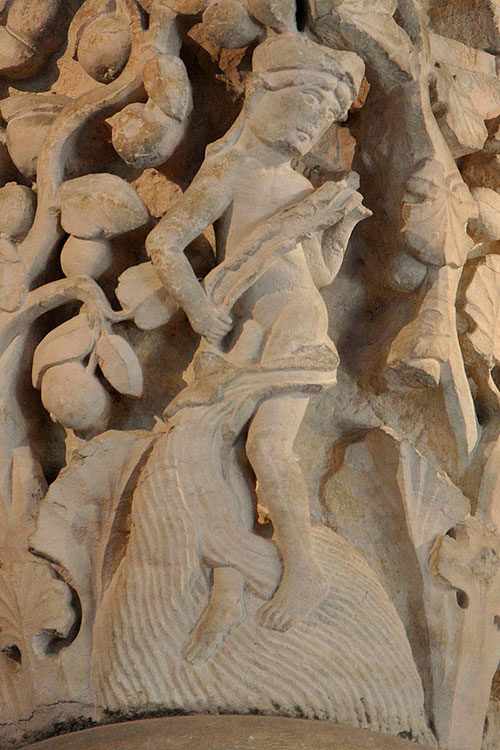
Capital of the rivers of Paradise (F)
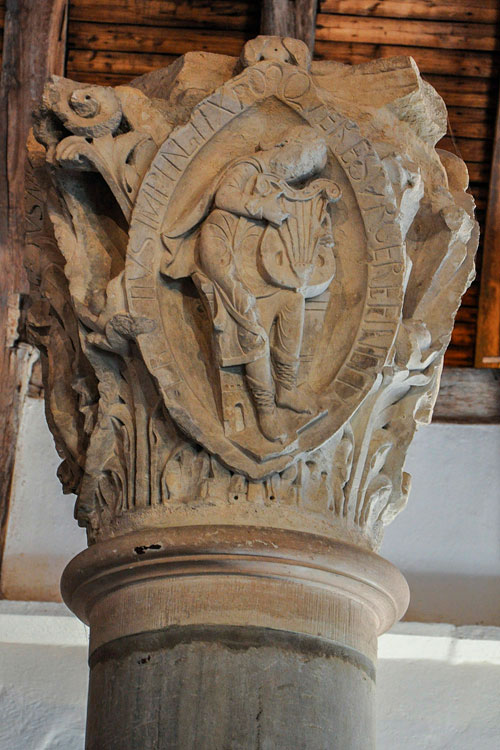
Minstrels' capital (G)
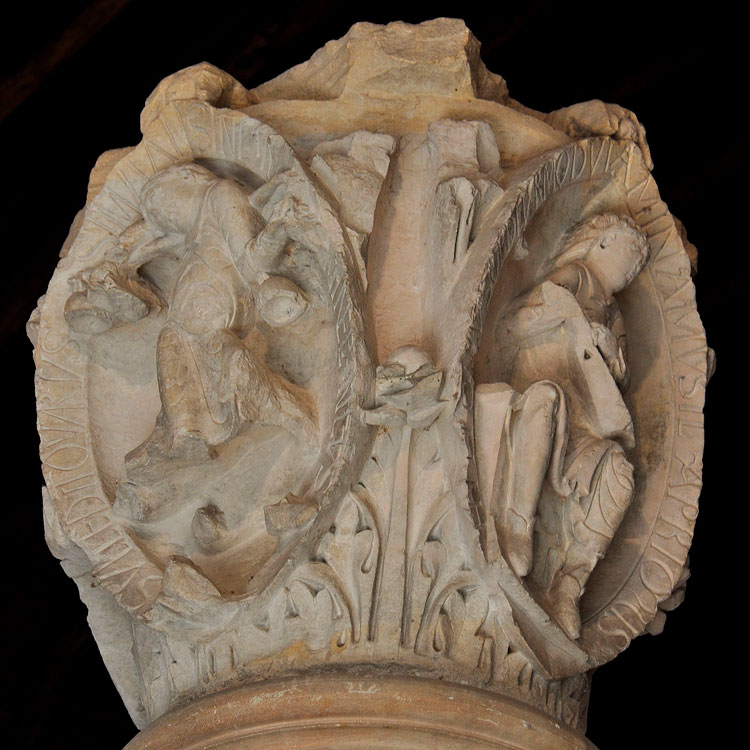
Minstrels' capital (G)
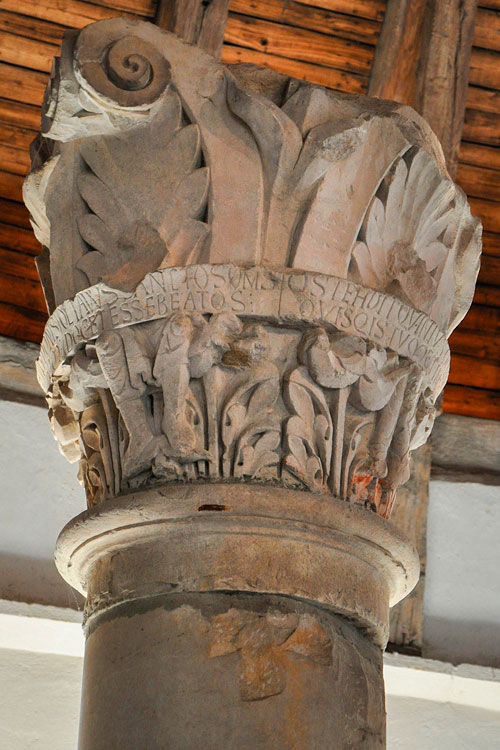
Capital with minstrels? (H)
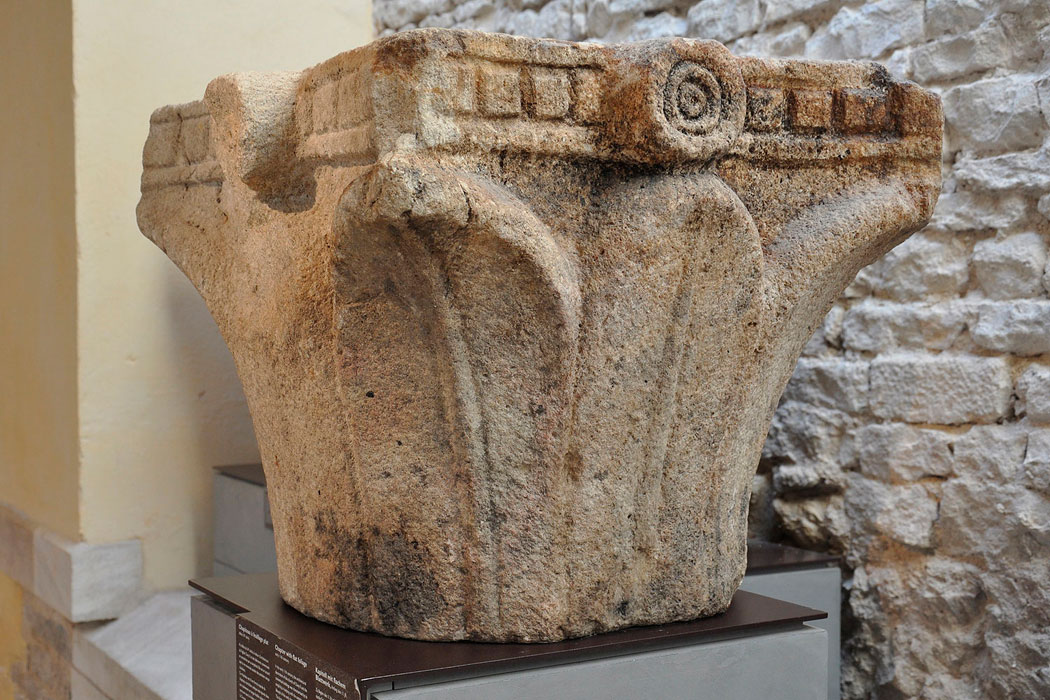
11th century capital (Cluny II)
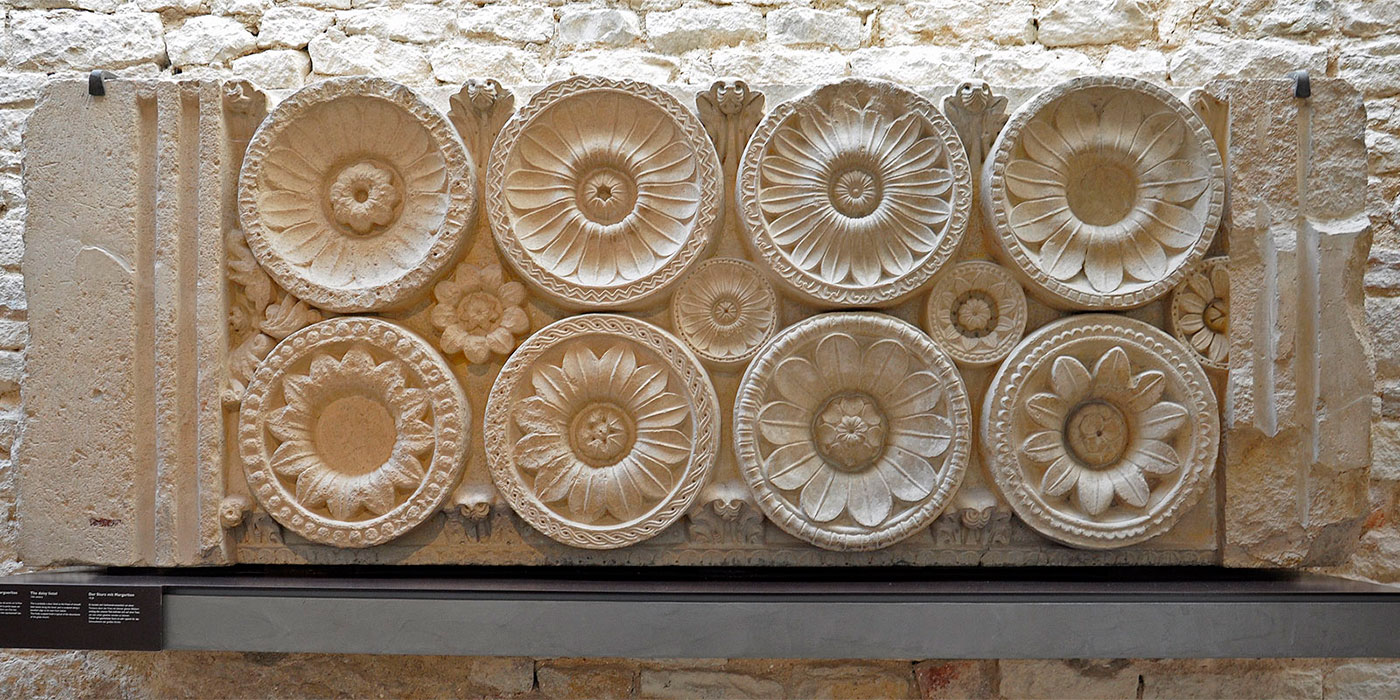
Lintel with flowers
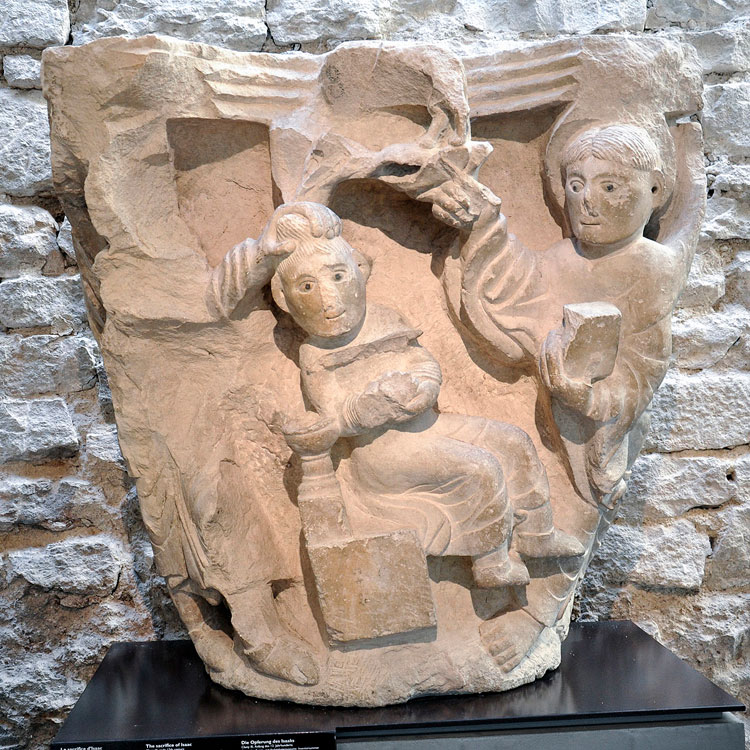
Sacrifice of Isaac. 12th century (Cluny III)
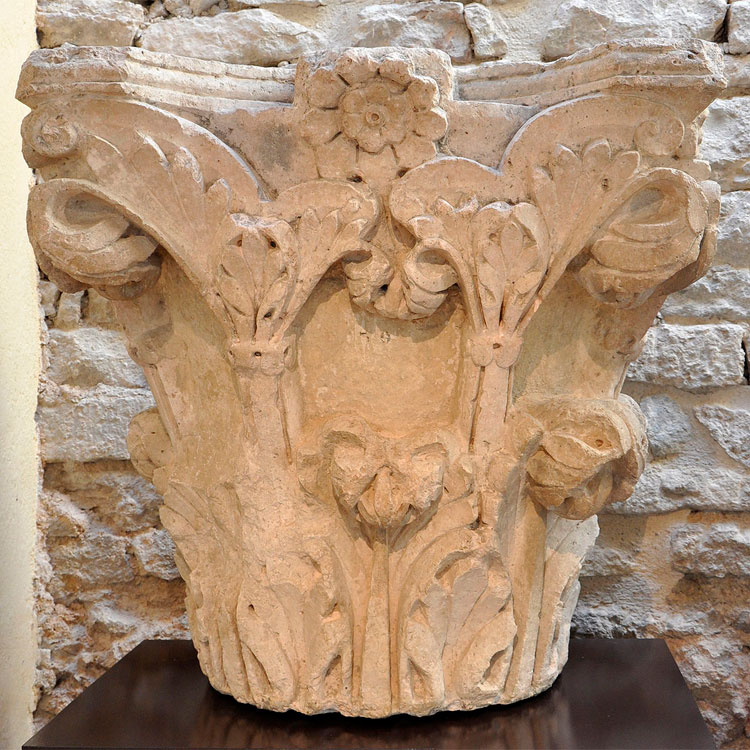
Vegetable capital. 12th century (Cluny III)

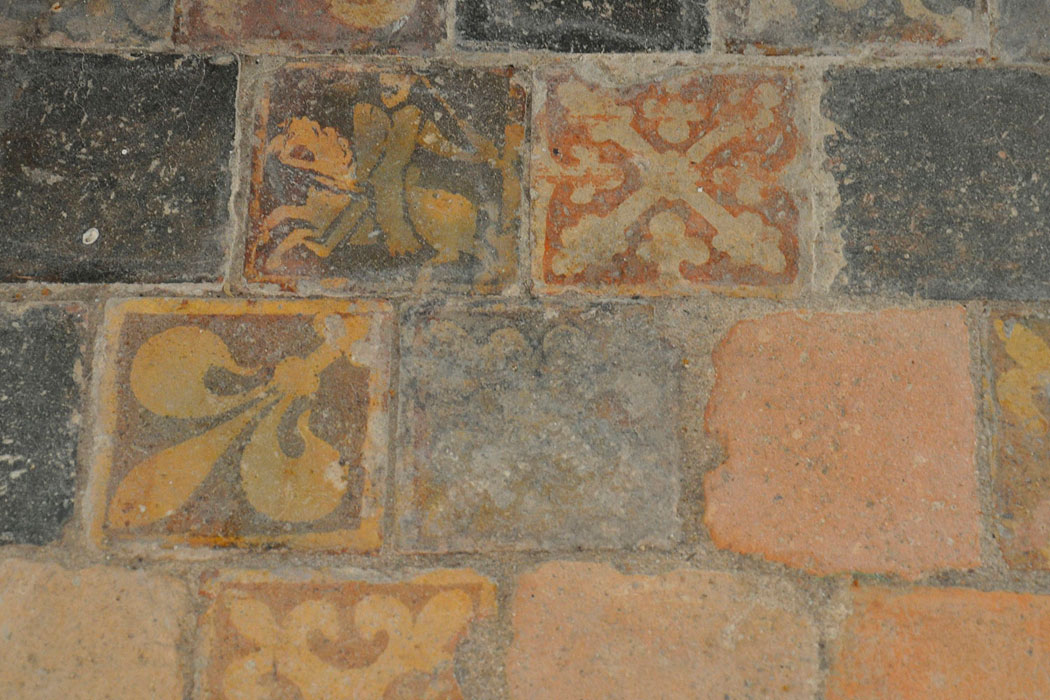
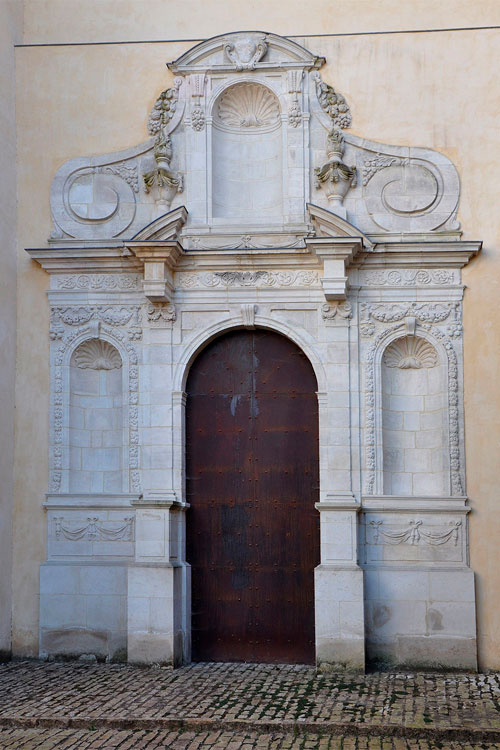
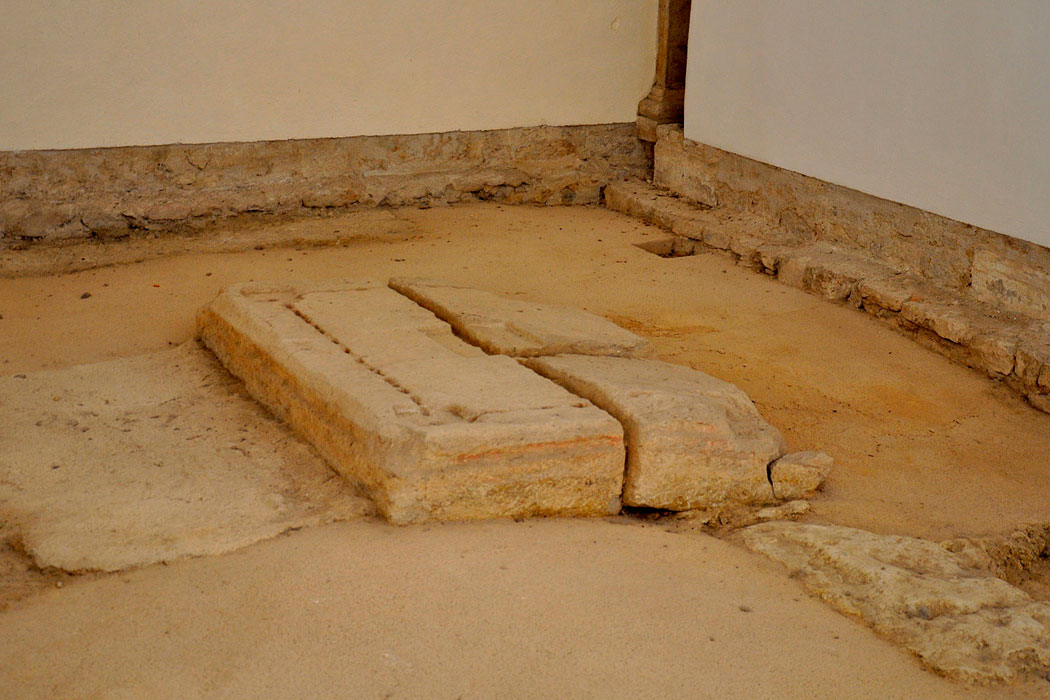
Base of the high altar of Cluny II (10th century)

Consecration of the church (Cluny III) by Pope Urban II
Illustration from Miscellanea secundum usum ordinis Cluniacensis (12th-13th centuries)
Bibliothèque nationale de France
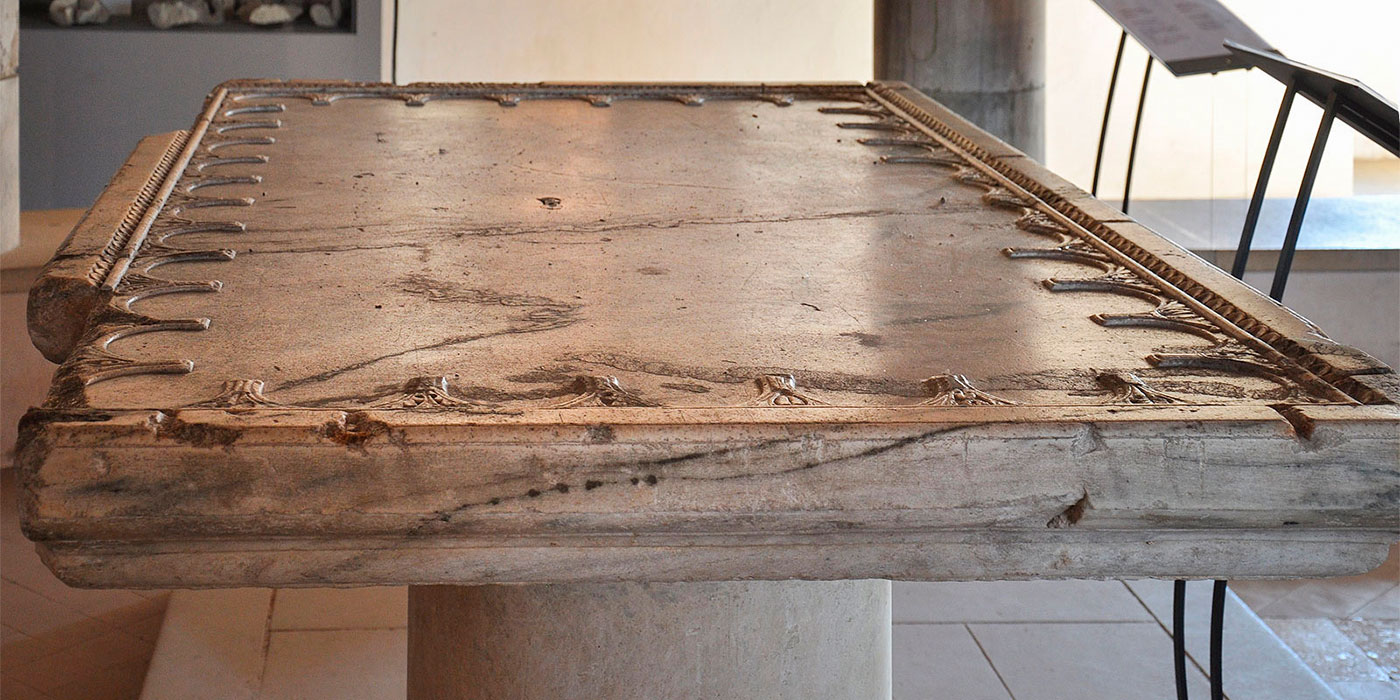
11th-century altar, perhaps used in the consecration of Pope Urban II
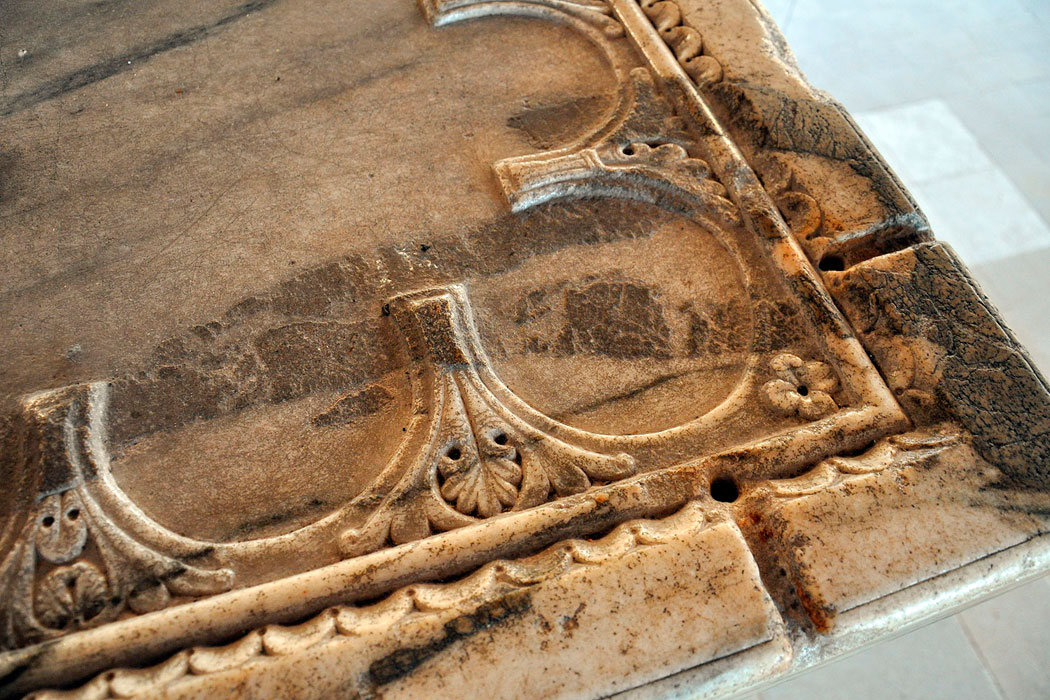
11th century altar, detail
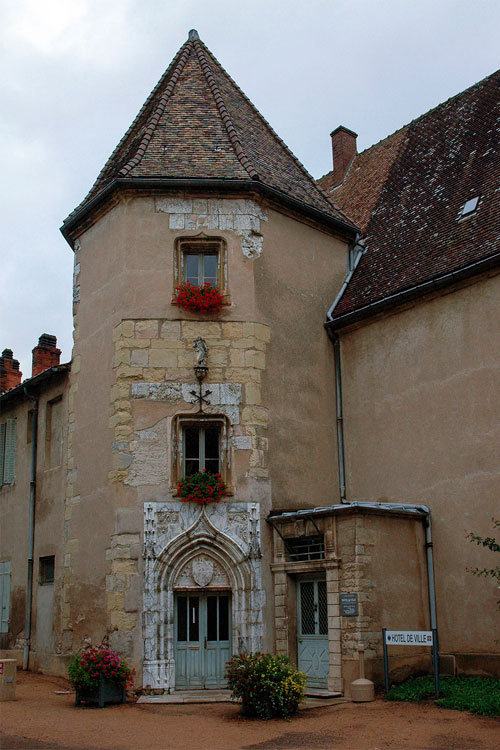
Abbey palace of Jacques d'Amboise (15th century)
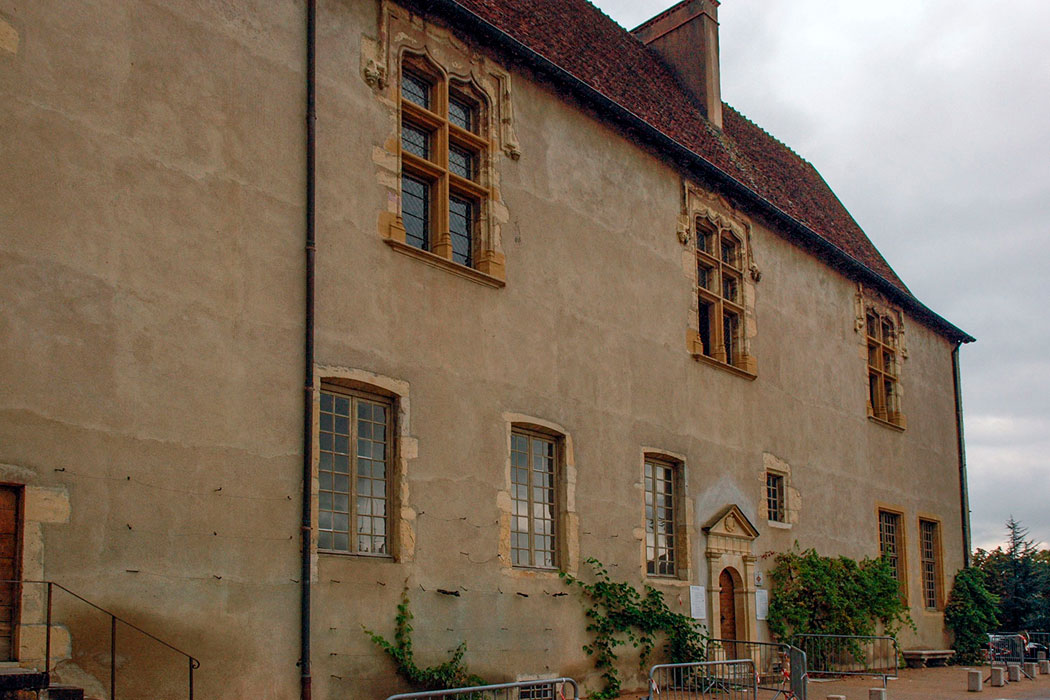
Palace of the Abbot Jean de Bourbon (c. 1485)
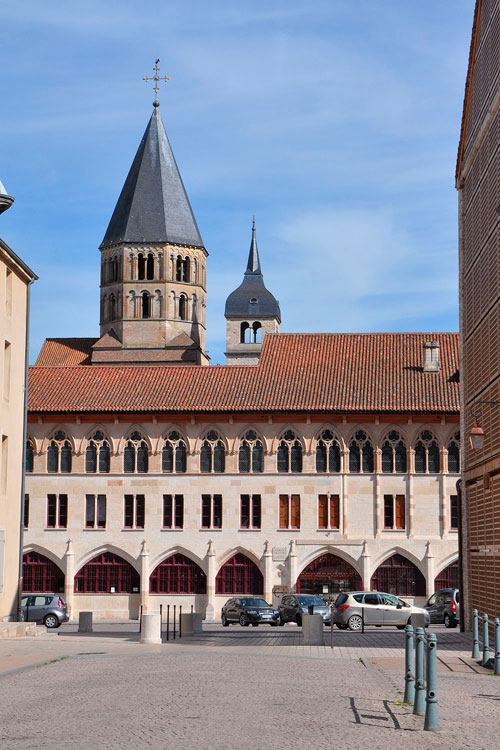
Palace of Gelasius (14th century)
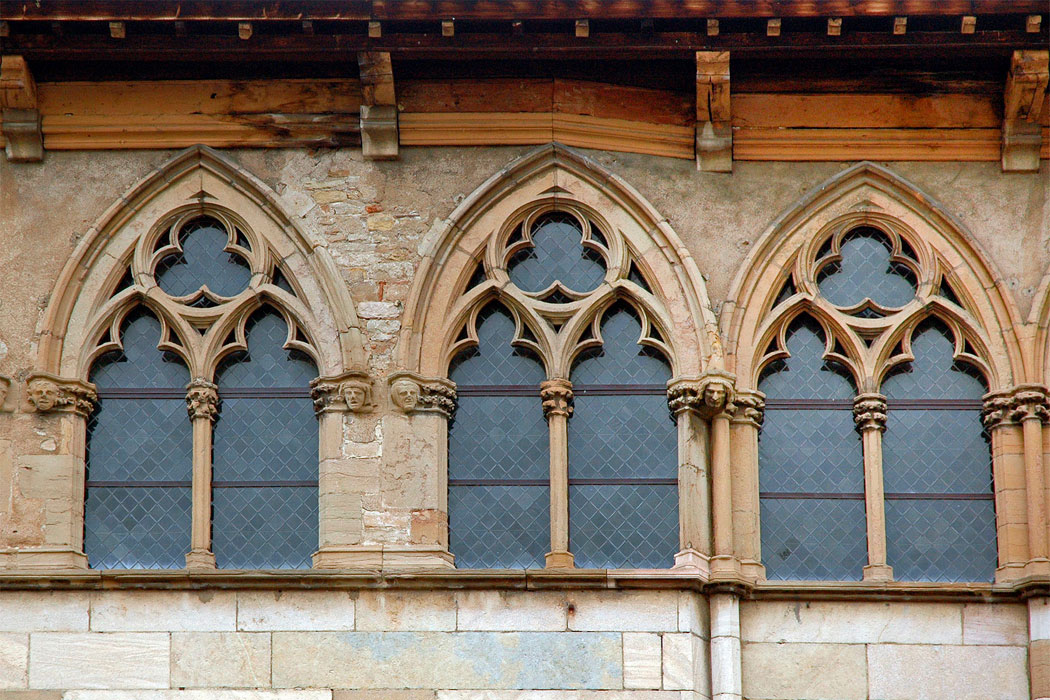
Palace of Gelasius
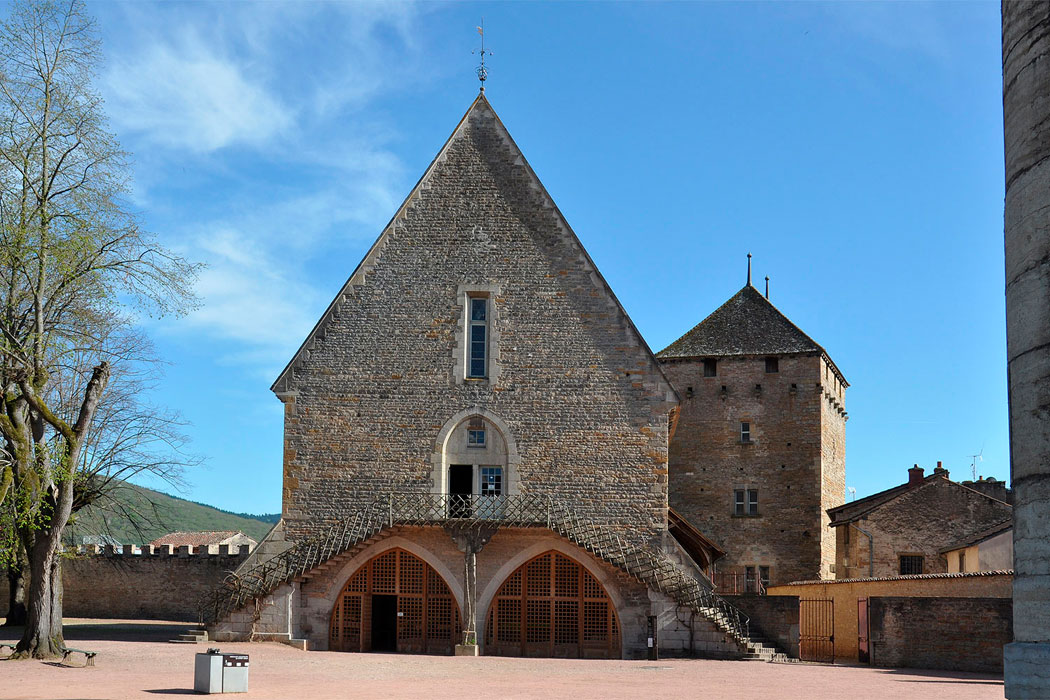
Cellar (Farinier, 13th century)
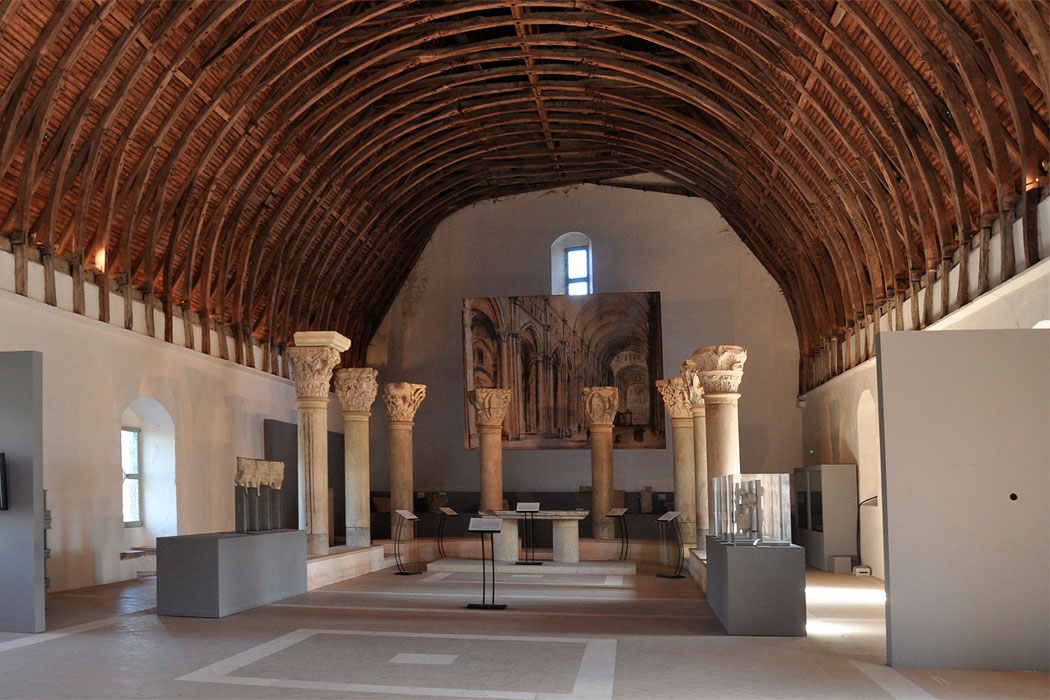
The cellar, upper floor with the capitals of Cluny III
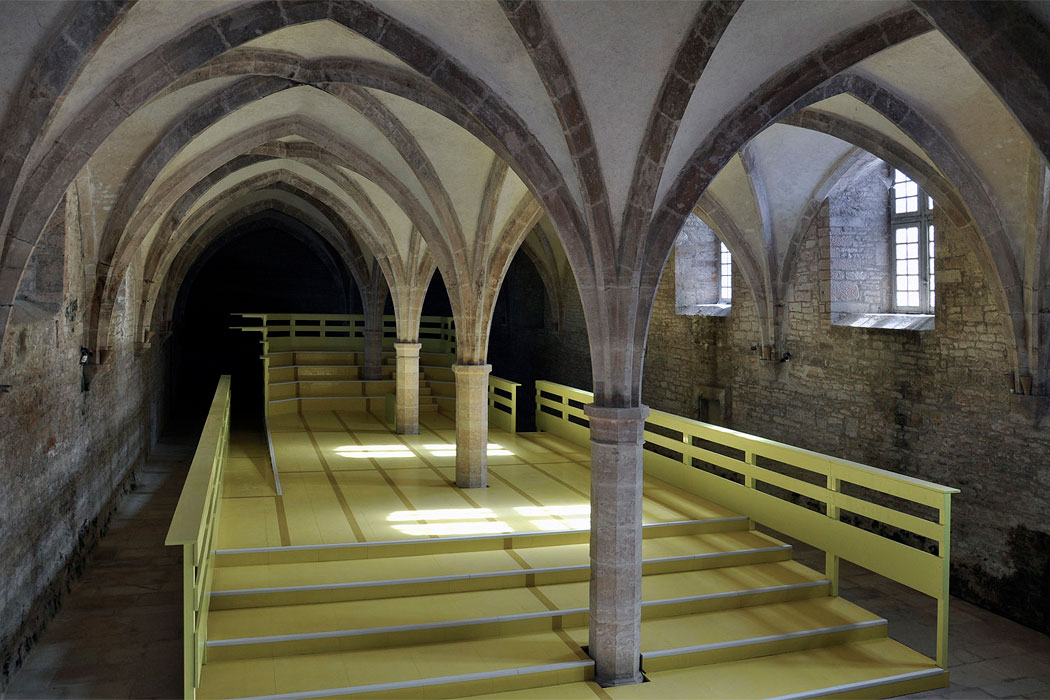
The cellar, lower floor
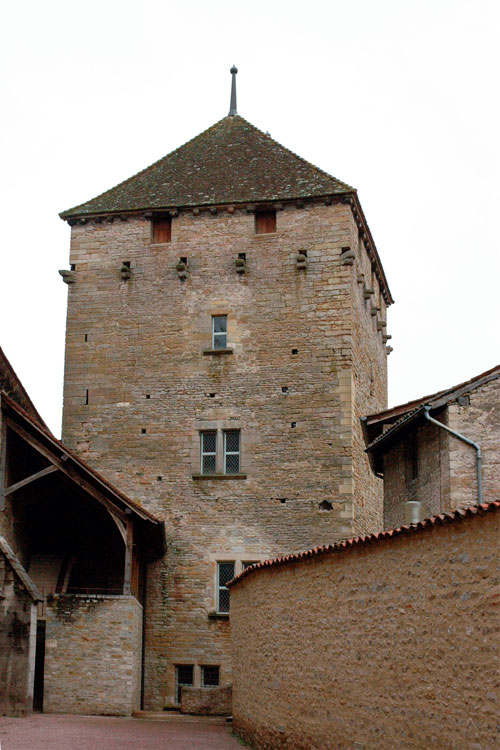
Moulin Tower
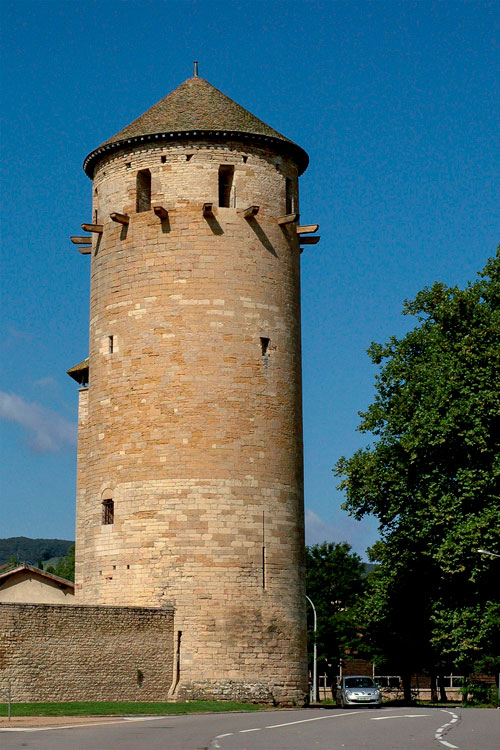
Tower of the wall
Bibliothèque nationale de France


Histoire des ordres monastiques religieux et militaires (1718)

Histoire des ordres monastiques religieux et militaires (1718)
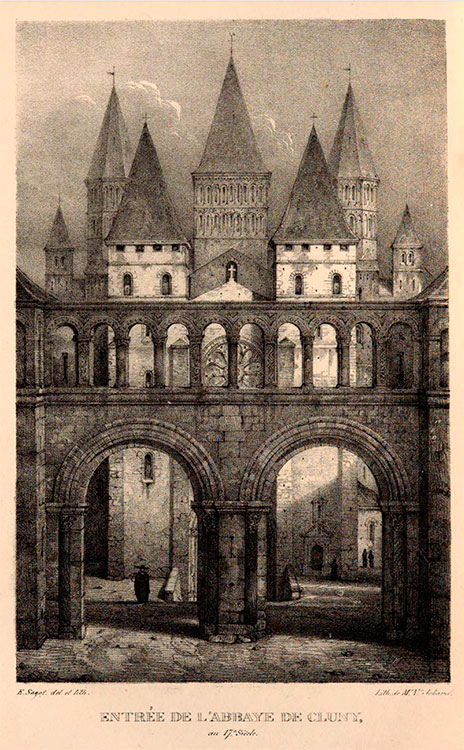
Entrée de l'abbaye de Cluny
Essai historique sur l'abbaye de Cluny
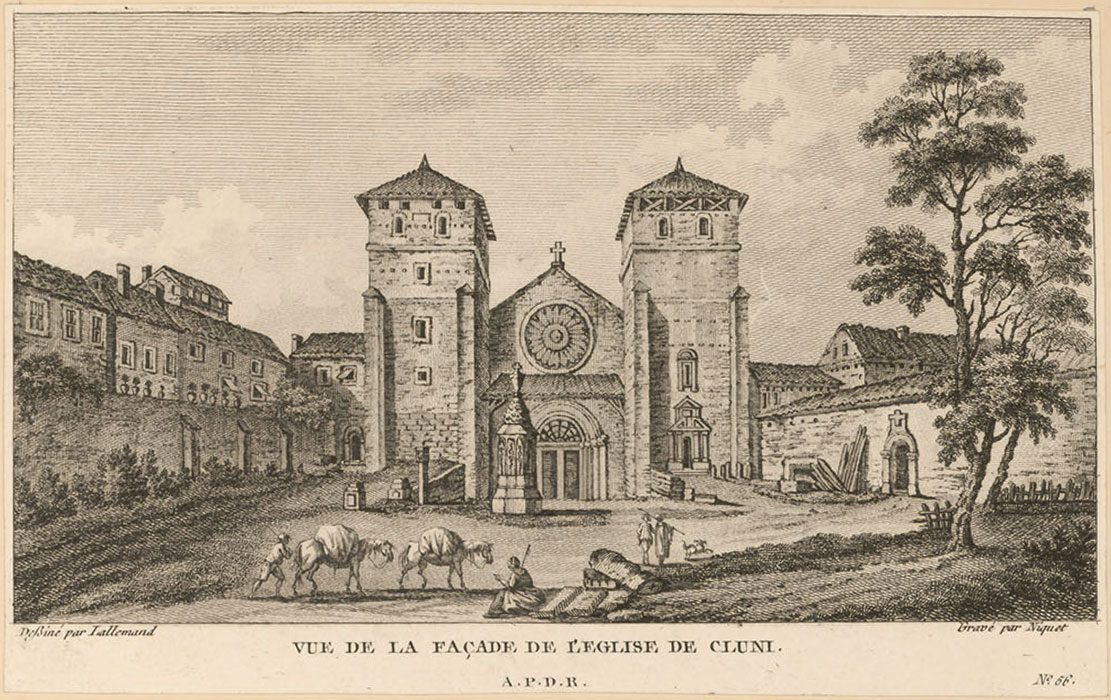
Vue de la façade de l'église de Cluni
The Albertina Museum, Austria
- BAUD, Anne; i altres (2010). L'archéologie à Cluny. Cluny et ses influences en Europe. Dossiers d’archéologie. H.S. 19. Dijon: Faton
- BAUDRILLART, Alfred (1956). Dictionnaire d'histoire et de géographie ecclésiastiques. Vol. 13. París: Letouzey et Ané
- BIAY, Sébastien (2011). Les chapiteaux de la troisième église abbatiale de Cluny (fin XIe-début XIIe siècle). Étude iconographique. Université de Poitiers
- BRUEL, Alexandre. (1876-1903). Recueil des chartes de l'abbaye de Cluny. Vols. 1/6. París: Imprimerie nationale
- CHAMPLY, Jules Henri (1930). Histoire de l'abbaye de Cluny. París: L. Centrale
- CUCHERAT, François; i altres (1851). Cluny au onzième siècle. Mâcon: Académie de Macon
- HÉLYOT, Pierre; BULLOT, Maximilien (1714-1719). Histoire des ordres monastiques religieux et militaires et des congrégations séculières de l'un et de l'autre sexe qui ont esté établies jusqu'à présent. Vol. 5. París: J.-B. Coignard
- LORAIN, Prosper (1839). Essai historique sur l'abbaye de Cluny. Dijon: Popelain
- OURSEL, Raymond (1974). Bourgogne romane. La nuit des temps, 1. Zodiaque
- PIGNOT, J.-Henri (1868). Histoire de l'ordre de Cluny, depuis la fondation de l'abbaye jusqu'à la mort de Pierre-le-Vénérable (909-1157), 3 vols. Autun: Dejussieu
- ROLLIER-HANSELMANN, Juliette; i altres (2011). L’abbaye de Cluny III. Étude de la façade gothique. Bulletin du centre d’études médiévales d’Auxerre. BUCEMA
- ROUX-PERINO, Julie (2008). Cluny. Vic-en-Bigorre: MSM
- SAINT-MAUR, Congregació de (1725). Gallia Christiana in provincias ecclesiasticas distributa. Vol. 4. París: Typographia Regia
- SARTIAUX, Frédéric (2010). L’abbaye de Cluny. París: Éditions du Patrimoine
- VINGTAIN, Dominique (2003). L’abbaye de Cluny. Centre de l’Occident médiéval. París: Éditions du Patrimoine

Cluny is situated northwest of Mâcon