Abbey of Saint-Antoine in Viennois
S Antonius Viennensis / S Antonio
(Saint-Antoine-l'Abbaye, Isère)
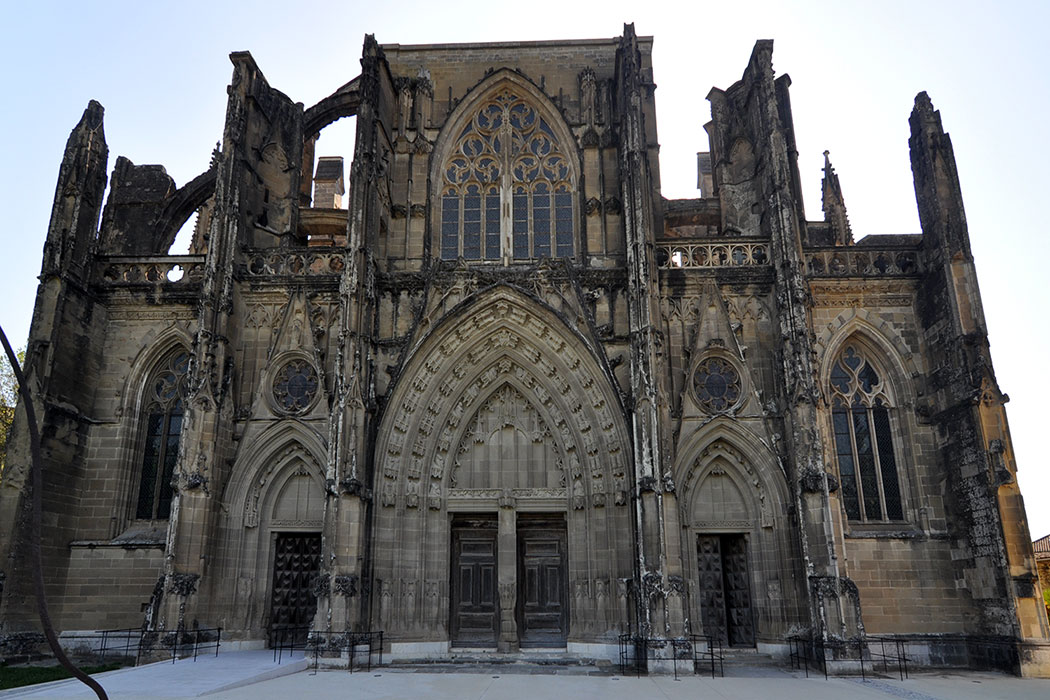
Facade of Saint-Antoine church


The complex of Saint-Antoine in Viennois developed following the arrival of the relics of Anthony the Great. The site was initially the seat of a Benedictine priory and also witnessed the birth and expansion of the Order of the Hospitaller Canons of Saint Anthony, which spread widely from this centre. The result was a large abbey, relatively well preserved despite the passage of time.
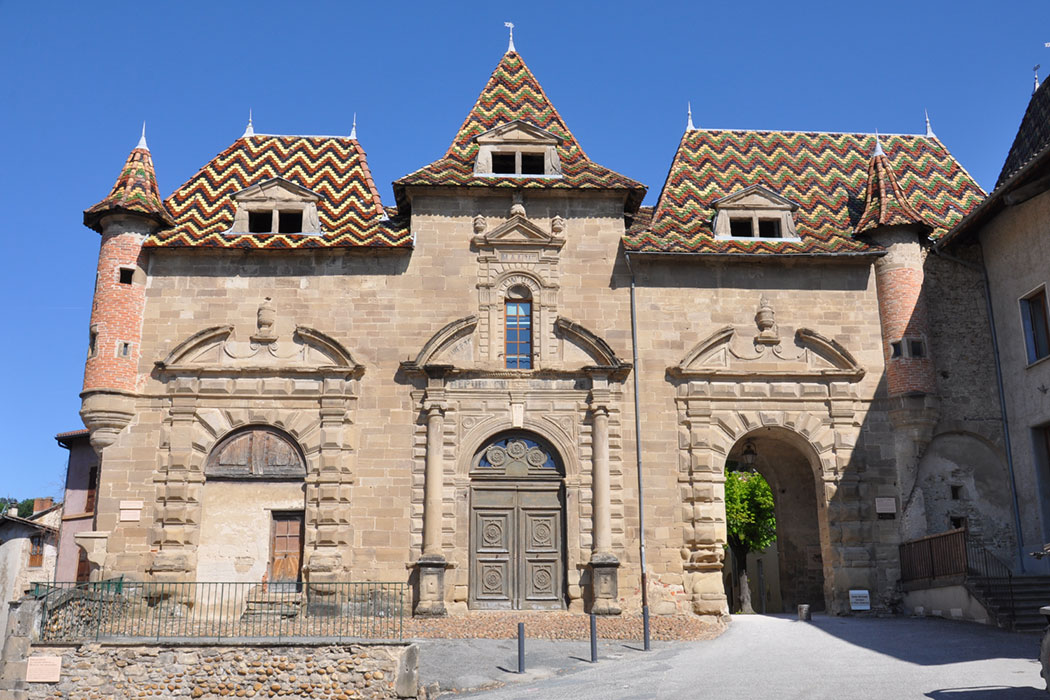
Porter’s lodge of the monastic compound
According to tradition, the relics of Anthony the Great reached La Motte-Saint-Didier in the 1070s. They were brought from Constantinople by Jocelin de Châteauneuf after a pilgrimage to the East. He promoted the construction of a church beside the feudal castle, worthy of housing the relics. To support this initiative, in 1088 the monks of the Abbey of Montmajour (Arles, Bouches-du-Rhône) were asked to establish a priory there and to provide religious services. The Benedictines were already firmly established at La Motte before the end of the 11th century.
The site quickly gained renown with the arrival of pilgrims who invoked the saint for the cure of the disease known as Saint Anthony’s fire (ergotism), widespread at the time. One of those cured was Guérin de la Valloire, who, in fulfilment of a vow, devoted his life to caring for the sick together with his father, Gaston. A small community soon gathered around this activity and by 1095 a small hospital was already in operation. They also obtained the approval of Pope Urban II. The first head (master) of the organisation was Gaston de la Valloire himself.
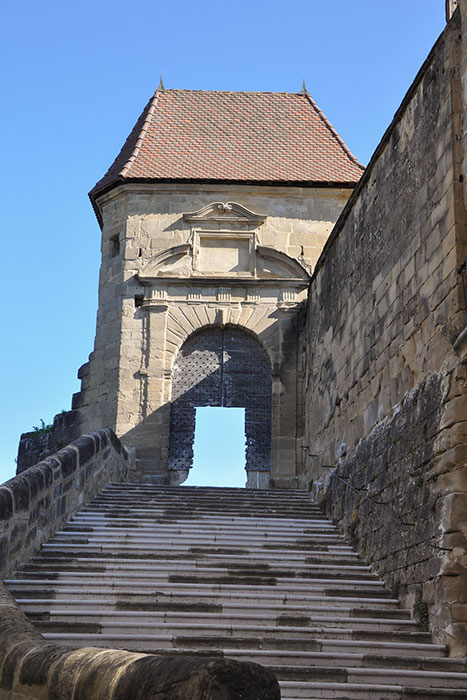
Access portal to the church square
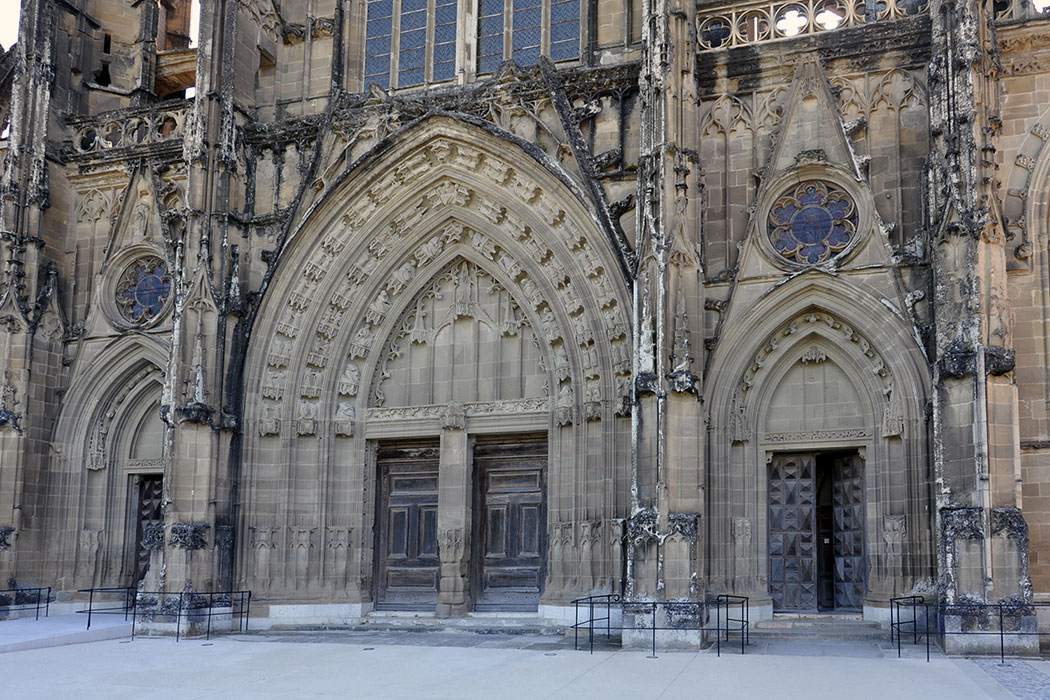
Church portals
In 1119, Pope Callixtus II consecrated the new church, although it was still under construction. The Benedictine priory and the hospital coexisted for a time at La Motte, but the growing activity of the Hospitallers came into conflict with the interests of the Priory of Montmajour, particularly over control of the site, the relics and the pilgrimage. The rapid development of the Hospitaller community allowed its influence to extend far beyond the region, with the foundation of hospital establishments in many cities, some of which even practised surgery. In 1209, the bishop authorised the Antonines to build their own oratory, the church of Notre-Dame, independent of the Benedictine church of Saint-Antoine.
By this period, the Hospitallers already had their own clergy within the community. During the first half of the 13th century they gradually obtained privileges at the expense of the Benedictines. In 1247, Pope Innocent IV placed the Hospitaller community under the Rule of Saint Augustine, transforming it into a fully fledged religious order of canonical character. Towards the end of the century, conflicts arose between the two institutions, sometimes violent. Finally, in 1297, Pope Boniface VIII suppressed the priory of Montmajour, leaving the site of Saint-Antoine entirely in the hands of the Antonines, with the status of an abbey.
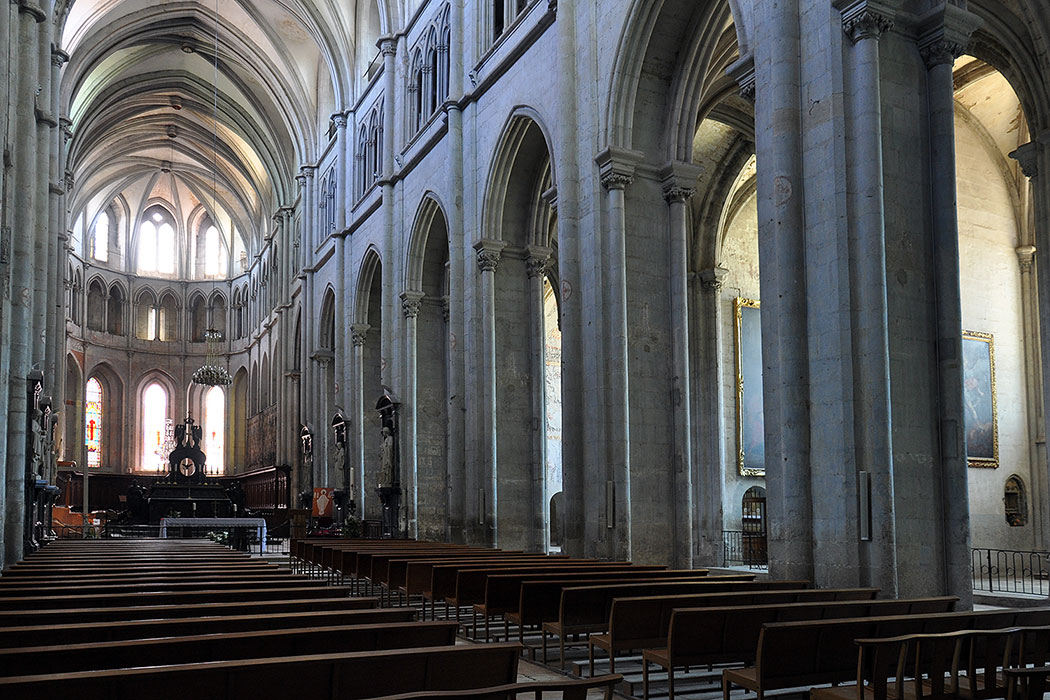
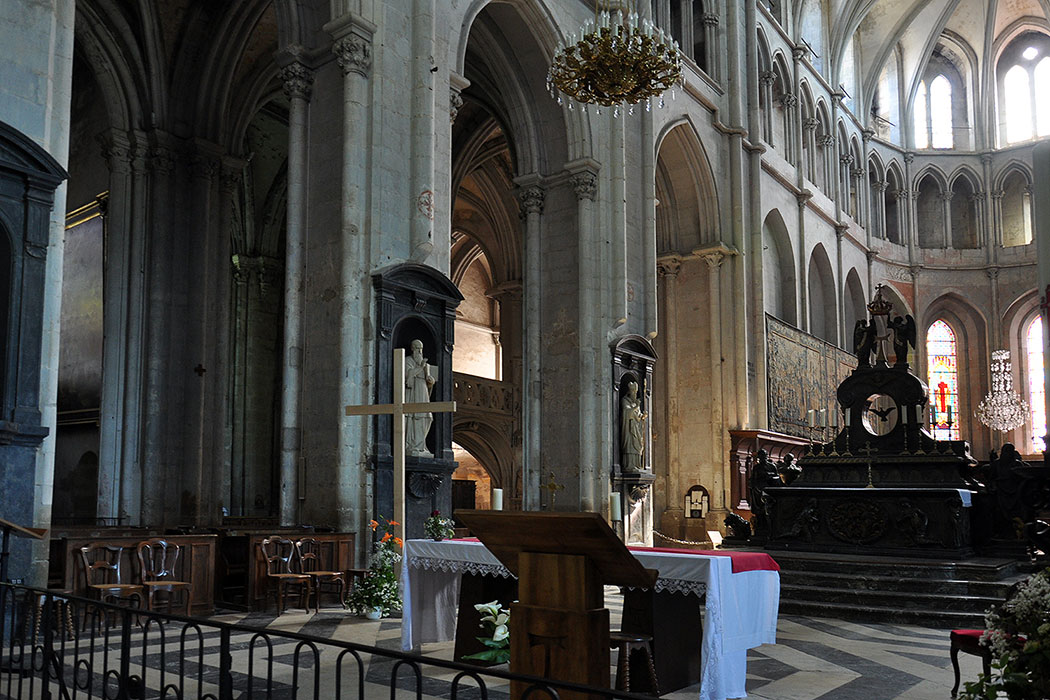
This house became the centre of the new order, where the grand master resided, and it also maintained an important hospital. The construction of the church of Saint-Antoine extended over a long period. When it was consecrated, work had probably only just begun. During the conflicts with the Benedictines, construction was likely interrupted, and most of the building was probably erected during the 14th and 15th centuries. In 1314, the church of Notre-Dame became the parish church; it later suffered from the Wars of Religion and, despite some reconstruction work, was abandoned in the 17th century.
The period of prosperity of the Abbey of Saint-Antoine lasted until the 16th century. Pilgrims of every social condition came to the site, from the needy to monarchs. The Wars of Religion also had a severe impact: during the second half of the 16th century the abbey suffered several attacks, with looting, destruction of buildings, serious damage to the sculptural decoration of the church, fires and the loss of the archives. During the 17th century, efforts were made to repair the buildings and furnishings. Nevertheless, economic difficulties, an internal crisis and external pressures led to the suppression of the Order of the Antonines in 1776. The site was briefly occupied by canonesses of the Order of the Hospital until the Revolution. By the end of the 18th century, community life had definitively ceased, resulting in the abandonment of the complex and further material losses.
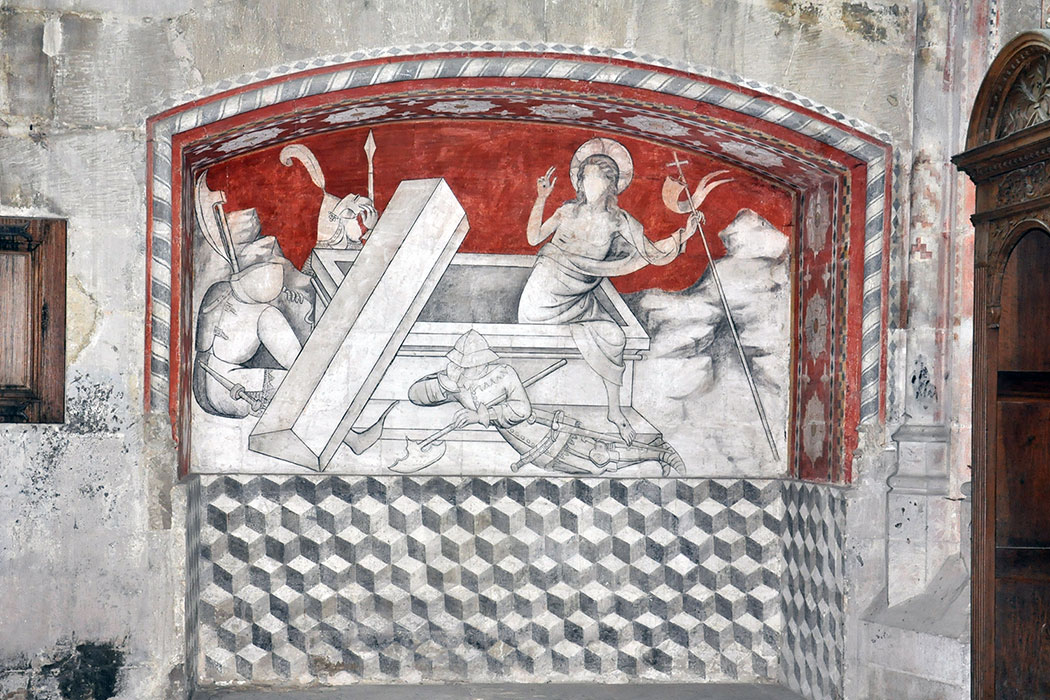
Rising of Christ (15th century)
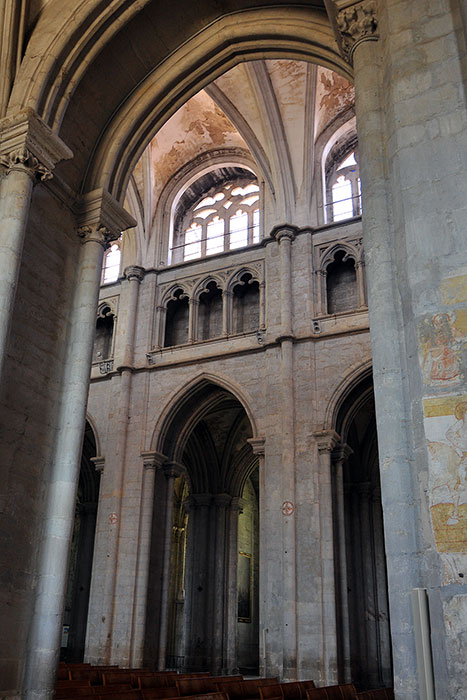
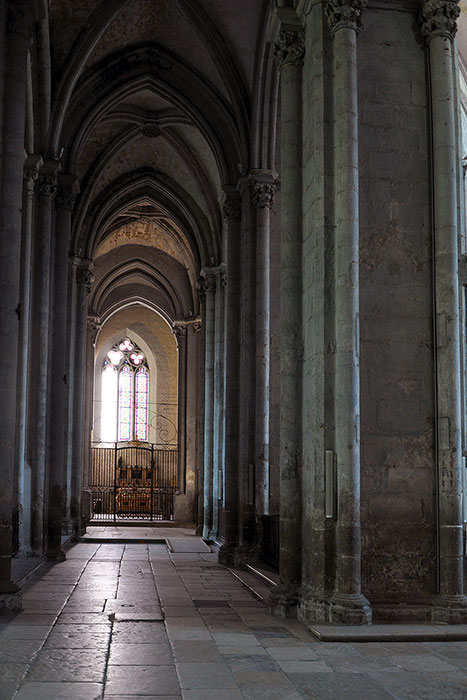
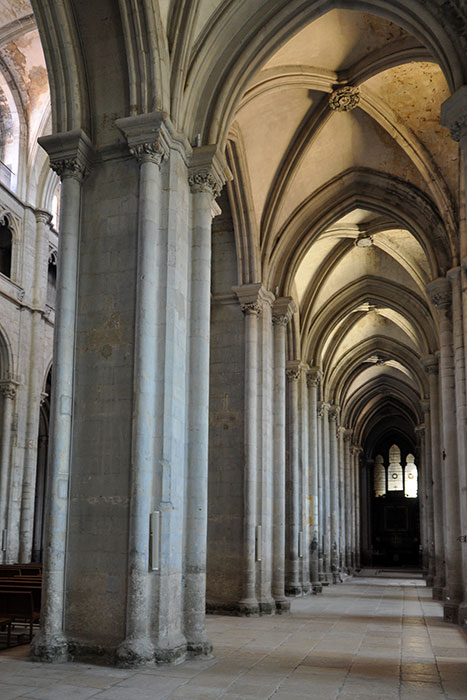
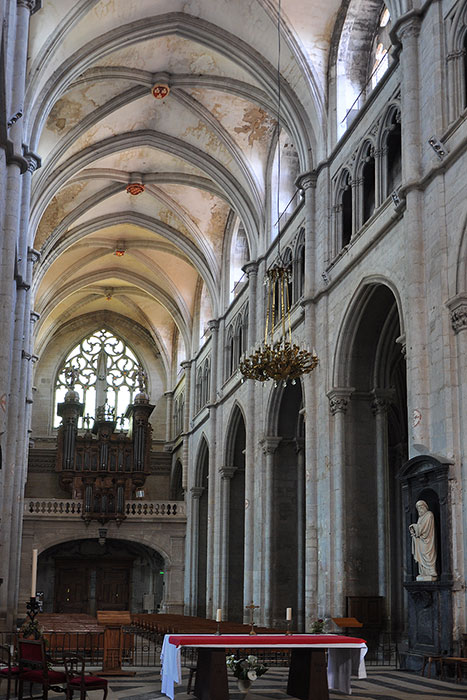
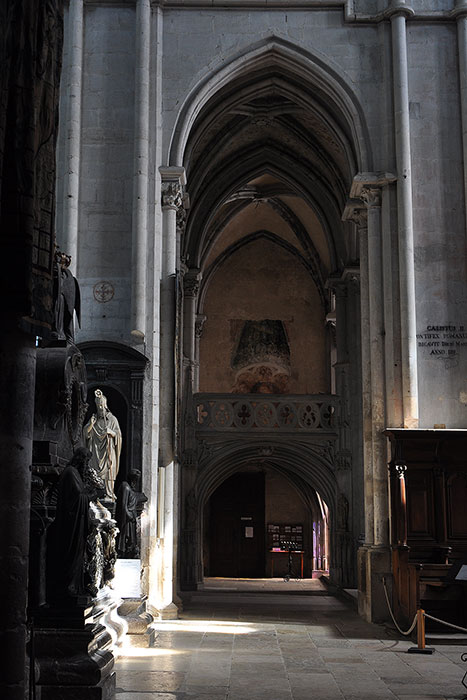
At Saint-Antoine in Viennois a large complex of buildings survives, altered over time. The most prominent structure is the Gothic church of Saint-Antoine. It was built from the 13th century onwards over the earlier church, to which successive constructions were added until its disappearance. It is a large building with five naves and a spacious chancel dating from 1630. It contains the tomb of Anthony the Great. The sculptural decoration of the façade was severely damaged during the Wars of Religion. In a more isolated location, remains of the church of Notre-Dame can still be seen.
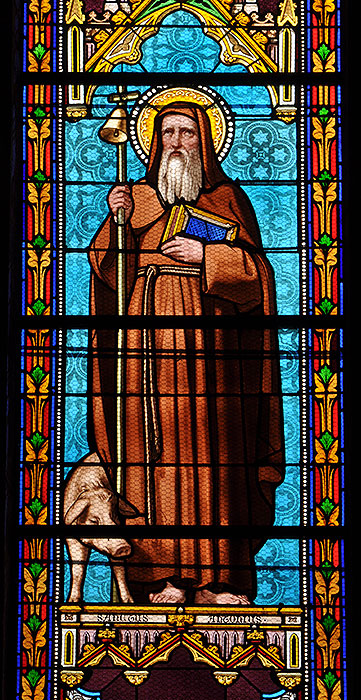
Modern stained glass window with Saint Anthony the Great
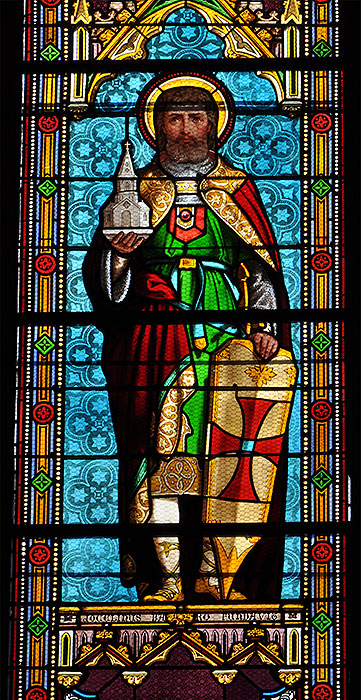
Modern stained glass with Jocelin de Châteauneuf, founder
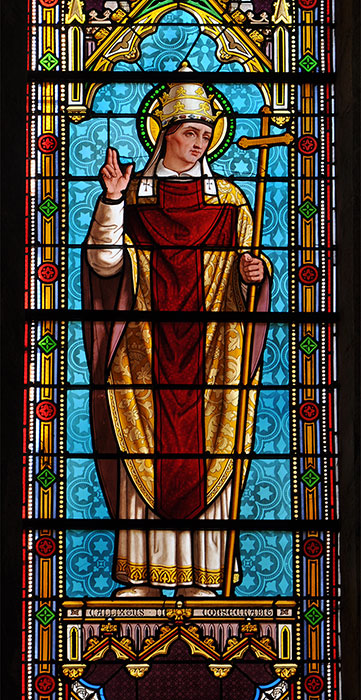
Modern stained glass window with Pope Callixtus II
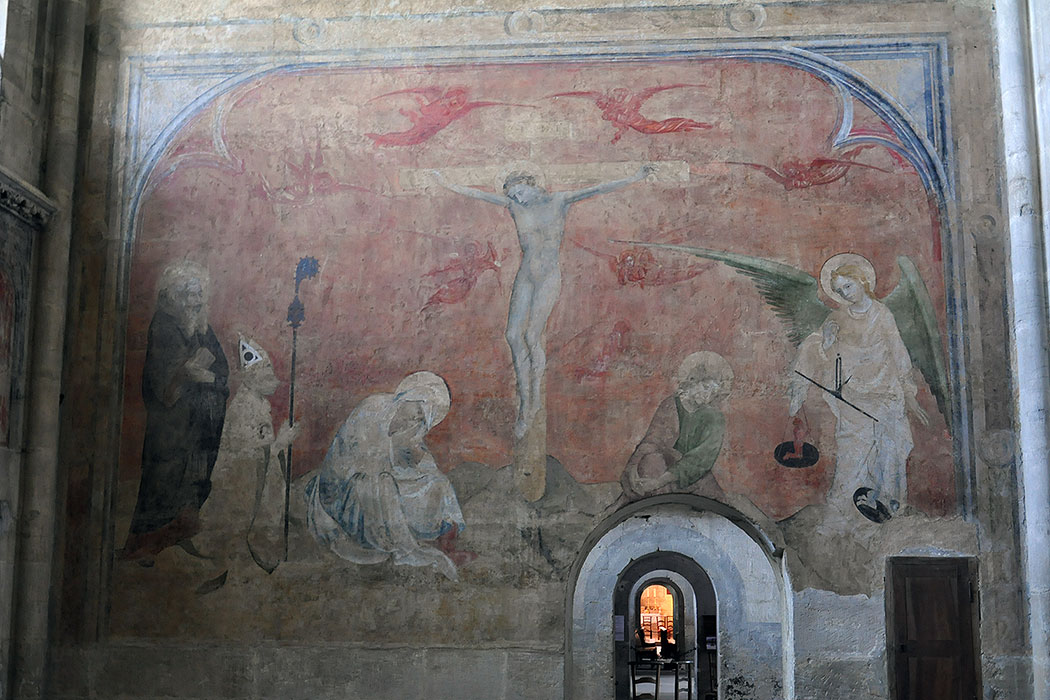
Crucifixion with saints and donor (15th century)
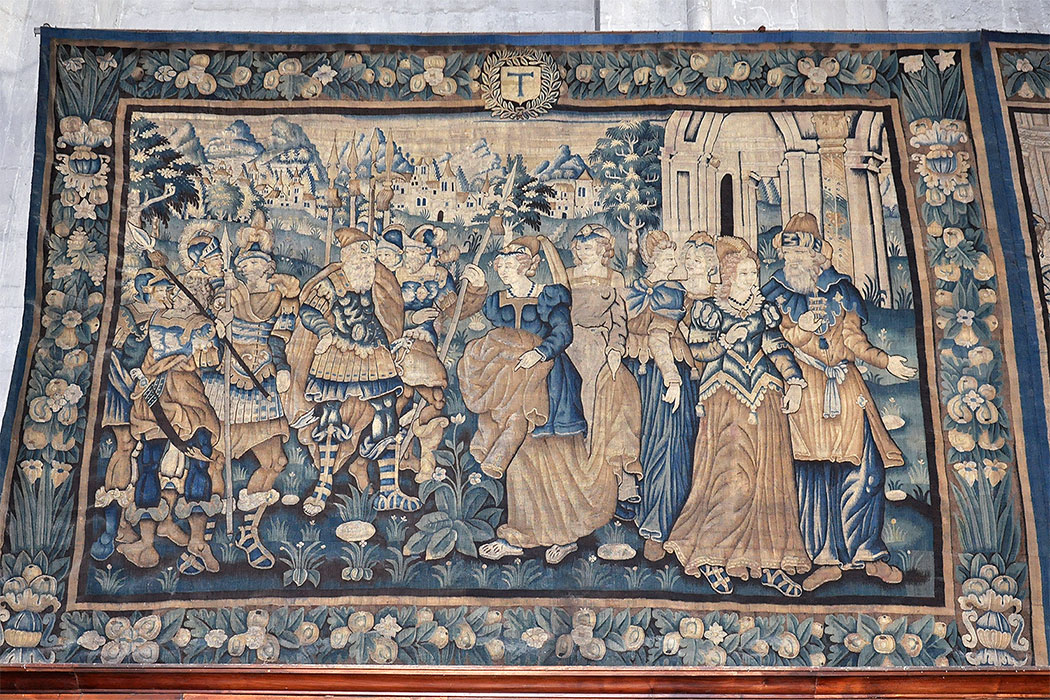
Aubusson Tapestry (1623)
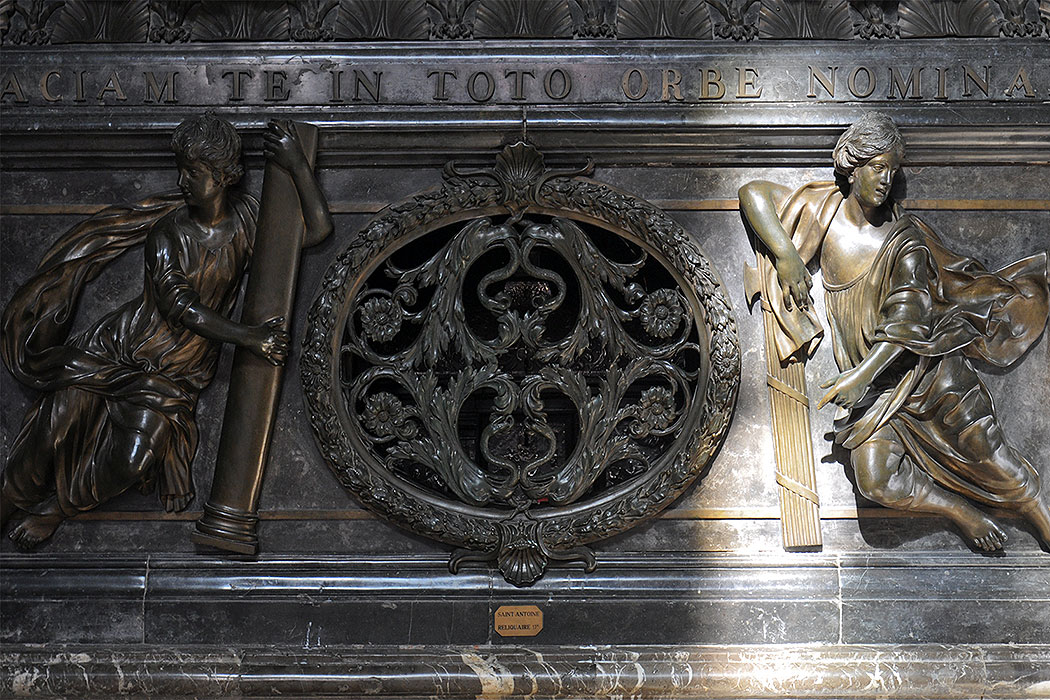
Reliquary tomb of Saint Anthony (1667)
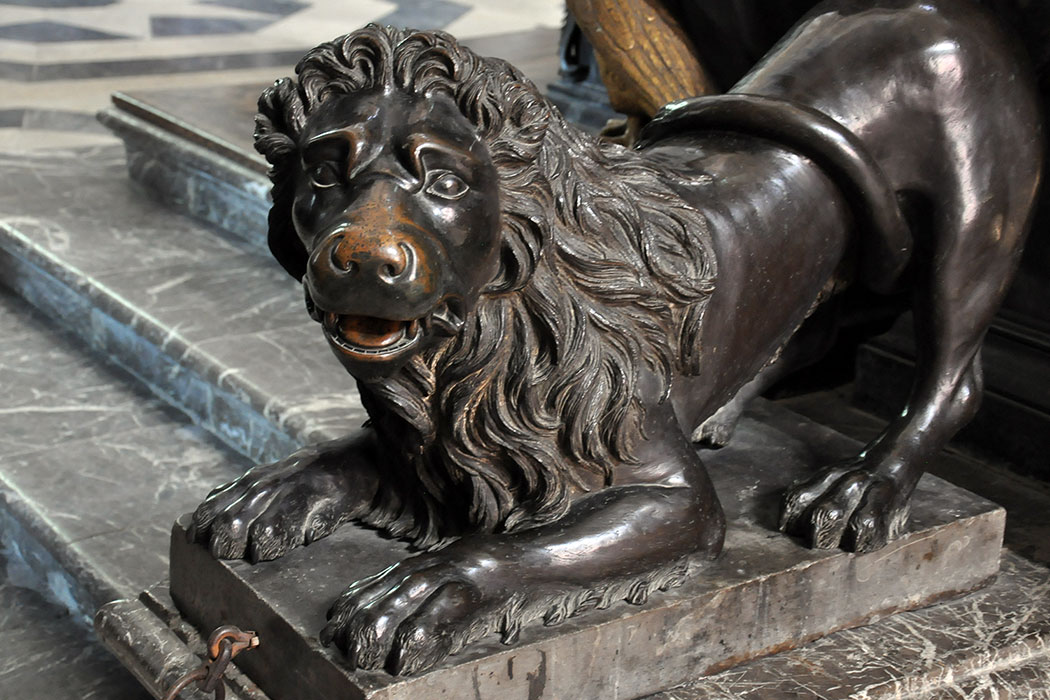
Reliquary tomb of Saint Anthony (1667)
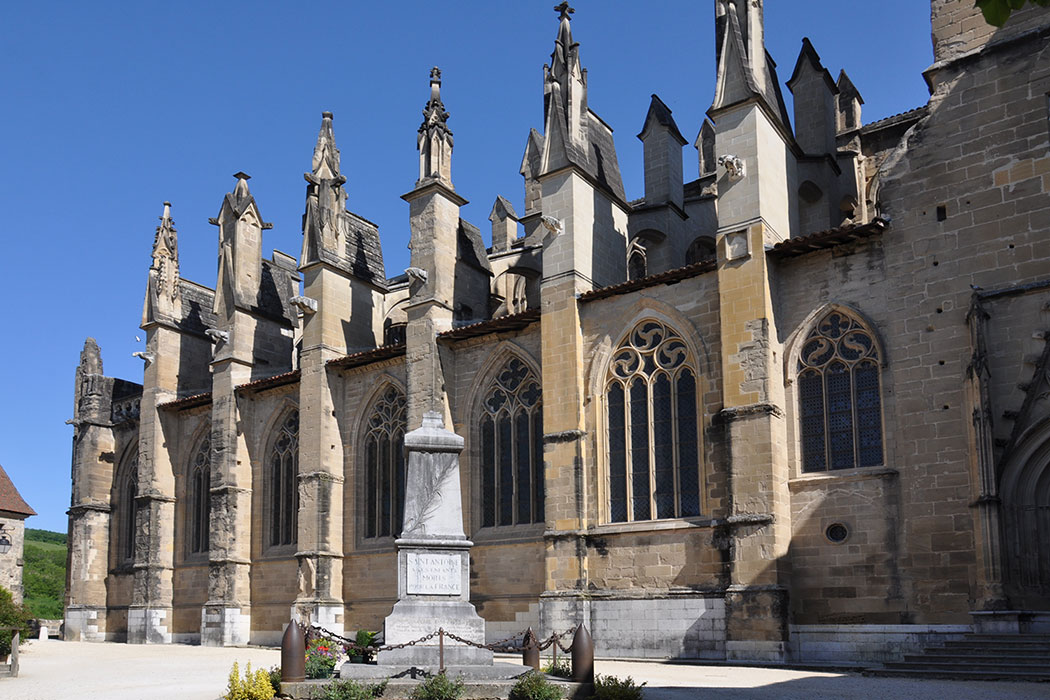
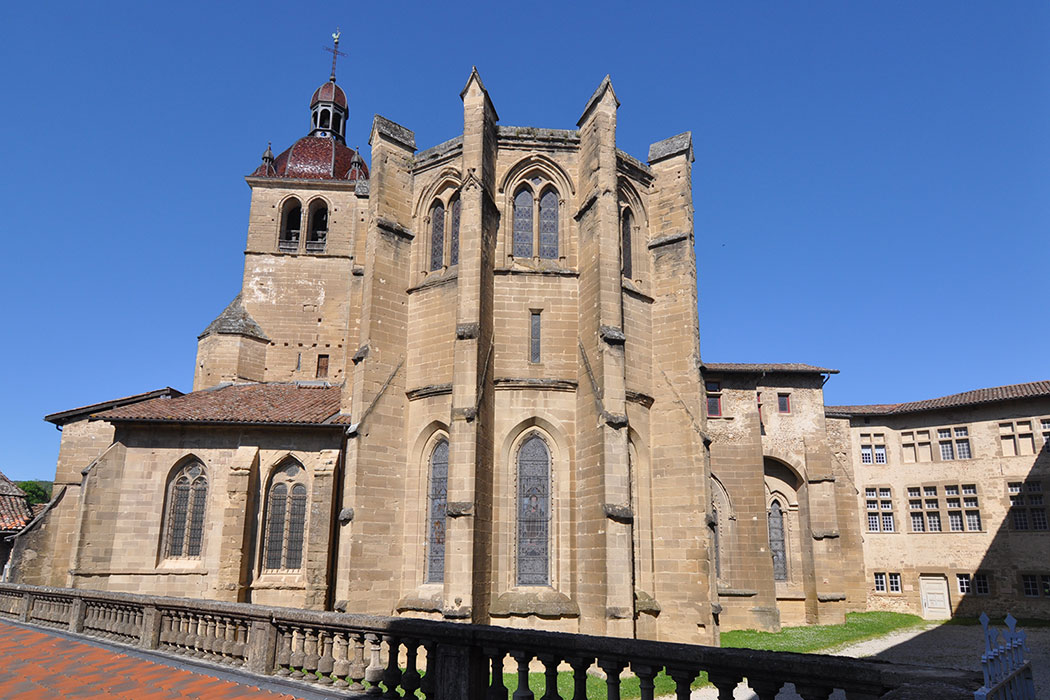
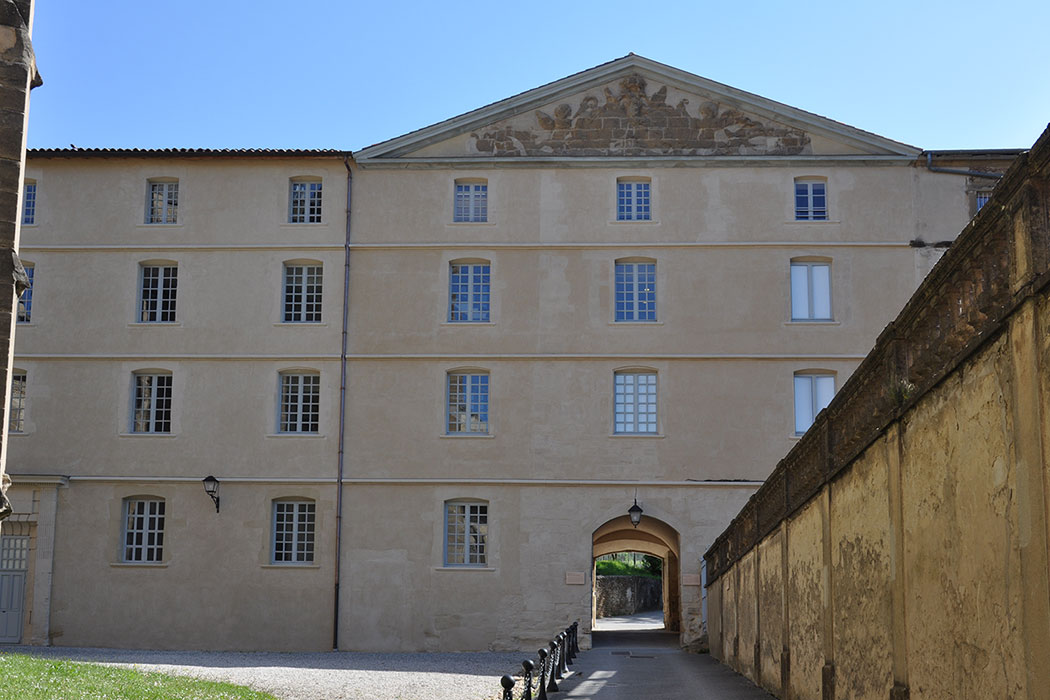
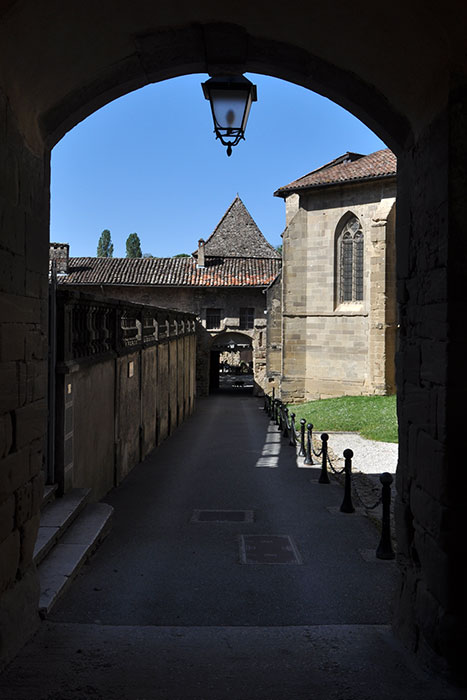
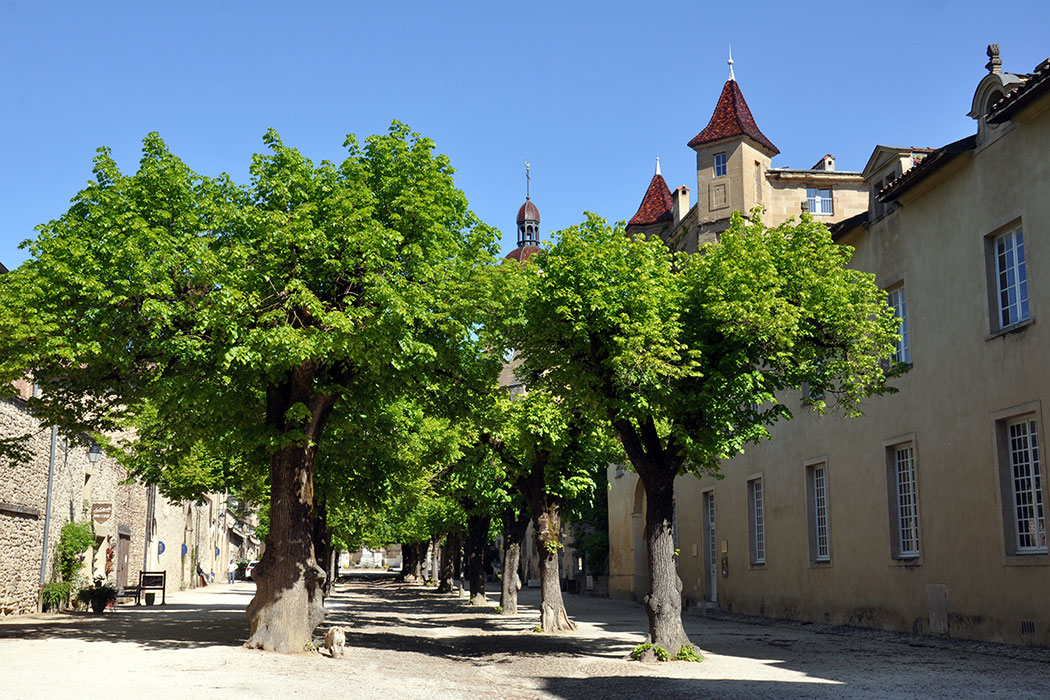
Abbaye square, inside the grounds
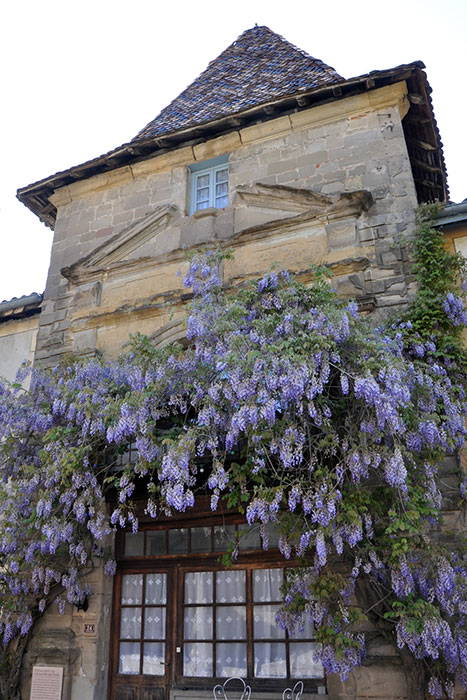
Remains of the Notre-Dame church
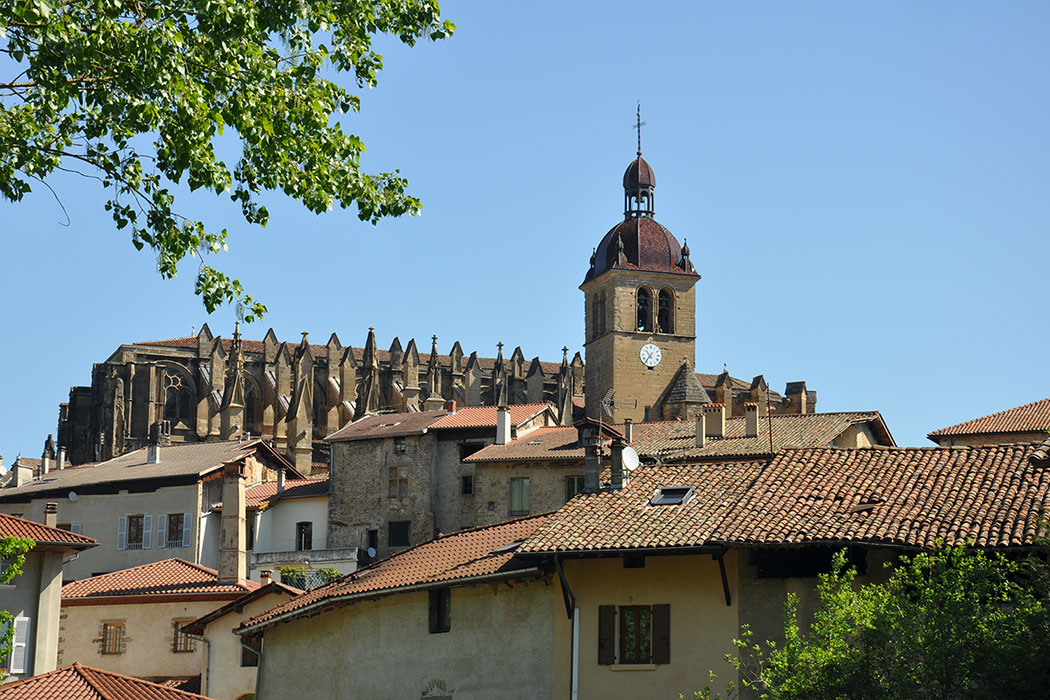
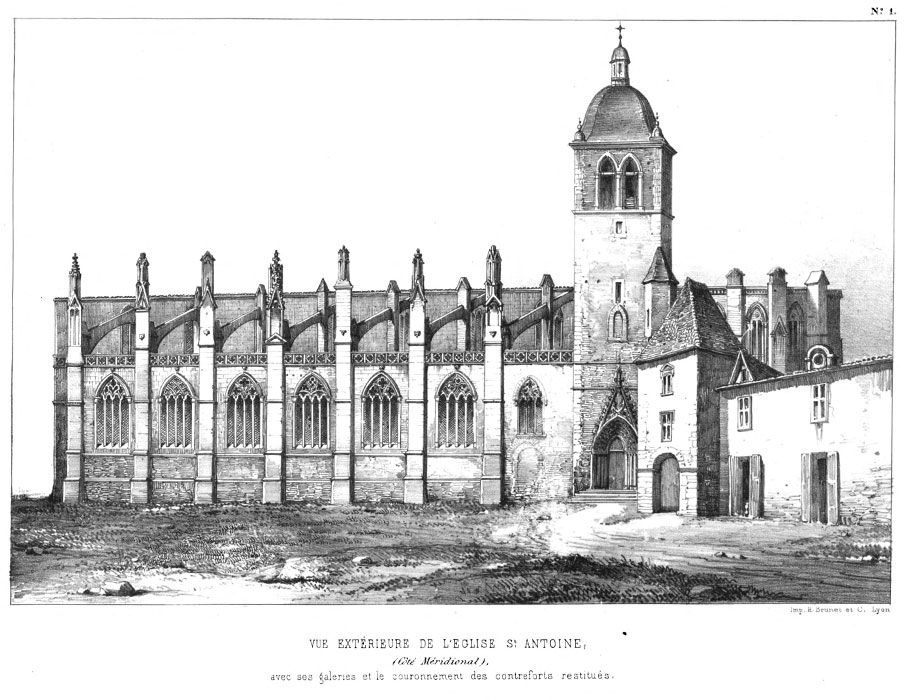
Illustration from L'Abbaye de Saint-Antoine en Dauphiné, essai historique... (1844)
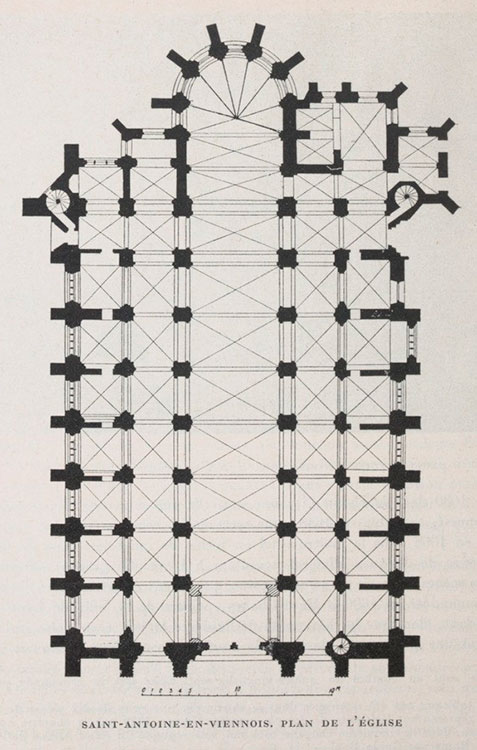
Church floor plan
Congrès archéologique de France, 130 sess. (1972)

Armorial général de France (18th century)
Bibliothèque nationale de France
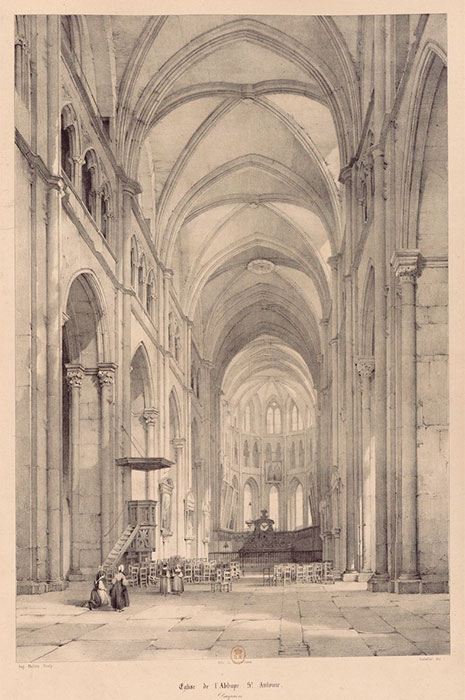
Illustration from Voyages pittoresques et romantiques dans l'ancienne France
Justin Taylor, 1854
Bibliothèque nationale de France
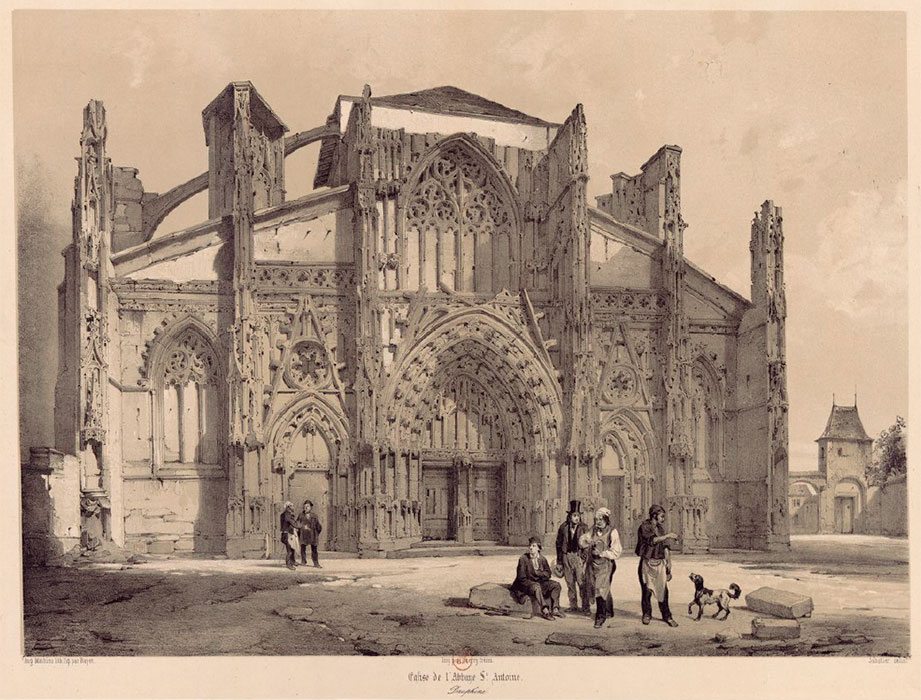
Illustration from Voyages pittoresques et romantiques dans l'ancienne France
Justin Taylor, 1854
Bibliothèque nationale de France
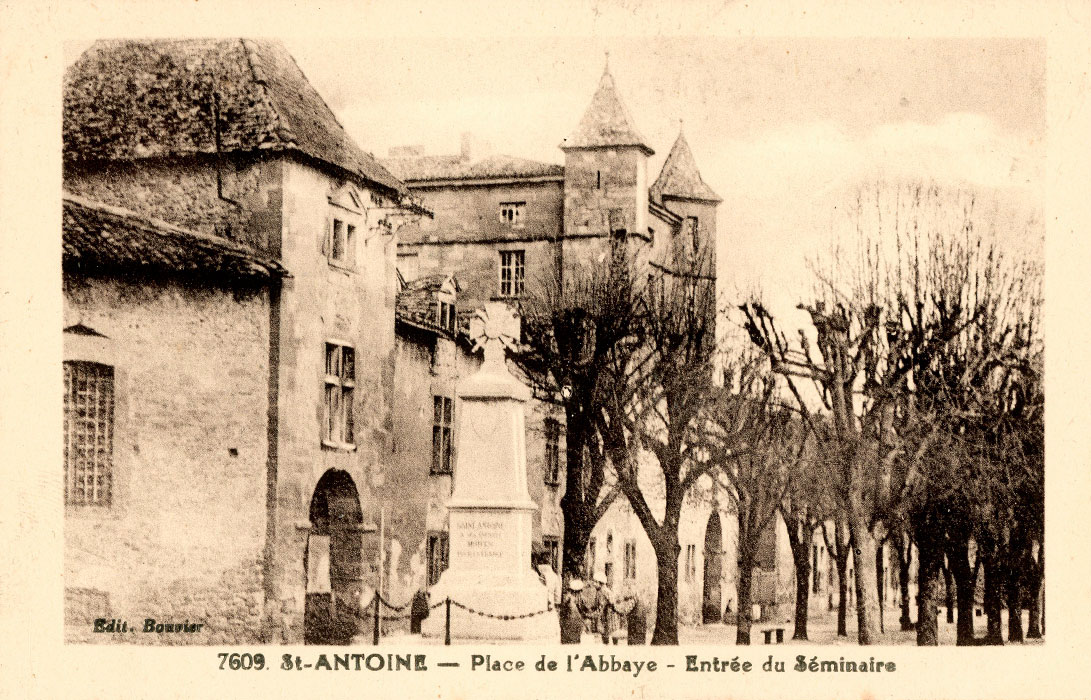
Old postcard, private collection
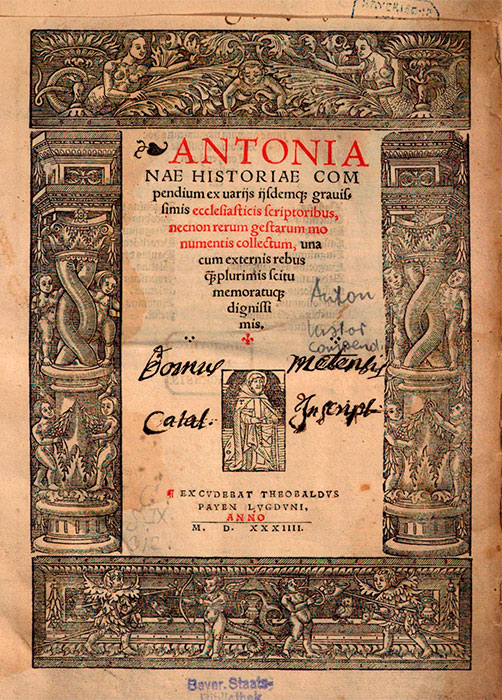
Bayerische Staatsbibliothek
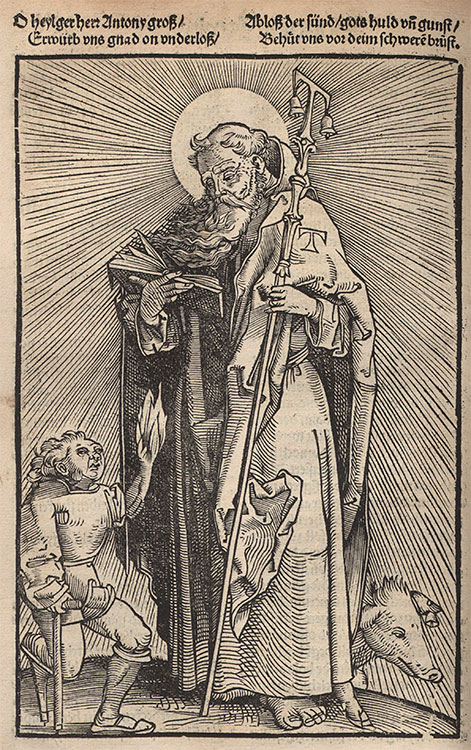
Illustration from Feldtbuch der wundtartzney
Strasbourg, 1517
München, Bayerische Staatsbibliothek
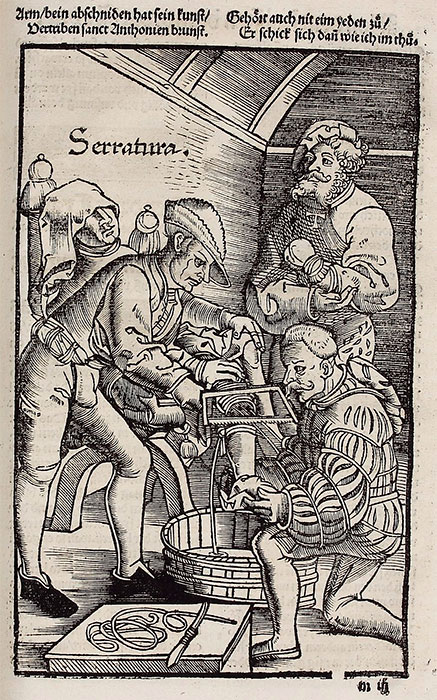
Illustration from Feldtbuch der wundtartzney
Strasbourg, 1517
München, Bayerische Staatsbibliothek
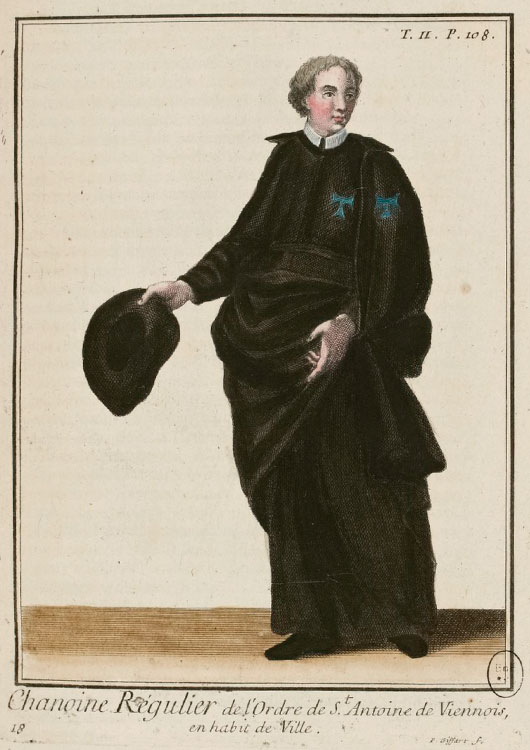
Histoire des ordres monastiques (Hélyot, 1714)
- ADVIELLE, Victor (1883). Histoire de l'ordre hospitalier de Saint-Antoine de Viennois et de ses commanderies et prieurés. Aix-en-Provence: Guitton
- AILLAU, Robert; i altres (2019). Saint-Antoine l'Abbaye. Grenoble: Glénat
- BESSE, J.-M.; i altres (1939). Abbayes et prieurés de l'ancienne France. Vol. 9: Province ecclésiastique de Vienne. Abbaye de Ligugé
- COTTINEAU, Laurent-Henri (1939). Répertoire topo-bibliographique des abbayes et prieurés. Vol. 2. Mâcon: Protat
- DASSY, Louis-Toussaint (1844). L'Abbaye de Saint-Antoine en Dauphiné, essai historique et descriptif. Grenoble: Baratier
- DIJON, Hippolyte (1900). Le bourg et l'abbaye de Saint-Antoine pendant les guerres de religion et de la Ligue. Grenoble: Falque
- DIJON, Hippolyte (1902). L'église abbatiale de Saint-Antoine en Dauphiné. Histoire et archéologie. Grenoble: Falque
- FALCOZ, Aymar (1534). Antonianae historiae compendium. Lió: Payen
- FONT-REAUX, M. de (1925). Saint-Antoine en Viennois. Congrès archéologique de France. París: Picard
- HÉLYOT, Pierre (1714). Histoire des ordres monastiques religieux et militaires. Vol. 2. París: Coignard
- LAGIER, A. (1901). Visite à la Basilique de Saint-Antoine de Viennois. Annales Dauphinoises, Vol. II. Grenoble: Vallier
- MAILLET-GUY, Germain (1907). Les origines de Saint-Antoine (Isère). Bulletin de la Société départamentale d'archéologie et de statistique de la Drôme. Valence
- PELLICCIA, Guerrino; dir. i altres (1975). Dizionario degli istituti di perfezione. Vol. 2. Roma: Ed. Paoline
- QUARRÉ, Pierre (1972). L'église abbatiale de Saint-Antoine-en-Viennois. Congrès archéologique de France. 130 ss. Société française d'archéologie
- SAINT-MAUR, Congregació de (1865). Gallia Christiana in provincias ecclesiasticas distributa. Vol. 16. París: Firmin Didot
- TAYLOR, J.; i altres (1854). Voyages pittoresques et romantiques dans l'ancienne France. Dauphiné. París: Firmin Didot
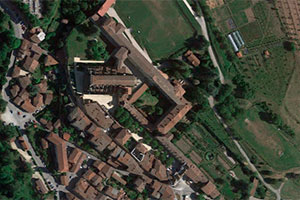
The Abbey of Saint-Antoine belongs to the municipality of Saint-Antoine-l’Abbaye (Isère). It lies west of Grenoble, between that city and Valence