Abbey of Saint-Chef in Dauphiné
Val Rupien / S. Theuderius Viennae / Saint-Theudère / Saint-Chef du Viennois
(Saint-Chef, Isère)
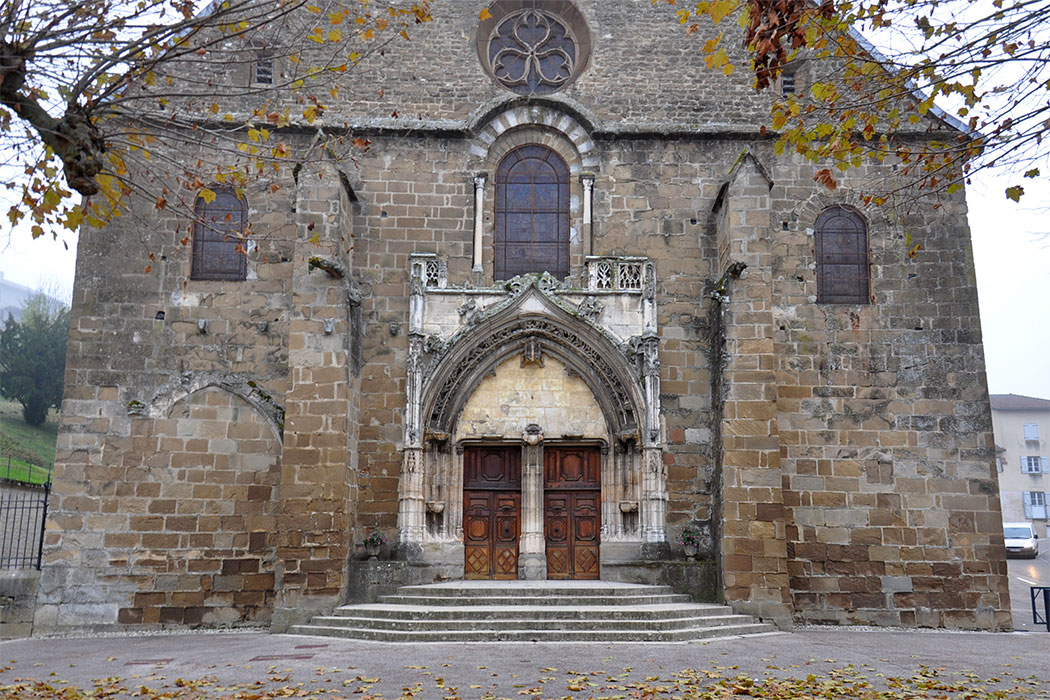


Of the Saint-Chef abbey, only the church survives. According to tradition, the original monastery was founded here in the 6th century. Although the present building preserves some elements dating from the 10th and 11th centuries, it is the result of numerous later alterations. From an artistic point of view, the site is especially renowned for its surviving wall paintings.
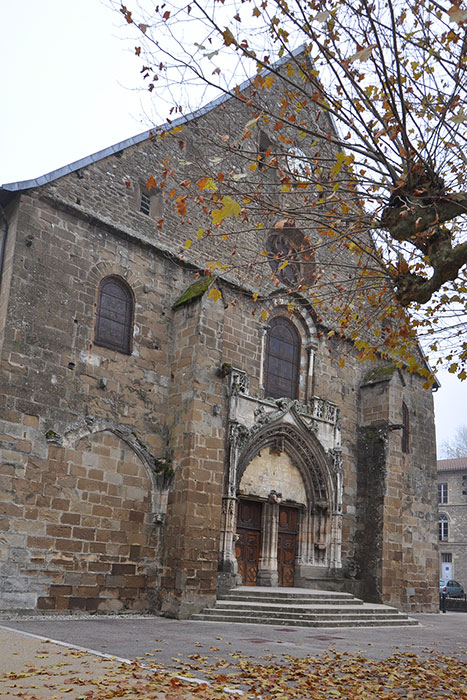
Tradition attributes the foundation of the monastery to Saint Theuderius (Theudère or Theodor). His Life was written in the 9th century by Saint Ado, archbishop of Vienne in Dauphiné. According to this account, Theuderius was native to these lands, is said to have been trained at Saint-Honorat de Lérins (Alpes-Maritimes), and was a disciple of Bishop Caesarius of Arles. He later settled in Vienne, from where he founded several monasteries in the region; the best known would be that of Val Rupien, established on lands belonging to his family. At his death in 575, he was buried here, and the site first took the dedication of Saint-Theudère, later replaced by that of Saint-Chef.
The rule followed by the early community is unknown, probably the same as that observed at Lérins, and little else is known about this first house. The monastery declined during the second half of the 9th century, possibly as a result of warfare. In 887 it was revived with the arrival of monks from the Abbey of Montier-en-Der (Haute-Marne), refugees from the Norman invasions and followers of the Rule of Saint Benedict. Around 925 these monks returned to their original monastery and Saint-Chef came under the jurisdiction of the archbishopric of Vienne. During the third quarter of the 10th century the complex was rebuilt by Archbishop Saint Thibaud († 1001), closely associated with this place, where he was also buried.
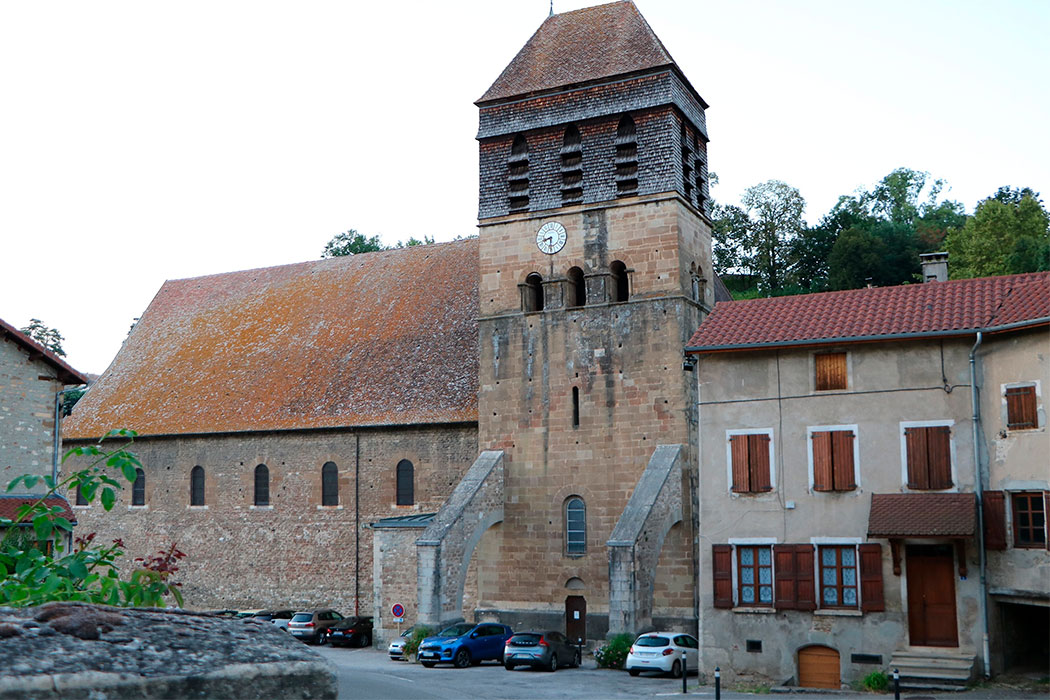
Photo by Cantepien, on Wikimedia
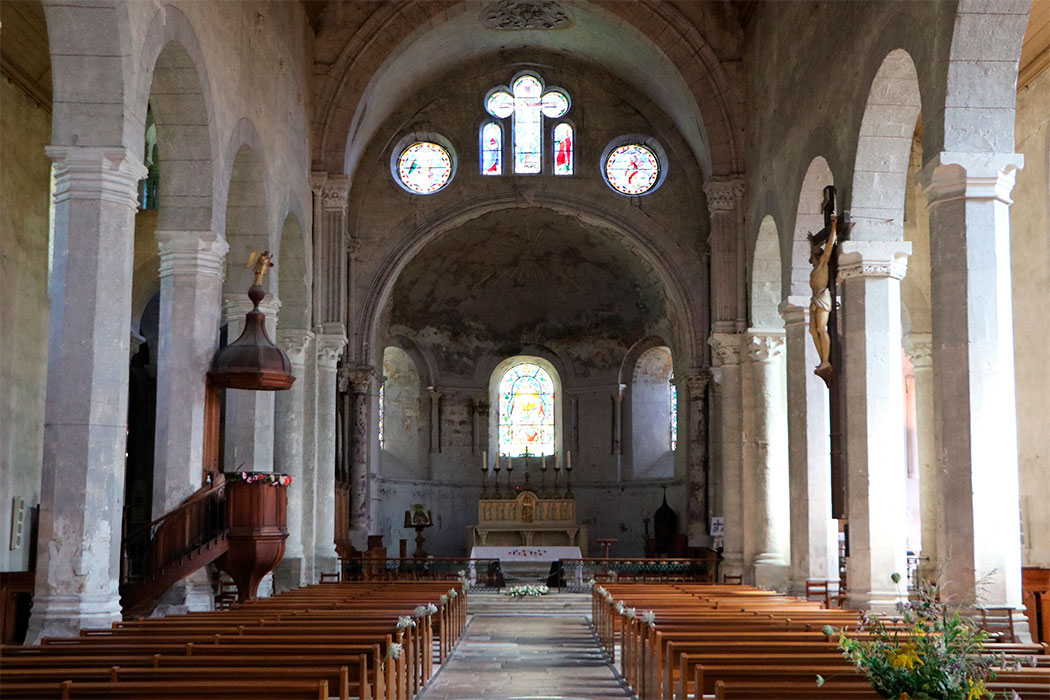
Photo by Cantepien, on Wikimedia
A period of prosperity then followed, during which the abbey gathered a considerable number of priories and churches under its dependence. Over time, various modifications were made to the church, including the construction of the transept with chapels and the painted decoration. In the 13th century conflicts arose between the abbots of Saint-Theudère and the archbishops of Vienne, who asserted their authority in 1280. In 1320 they assumed effective control of the house, which was henceforth placed under the direct authority of the archbishopric. The monastery then became known as Saint-Chef, probably because of a reliquary containing the head of the founder — or perhaps of another saint — venerated here.
In 1531 the monastery was secularised and converted into a collegiate church; the pope confirmed this change in 1536. Without a monastic community, Saint-Chef suffered severely during the Wars of Religion in the second half of the 16th century. In 1774 the Abbey of Saint-André-le-Bas de Vienne (Isère) was suppressed and united with that of Saint-Chef; the community moved to Vienne, where it formed the collegiate church of Saint-Theudère and Saint-André. In 1780 this institution was transferred and incorporated into Saint-Pierre de Vienne.
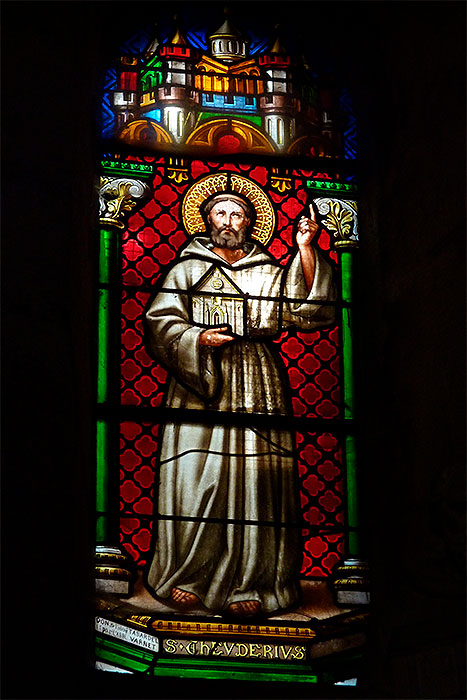
Modern stained glass window with Saint Theuderius, the founder
Photo by Reinhardhauke, on Wikimedia
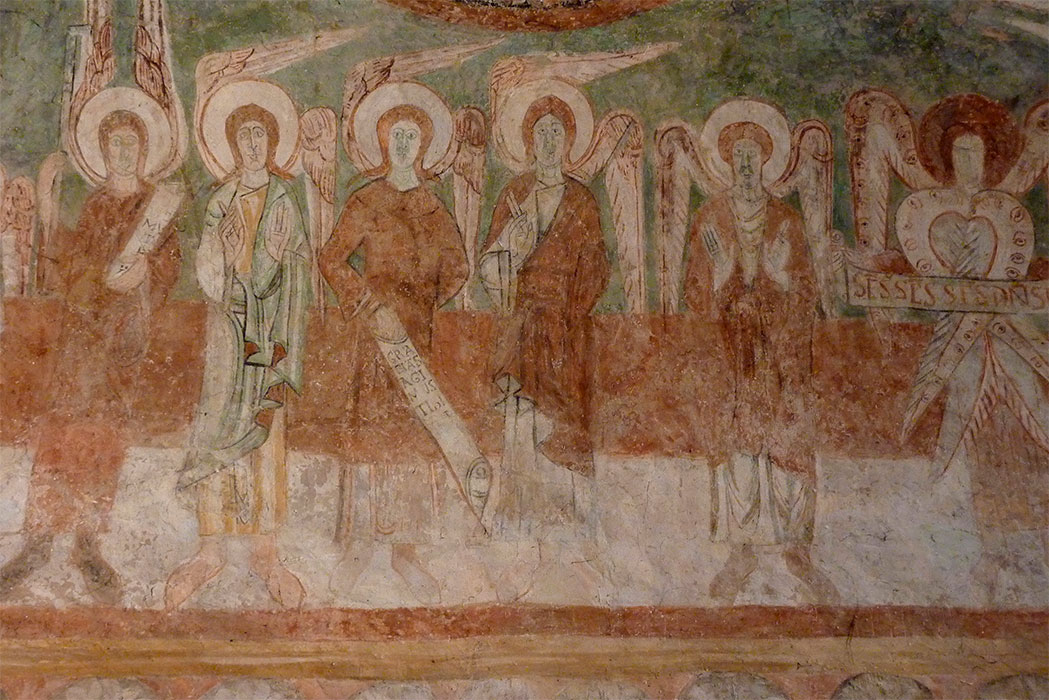
Mural paintings (11th century)
Photo by GFreihalter, on Wikimedia
The church survives, retaining some 10th-century elements despite later alterations, notably the addition of the transept with two apsidal chapels opening from each arm. The building has three aisles divided into seven bays. The wall paintings of the second half of the 11th century are among its most remarkable features.
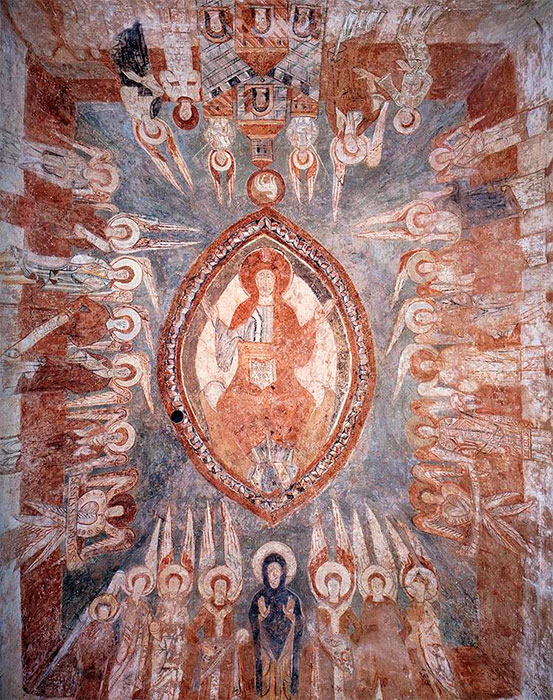
Mural paintings (11th century)
Photo by Wikimedia
- BARRUOL, Guy (1992). Dauphiné roman. La Nuit des Temps, 77. Zodiaque
- BESSE, J.-M.; i altres (1939). Abbayes et prieurés de l'ancienne France. Vol. 9: Province ecclésiastique de Vienne. Abbaye de Ligugé
- COTTINEAU, Laurent-Henri (1939). Répertoire topo-bibliographique des abbayes et prieurés. Vol. 2. Mâcon: Protat
- FOCHIER, Louis (1865). Recherches historiques sur les environs de Bourgoin. Lió: Boullieux
- OURSEL, Raymond (1962). L'architecture de l'abbatiale de Saint-Chef. Bulletin Monumental. Vol. 120
- SAINT-MAUR, Congregació de (1865). Gallia Christiana in provincias ecclesiasticas distributa. Vol. 16. París: Firmin Didot
- VARNET, Abbé (1873). Saint Theudère et son abbaye de Saint-Chef. Grenoble: Baratier
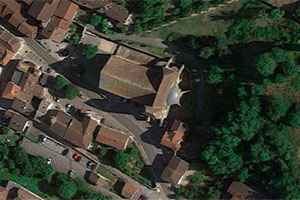
The Abbey of Saint-Chef (Isère) is located in the commune of the same name, northwest of Grenoble, between that city and Lyon