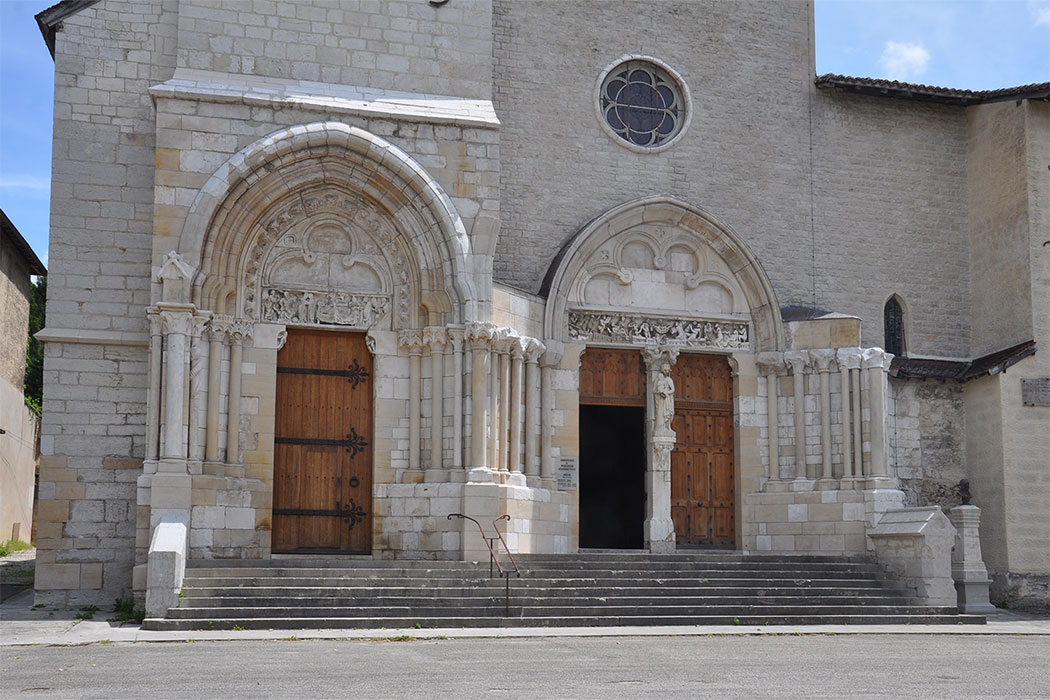

The Benedictine abbey of Notre-Dame d'Ambronay was founded by Saint Barnard of Vienne (c. 778–842). After serving as an officer in Charlemagne’s army, he acquired the site of Ambronay from the Abbey of Luxeuil (Haute-Saône), which already possessed a church there and possibly a small monastic establishment. Around 803, he founded a monastery on the site, entering it himself as a monk; by about 807 he had been elected abbot, a position he held until 810, when he was appointed to the diocese of Vienne in the Dauphiné.
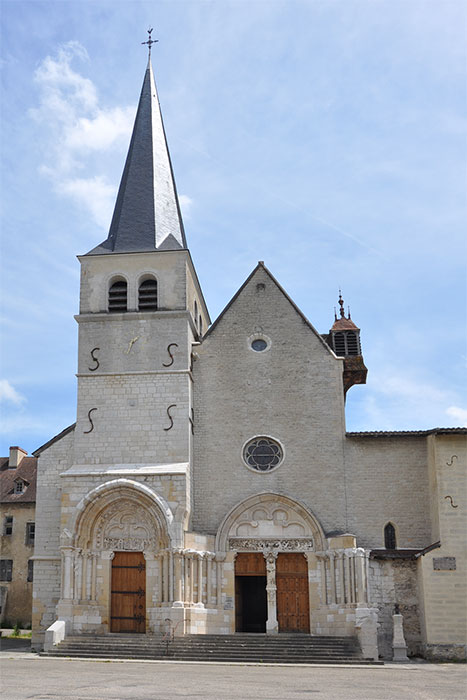
After a long period during which no records of the site are known, probably due to invasions, a bull issued by Pope Leo IX in 1050 recognised the abbey’s possessions and confirmed its right of exemption, placing it directly under the authority of the Holy See. The enjoyment of this privilege likely contributed to its economic development; at that time, the abbey held extensive landed property and a long series of dependent priories. In 1115, Abbot Didier granted the territory of Portes to two monks of the community who wished to withdraw in accordance with the customs promoted by Saint Bruno from the Grande Chartreuse (Isère); this site would later become the Charterhouse of Portes (Ain).
The abbey was not subject to diocesan authority nor dependent on secular power; however, for reasons of protection, in 1282 it placed itself under the protection of Philip I, Count of Savoy, in exchange for the transfer of certain rights. This arrangement led to external interference in the internal affairs of the house, notably in the election of abbots. After a fire in 1341, the construction of a new church was undertaken at the beginning of the fifteenth century, indicating that the abbey was then experiencing a period of prosperity. In 1469, Richard Olivier de Longueil, Bishop of Coutances, was appointed as the first commendatory abbot of Ambronay.
Abbey of Saint-Barnard de Romans
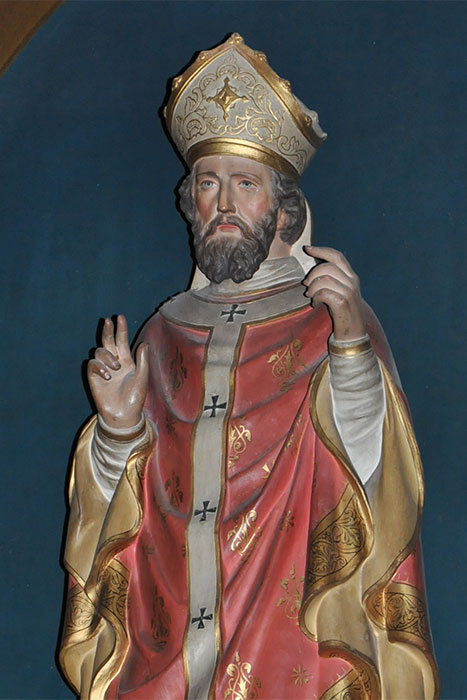
Bernard
Archbishop of Vienne. He was born around 778 into a noble family. He served in the army of Charlemagne and married, but later withdrew from secular life to embrace a religious vocation. He founded the monastery of Ambronay (Ain), of which he was abbot until he assumed the archiepiscopal see of Vienne in 810. He maintained close relations with Louis the Pious, which led to his political persecution. Once his position had been restored, he founded a new monastery at Romans (Drôme), which later took his name: the Abbey of Saint-Barnard. He died at this site in 842.
In 1595, the abbey suffered the effects of the war that resulted in the transfer of the Bugey region from Savoy to France; the consequences of these conflicts persisted until the house was incorporated into the Congregation of Saint-Maur in 1651. The Maurists carried out major construction and restoration works on the monastic buildings and remained on the site until 1790, when the abbey was suppressed during the Revolution. The complex was subsequently sold; despite the damage it suffered, notably to the church portals, the main body of its structures remained standing.
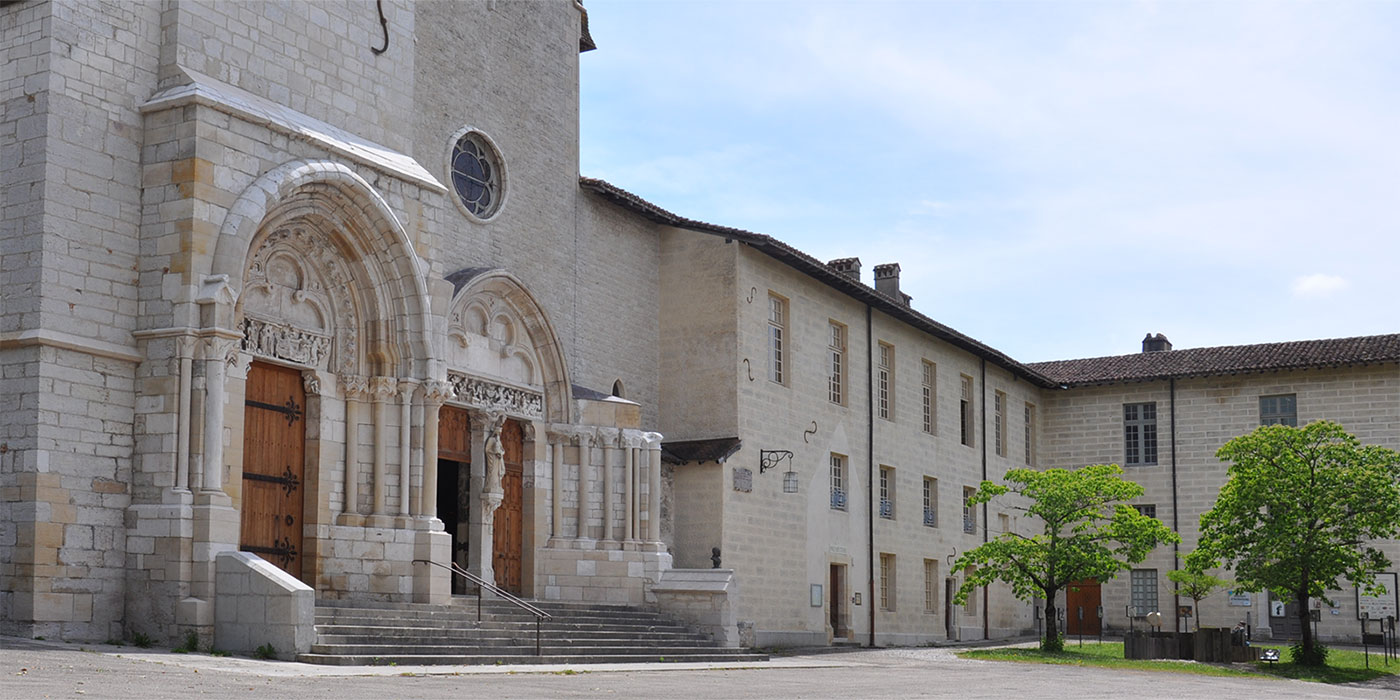
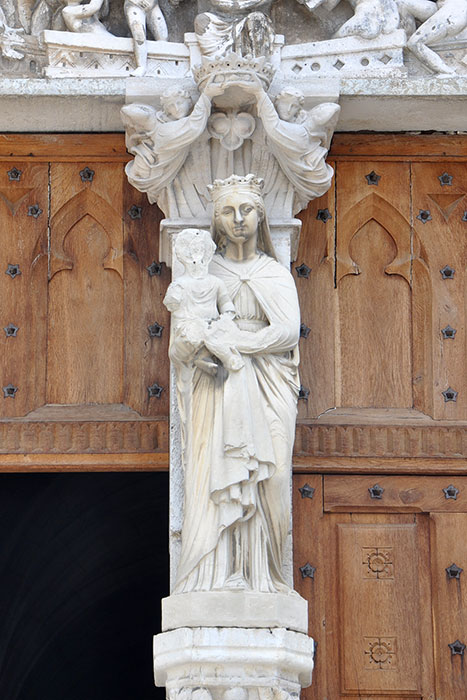
Trumeau with the Virgin
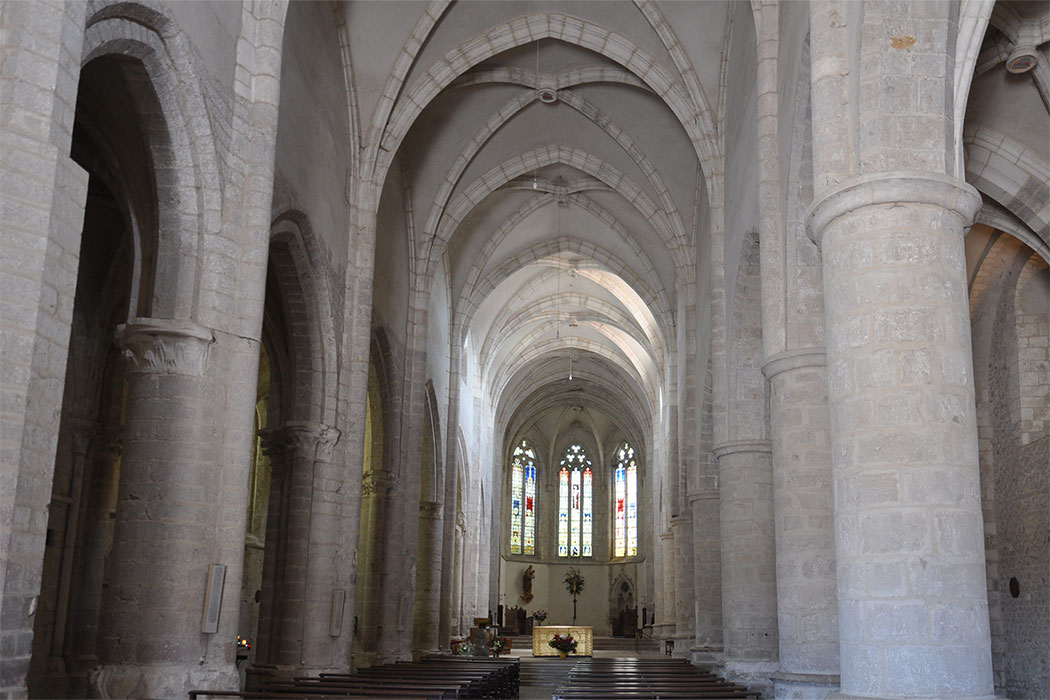
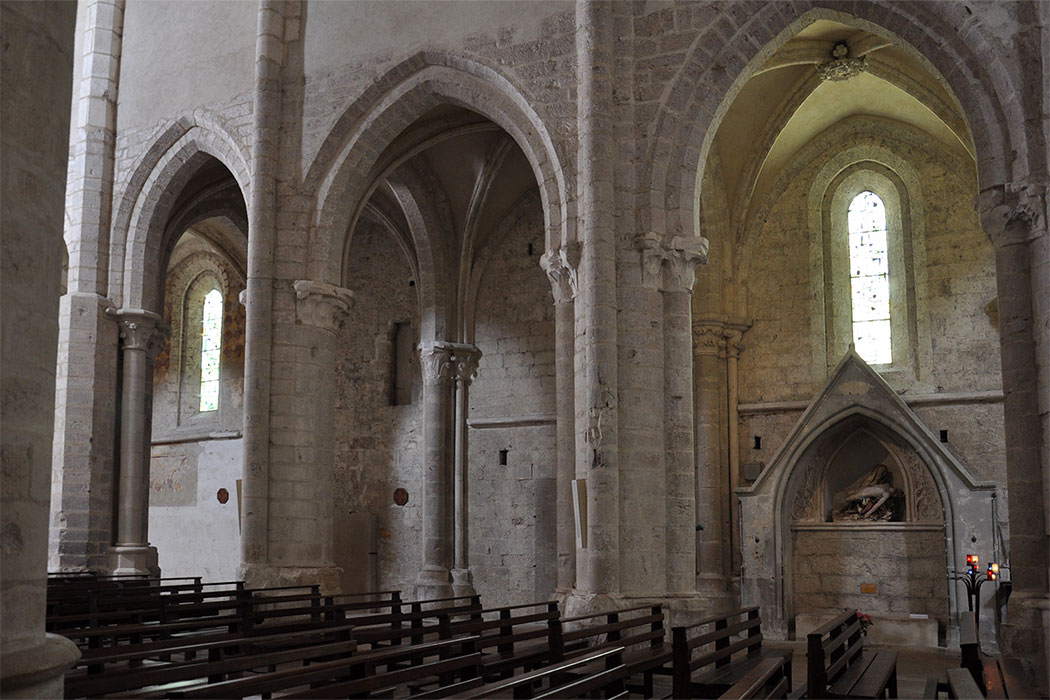
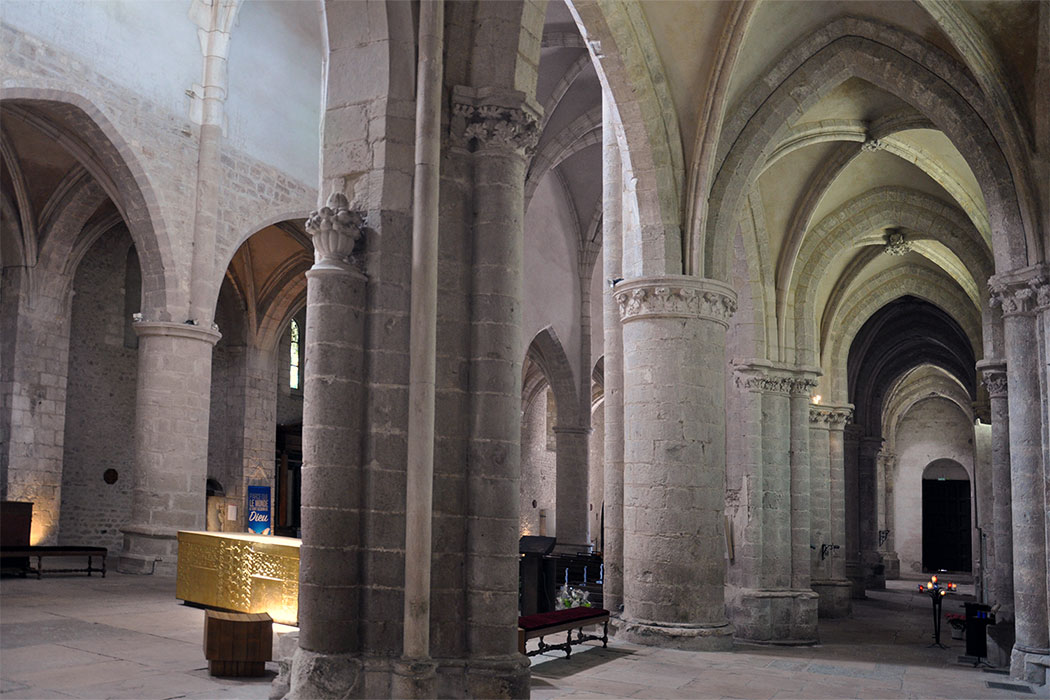
The monastic buildings were put to various uses until the site was gradually protected and restored. The church became a parish church in 1802; most of its fabric dates from the thirteenth to the fifteenth centuries, although earlier remains and later interventions are also present. It preserves stained glass from various periods, the tomb of Abbot Jacques de Mauvoisin (1425–1439), and the wooden choir stalls, among other elements. The two-storey cloister is also noteworthy, with the lower gallery dating from around 1500 and the upper one from the mid-seventeenth century. Other buildings are still preserved, including the chapter house, the abbatial residence, and the Archive Tower.
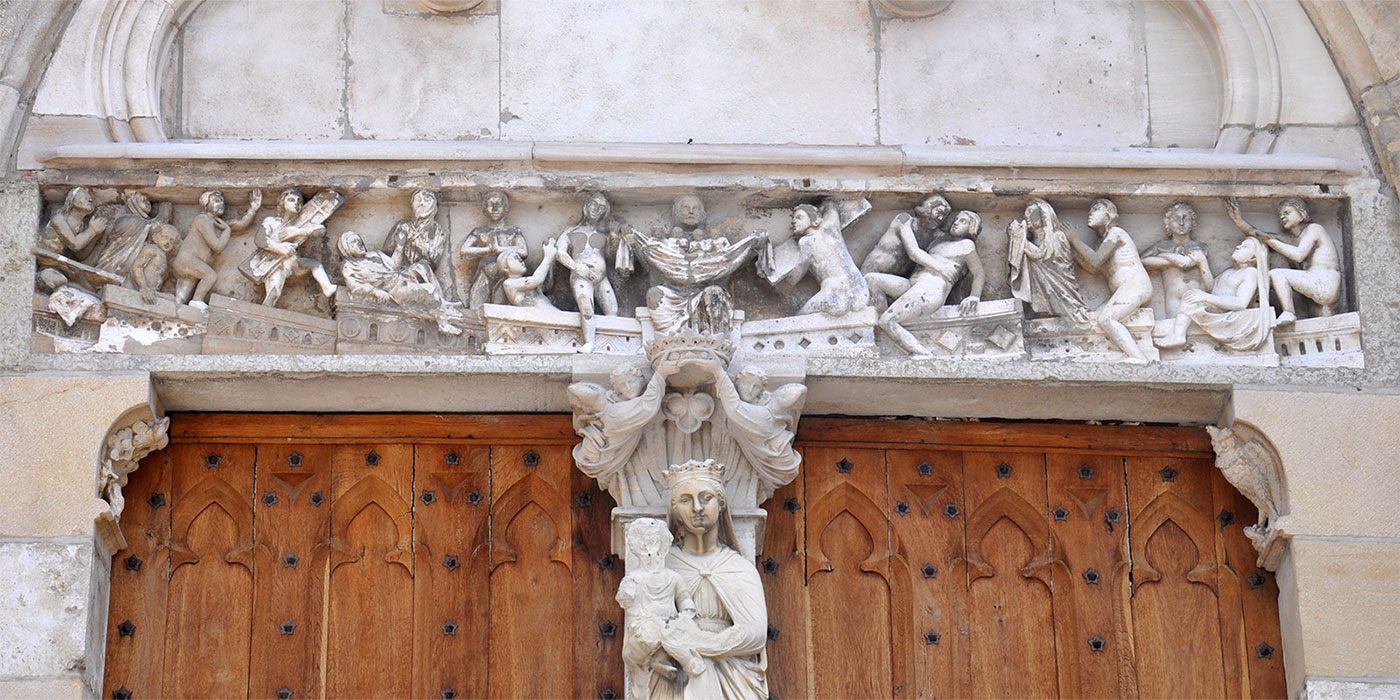
Portal lintel with the Last Judgment
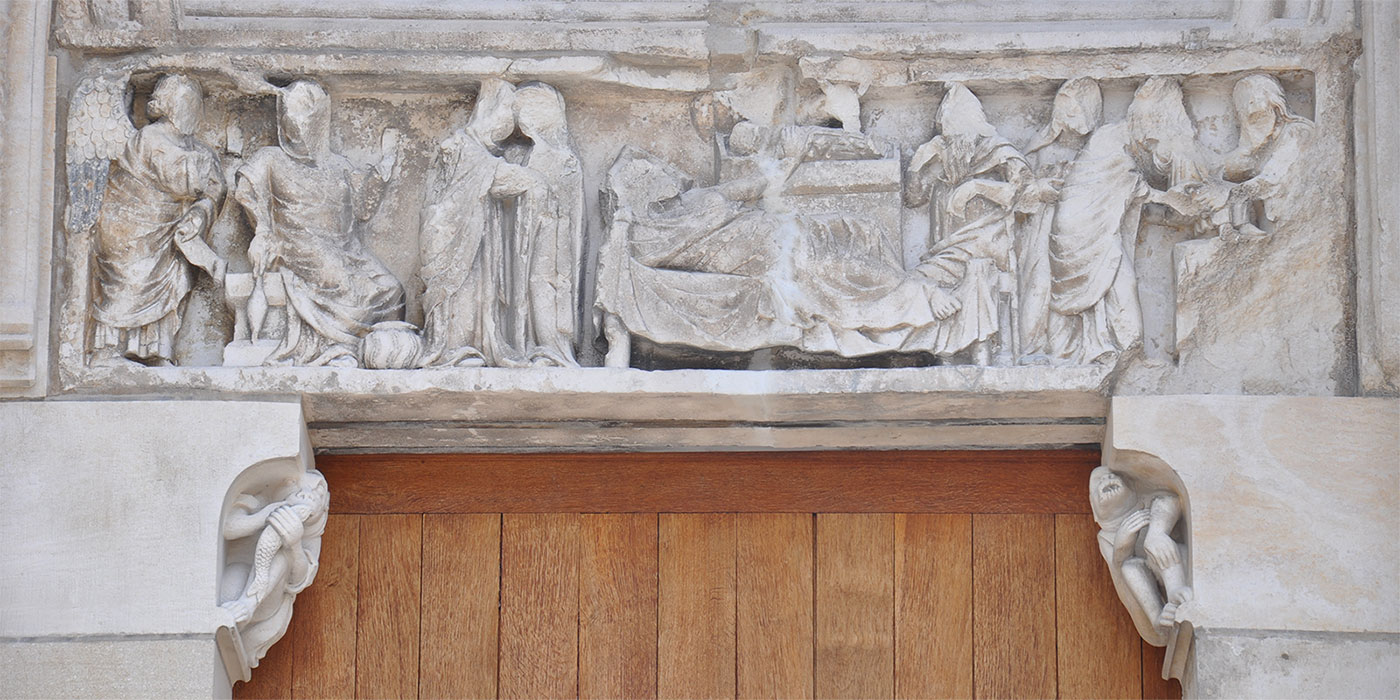
Portal lintel with the Annunciation, Visitation,
Nativity and Presentation in the Temple
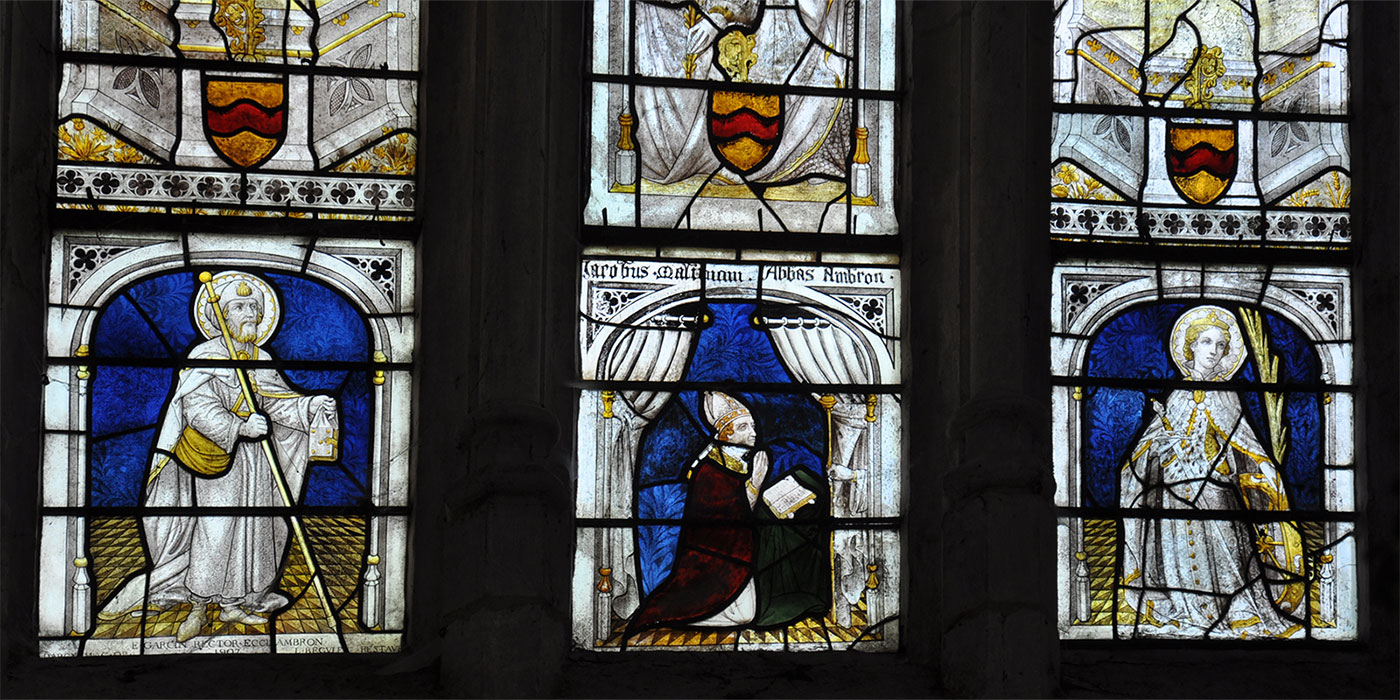
Stained glass window with James the Great, Abbot Jacques de Mauvoisin (1425-1439) and
Saint Catherine of Alexandria
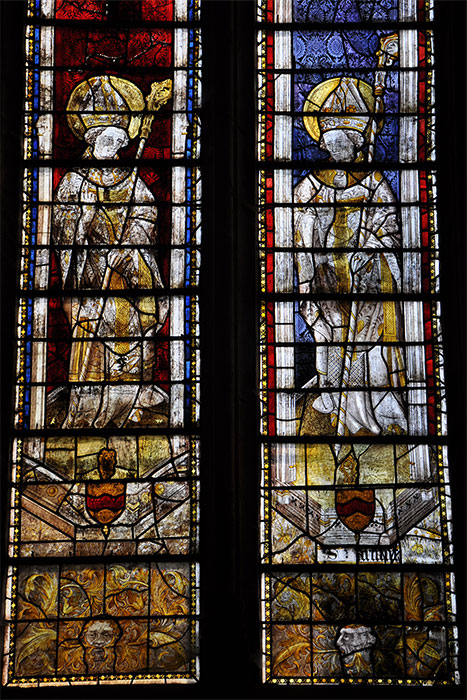
Stained glass window with two holy bishops
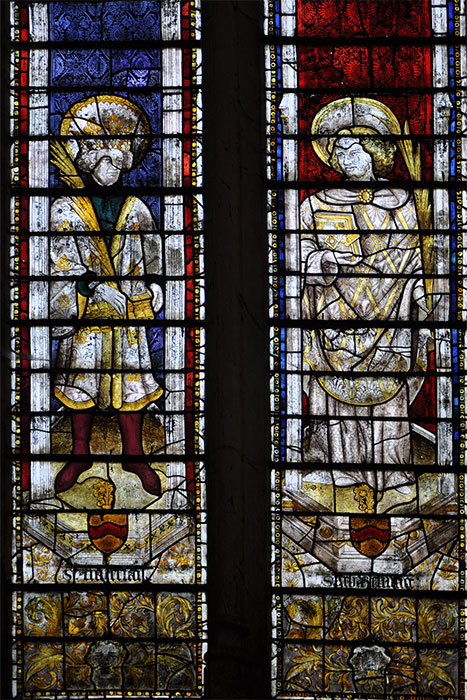
Stained glass window with two martyrs
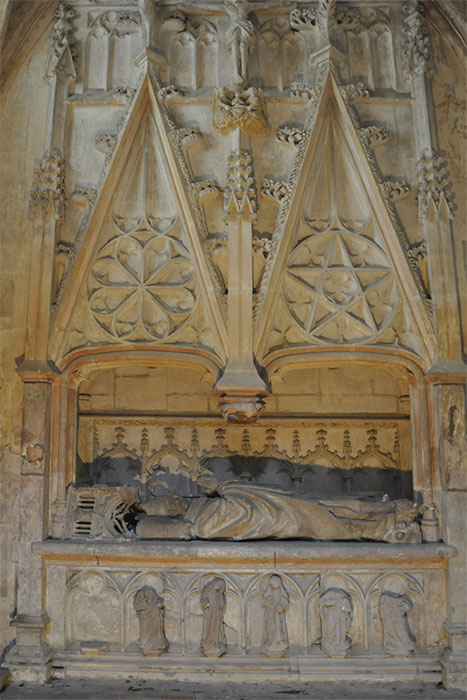
Tomb of the abbot Jacques de Mauvoisin (1425-1439)
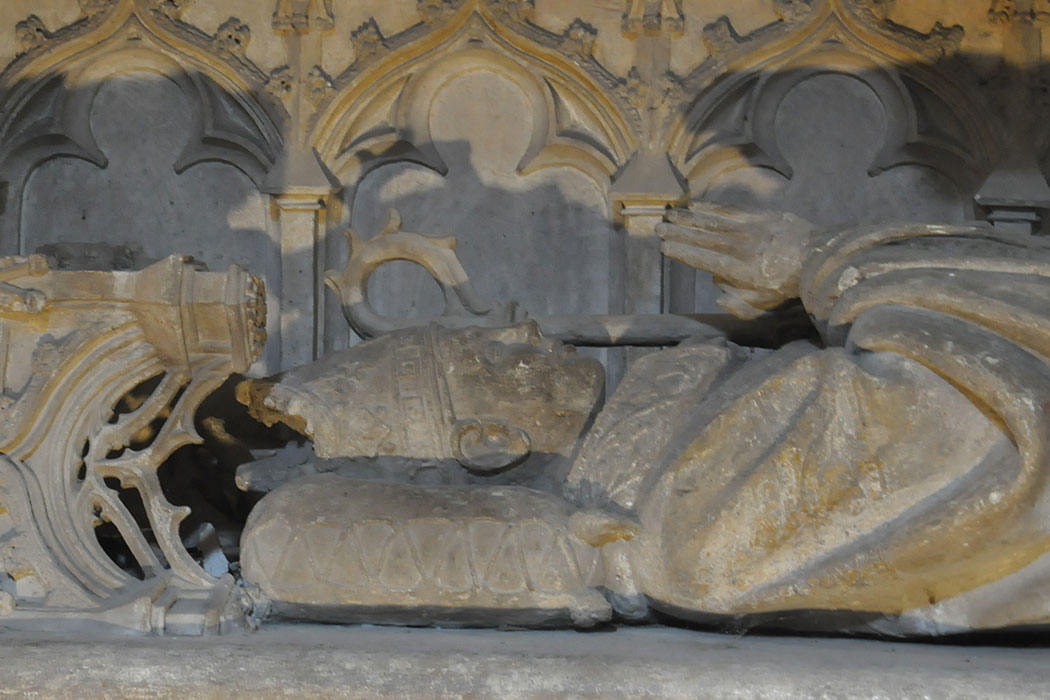
Tomb of the abbot Jacques de Mauvoisin (1425-1439)
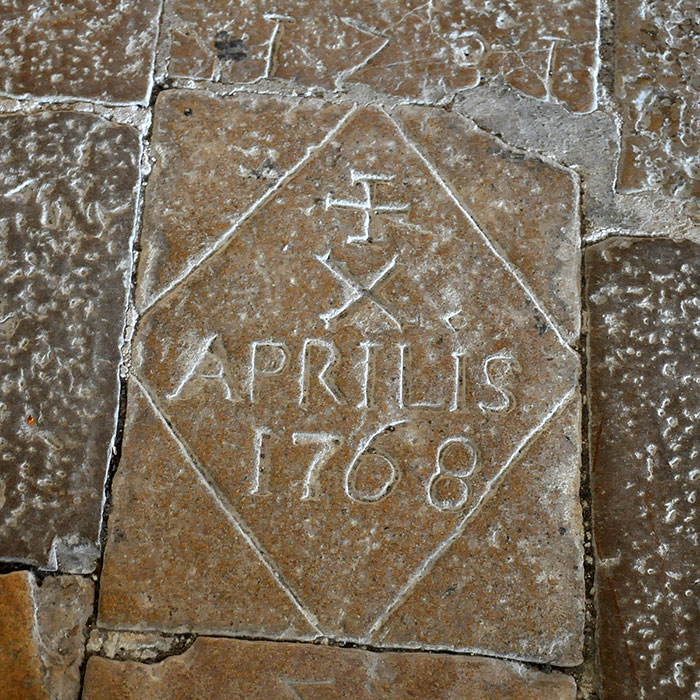
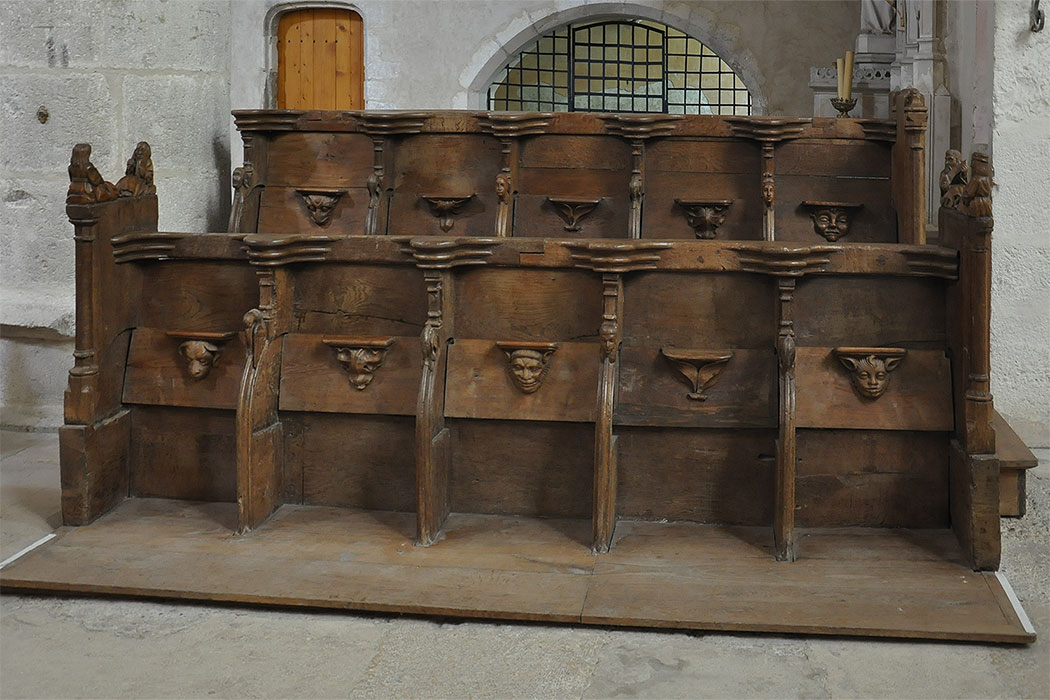
Choir-stalls
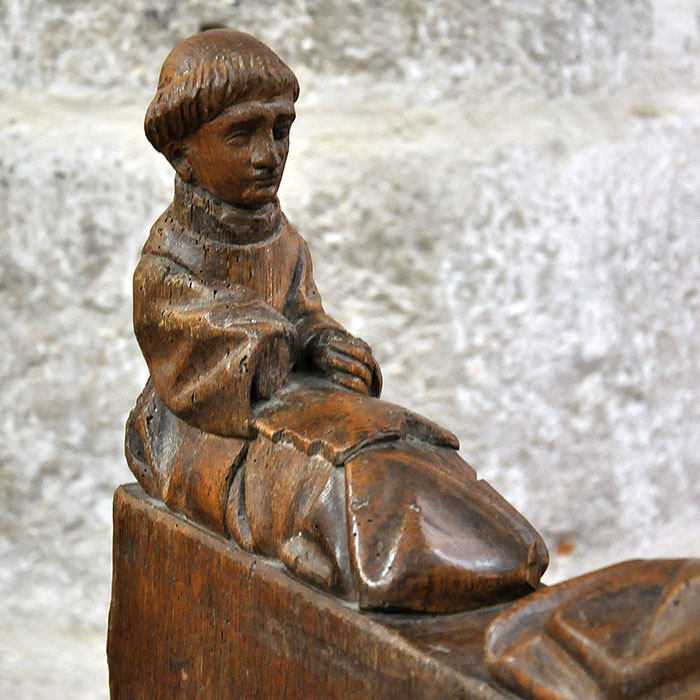
Choir-stalls
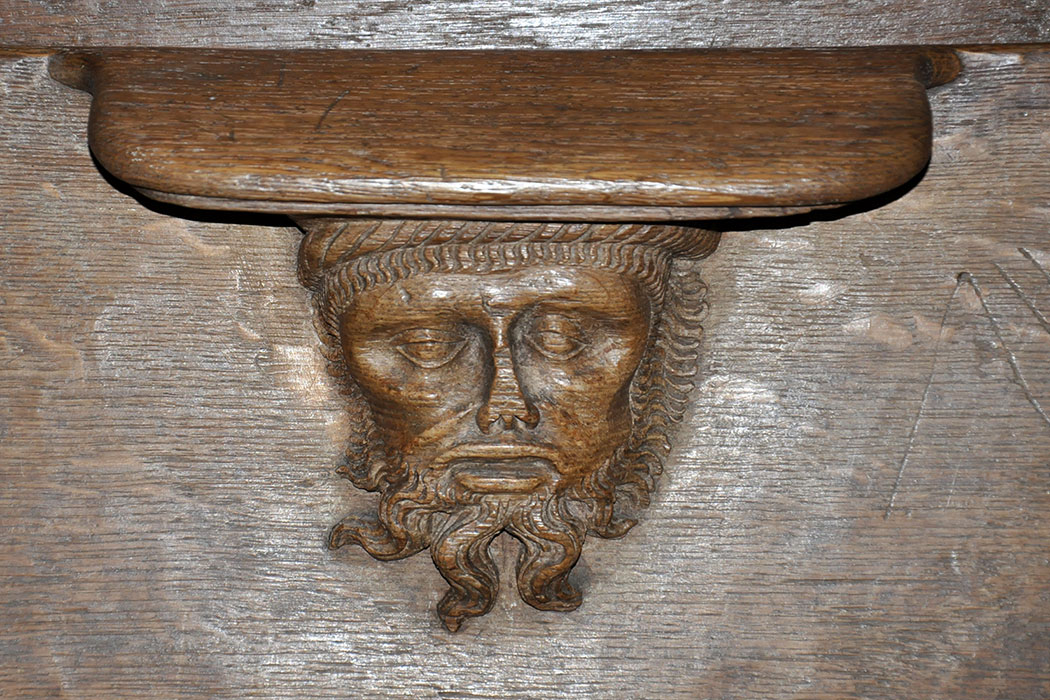
Choir-stalls
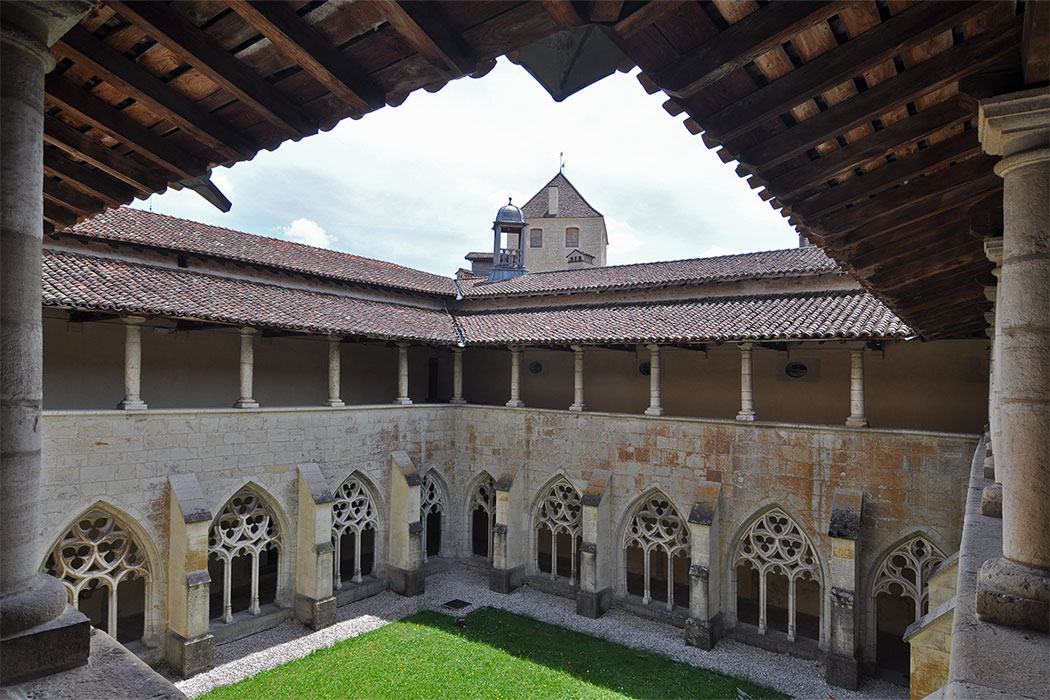
Cloister
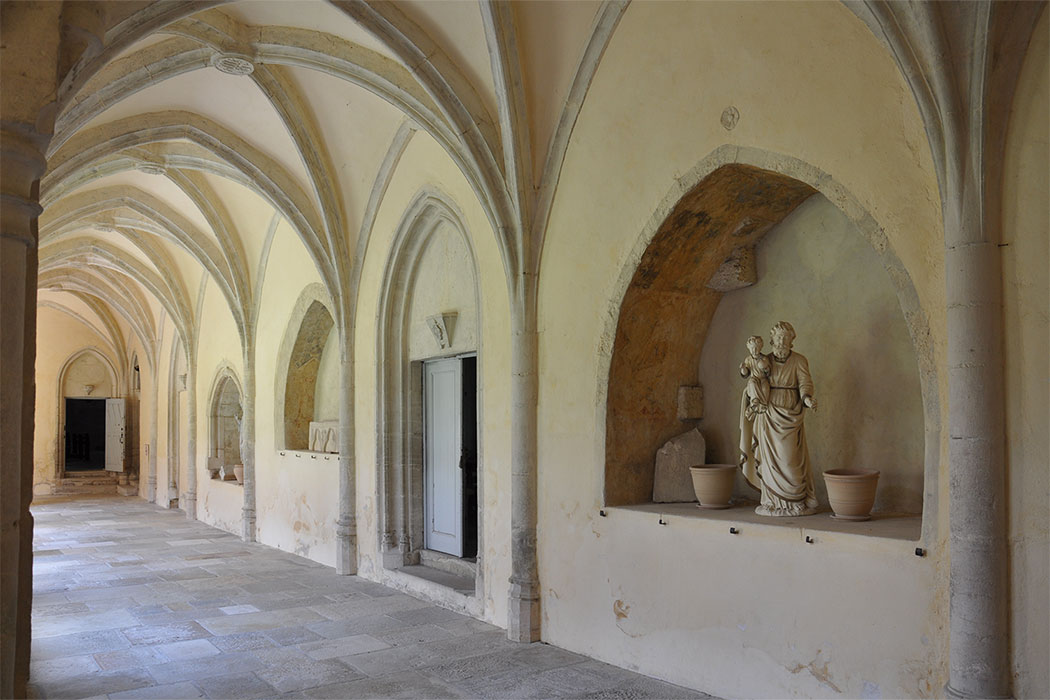
Cloister
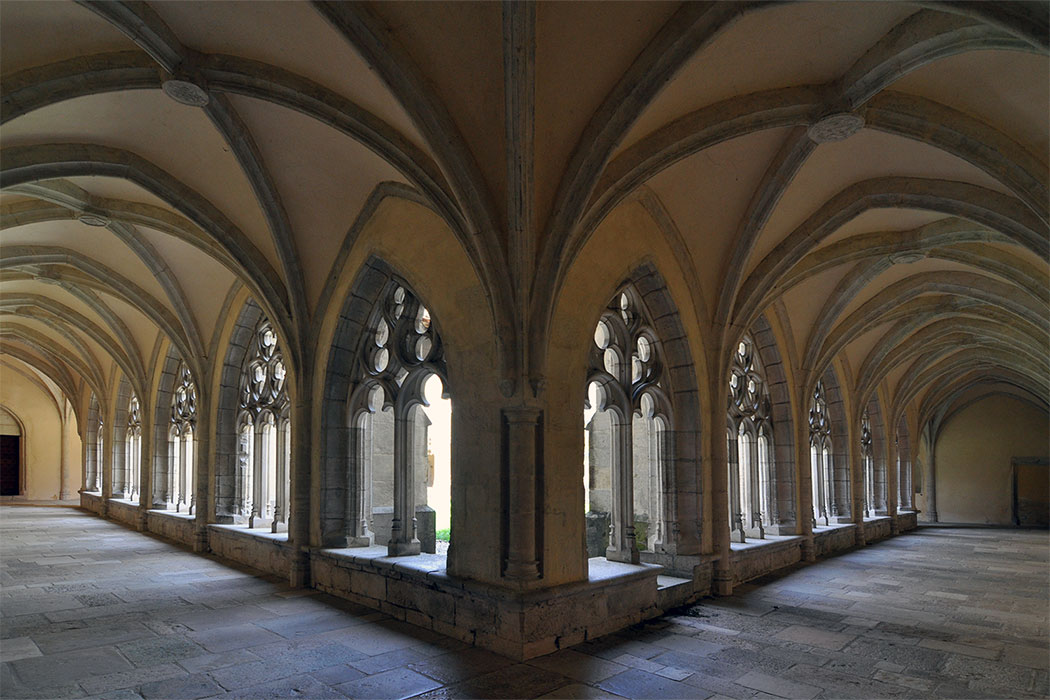
Cloister
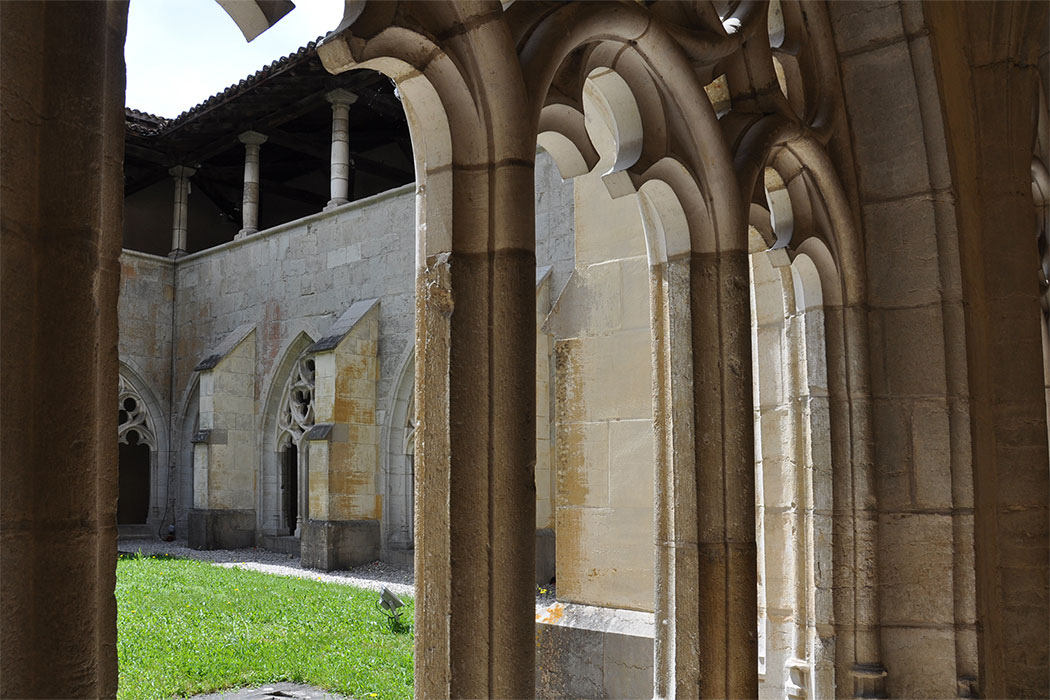
Cloister
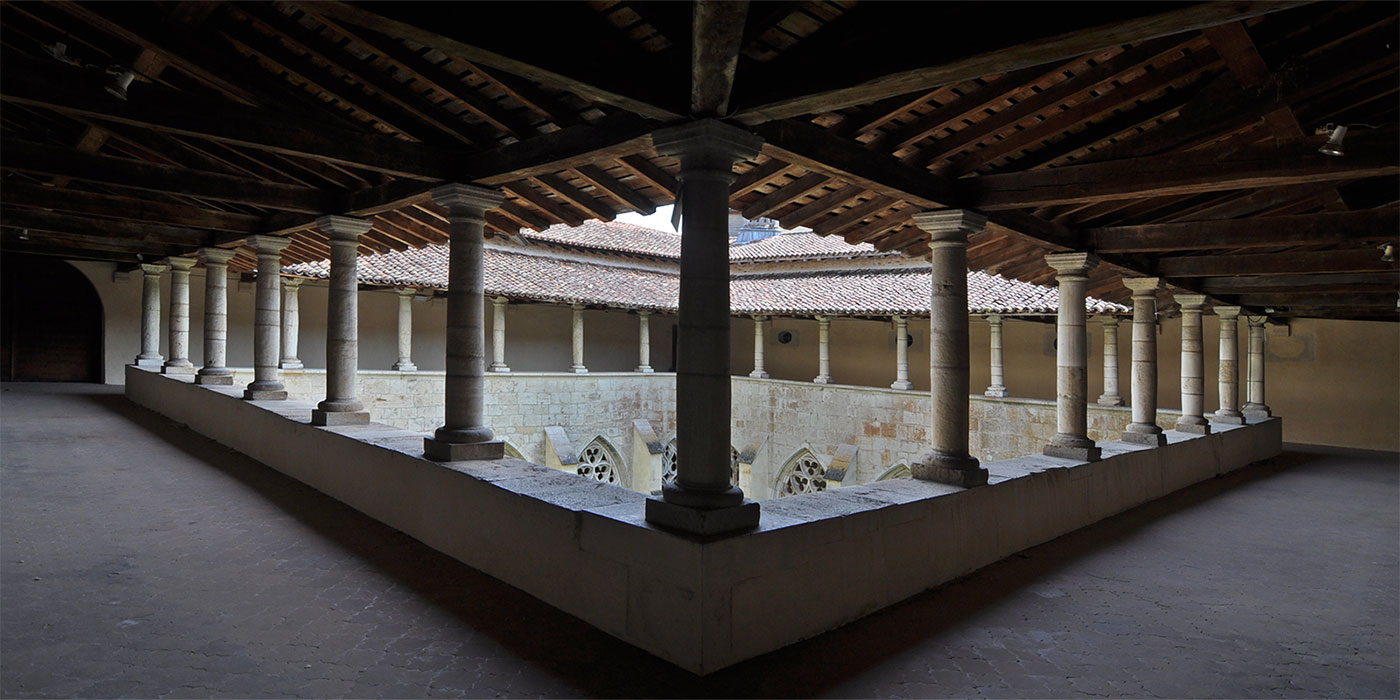
Cloister
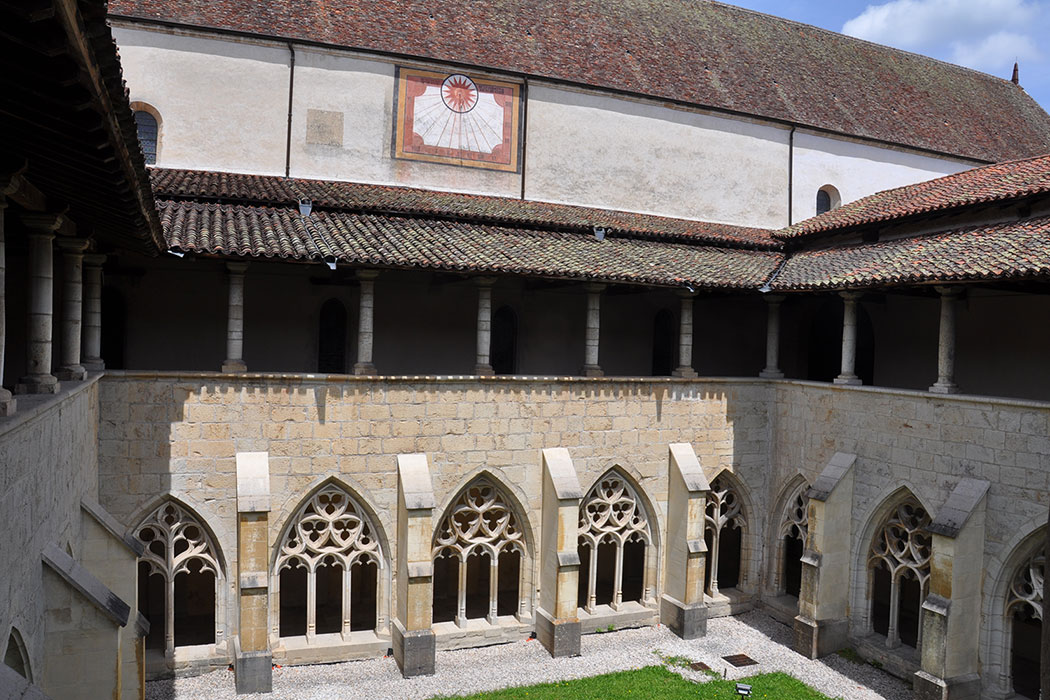
Cloister
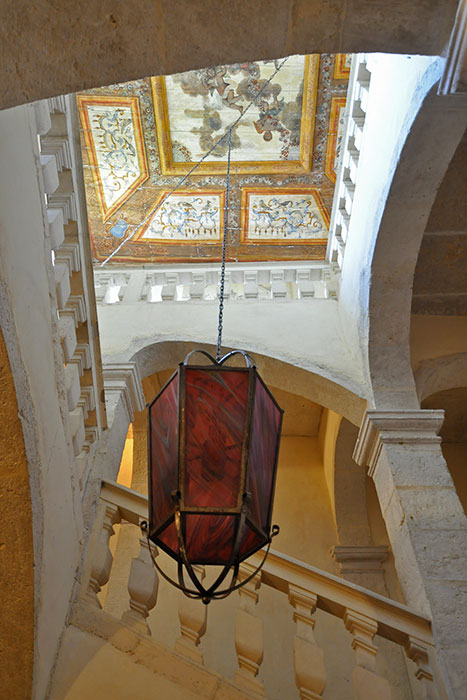
Stairs
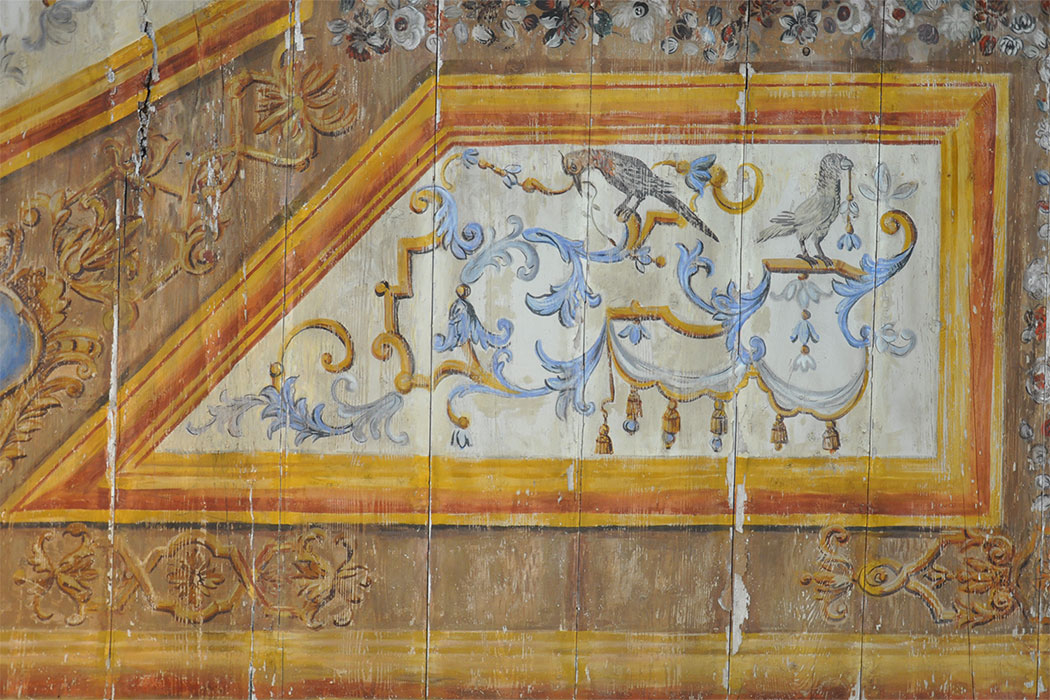
Staircase ceiling decoration
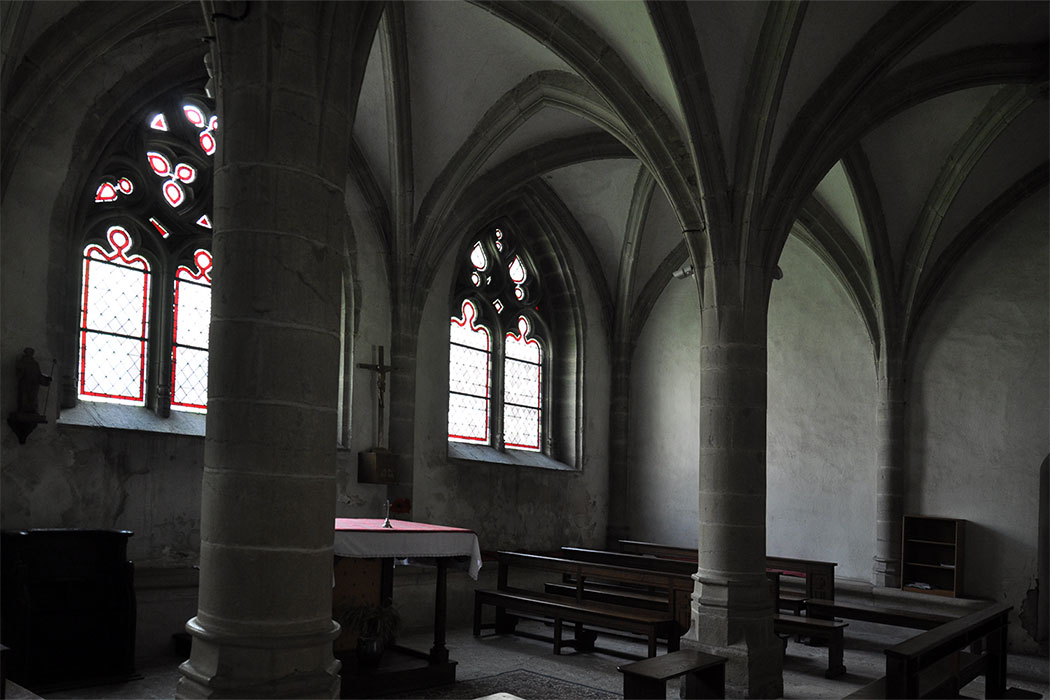
Chapter house
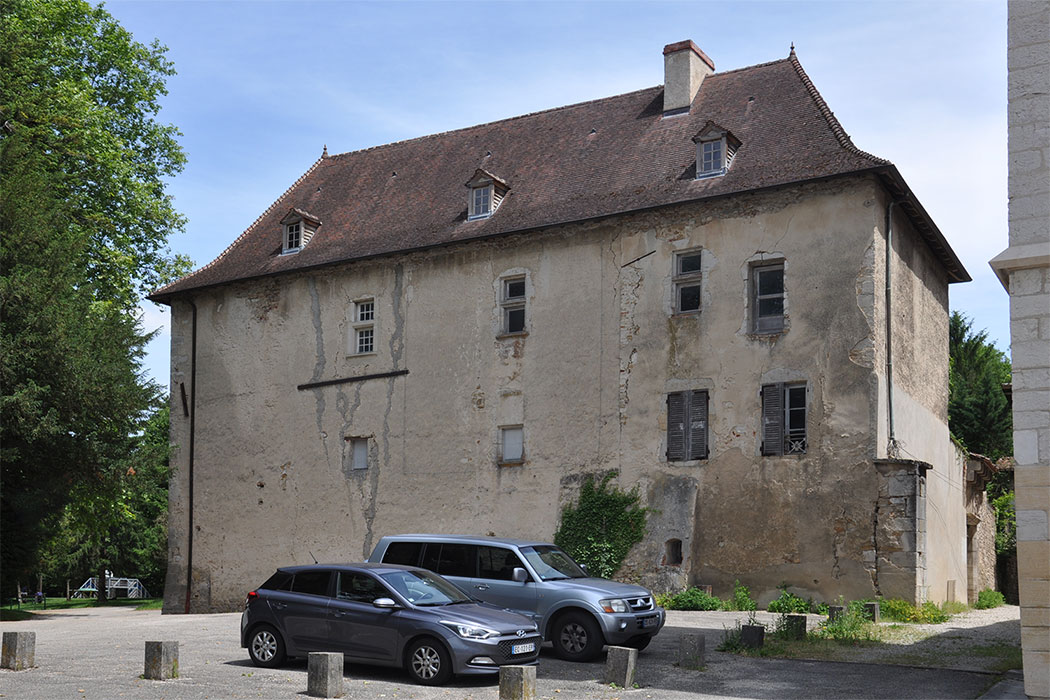
Abbatial palace
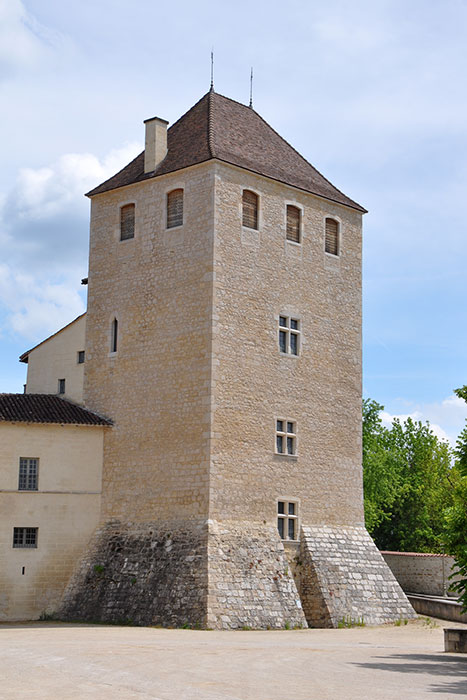
Archive Tower
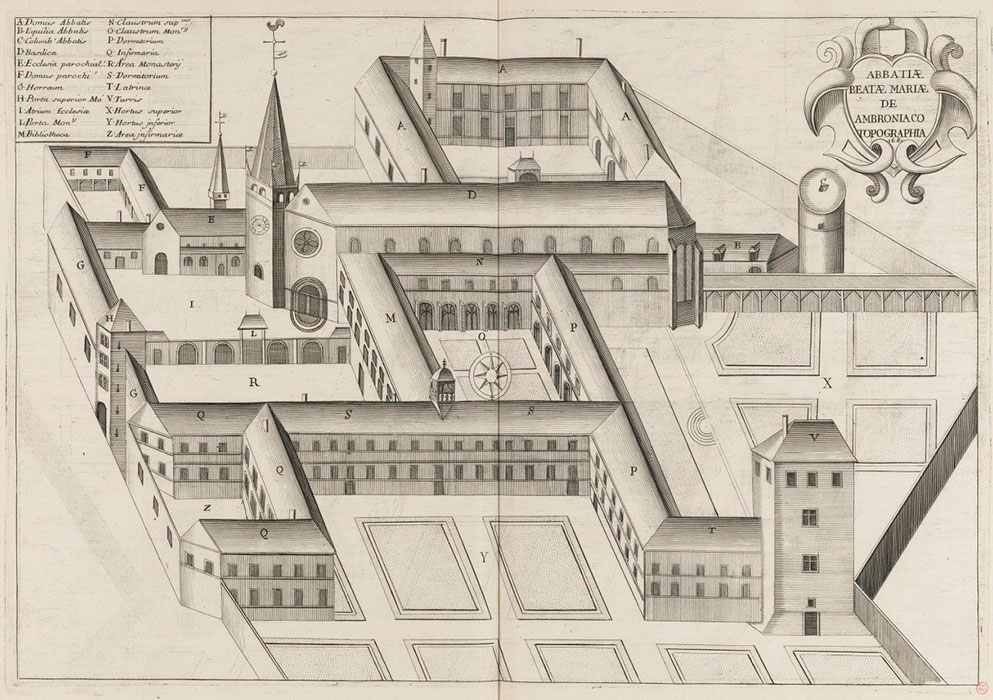
Monasticon Gallicanum
Bibliothèque nationale de France
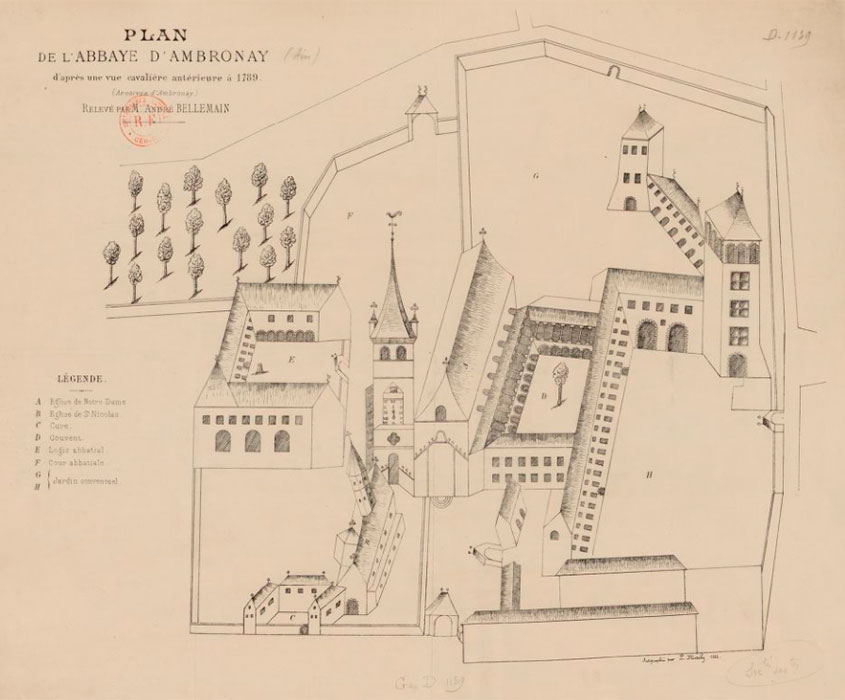
André Bellemain (1888)
Bibliothèque nationale de France
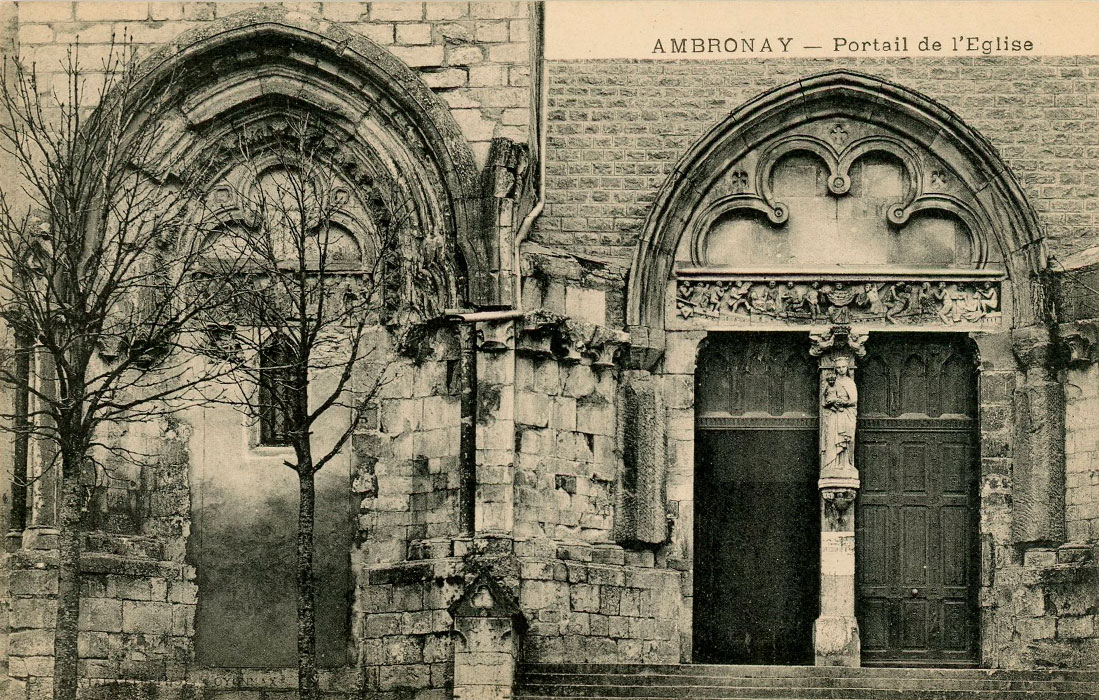
Old postcard, private collection

Armorial général de France (18th century)
Bibliothèque nationale de France
- ALLOING, L. (1914). Ambronay. Dictionnaire d'histoire et de géographie ecclésiastiques. Vol. 2. París: Letouzey
- BAUDRILLART, Alfred (1932). Dictionnaire d'histoire et de géographie ecclésiastiques. Vol. 6. París: Letouzey et Ané
- BÉGULE, Lucien (1911). Les vitraux du Moyen âge et de la Renaissance dans la région Lyonnaise, et spécialement dans l'ancien diocèse de Lyon. Lyon: Rey
- BÉRARD, Alexandre (1887-1888). L'abbaye d'Ambronay. Annales de la Société d’Émulation de l’Ain. Bourg: Authier
- CHAGNY, André (1956). Abbaye d'Ambronay. Lió: Lescuyer
- DOUARD-BOREL, Anne-France (2010). L’abbaye d’Ambronay, des bénédictins aux mauristes, transformation de l’espace monastique. Espace ecclésial et liturgique au Moyen Âge. Lyon : Maison de l'Orient et de la Méditerranée
- DUBOIS, Jacques (1971). L'implantation monastique dans le Bugey au Moyen Âge. Journal des savants
- FISQUET, Honoré (1864-1873). La France pontificale (Gallia christiana), histoire chronologique et biographique des archevêques et évêques de tous les diocèses de France. Lyon. Vol. 2. París: E. Repos
- GARCIN, E. (1929). Monographie sur le cloître de l'abbaye d'Ambronay. Belley: Chaduc
- GUÉRIN, Paul (1888). Les Petits Bollandistes. Vies des saints. Vol. 1. París: Bloud et Barral
- GUICHENON, Samuel (1650). Histoire de Bresse et de Bugey. Partie 2. Lió
- MOREL, Jacques (2007). Guide des Abbayes et Prieurés en région Rône-Alpes. Lyon: Autre Vue
- PEIGNÉ-DELACOURT, Achille (1877). Monasticon Gallicanum. Paris: G. Chamerot
- RUTY, Jacques (2022). Ambronay-La Commende de Jean de Cussigny
- SAINT-MAUR, Congregació de (1725). Gallia Christiana in provincias ecclesiasticas distributa. Vol. 4. París: Typographia Regia
- VALLERY-RADOT, Jean (1936). Ambronay. Congrès archéologique de France. París: Derache
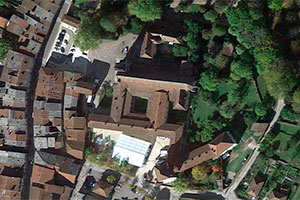
Ambronay lies to the north-east of Lyon, between that city and Geneva