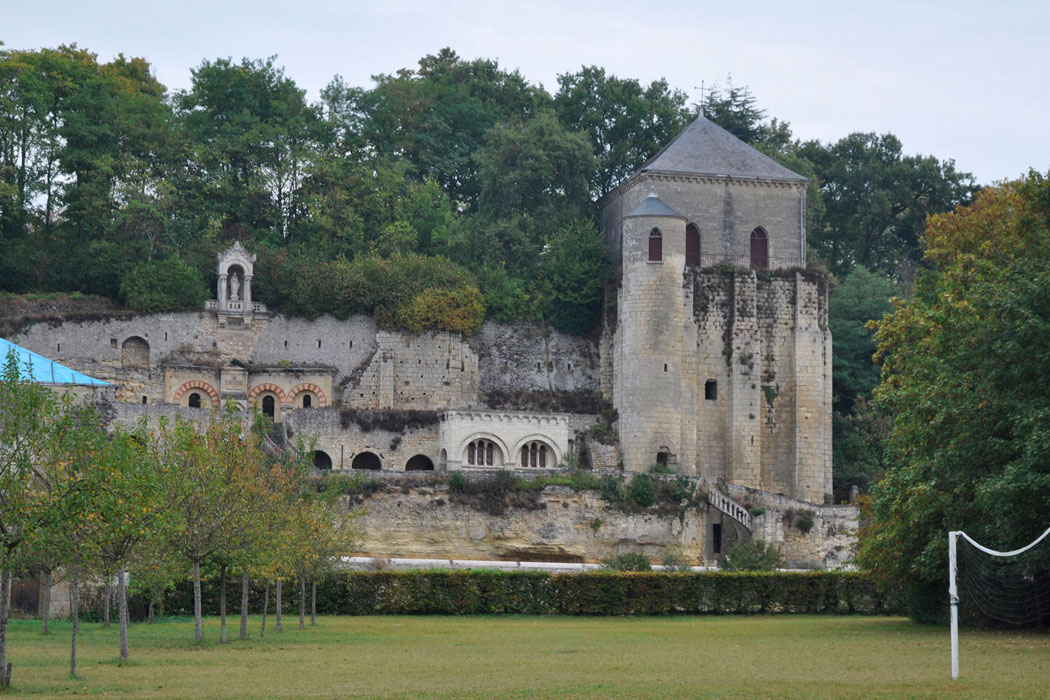


Saint Martin of Tours (c. 316-397), after founding the Abbey of Saint-Martin de Ligugé (Vienne), was appointed bishop of that diocese, a position he held from 371 until 397. Martin chose to distance himself from the comforts of the episcopal residence by first occupying a cell within the city itself, but soon moved to a secluded site on the right bank of the Loire.
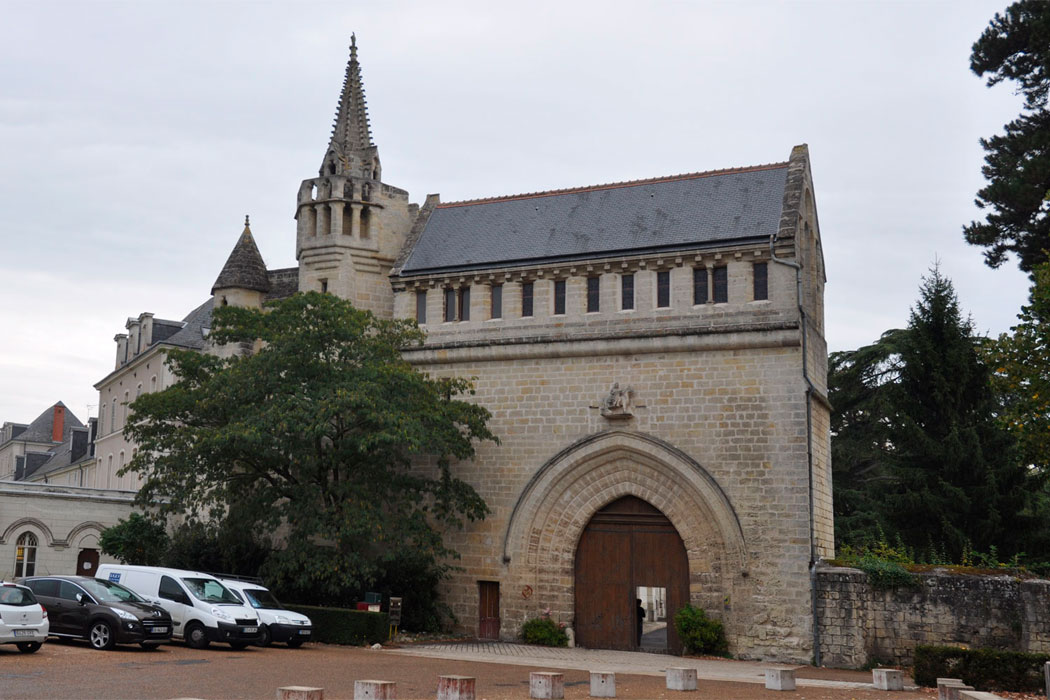
La Crosse Portal
This place, known as Marmoutier, was more isolated and had been occupied since earlier times. Tradition associates it with the cell of Saint Gatianus († 301), one of the Seven Apostles of Gaul and regarded as the first bishop of Tours. Over time, Marmoutier developed into an eremitical colony enclosed by a wall, where perhaps eighty anchorites lived in caves cut into the rock and in huts. They also shared communal facilities, including a church dedicated to Saints Peter and Paul.
At the end of the fifth century, during the episcopate of Volusianus († 498), a new church dedicated to Saint John was erected and the monastic complex was renovated, increasing its popularity and making it an important centre of devotion. After the founder’s death, his cell and the objects associated with Saint Martin became objects of veneration. Although there is no archaeological evidence to confirm it, tradition maintains that Marmoutier also suffered from Viking incursions. In 853, the monastery is said to have been plundered and left in ruins; according to tradition, 116 monks were killed and the few survivors fled.
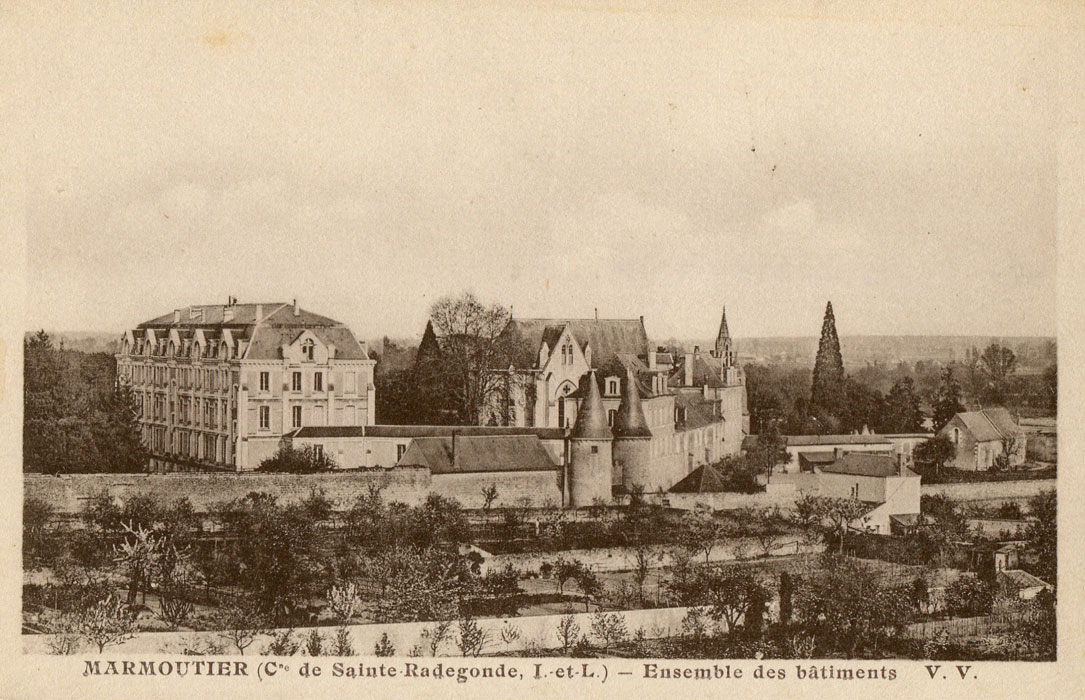
Old postcard, private collection
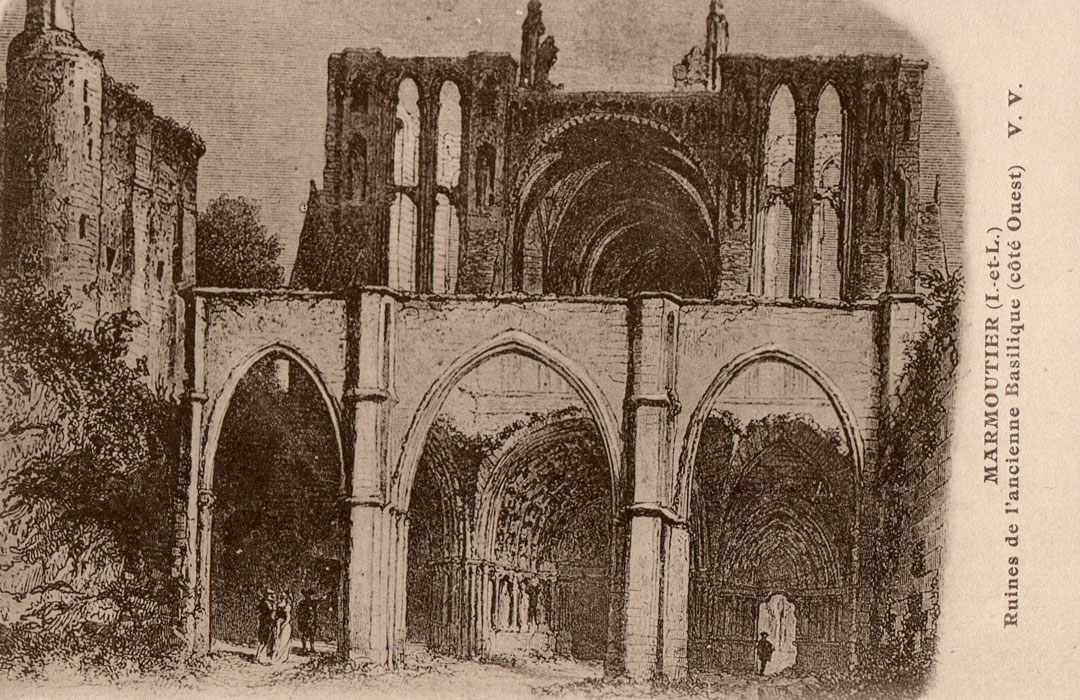
Demolition of the monastery
Old postcard, private collection
A long period of hardship and decline probably followed. During calmer times, the canons of Saint-Martin cared for Marmoutier, which became dependent on that collegiate church. A small community was established there to maintain religious life. By the later tenth century, Marmoutier had begun to recover the possessions and privileges it had enjoyed during the Carolingian period, before the Norman invasions. However, monastic regularity was not restored until 982 through the intervention of Count Odo I of Blois (c. 950-996), who also held the office of lay abbot of Marmoutier.
The count requested the assistance of Abbot Mayeul of Cluny (910-994), who in 982 provided the monastery with a new Cluniac community and transformed it into a regular house. Mayeul himself became its first abbot. William the Conqueror (c. 1028-1087) also contributed to this restoration through the construction of new buildings. The church was consecrated in 1096 by Pope Urban II. Thereafter, a long period of prosperity followed, owing to its association with Saint Martin figure, which attracted resources and enhanced its influence.
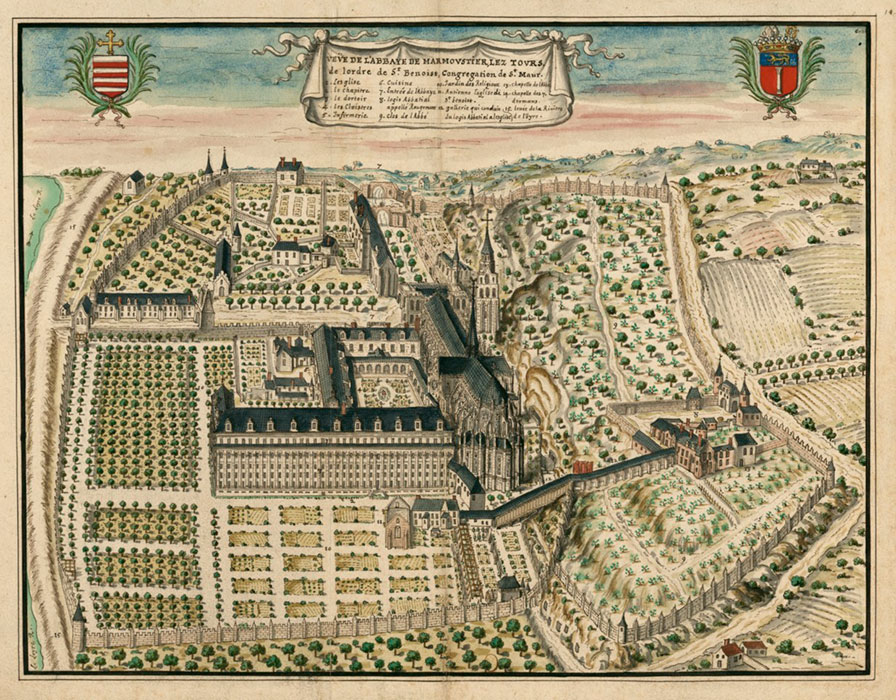
Veüe de l'Abbaye de Marmoustier Lez Tours
Louis Boudan (1699)
Bibliothèque nationale de France
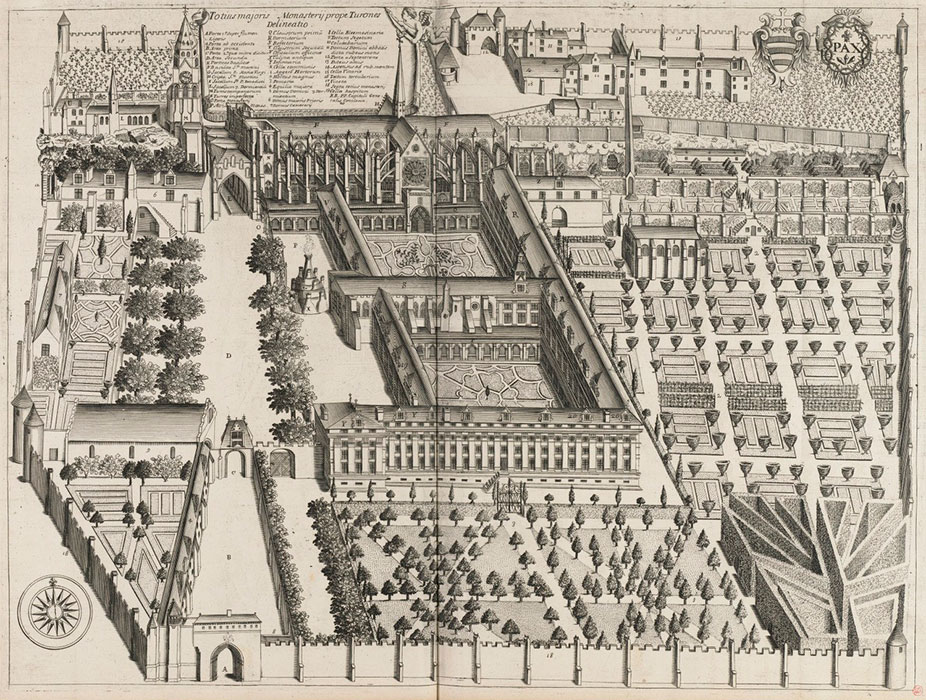
Monasticon Gallicanum
Bibliothèque nationale de France
Marmoutier took part in numerous foundations and reconstructions of abbeys throughout the region and possessed a large number of dependent priories. Many monks trained at Marmoutier went on to hold important offices in other monasteries. By the twelfth century, it had developed into a major monastic complex. In 1255, King Louis IX of France placed the abbey under his protection and that of his successors. It also experienced the effects of the Hundred Years’ War; although it was not directly affected by military operations, its economic situation suffered as a result.
The Wars of Religion had a more direct impact. In 1562, Marmoutier was attacked and plundered. Nevertheless, it remained one of the most prosperous monastic establishments in the kingdom. In 1629, Cardinal Richelieu (1585-1642) was appointed abbot of Marmoutier and promoted the arrival of the Congregation of Saint-Maur which, from 1637 onward, undertook the reform of the monastery, both in terms of observance and the renewal of its buildings. The monastery survived until the Revolution; its dismantling began in 1789 and the last monks were forced to leave in 1792.
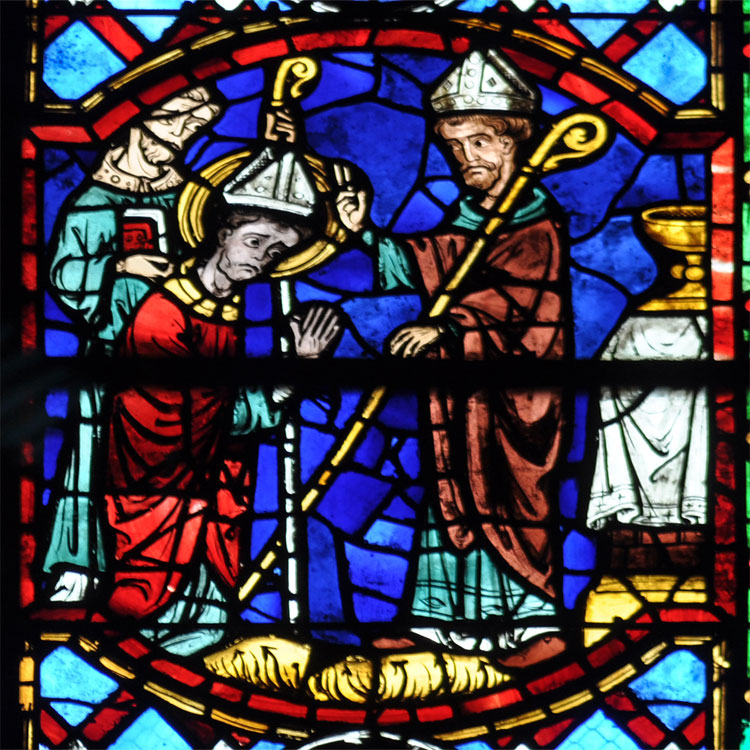
Consecration of Saint Martin as Bishop of Tours
Stained glass window in Tours Cathedral (c. 1300)
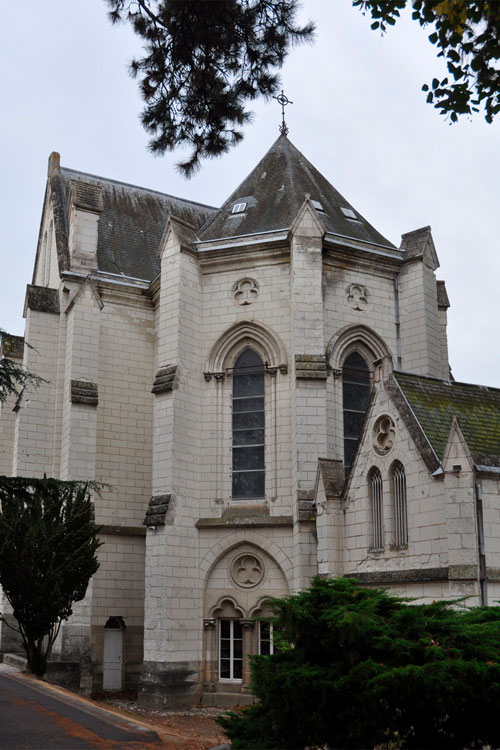
Current chapel, modern construction
After serving as a military hospital, the site was sold in 1799. It soon fell into ruin and was almost completely demolished between 1818 and 1819. In 1847, the surviving remains passed to the Dames du Sacré-Cœur de Jésus, who revived the memory of Saint Martin and established an educational institution that remains active today. Following recognition of the site's historical importance, archaeological excavations have been carried out since the last quarter of the twentieth century, providing new insights into its history.
Few remains of the former monastery survive today. The Romanesque church underwent numerous alterations and enlargements during the eleventh and twelfth centuries before being rebuilt in the Gothic style during the thirteenth and fourteenth centuries. It possessed a crypt, parts of which have survived. The church also preserves part of the tower known as the tour des Cloches. Other notable remains include the portal de la Crosse, dating from the first quarter of the thirteenth century, part of the medieval guesthouse, and the Sainte-Radegonde Gate, one of the few surviving structures from the Maurist period (eighteenth century).
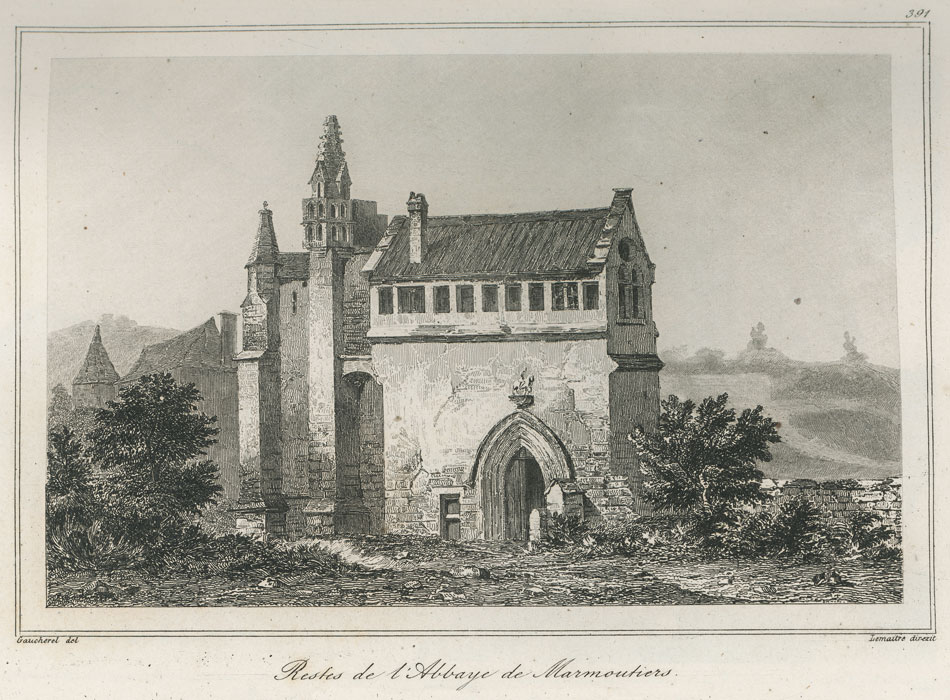
La Crosse Portal
Illustration from Historia de la Francia (1841)
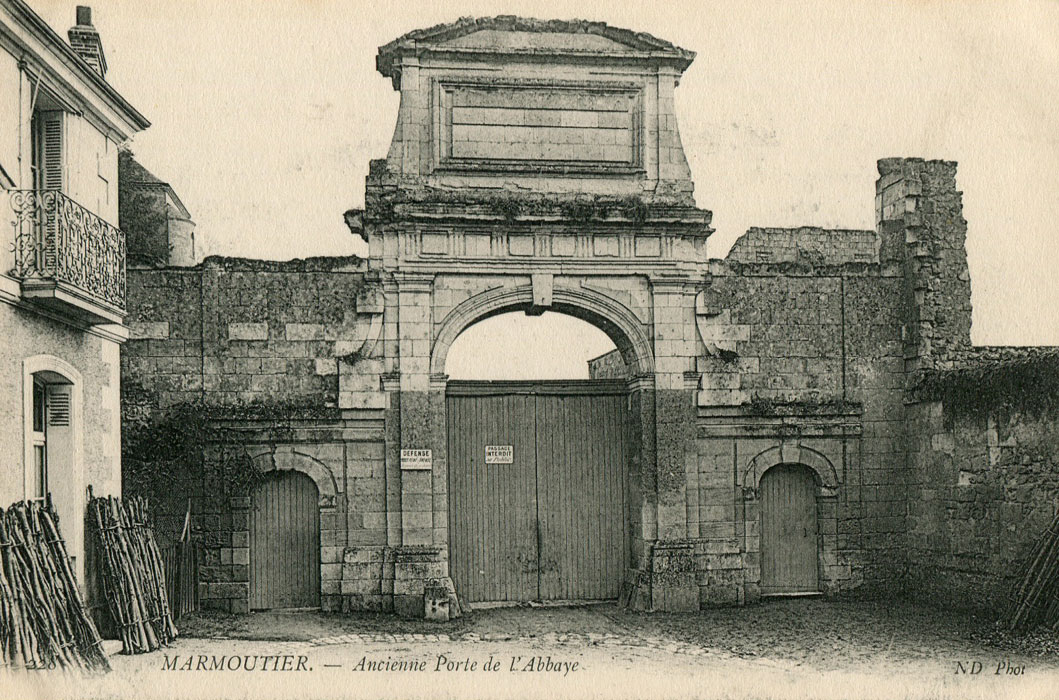
Portal of Sainte-Radegonde (18th century)
Old postcard, private collection
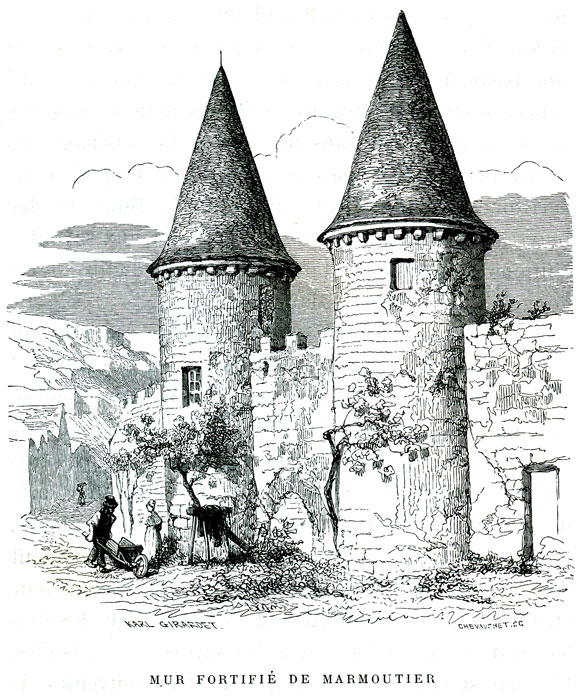
Towers of the monastery wall
Illustration from Abbayes et monastères (1870)

According to Armorial général de France (18th century)
Bibliothèque nationale de France
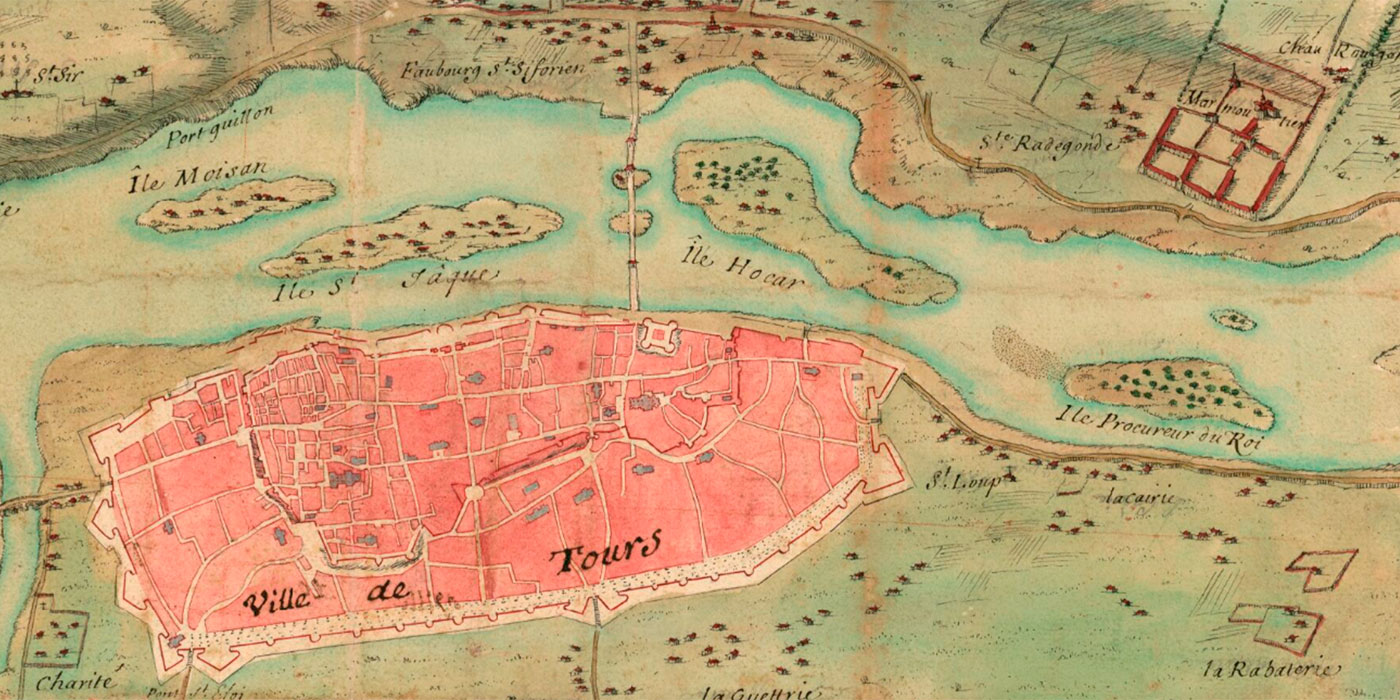
Detail of Plan du cours de la Loire (17th century)
Bibliothèque nationale de France
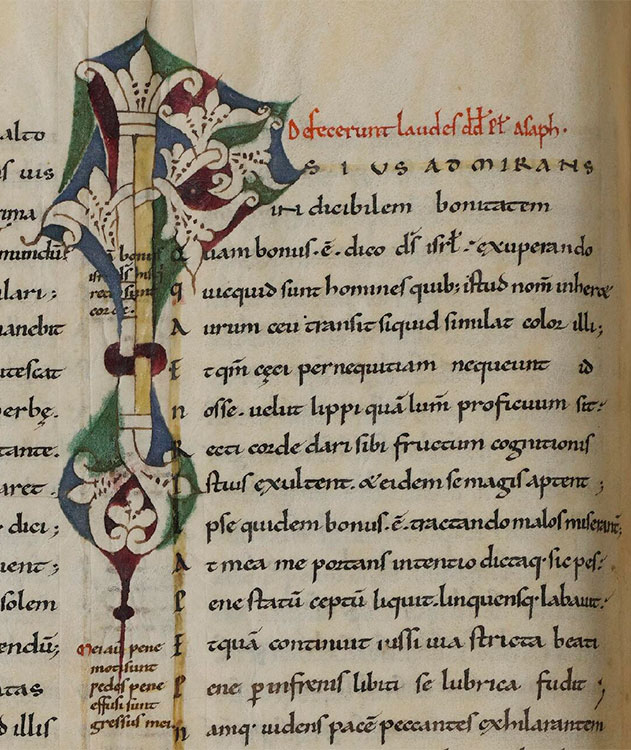
Psalter (11th century)
Bibliothèque municipale de Tours (MS 90)
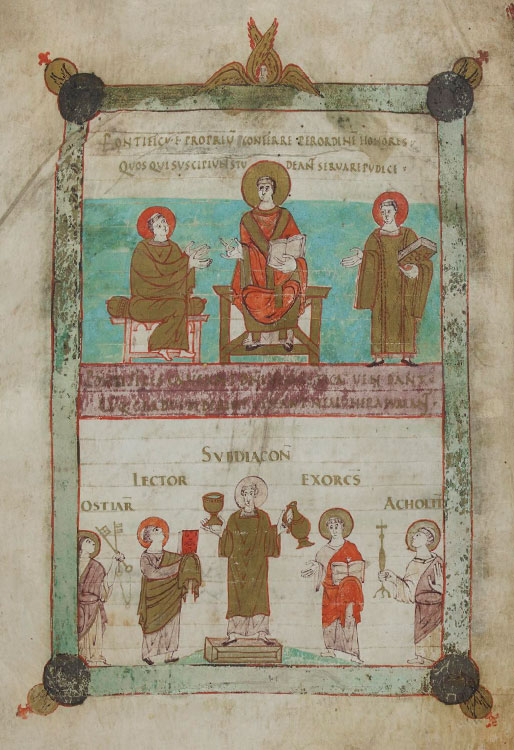
Sacramentary (845-850)
Bibliothèque municipale d'Autun (S 19 B)
During the abbacy of Hugues de Rochecorbon (1210-1227), the grange of Meslay was established near the monastery; it still preserves much of its medieval fabric. It also served as the seat of a priory.
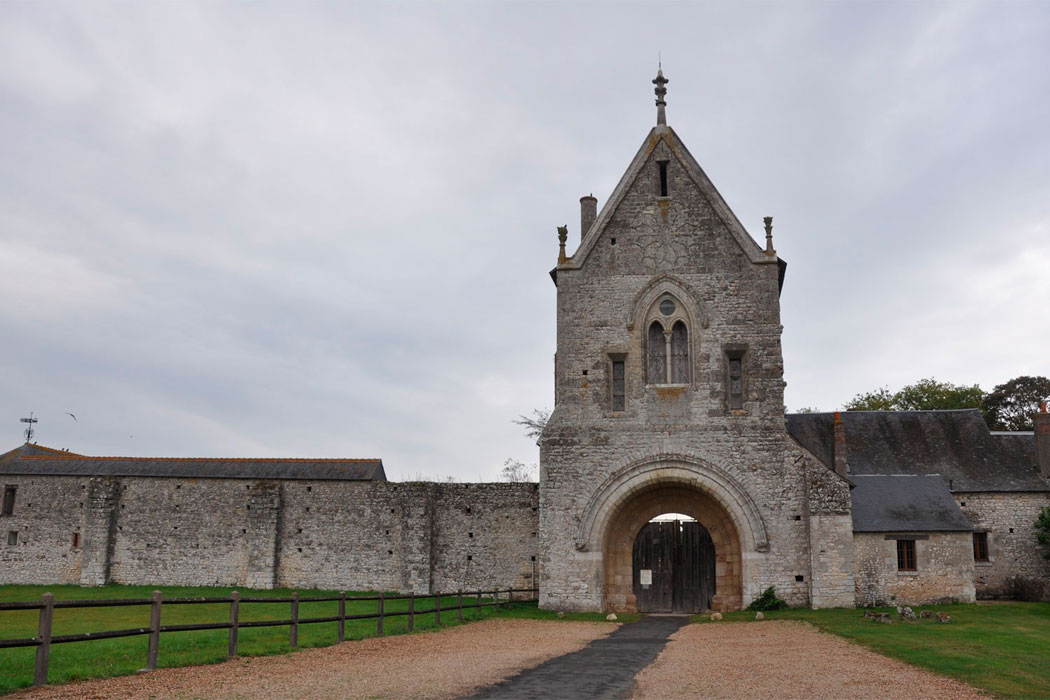
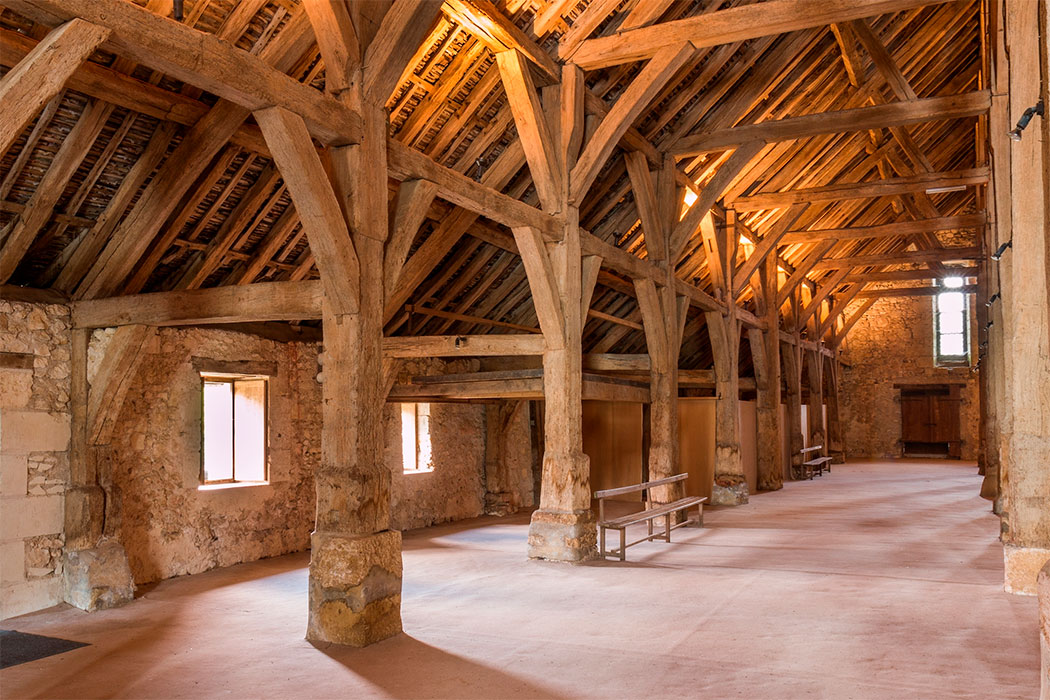
Foto de Jmenj, a Wikimedia
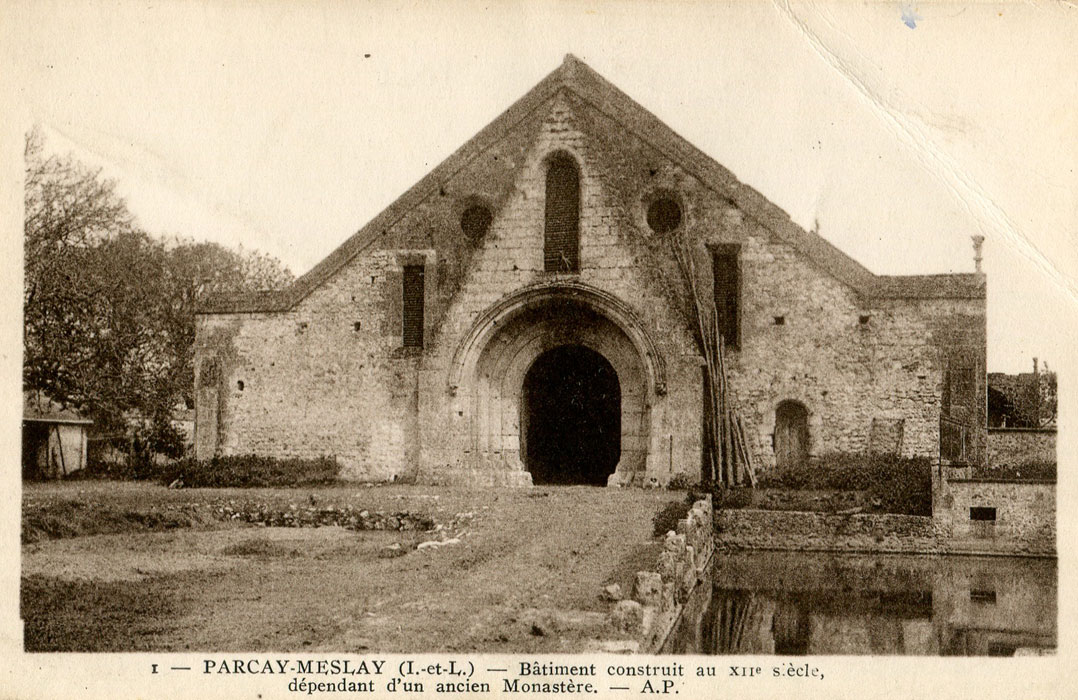
Old postcard, private collection
- BESSE, Jean-Martial (1920). Abbayes et prieurés de l'ancienne France, vol. 8, Tours. París : Picard
- CARRÉ DE BUSSEROLLE, Jacques-Xavier (1879). Dictionnaire géographique, historique et biographique d'Indre-et-Loire et de l'ancienne province de Touraine. Vol. II. Tours: Rouillé-Ladevèze
- HUREL, Daniel-Odon (1987). La reconstruction de Marmoutier par les Mauristes (1638-1715). Revue d'histoire de l'Église de France, vol. 73
- LE BAS, Philippe (1841). Historia de la Francia. Vol. 1. Barcelona: Imp. Nacional
- LELONG, Charles (1989). L’abbaye de Marmoutier. Chambray: C. L. D.
- LORANS, Élisabeth (2007). Marmoutier, le premier monastère d’Occident aux portes de la ville. Tours antique et médieval. Lieux de vie, temps de la ville. Tours: FERACF
- LORANS, Élisabeth; i altres, dir. (2014). Marmoutier, un grand monastère ligérien : Antiquité - XIXe siècle. Ministère de la Culture et de la Communication
- MARTÈNE, Edmond; CHEVALIER, C. (1874-75). Histoire de l’abbaye de Marmoutier. 2 Vols. Tours
- PEIGNÉ-DELACOURT, Achille (1877). Monasticon Gallicanum. Paris: G. Chamerot
- PIETRI, Luce (1983). La ville de Tours du IVe au VIe siècle. Naissance d'une cité chrétienne. Rome: École Française de Rome, 69/1
- POUYET, Thomas (2019). Cormery et son territoire : origines et transformations d’un établissement monastique dans la longue durée (8e - 18e siècles). Université de Tours
- RANJARD, Robert (1949). L’abbaye de Marmoutier. Congrès archéologique de France, 106 ss. Tours. Société française d'archéologie
- SAINT-MAUR, Congregació de (1856). Gallia Christiana in provincias ecclesiasticas distributa. Vol. 14. París: Typographia Regia
- SEMUR, François-Christian (2011). Abbayes de Touraine. La Crèche: Geste Ed.
- SULPICE SÉVÈRE (1861). Vie de saint Martin. Tours: Mame
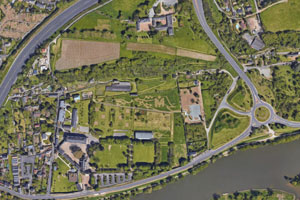
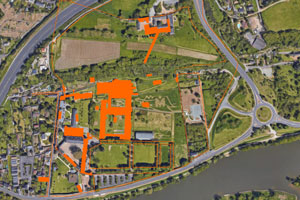
The remains of the abbey of Marmoutier are located east of the city of Tours, on the opposite bank of the Loire. Meslay is located in the north