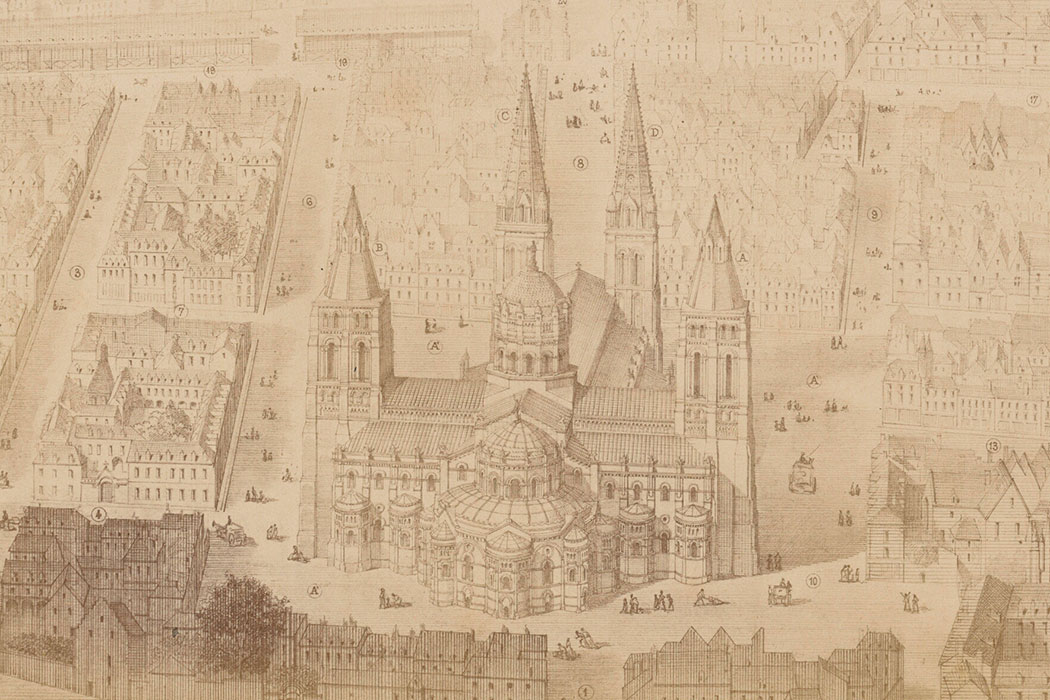
Restitution of the basilica, before demolition
Gabriel Blaise (c. 1874)
Institut Catholique de Paris


During the 4th century, a Christian necropolis developed on the site of the present Basilica of Saint-Martin de Tours, occupying an area containing remains of Roman-period structures. Saint Martin served as bishop of the Diocese of Tours between 371 and 397. In the latter year, he died at Candes, west of the city, and his body was brought to this site, where he was buried.
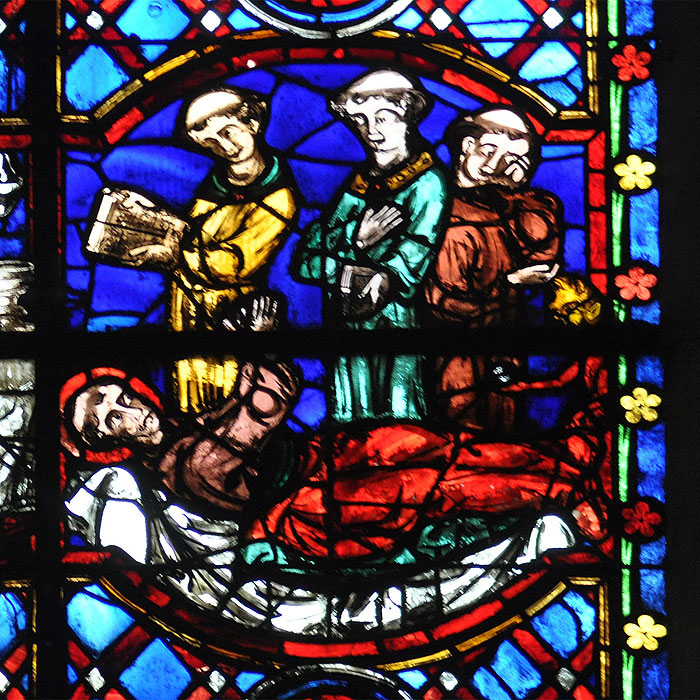
Stained glass of Tours Cathedral (c. 1300)
His successor as bishop was Saint Brice, who held office between 397 and 442. The new bishop undertook to enhance the burial place with a simple structure that would later also serve as his own burial site. This building, dedicated to Saint Peter and Saint Paul, was remodelled under Bishop Perpet (458–488), who commissioned the construction of a new basilica between 467 and 471, consecrated in the latter year. While these works were underway, the saint's body was housed in a simple temporary building, possibly made of wood, of which some remains are believed to have been identified.
The cult of Saint Martin of Tours gained considerable momentum through the spread of his reputation, and the site came to be placed under his patronage, replacing the earlier dedication to Saints Peter and Paul. One of the principal figures responsible for the expansion of the cult of Saint Martin was Gregory of Tours, who served as bishop of the diocese between 573 and 593 and left written accounts of both the site and Saint Martin's life in his Historia Francorum. Pilgrimage to the Basilica of Saint-Martin was complemented by the Abbey of Marmoutier, located on the outskirts of Tours and also closely associated with the saint.
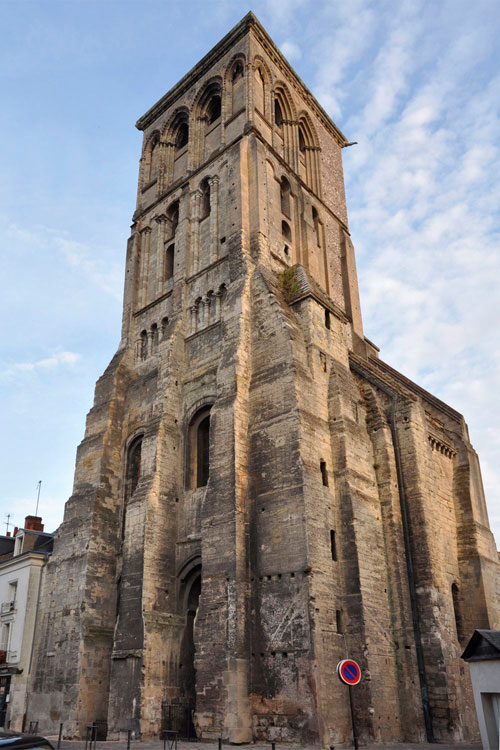
Tower of Charlemagne, north of the transept
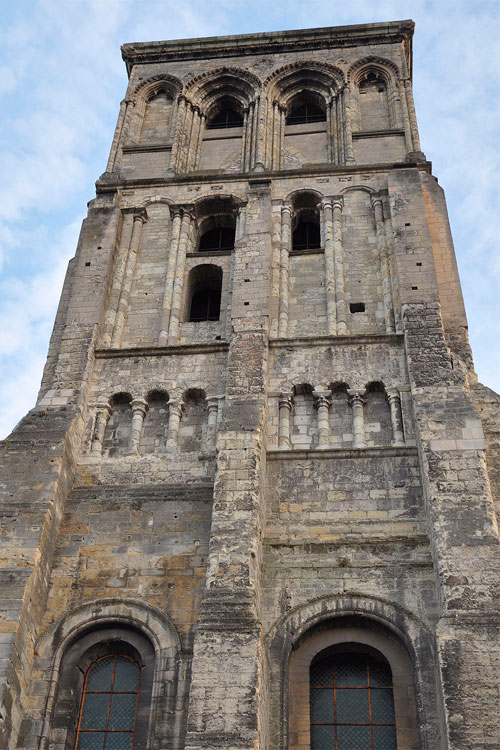
Tower of Charlemagne
The Basilica of Saint-Martin and the city of Tours itself became an important centre of attraction for the Merovingian rulers, beginning with Clovis I (c. 466–511), and later for the Carolingian dynasty. The traditions of Tours recount several episodes illustrating the favour shown by kings towards this city. The basilica was served by a community of clerics dependent on the cathedral. Between the late 5th and early 6th centuries, a group of buildings was constructed within an enclosed precinct occupied by secular clerics until the mid-7th century, when other monastic communities developed in its vicinity, including that of Saint-Pierre-le-Puellier. During this period, communities of canons and monks coexisted, following different forms of regulation. At the beginning of the 9th century, these communities were reformed according to principles that would later be formalised at the Synod of Aachen in 817.
The monks moved to the Benedictine Abbey of Saint-Paul de Cormery (Indre-et-Loire), while the canons remained at Saint-Martin. Their way of life was probably not uniform: some canons lived in community, whereas others maintained their own residences. By the end of the 9th century, the institution had taken the form of a secular collegiate church under the direction of abbots. The community was then particularly numerous; sources mention more than two hundred canons, a number that gradually declined over time. During the Norman invasions (853–903), Saint-Martin and its surroundings were affected on several occasions. The saint's relics were temporarily taken to Leré (Cher), where the Collegiate Church of Saint-Martin still survives; they were later transferred to Chablis (Yonne, Burgundy) and also to Saint-Martin-de-la-Bazoche, within the city of Tours itself, near the Roman amphitheatre.
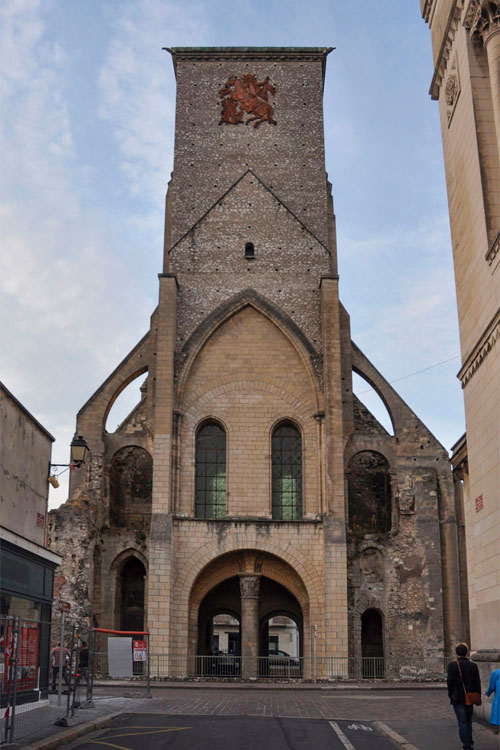
Tower of Charlemagne
View from the missing transept
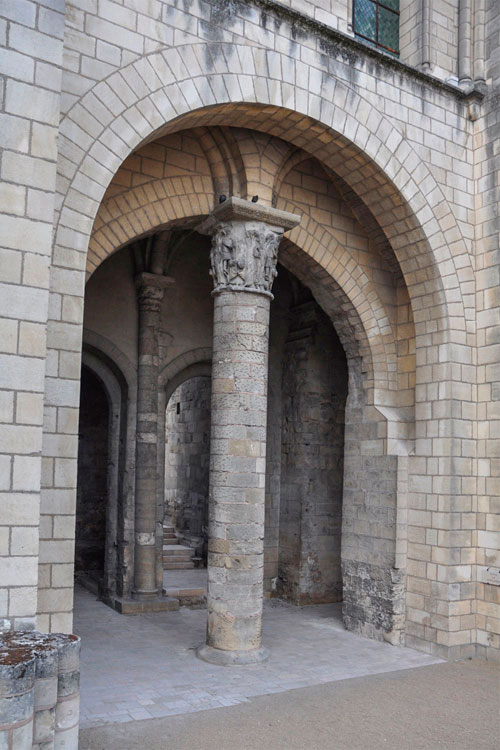
Tower of Charlemagne
Despite these difficulties, the canons took responsibility for the Abbey of Marmoutier, which had been temporarily abandoned. Once conditions had stabilised, the site was protected by a defensive enclosure surrounding the basilica and its numerous dependencies. A major fire occurred in 994, necessitating another rebuilding campaign and the consecration of the church in 1014. The monastery was governed by abbots until the 10th century, after which it came under the authority of a dean. It was a canonical community enjoying privileged status, with its own regulations and a degree of independence from ecclesiastical authorities, both from the Bishop of Tours and from the papacy itself.
In the last quarter of the 12th century, the basilica underwent further partial reconstruction. During the French Wars of Religion, particularly in 1562, the site suffered significant damage, and many of the saint's relics were lost. Nevertheless, the collegiate church continued to function until the 18th century. The Romanesque church survived until the French Revolution, although it had fallen into a poor state of repair due to neglect. Following its abandonment, its demolition was decided upon, and this process was already well advanced by the closing years of the 18th century.
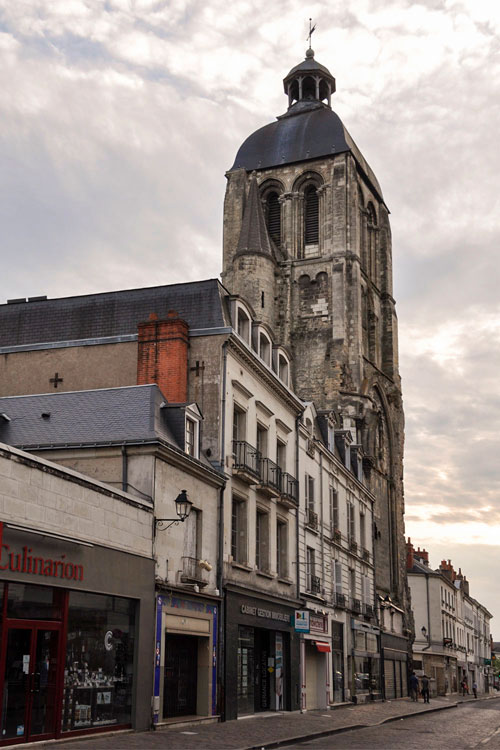
Horloge tower
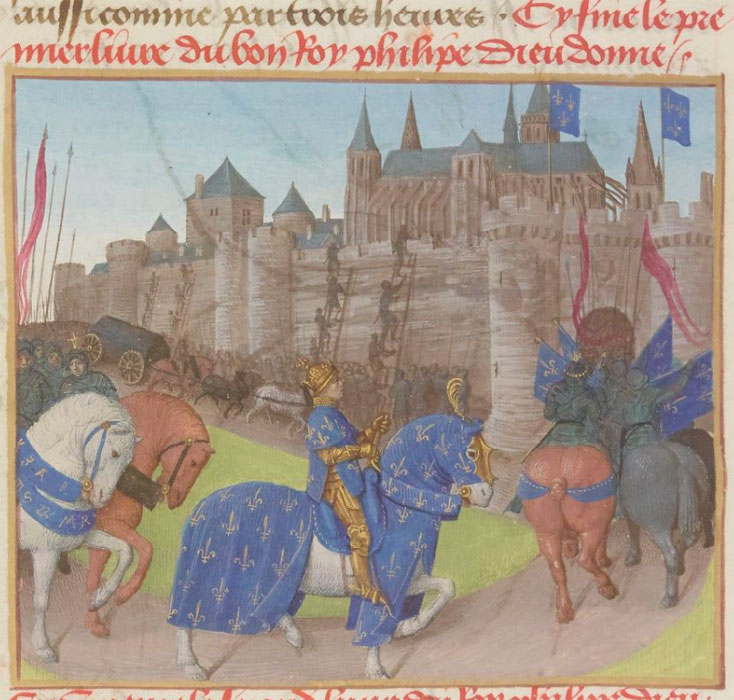
Philip Augustus of France entering Tours,
with the Basilica of Saint-Martin in the background
Miniature of Les Chroniques de Saint-Denis
(Jean Fouquet, c. 1460)
Bibliothèque nationale de France
The 11th-century church, with later modifications, was a building of considerable size. It consisted of five aisles divided into eleven bays, together with a series of chapels added along the southern side, adjacent to the cloister. It also featured a three-aisled transept. The eastern end was formed by the chancel, surrounded by a double ambulatory corresponding to the side aisles of the church. This ambulatory provided access to five radiating chapels. The most significant remains of the building that survive today are the towers known as Charlemagne and Horloge, two of the five towers that once belonged to the complex. From 1887 onwards, a new basilica was erected, smaller in scale and with a different orientation, while preserving Saint Martin's burial place, which continues to be venerated.
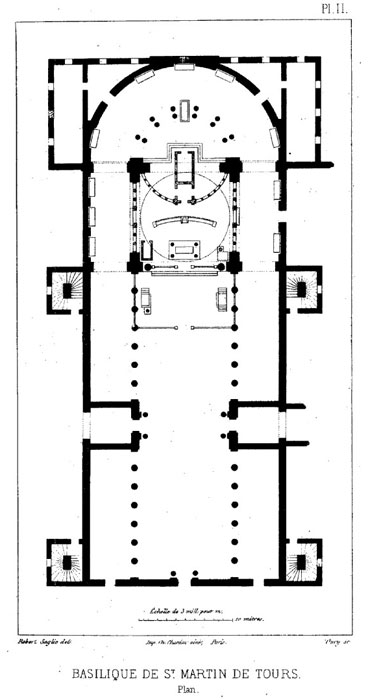
Plan of the basilica of Perpet (5th century)
According to Quicherat, in Restitution de la basilique de Saint-Martin de Tours (1869)
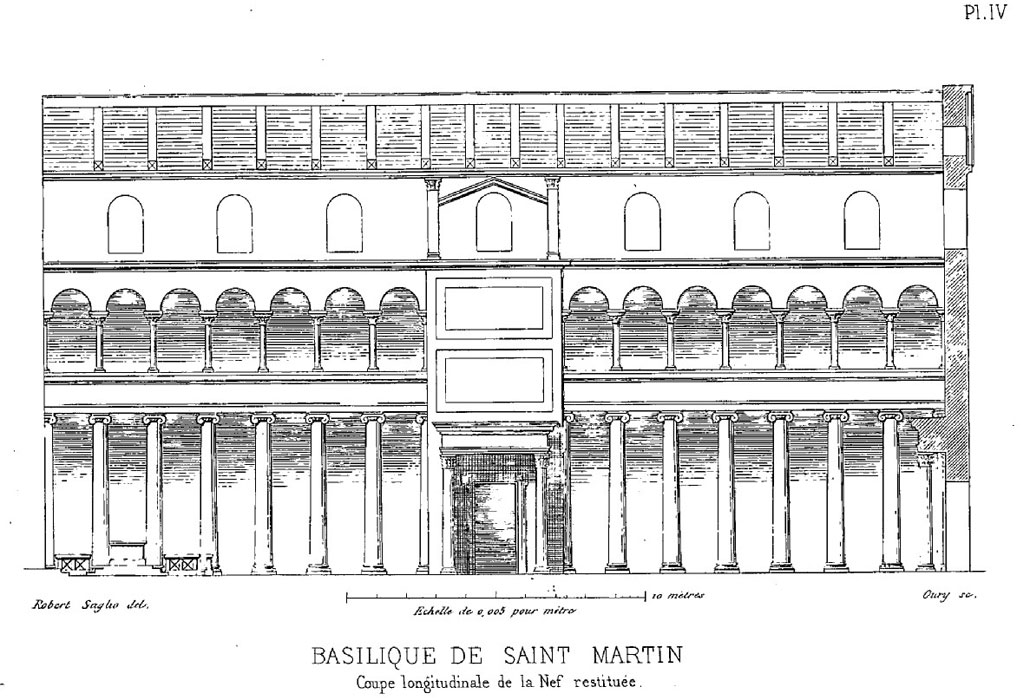
Interior of the Basilica of Perpet (5th century)
According to Quicherat, in Restitution de la basilique de Saint-Martin de Tours (1869)
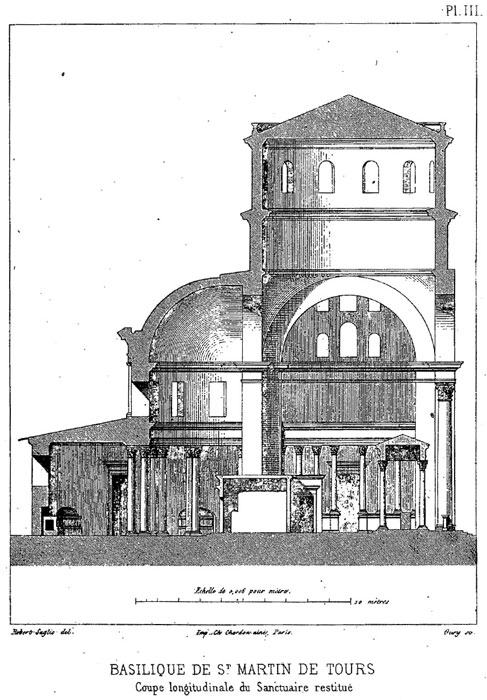
Section view of the Basilica of Perpet (5th century)
According to Quicherat, in Restitution de la basilique de Saint-Martin de Tours (1869)
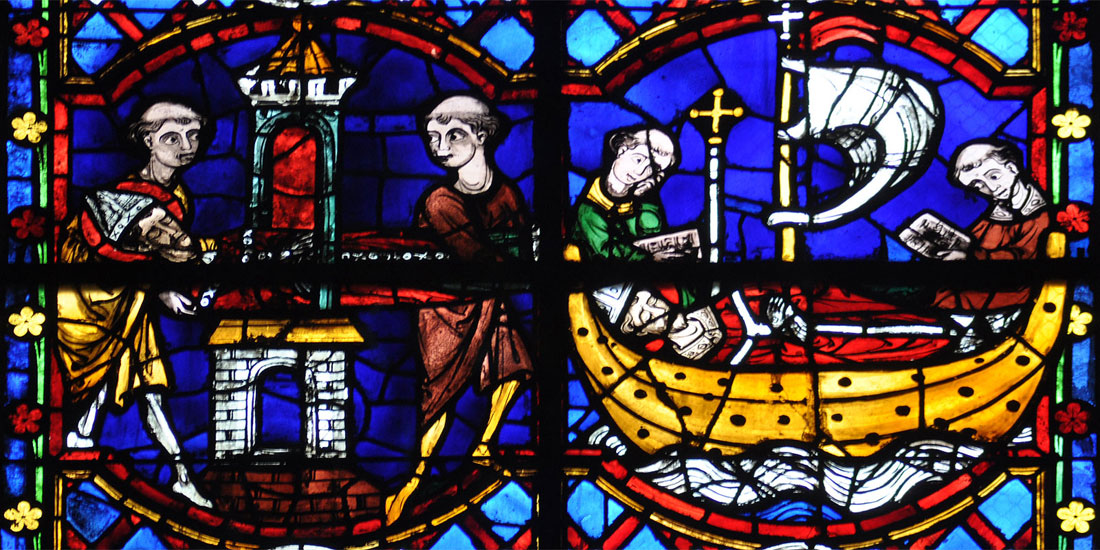
Transport of the body of Saint Martin to Tours
Stained glass window of Tours Cathedral (c. 1300)
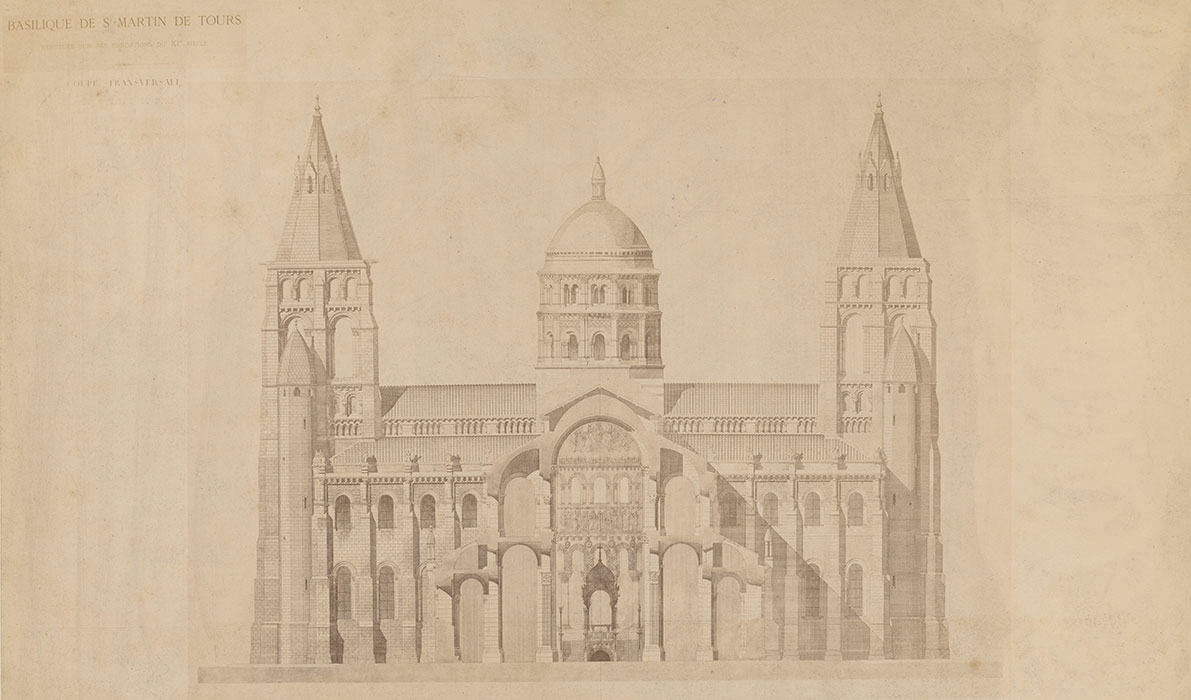
Restitution of the basilica, before demolition. Section view
Gabriel Blaise (c. 1874)
Institut Catholique de Paris
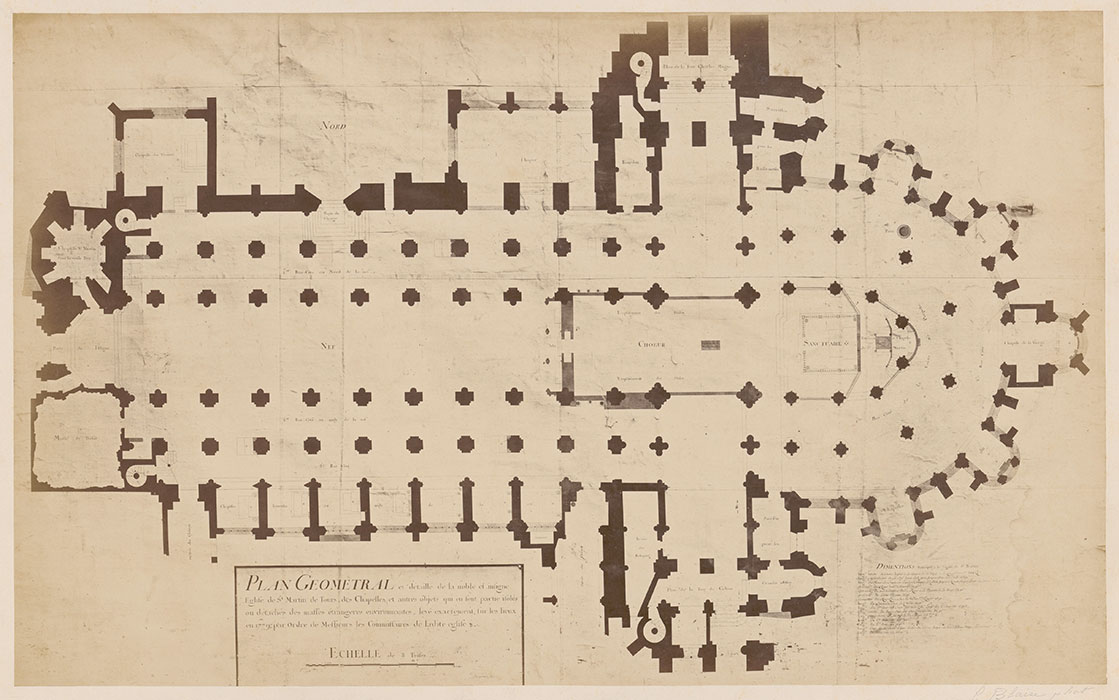
Restitution of the basilica, before demolition. Floor plan
Gabriel Blaise (c. 1874)
Institut Catholique de Paris
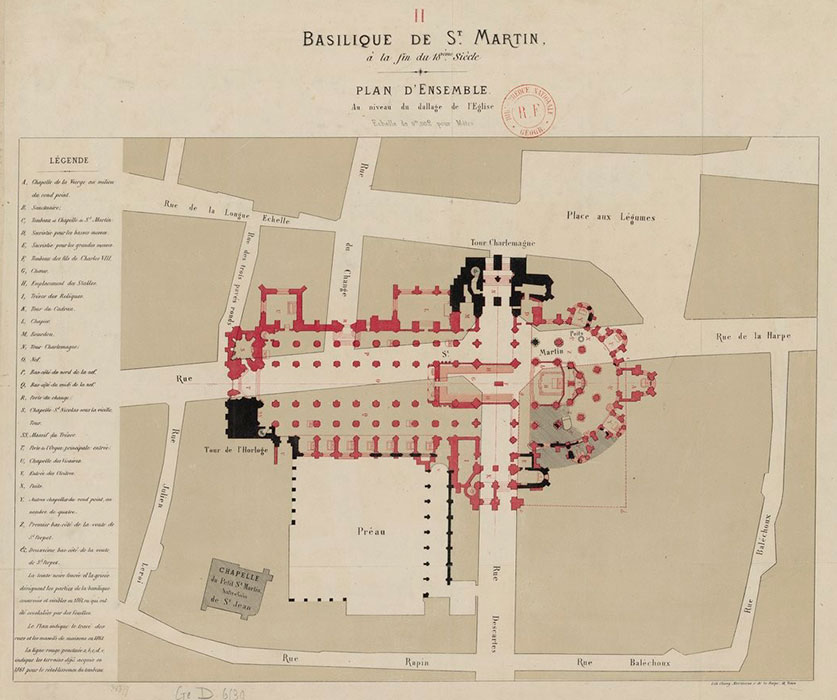
Plan of the church of Saint-Martin de Tours on the city's street network
In black, the preserved parts (19th century)
Bibliothèque nationale de France
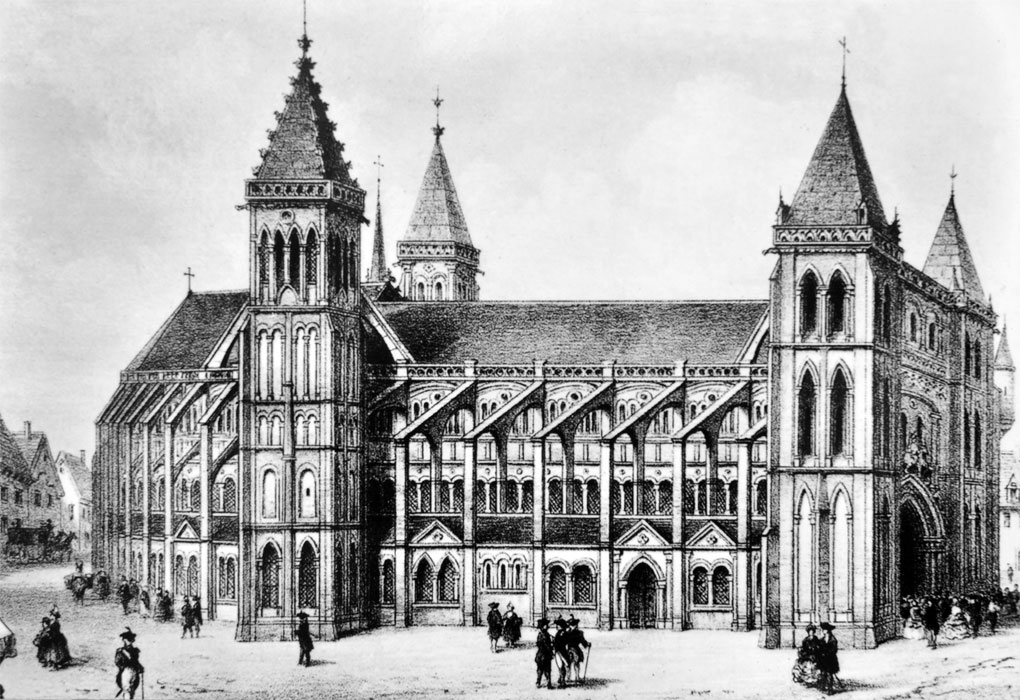
The basilica before demolition (18th century)
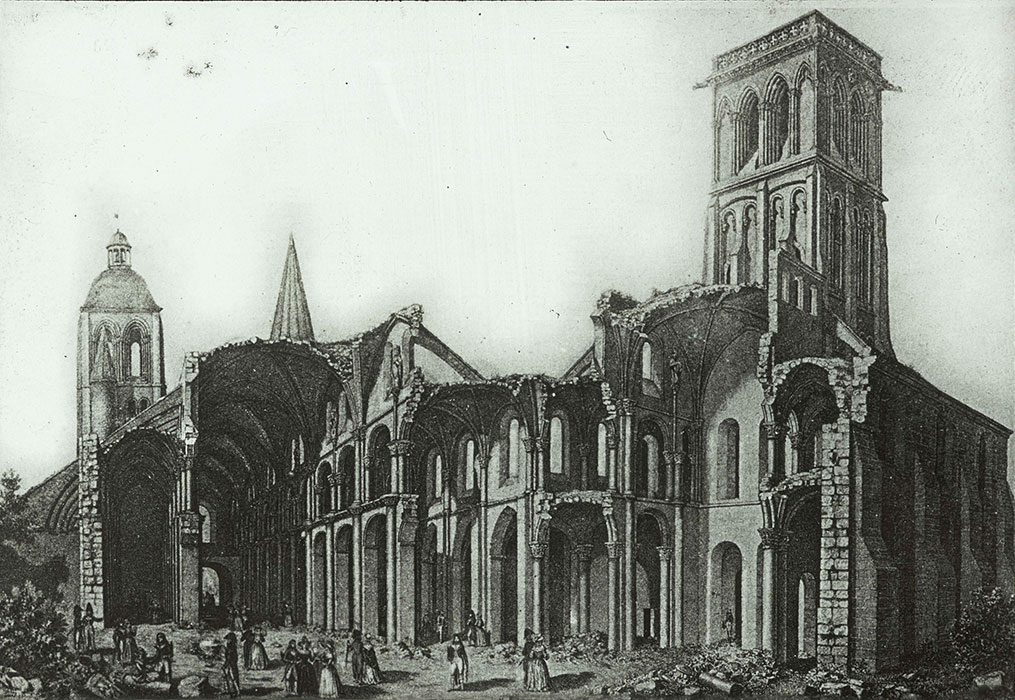
Demolition of the basilica (1797)
Institut Catholique de Paris
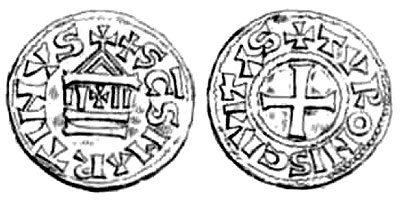
Coin minted in Saint-Martin, with the basilica
SCS MARTINVS / + TVRONIS CIVITAS
Published in Monnaies féodales de France. Vol. 1 (1858)
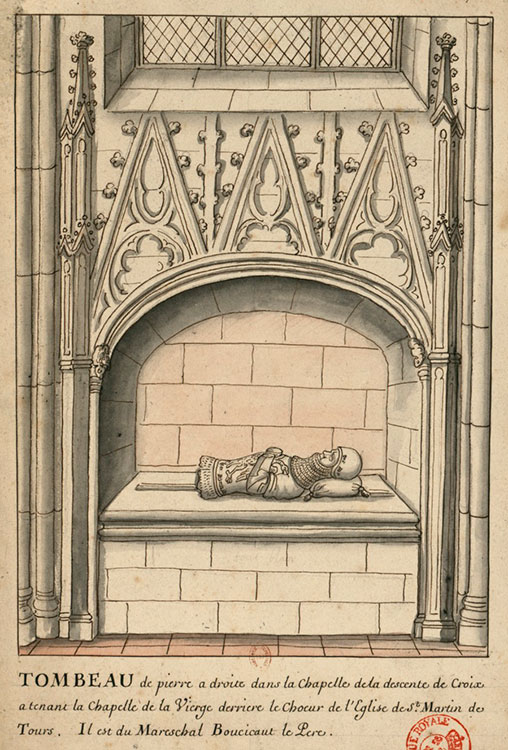
Tomb of Boucicaut le Pere
Louis Boudan (1695)
Bibliothèque nationale de France
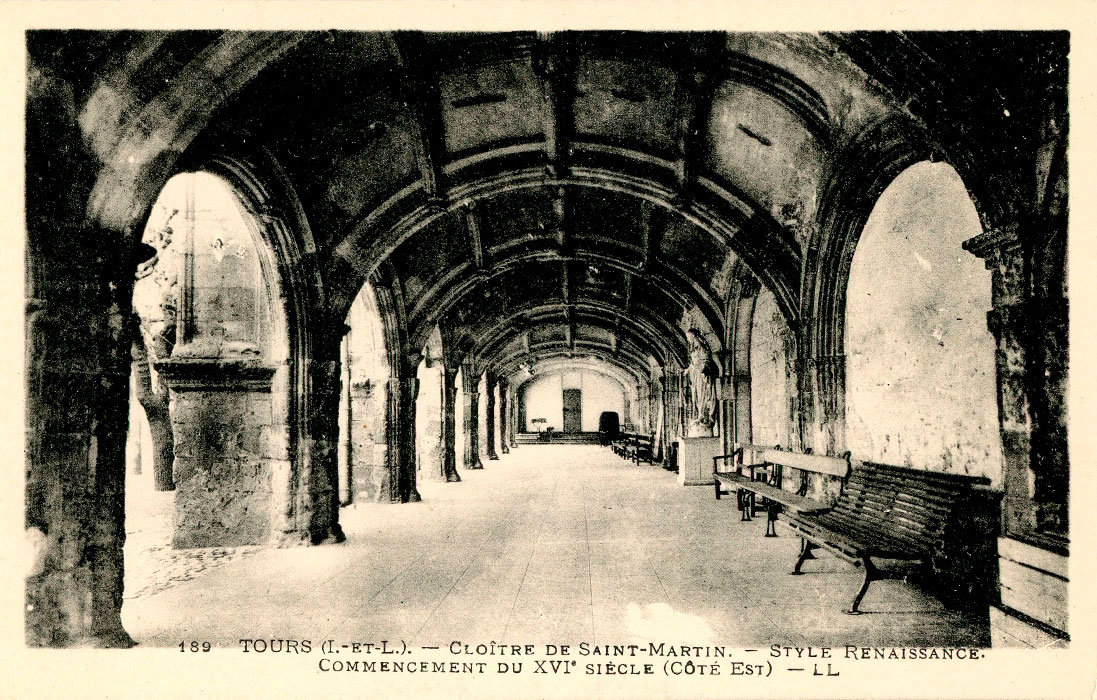
Cloister
Old postcard, private collection
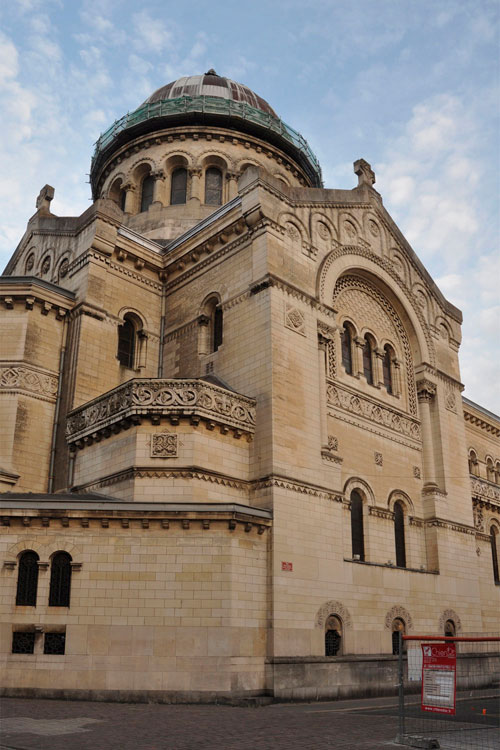
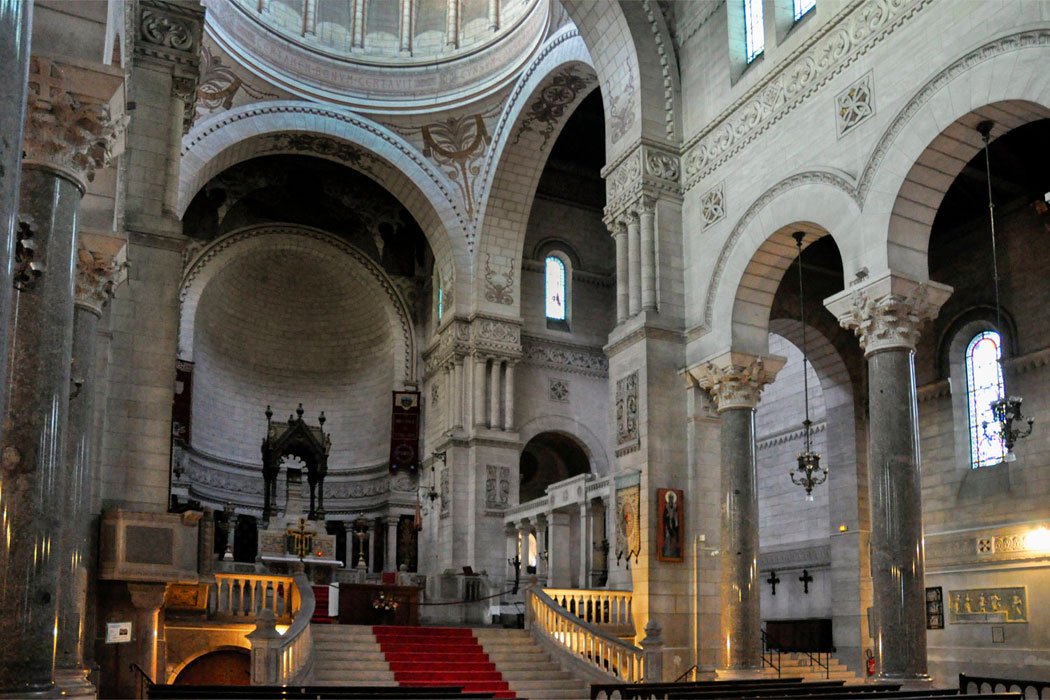
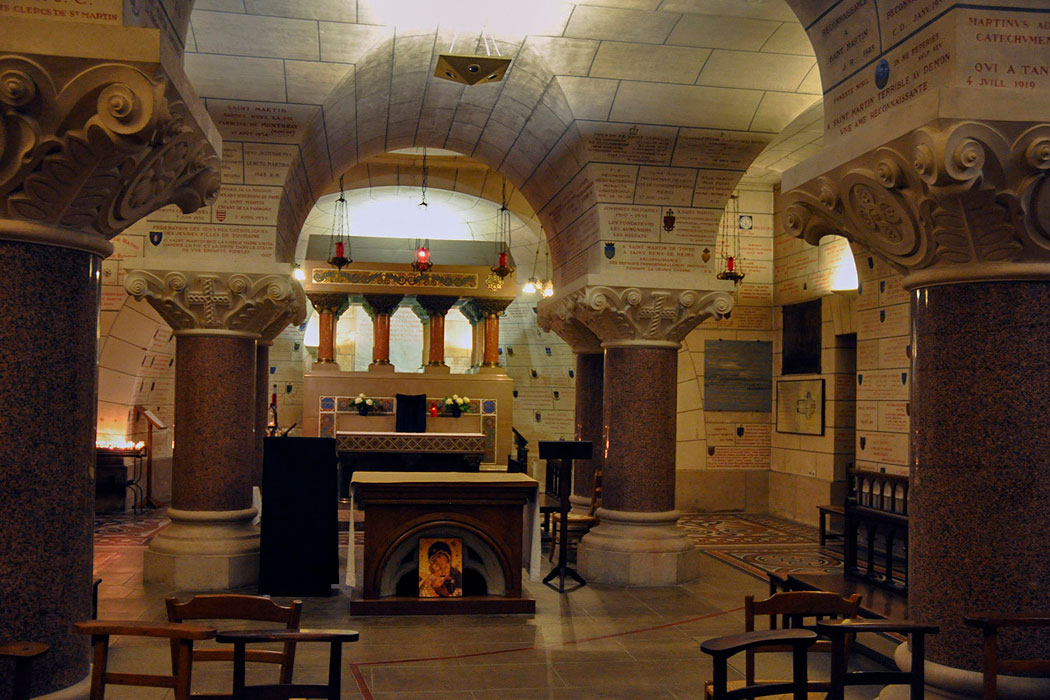
Sepulchre of Saint Martin
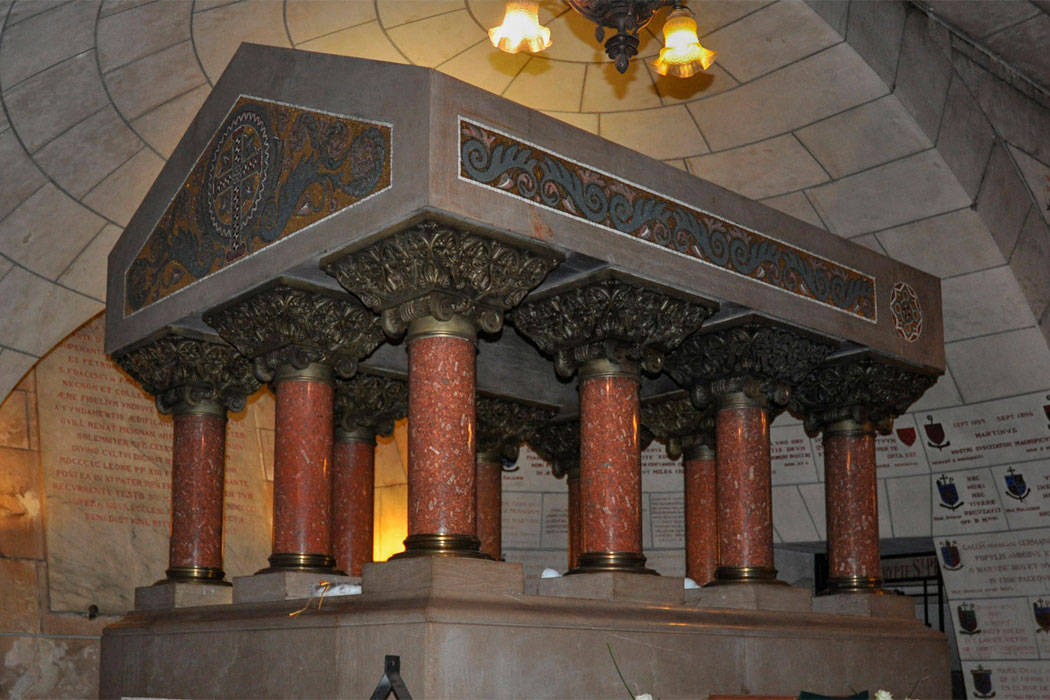
Sepulchre of Saint Martin
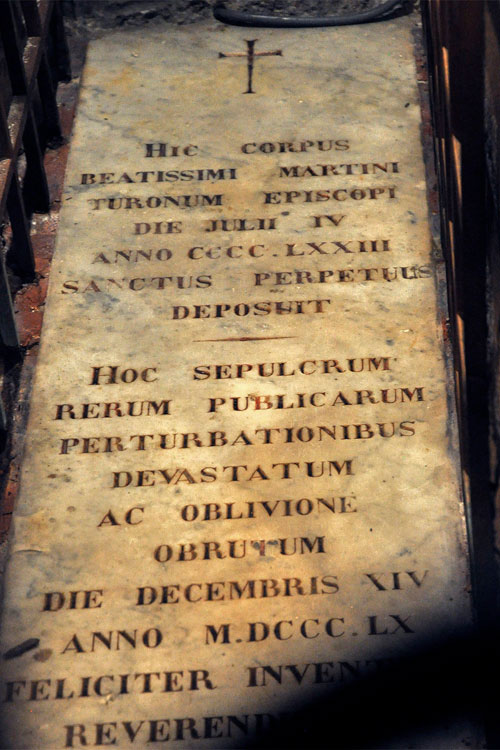
Sepulchre of Saint Martin
- BESSE, Jean-Martial (1920). Abbayes et prieurés de l'ancienne France, vol. 8, Tours. París : Picard
- CARRÉ DE BUSSEROLLE, Jacques-Xavier (1884). Dictionnaire géographique, historique et biographique d'Indre-et-Loire et de l'ancienne province de Touraine. Vol. VI. Tours: Rouillé-Ladevèze
- GALINIÉ, Henri; dir. (2007). Tours antique et médiéval. Tours: Revue archéologique du Centre de la France
- LASTEYRIE, Robert de (1892). L'église Saint-Martin de Tours, étude critique sur l'histoire et la forme de ce monument du Ve au XIe siècle. Mémoires de l'Institut national de France. T. 34
- LELONG, Charles (1975). La nef de Saint-Martin de Tours. Bulletin Monumental. T. 133
- LELONG, Charles (1986). La basilique Saint-Martin de Tours. Chambray: C. L. D.
- LESUEUR, Frédéric (1949). Saint-Martin de Tours. Congrès archéologique de France, 106 ss. Société française d'archéologie
- MABILLE, Emile (1869). Les invasions normandes dans la Loire et les pérégrinations du corps de saint Martin. Bibliothèque de l'École des Chartes. París: A. Franck
- MARTIN, Pierre (2010). Les premiers chevets à déambulatoire et chapelles rayonnantes de la Loire moyenne (Xe-Xie siècles). Tesi doctoral. Université de Poitiers
- NOIZET, Hélène (2019). La fabrique de la ville. Espace et sociétés à Tours (IXe-XIIIe siècle). París: Éditions de la Sorbonne
- POUYET, Thomas (2019). Cormery et son territoire : origines et transformations d’un établissement monastique dans la longue durée (8e - 18e siècles). Université de Tours
- QUICHERAT, Jules (1869). Restitution de la basilique de Saint-Martin de Tours. París: Didier
- RATEL, Stanislas (1886). Les basiliques de Saint Martin à Tours. Brussel·les: Vromant
- SAINT-MAUR, Congregació de (1856). Gallia Christiana in provincias ecclesiasticas distributa. Vol. 14. París: Typographia Regia
- SEMUR, François-Christian (2011). Abbayes de Touraine. La Crèche: Geste Ed.
- VAUCELLE, Edgard-Raphaël (1908). La collégiale de Saint-Martin de Tours des origines à l'avènement des Valois. París: Picard
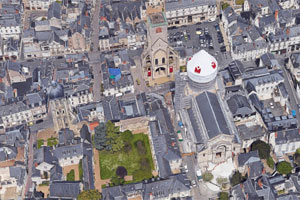
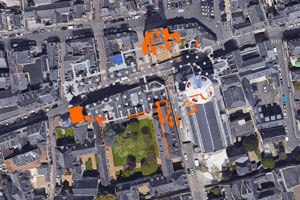
The remains of the Abbey of Saint-Martin are located in the centre of Tours, beside the present basilica