Abbey of Saint-Julien de Tours
S Julianus Turonensis / S. Iuliani / Saint-Jullien
(Tours, Indre-et-Loire)
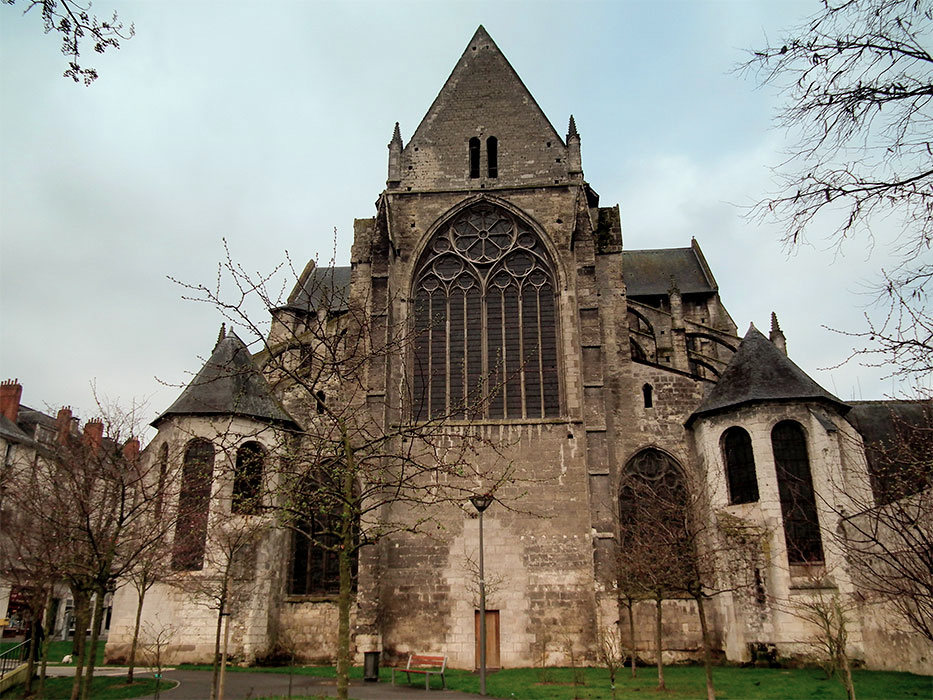
Photo by Alkhimov Maxim, on Wimimedia


Clovis I (c. 466–511), after his victory over the Visigoths at the Battle of Vouillé (507), visited Tours and the tomb of Saint Martin. He also had a chapel built there, where monks from Auvergne later settled, attracted by the devotion surrounding the saint, one of the earliest bishops of the city.
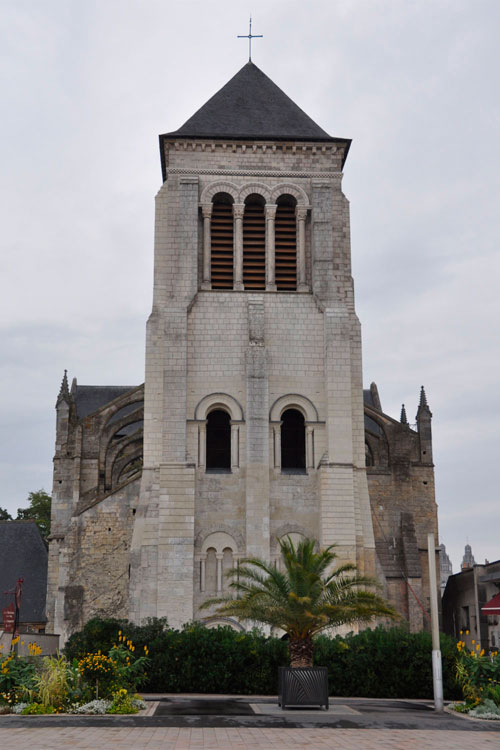
Tower (11th century)
During the episcopate of Gregory of Tours (573–593), he gave the monks relics of the martyr Julian of Brioude (3rd century), and the monastery was dedicated to him. That early establishment disappeared or was severely affected during a Viking raid in 853. Restoration took place under Archbishop Théotolon (931–945), who, with the assistance of his sister, provided the funds necessary to rebuild the site. Théotolon maintained close ties with the Abbey of Cluny (Saône-et-Loire) and had worked alongside Abbot Odo (c. 878–942) during the early years of the Burgundian monastery. In 948, the abbey church was consecrated. Upon their deaths, both Odo of Cluny and Théotolon were buried at Saint-Julien.
Around the year 990, the monk Gausbert († 1007) was appointed abbot. He played a direct role in the affairs of several monasteries in the region and, in some cases, also served as their abbot: Saint-Pierre de Maillezais (Vendée), Saint-Pierre de la Couture (Sarthe), Saint-Pierre de Bourgueil and Marmoutier (both in Indre-et-Loire), as well as Saint-Julien. The Abbey of Preuilly (Indre-et-Loire) depended on this house between 1007 and 1025.
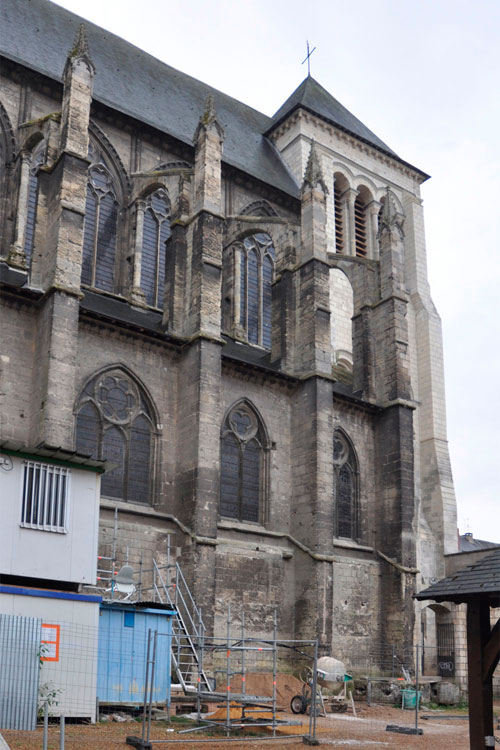
During the first half of the 11th century, Abbot Richer rebuilt the monastery because of its poor state of preservation, and it was rebuilt once again during the second half of the same century. In 1084, the new church was consecrated by the Archbishop of Tours, but it had a relatively short life, as it was severely damaged by a storm in 1224. By 1240, reconstruction work was already underway, this time in the Gothic style. Over the following centuries, new structures were added, completing the monastic complex. In 1540, the first commendatory abbot arrived and, shortly afterwards, in 1562, the house was affected by the Wars of Religion.
In 1637, during a period of marked decline, the abbey joined the Congregation of Saint-Maur, which maintained it until 1735. By that date, the community had already disappeared, and the abbey passed to the Collège de Tours, which maintained a prior there until its final suppression in 1790 during the Revolution. In 1798, the abbey was sold and passed into private hands. It was protected in 1840 and acquired by the State five years later. Restoration then began and, in 1858, worship returned to the church, now serving as a parish church. In 1944, the site was damaged by bombing during the Second World War. Further restoration campaigns followed and continued into recent times.
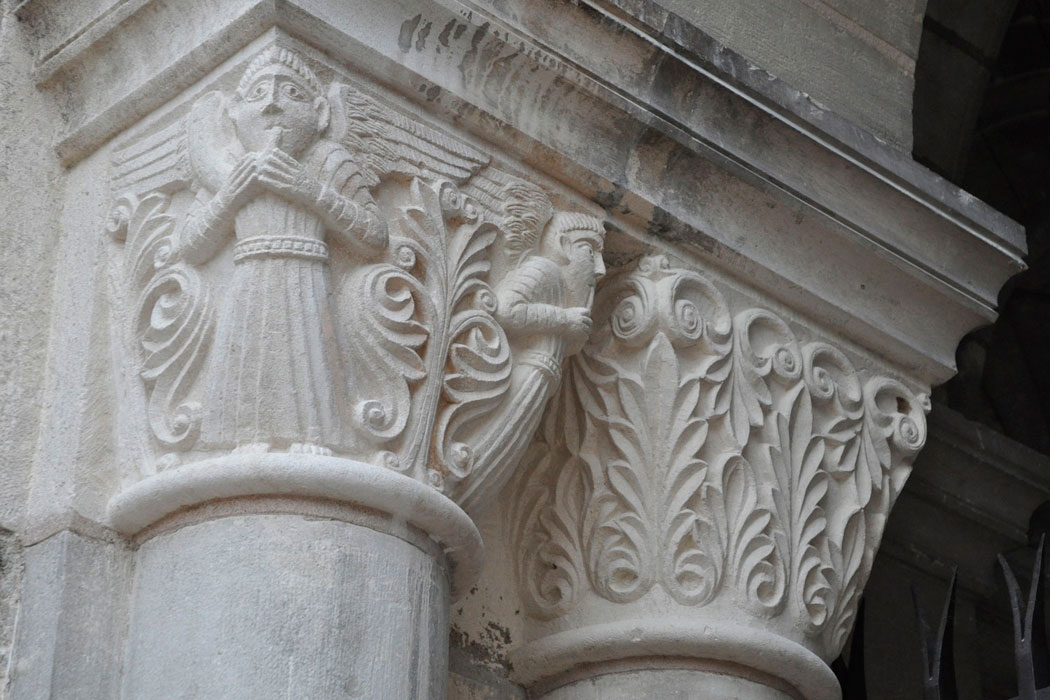
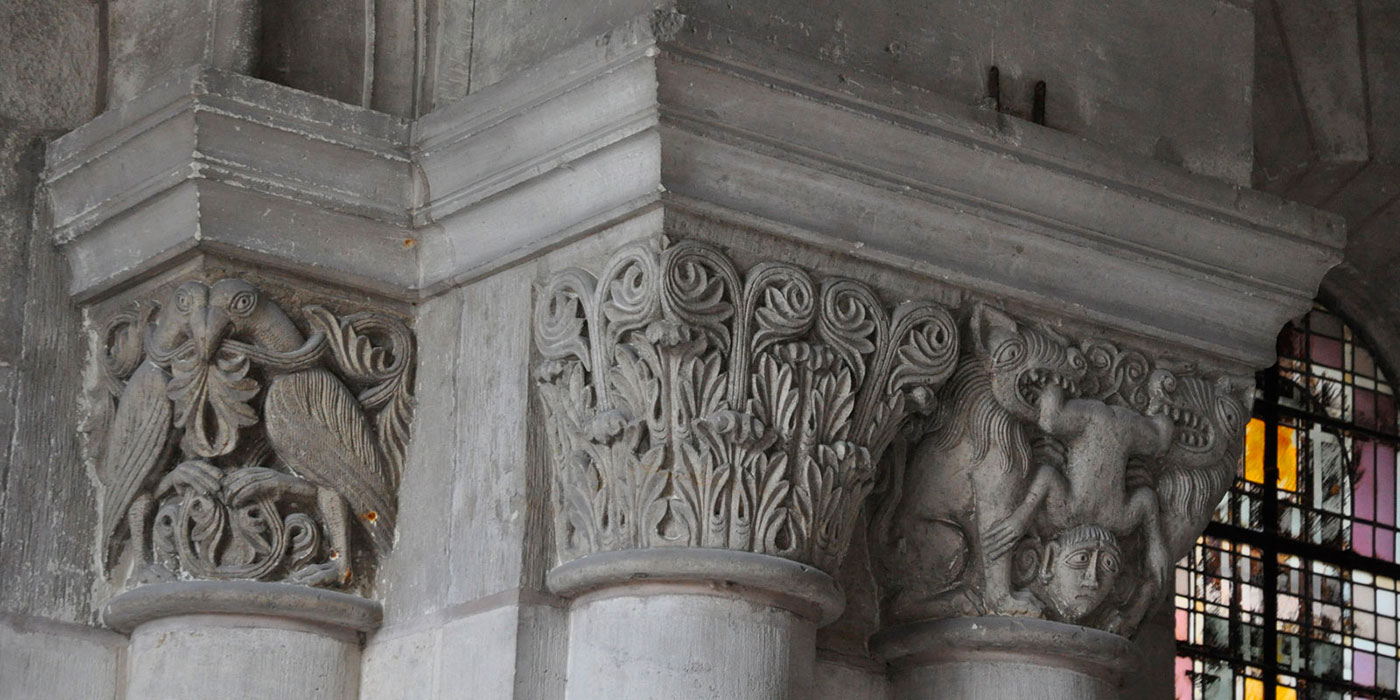
Capitals of the 19th century restoration
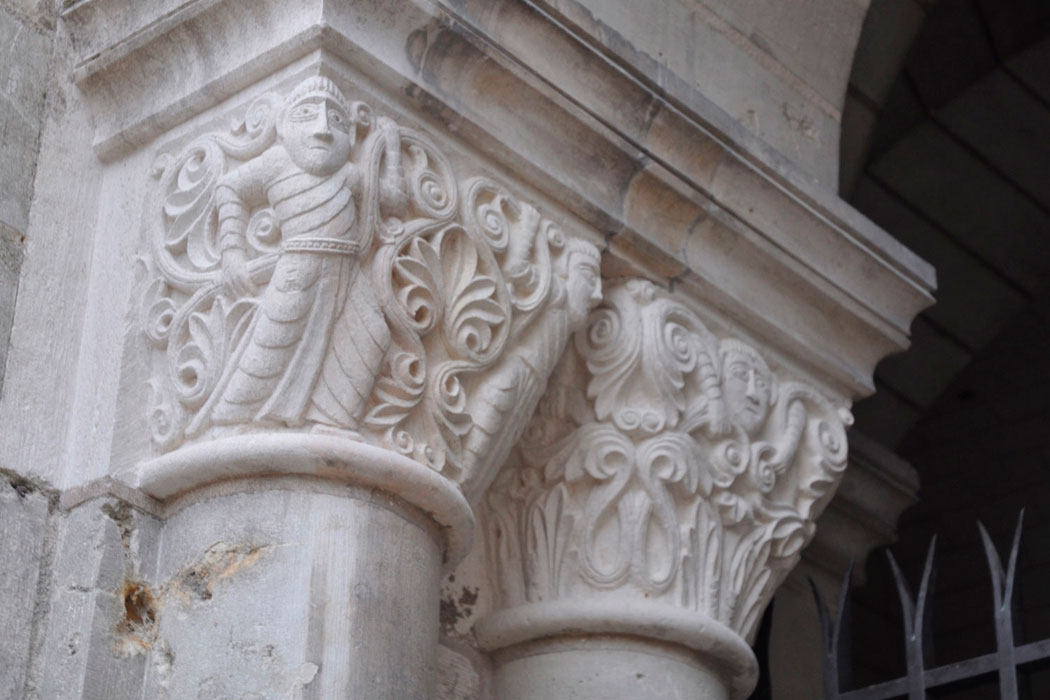
Capitals of the 19th century restoration
The church of Saint-Julien de Tours displays an unusual layout. On the one hand, it preserves its Romanesque tower (11th century), while the remainder of the building belongs to the Gothic period (13th century). It has three aisles communicating with the transept and the chancel, which is of the same width. This eastern section comprises five aisles: the three central ones corresponding to those of the church and two additional aisles on either side, all divided into three bays. There is no central apse, and the chancel ends in a flat east end, an unusual arrangement whose origin has not been explained with certainty. The outer aisles terminate in two apses added in the 16th century. Of the remaining monastic buildings, the chapter house deserves particular mention, together with other secondary structures.
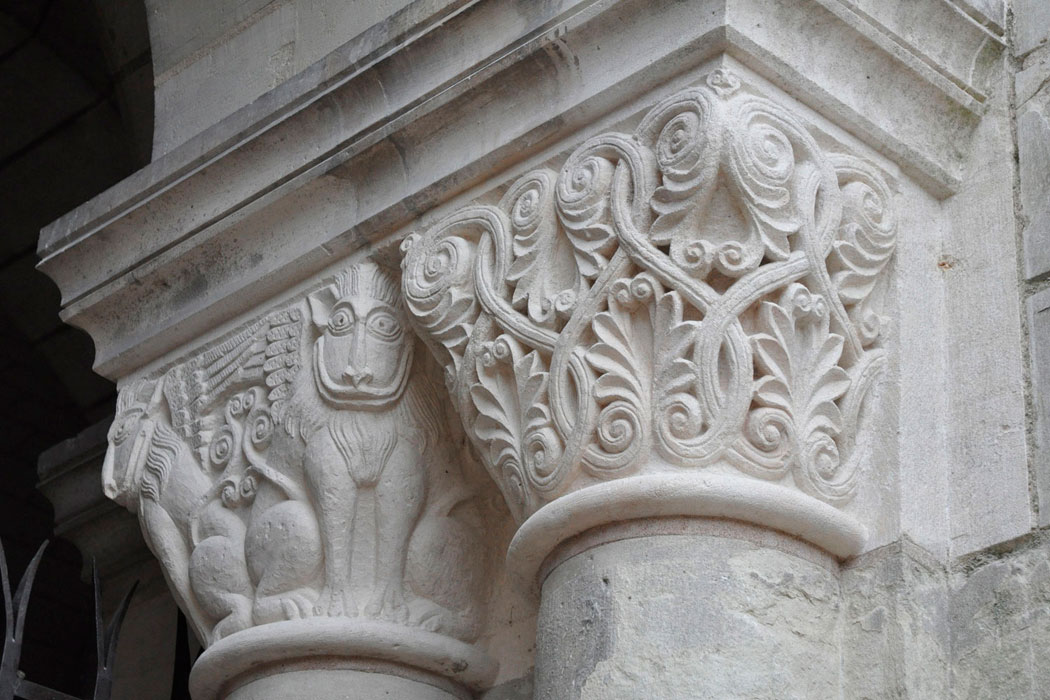
Capitals of the 19th century restoration
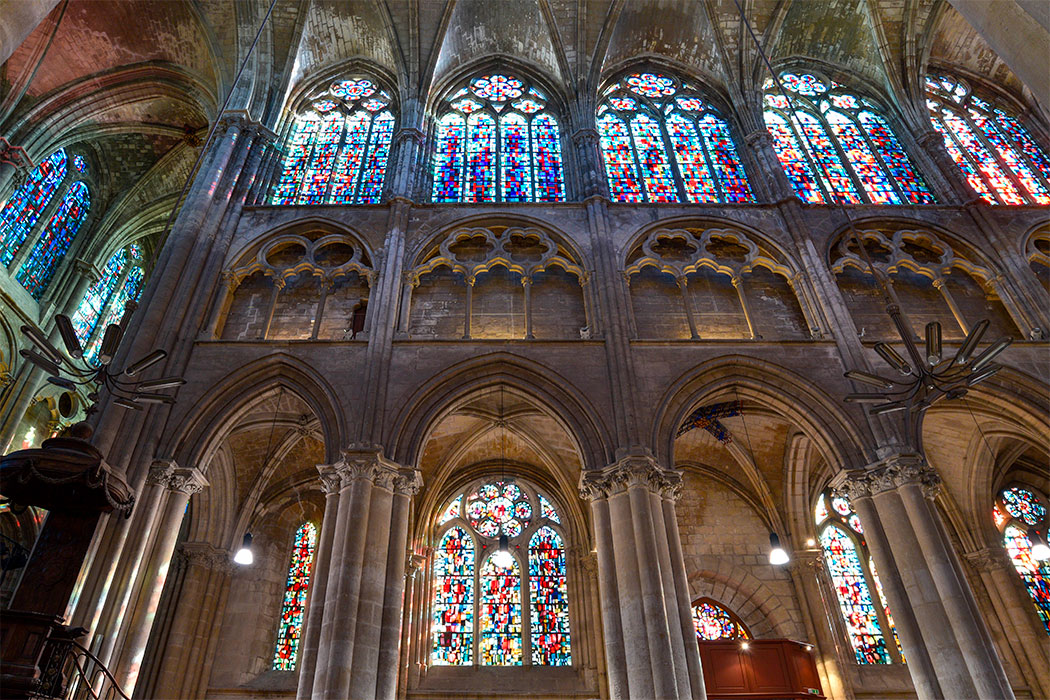
Photo by Antoine Montulé, on Wikimedia
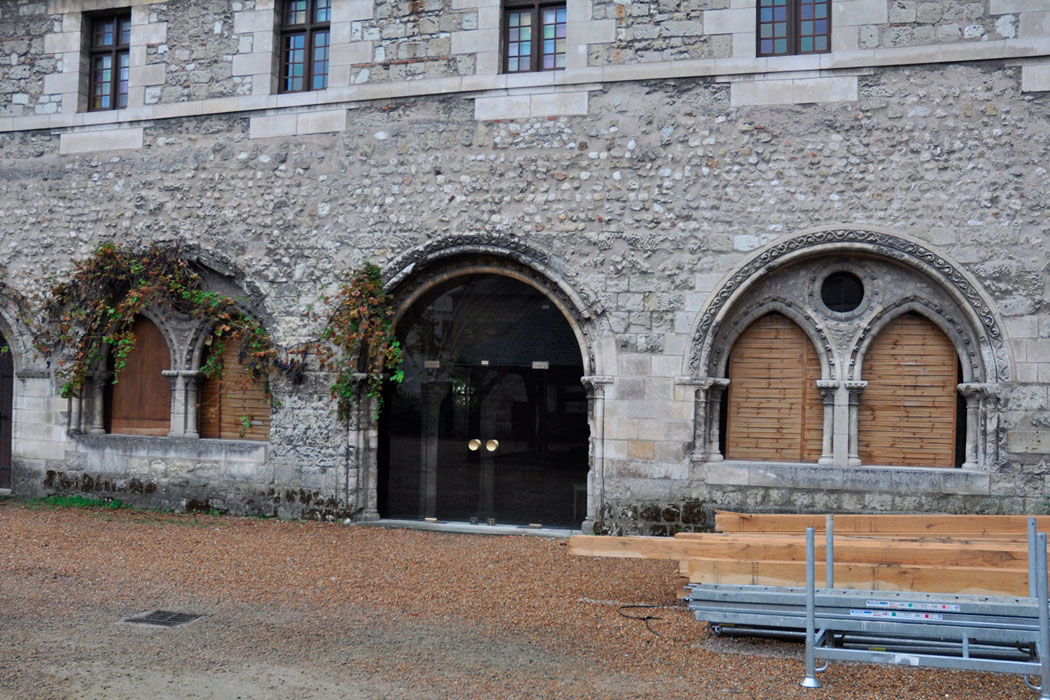
Chapter house
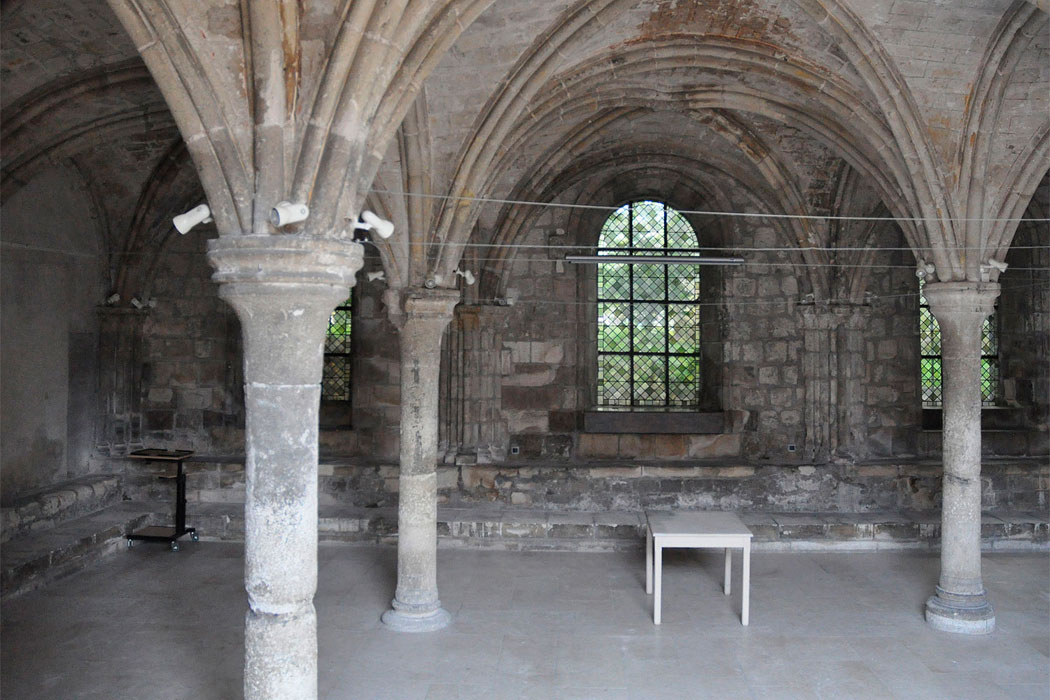
Chapter house
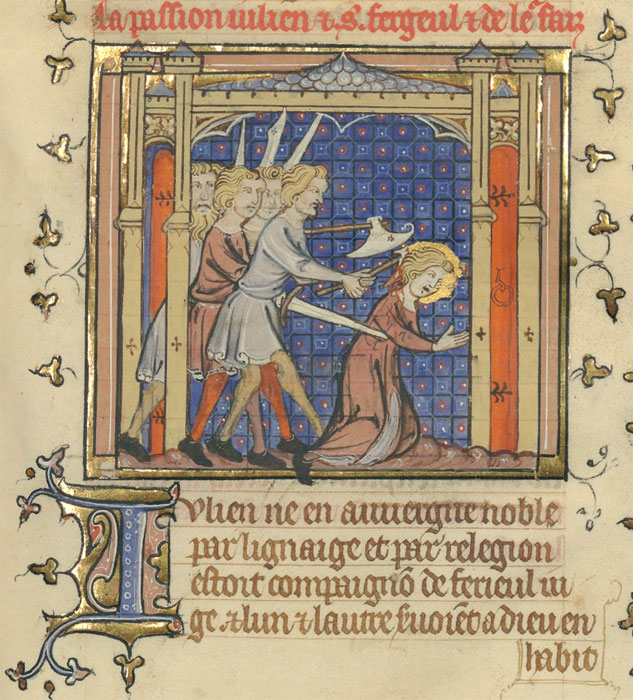
Miniature from Miroir historial (14th century)
Bibliothèque nationale de France

According to Armorial général de France (18th century)
Bibliothèque nationale de France
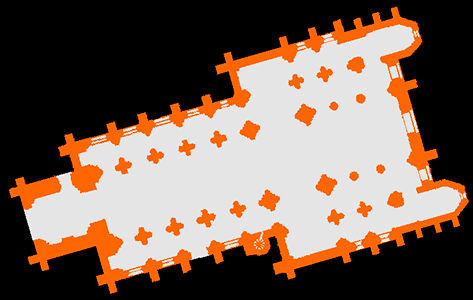
Schematic plan of the church
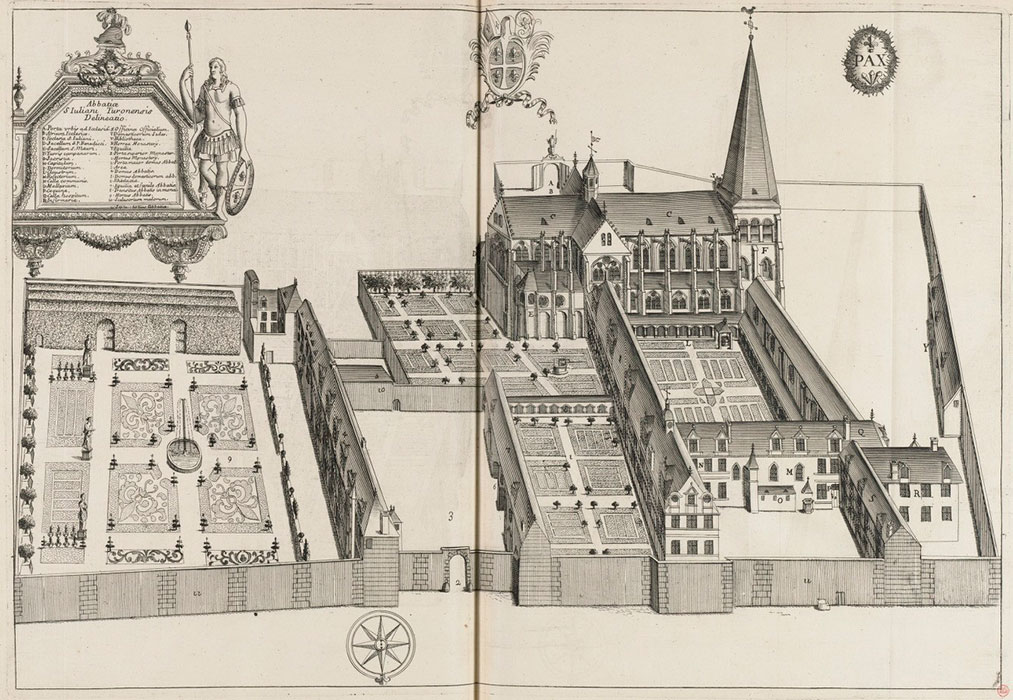
Monasticon Gallicanum
Bibliothèque nationale de France
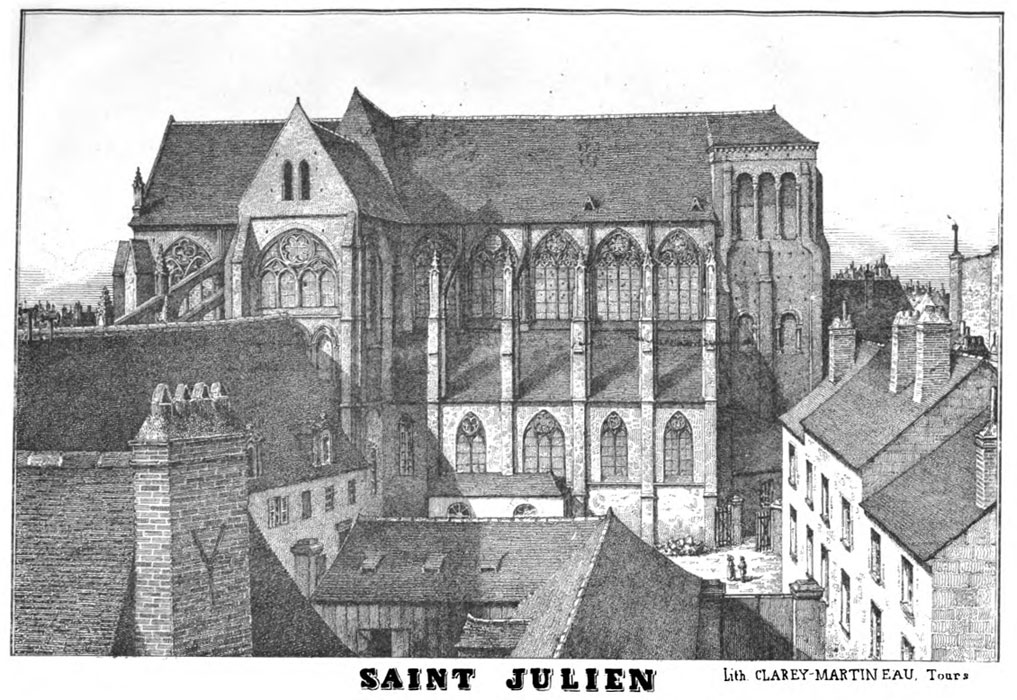
Illustration from Notice historique et archéologique sur
l'église abbatiale de Saint-Julien de Tours (1845)
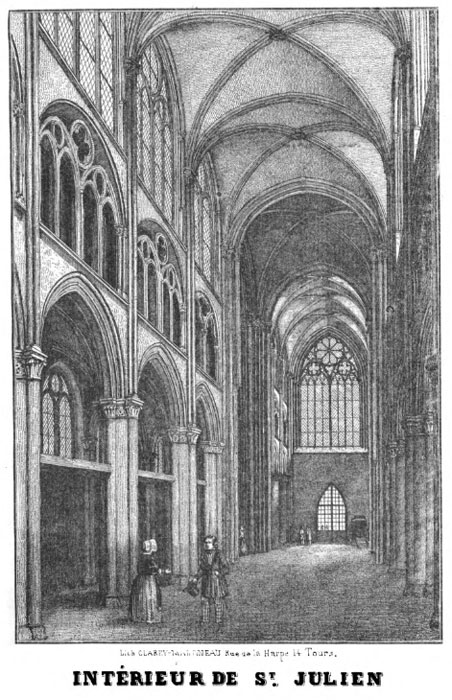
Illustration from Notice historique et archéologique sur
l'église abbatiale de Saint-Julien de Tours (1845)
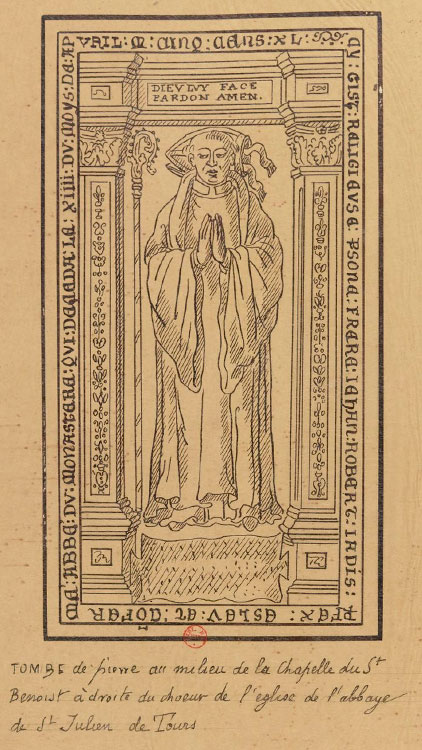
Tomb of Abbot Jean de Quedillac († 1515)
Bibliothèque nationale de France
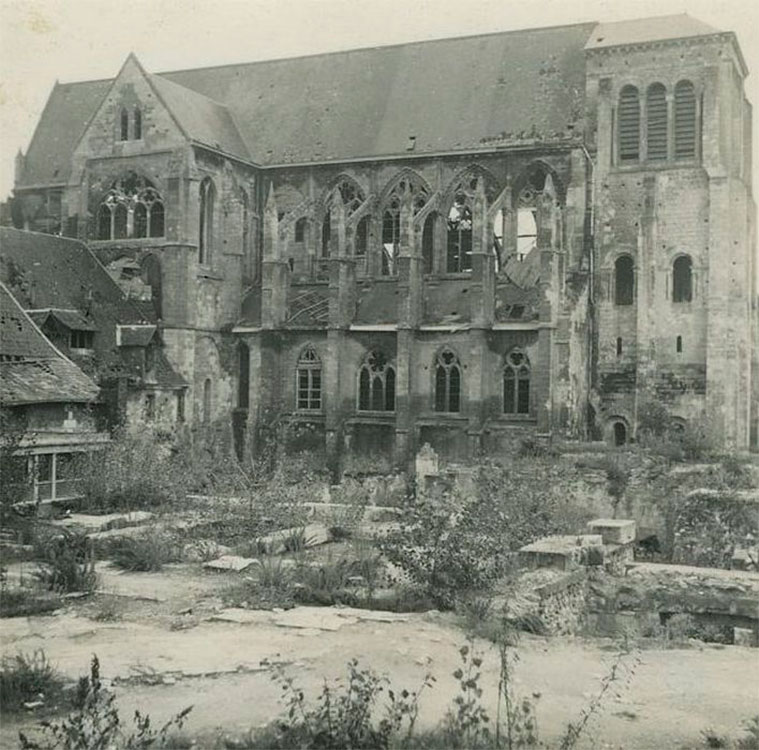
Médiathèque du patrimoine et de la photographie
- BESSE, Jean-Martial (1920). Abbayes et prieurés de l'ancienne France, vol. 8, Tours. París : Picard
- BONNEFOI, Joseph (1874). Saint Julien et Saint Grégoire de Tours. Tours: Bouserez
- BOURASSÉ, Abbé; MANCEAU, Abbé (1845). Notice historique et archéologique sur l'église abbatiale de Saint-Julien de Tours
- BOUTINEAU, E. (1909). Documents pour servir à l'histoire de l'abbaye de Saint-Julien de Tours. Bulletin de la Société archéologique de Touraine. Tours
- CARRÉ DE BUSSEROLLE, Jacques-Xavier (1884). Dictionnaire géographique, historique et biographique d'Indre-et-Loire et de l'ancienne province de Touraine. Vol. VI. Tours: Rouillé-Ladevèze
- GUÉRIN, Paul (1888). Les Petits Bollandistes. Vies des saints. Vol. 10. París: Bloud et Barral
- GUERLIN, Henri (1921). L'église de Saint-Julien de Tours. Bulletin Monumental, vol. 80
- LAURENCIN Michel (2021). La restauration de l’église Saint-Julien de Tours au XIXe siècle et les architectes Guérin : une affaire de famille. Société archéologique de Touraine
- LELONG, Charles (1974). Le clocher-porche de Saint-Julien de Tours et les vestiges romans de l'abbaye. Cahiers de civilisation médiévale, núm. 68
- OURY, Guy (1964). La reconstruction monastique dans l'Ouest : L'Abbé Gauzbert de Saint-Julien de Tours (v. 990-1007). Revue Mabillon, núm. 217. Ligugé
- PEIGNÉ-DELACOURT, Achille (1877). Monasticon Gallicanum. Paris: G. Chamerot
- PIETRI, Luce (1983). La ville de Tours du IVe au VIe siècle. Naissance d'une cité chrétienne. Rome: École Française de Rome, 69/1
- POUYET, Thomas (2019). Cormery et son territoire : origines et transformations d’un établissement monastique dans la longue durée (8e - 18e siècles). UniversitédeTours
- RANJARD, Robert (1949). Saint-Julien de Tours. Congrès archéologique de France, 106 ss. Société française d'archéologie
- RANJARD, Robert et Michel (1939). La reconstruction de l'église Saint-Julien de Tours au XIIIe siècle et ses différents aspects au cours de son achèvement. Bulletin de la Société archéologique de Touraine, vol. XXVII
- SAINT-MAUR, Congregació de (1856). Gallia Christiana in provincias ecclesiasticas distributa. Vol. 14. París: Typographia Regia
- SEMUR, François-Christian (2011). Abbayes de Touraine. La Crèche: Geste Ed.
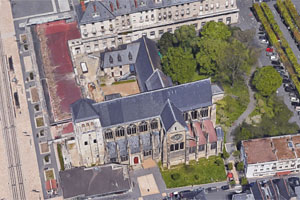
The former Abbey of Saint-Julien is situated in the centre of Tours, between the cathedral and Saint-Martin