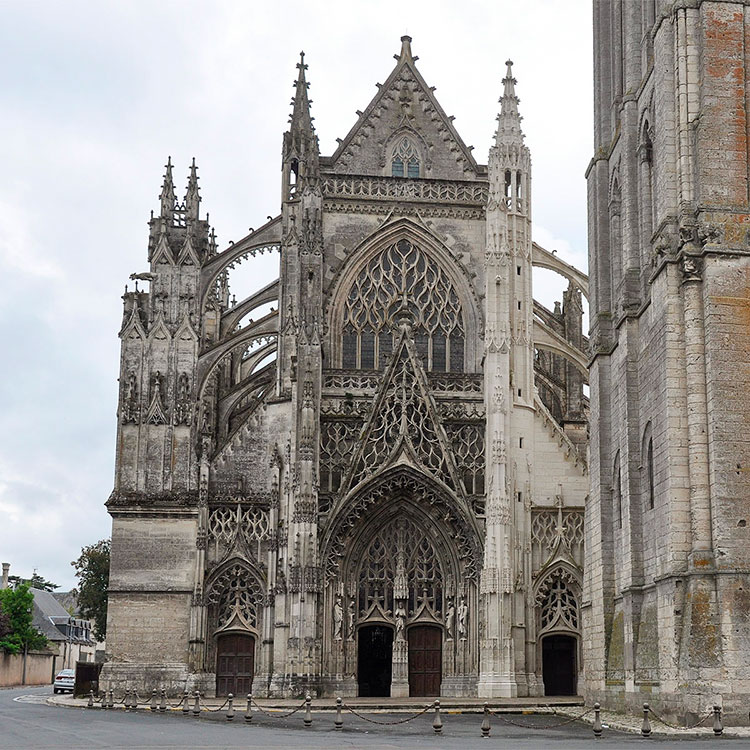


The monastery of Trinité de Vendôme was founded by Geoffrey II Martel —Count of Vendôme from 1032 to 1056 and Count of Anjou from 1040 to 1060— and his wife, Agnes of Burgundy (c. 995–1068), on an unknown date between 1032 and 1040. According to a legend, the foundation resulted from a miraculous vision experienced by the comital couple. It has also been suggested that the first monks came from Marmoutier Abbey (Tours, Indre-et-Loire), although this has never been confirmed.
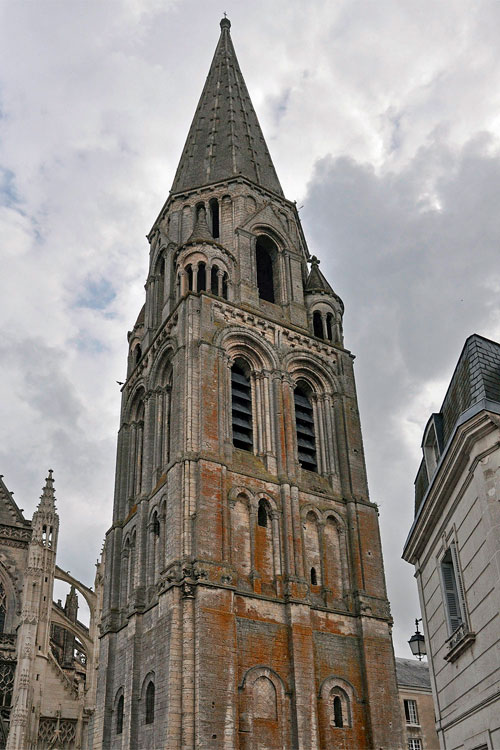
Bell tower (12th century)
The first abbot of Trinité was Renaud, who came from Saint-Nicolas Abbey in Angers (Maine-et-Loire). Construction of the first monastic complex probably began around 1032, and by 1035 the chapel, which still survives despite extensive alterations, had already been completed. In 1040 the foundation was formally established in the presence of numerous distinguished figures. On that occasion the new abbey church was consecrated, although construction had only just begun.
Geoffrey II also endowed the monastery with numerous properties and rights and donated the precious relic known as the Holy Tear, which became one of the community's principal objects of veneration. When he restored the County of Vendôme to Foulques (†1066) in 1056, he nevertheless retained his rights over the abbey. In 1061 Pope Nicholas II (1059–1061) confirmed the foundation and its possessions, and in 1097 or 1098 Pope Urban II (1088–1099) granted the abbey exemption, placing it directly under the authority of the Holy See. Geoffroi de Vendôme (c. 1070–1132) served as abbot from 1093 until his death in 1132. He was an influential figure with close ties to Pope Urban II and was the author of several religious works.
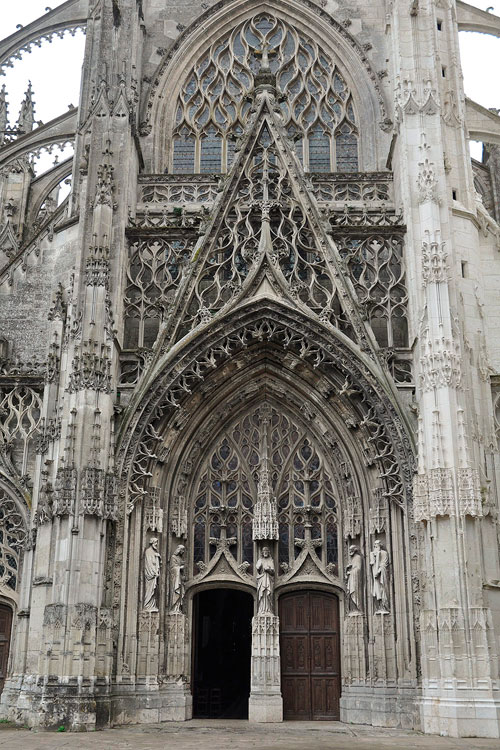
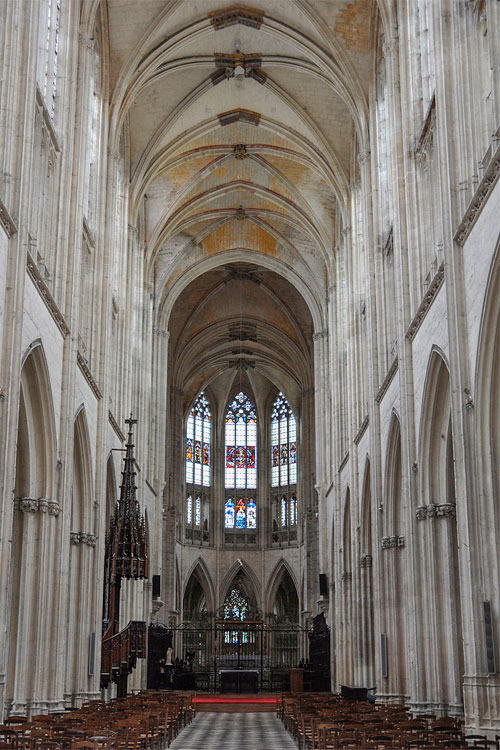
During the last quarter of the thirteenth century the abbey church began to be rebuilt in the Gothic style. The works continued for many years owing, among other reasons, to the Hundred Years' War. In 1539 the last regular abbot died, after which the abbey was governed by commendatory abbots. Because of the decline in monastic discipline, Abbot Sablet promoted the community's incorporation into the Congregation of Saint-Maur, which became effective in 1621. The Maurists remained there until the French Revolution, when community life came to an end in 1790. Trinité de Vendôme was more fortunate than many other monasteries and has survived largely intact.
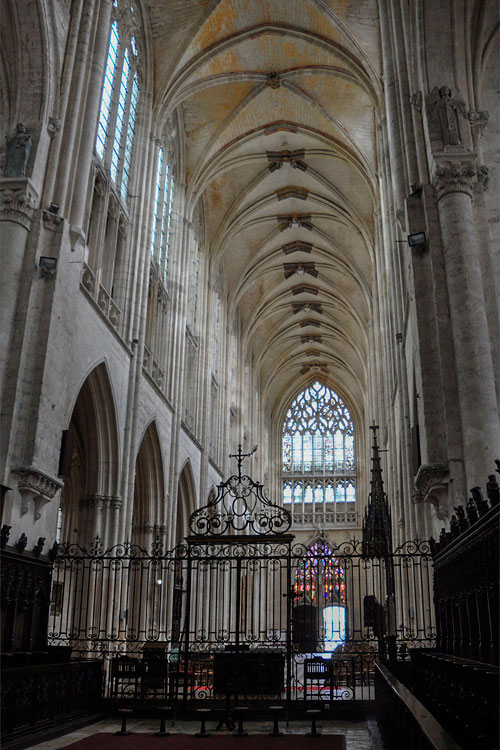
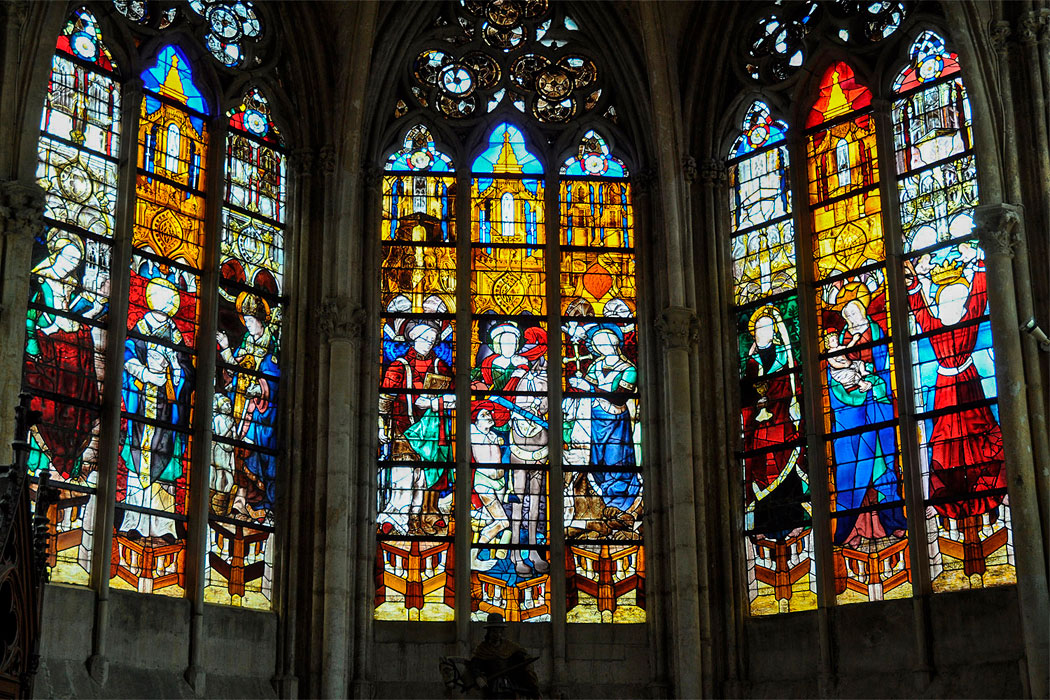
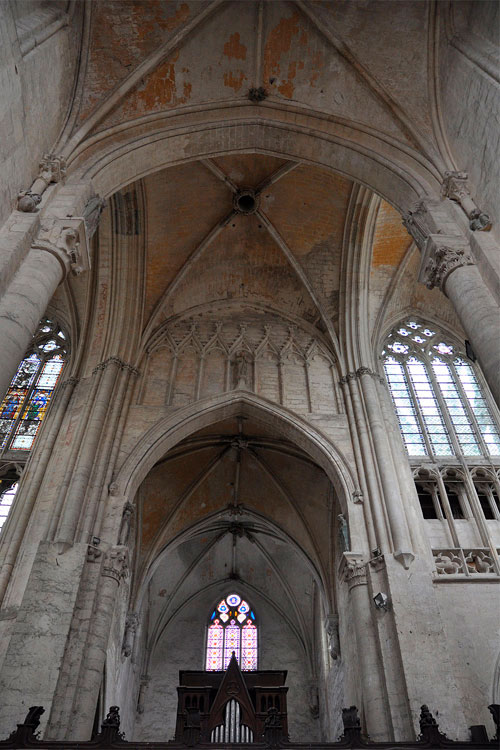
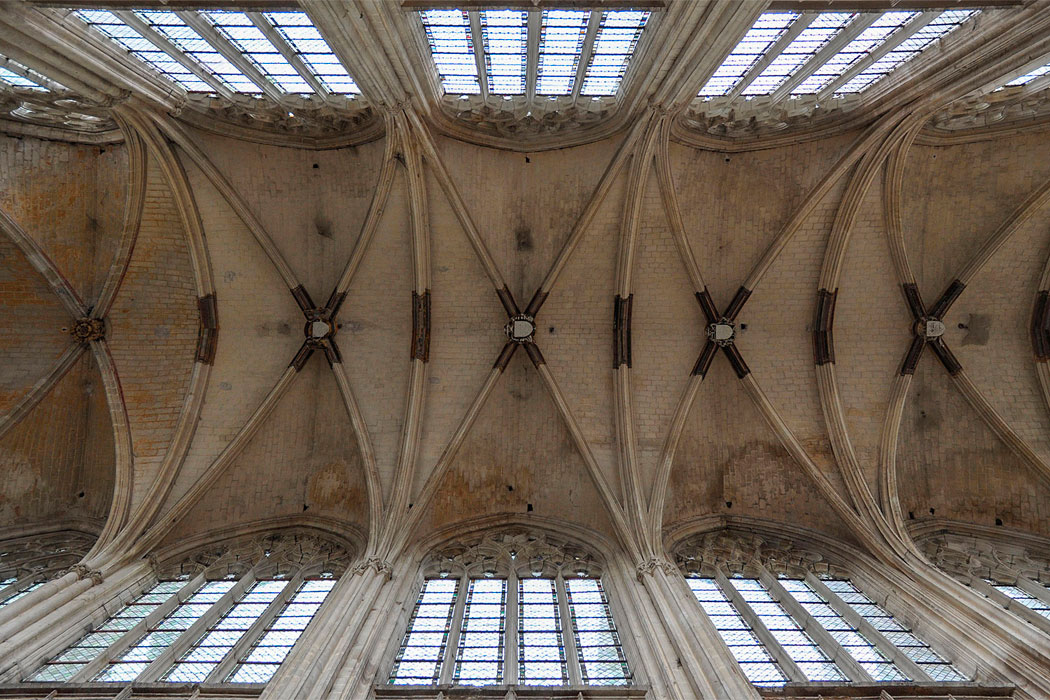
The church is essentially Gothic but still preserves elements from the original Romanesque building, notably the eleventh-century transept. It has three aisles and eight bays, built between the fourteenth and fifteenth centuries, extending westwards from the transept. The façade dates from the early sixteenth century. The eastern end is complex, with a fourteenth-century chancel surrounded by an ambulatory and several thirteenth-century radiating chapels. The bell tower is also an important early structure, dating from the twelfth century. Other noteworthy remains include the original foundation chapel, much altered over time, and the chapter house, which preserves twelfth-century wall paintings.
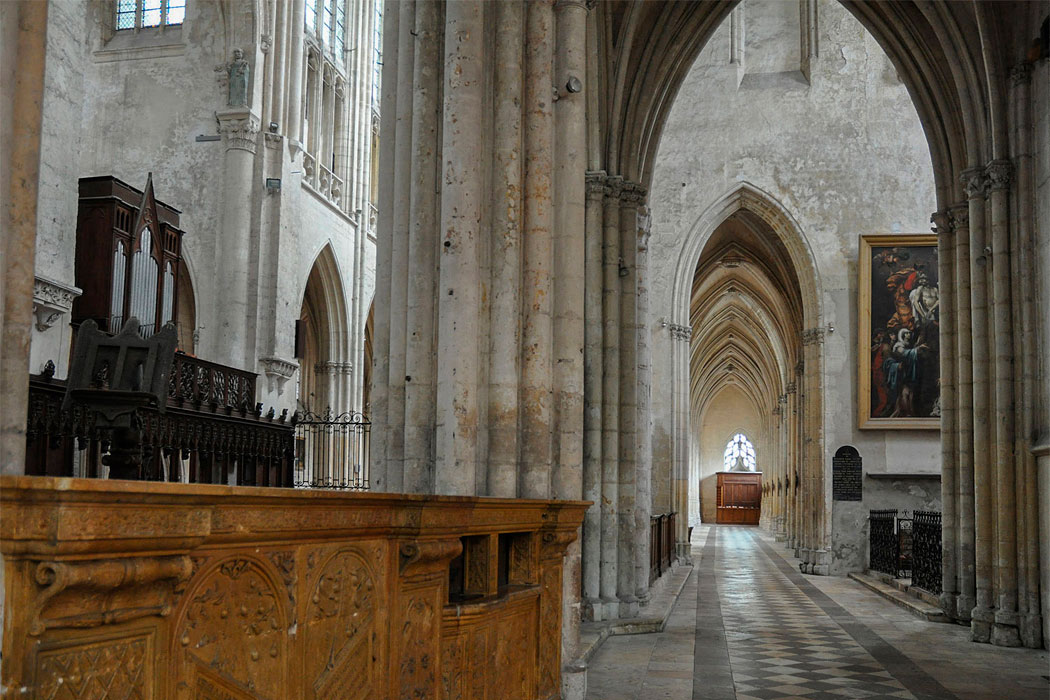
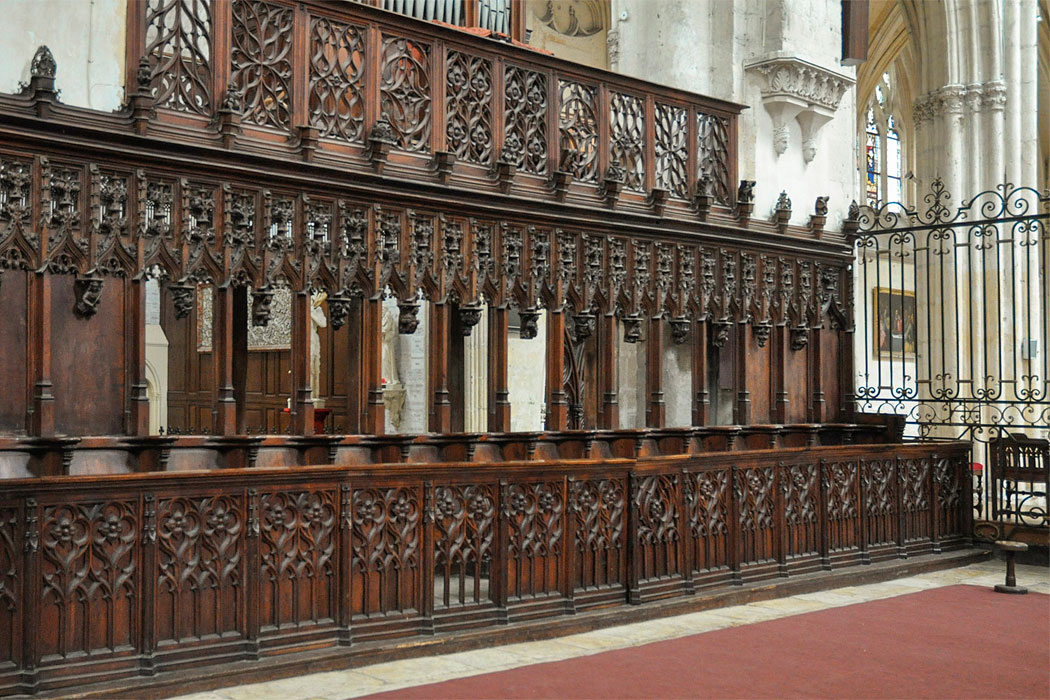
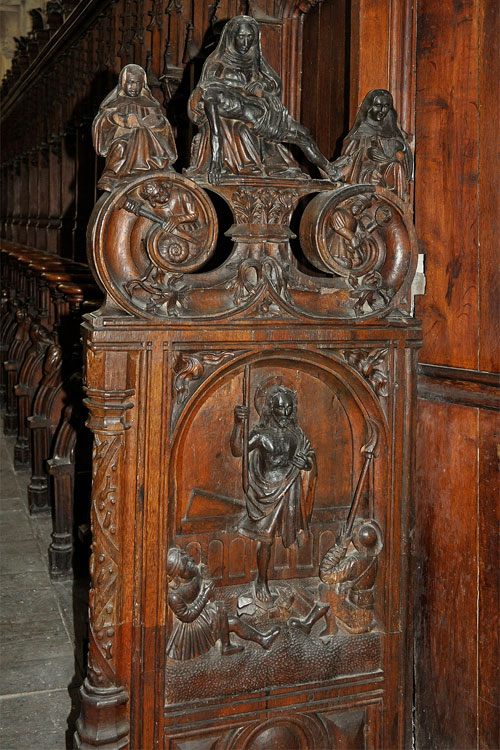
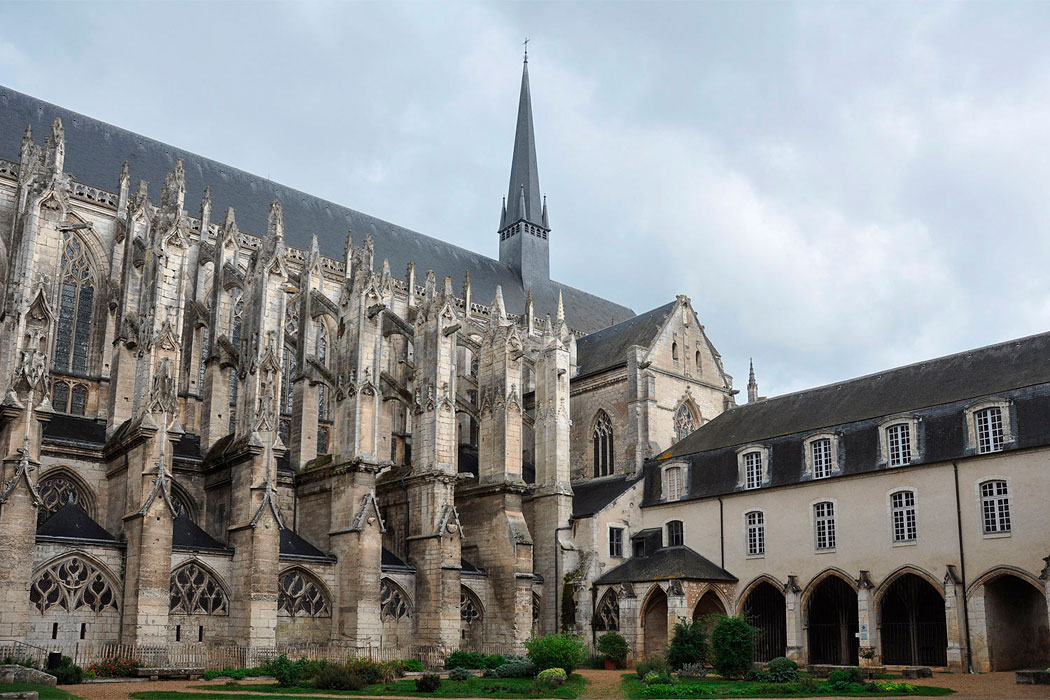
The church from the cloister
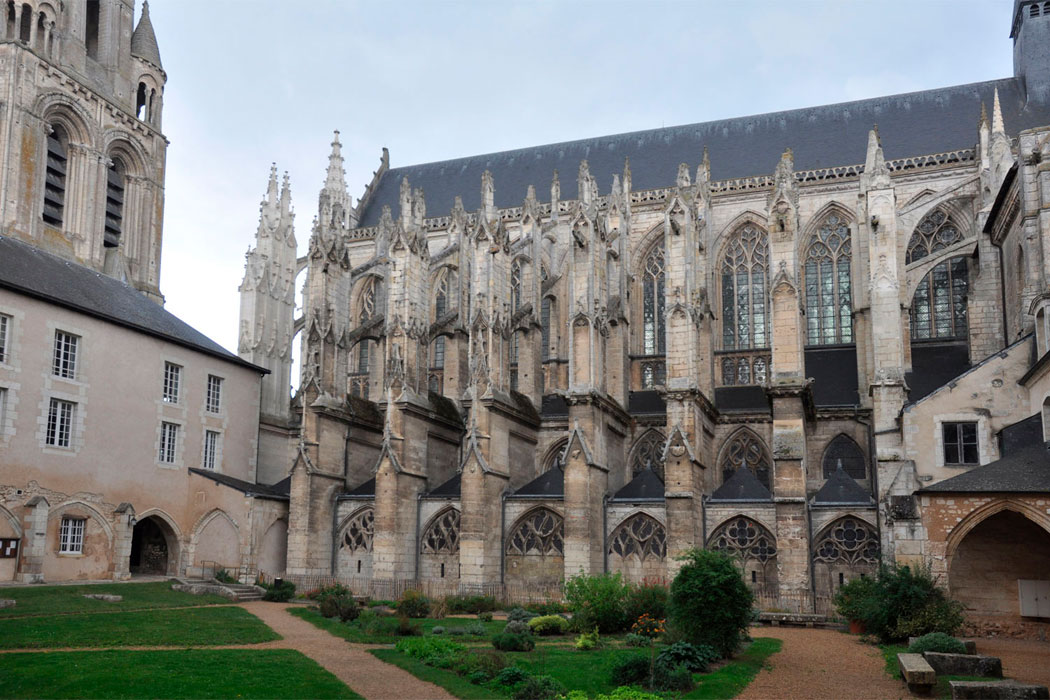
The church from the cloister
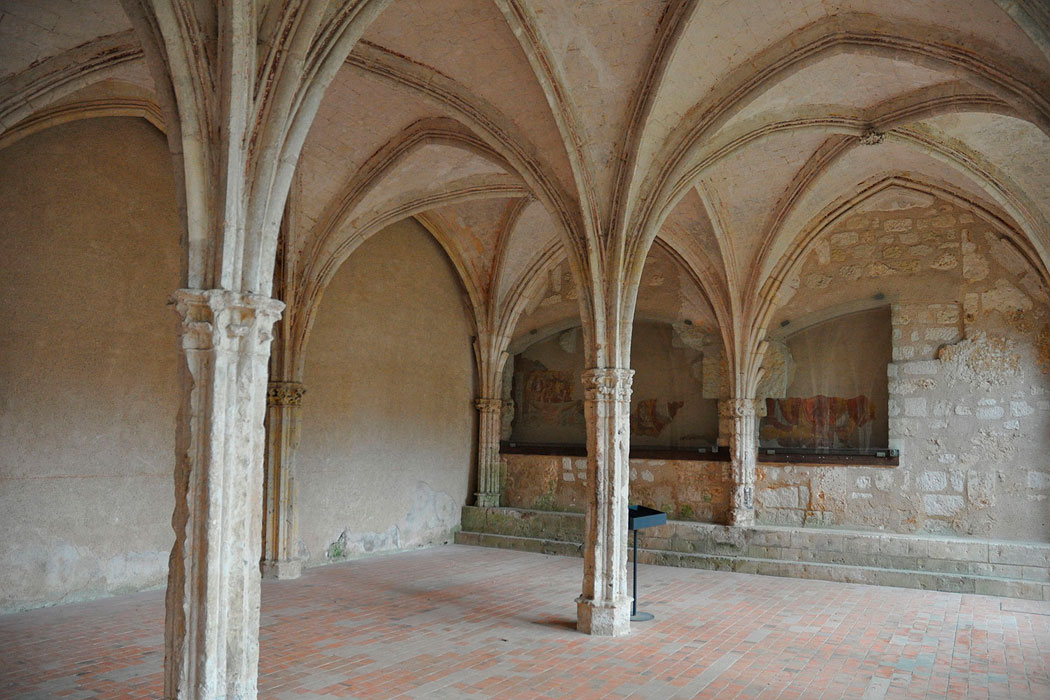
Chapter house
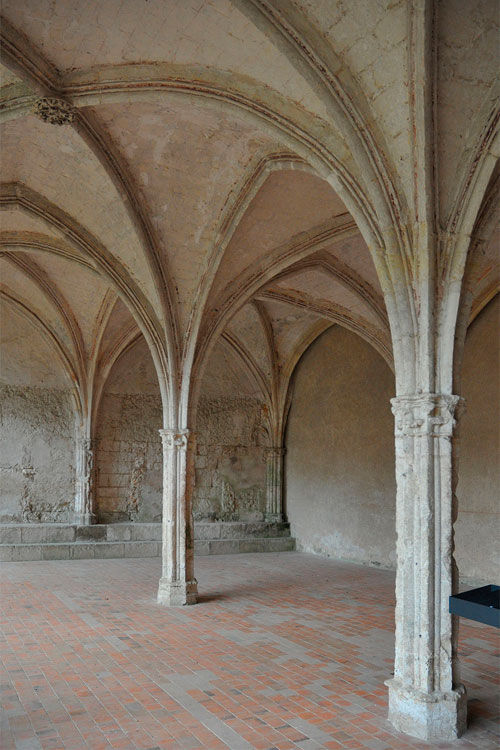
Chapter house
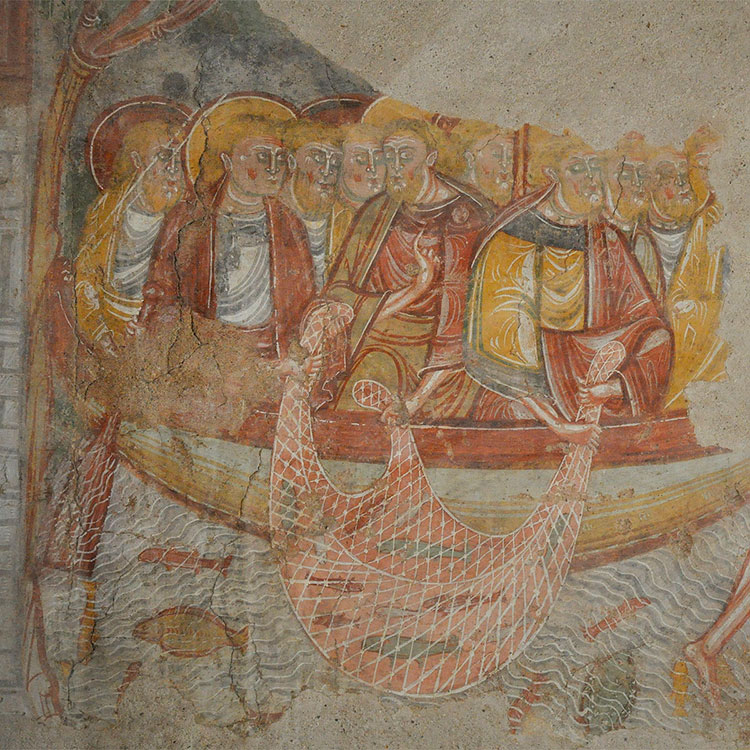
Chapter house. Miraculous draught of fish (12th century)
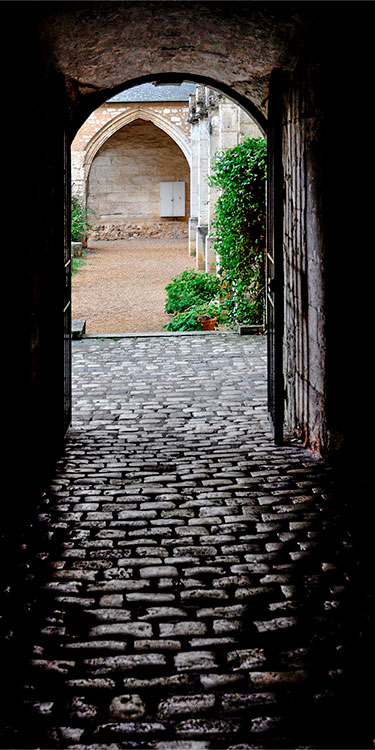
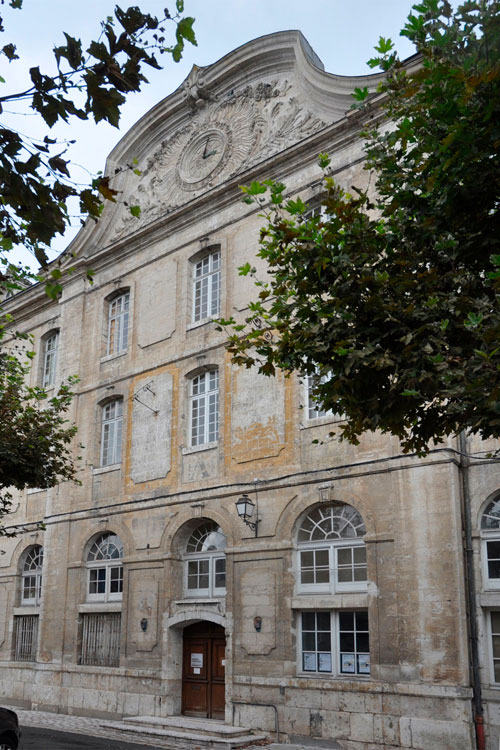
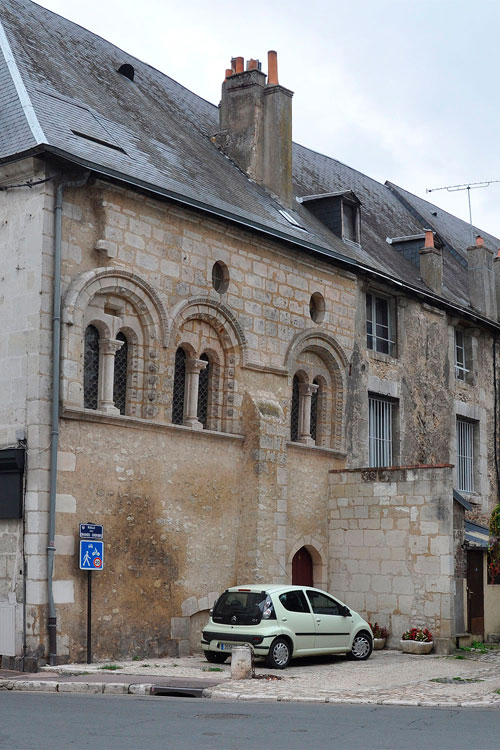
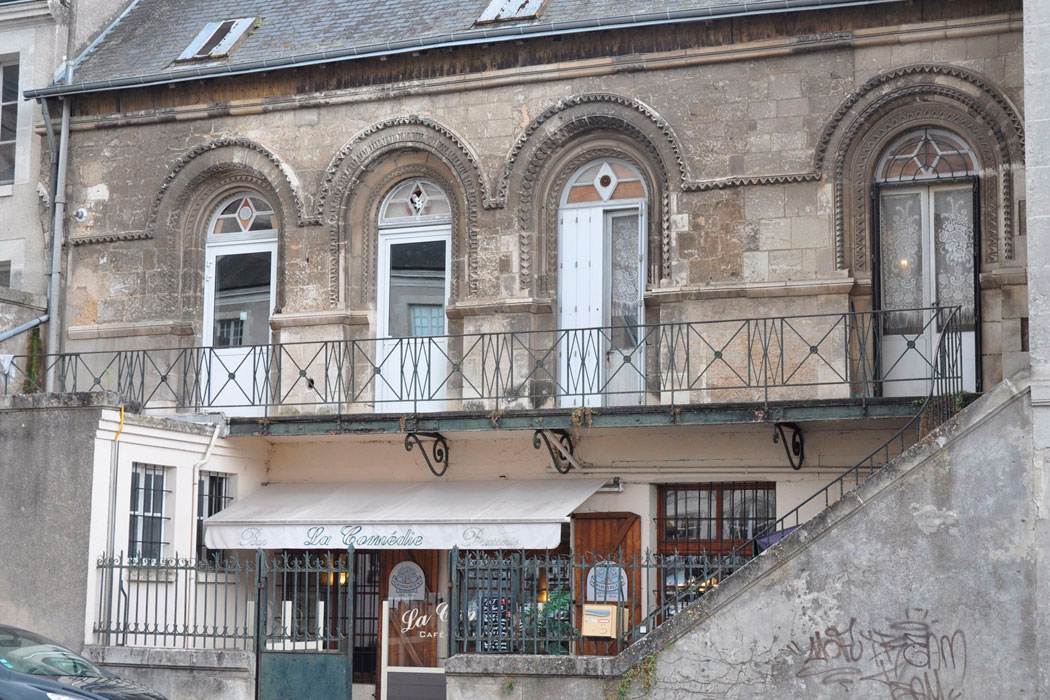
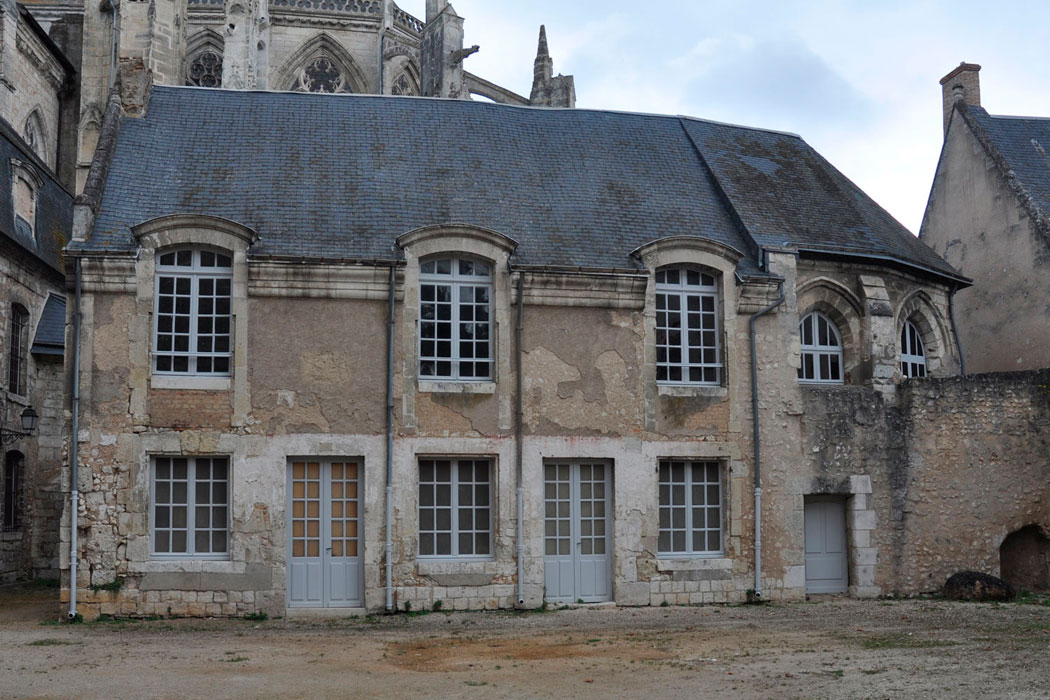
Primitive chapel, heavily modified
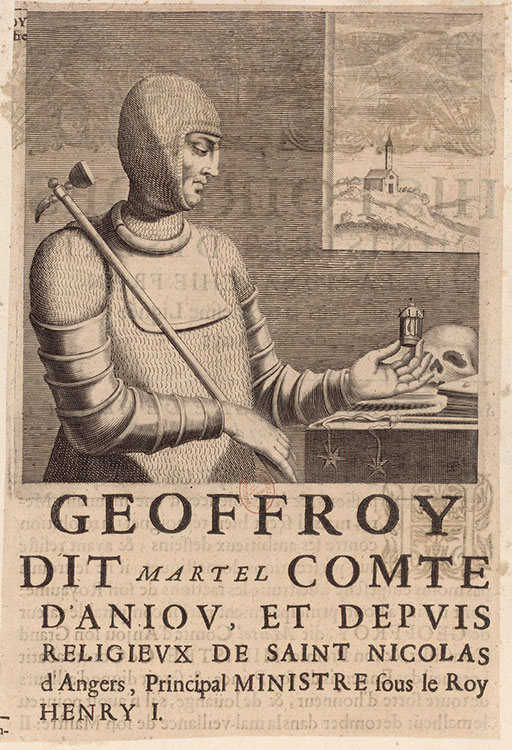
Bibliothèque nationale de France
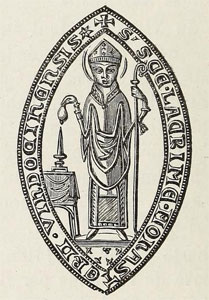
Abbey seal
Illustration from Voyage à la Sainte-Larme de Vendôme

According to Armorial général de France
Bibliothèque nationale de France
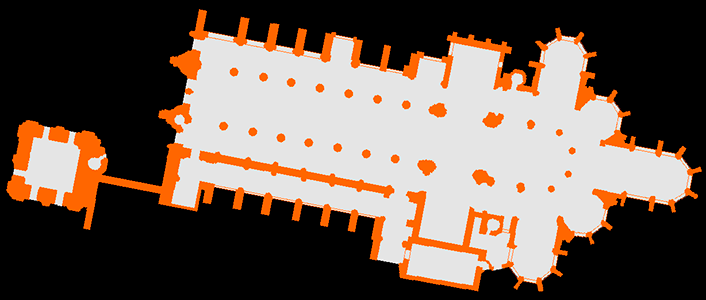
Schematic plan of the church
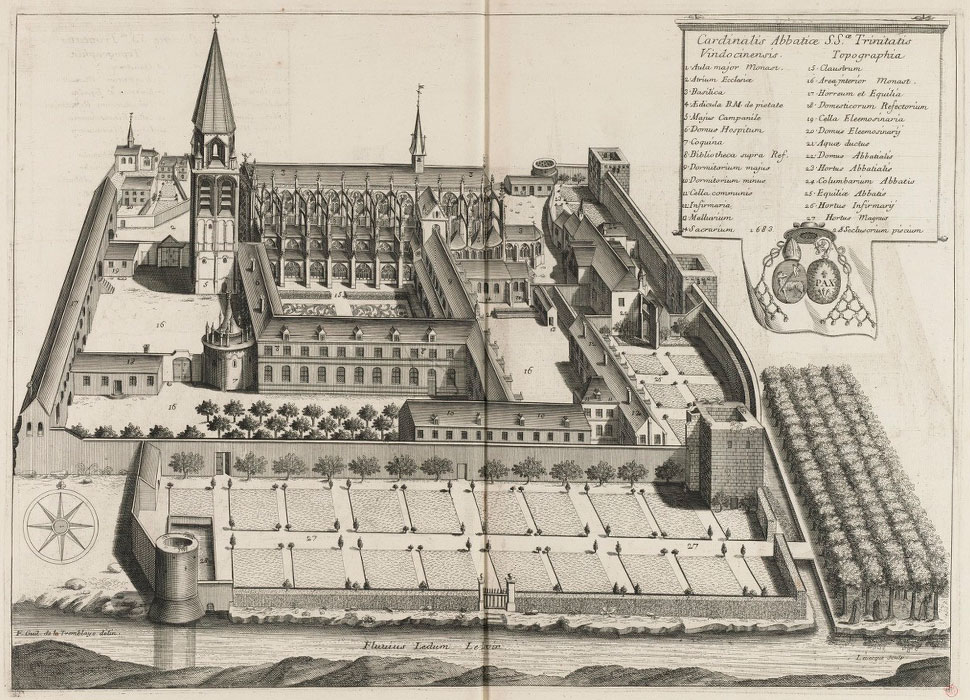
Monasticon Gallicanum
Bibliothèque nationale de France
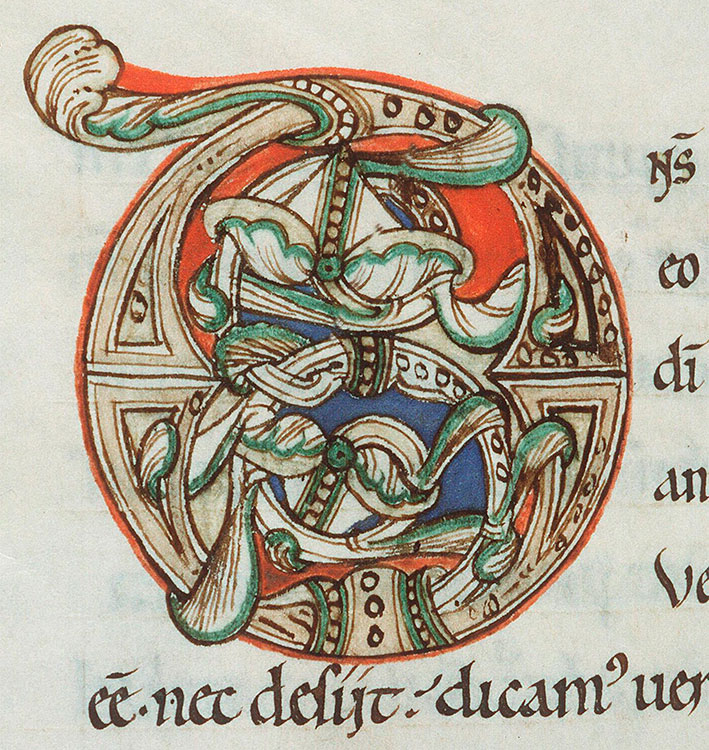
Initial of Moralia in Job (12th century)
From the monastery
Vendôme. Bibliothèque municipale, Ms. 48
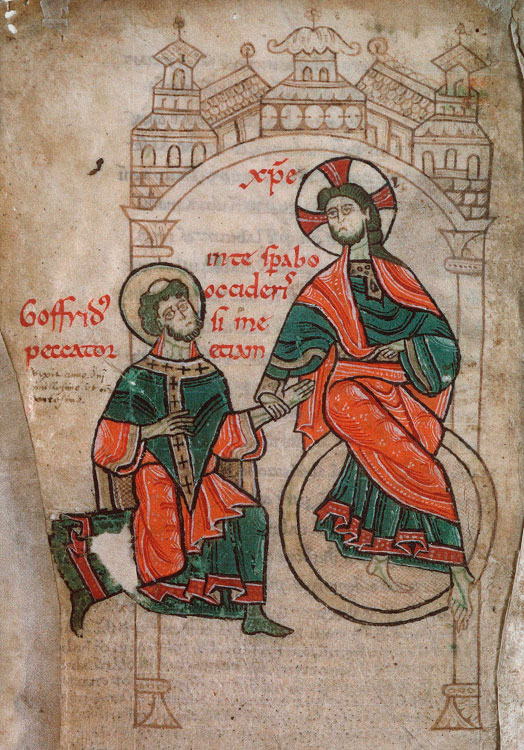
Christ and Abbot Geoffroi de Vendôme
Illustration of a manuscript from the monastery
Vendôme. Bibliothèque municipale, Ms. 193
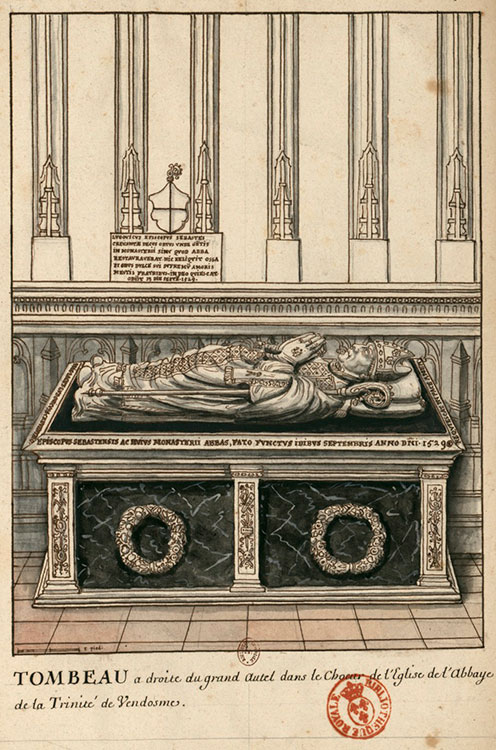
Tomb in the abbey church
Louis Boudan (1695)
Bibliothèque nationale de France
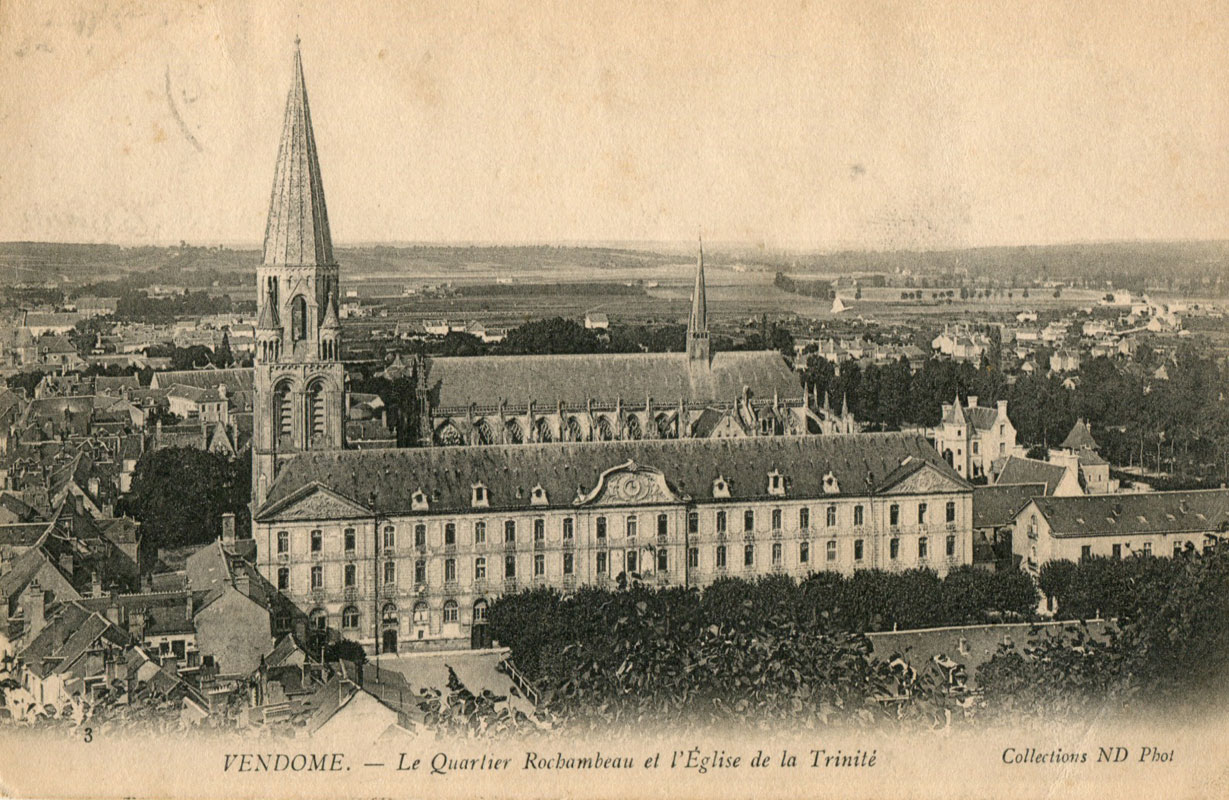
Old postcard, private collection
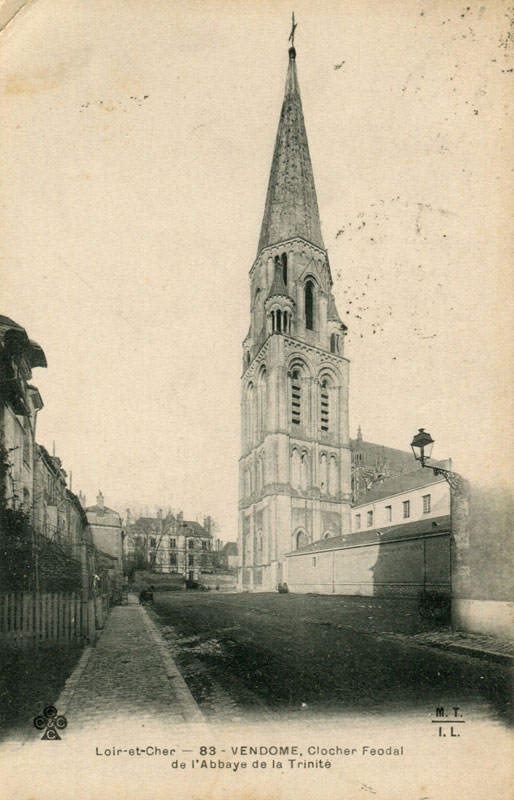
Old postcard, private collection
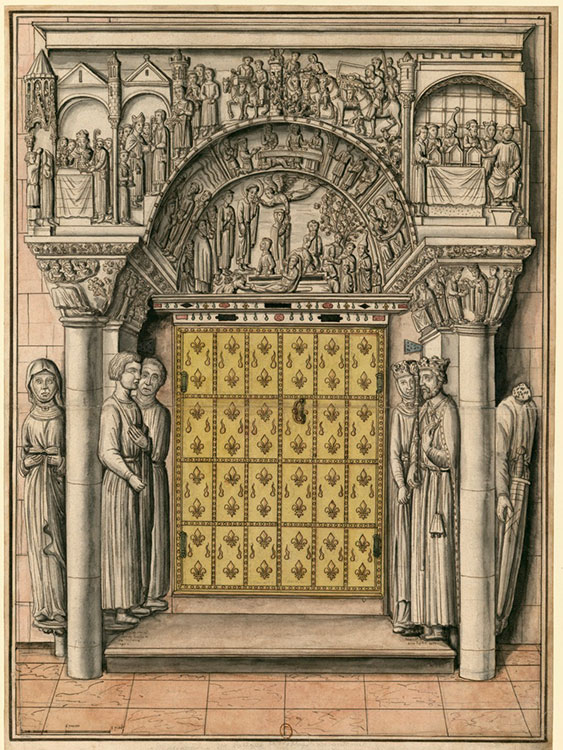
Reliquary cabinet of the Holy Tear
Louis Boudan (1695)
Bibliothèque nationale de France
According to tradition, this relic is a tear shed by Christ before the tomb of Lazarus. Legend relates that it was collected by an angel and entrusted to Mary Magdalene, who brought it to Gaul and gave it to Maximinus of Aix (†c. 80), who attended her at her death. It was later taken by Emperor Constantine to Constantinople, where it remained until Geoffrey II Martel received it from the Byzantine Emperor Michael IV in 1040 and deposited it in the monastery he had founded.
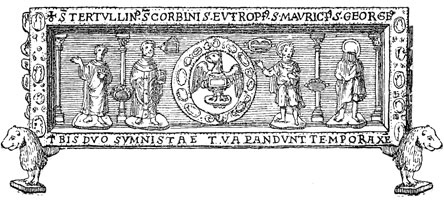
Reliquary containing the Holy Tear
Illustration from Voyage à la Sainte-Larme de Vendôme
Despite this tradition, the relic is not documented until the late twelfth century, when it was associated with a miraculous event. It consisted of a rock crystal vessel containing a drop of water, to which various ornamental elements were later added. The relic appears in the abbey inventory drawn up during the Revolution (1790), although in 1793 it lost its precious goldsmith's work. In 1803 it was in the possession of the Bishop of Orleans, after which it disappeared.
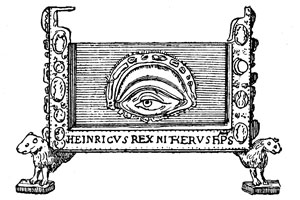
Reliquary containing the Holy Tear
Illustration from Voyage à la Sainte-Larme de Vendôme
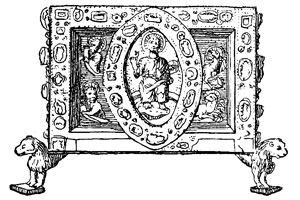
Reliquary containing the Holy Tear
Illustration from Voyage à la Sainte-Larme de Vendôme
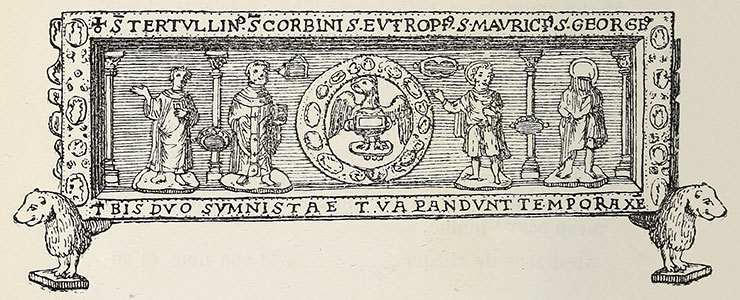
Reliquary containing the Holy Tear
Illustration from Voyage à la Sainte-Larme de Vendôme
- BEAUNIER, Dom (1905). Recueil historique des Archêvechés, Évêchés, Abbayes et Prieurés de France. Vol. 1. Province ecclésiastique de Paris. París: Poussielgue
- CROYÈRE, Dominique (1998). L'église primitive de la Trinité de Vendôme. Bulletin de la Société archéologique, scientifique et littéraire du Vendômois
- CROZET, René (1963). Le monument de la Sainte Larme à la Trinité de Vendôme. Bulletin Monumental, 121
- ISNARD, Isabelle (2009). La Sainte Larme de l’abbaye de la Trinité de Vendôme: Architecture, décor et mobilier liturgique. Revue Mabillon
- MÉTAIS, Charles; ed. (1894). Cartulaire de l'abbaye cardinale de la Trinité de Vendôme, vol. 2. París: Picard
- PEIGNÉ-DELACOURT, Achille (1877). Monasticon Gallicanum. Paris: G. Chamerot
- PLAT, Gabriel (1934). L’église de la Trinité de Vendôme. París: H. Laurens
- ROCHAMBEAU, Achille de (1874). Voyage à la Sainte-Larme de Vendôme. Vendôme: Lemercier
- SAINT-MAUR, Congregació de (1744). Gallia Christiana in provincias ecclesiasticas distributa. Vol. 8. París: Typographia Regia
- SIMON, Gaël (2015). Espace et société à Vendôme du 11e au début du 19e s. : fonctionnement et fabrique d'une ville intermédiaire sur le temps long. Tesi doctoral. Université François-Rabelais de Tours
- SIMON, Michel (1834). Histoire de Vendôme et de ses environs, vol. 2. Vendôme: Henrion-Loiseau
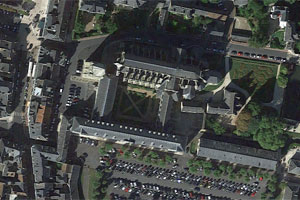
Vendôme lies between the cities of Le Mans and Orléans