Abbey of Saint-Fortunat de Charlieu
Saint-Étienne de Charlieu / Carus Locus / Carilocus / Priory of Charlieu
(Charlieu, Loire)
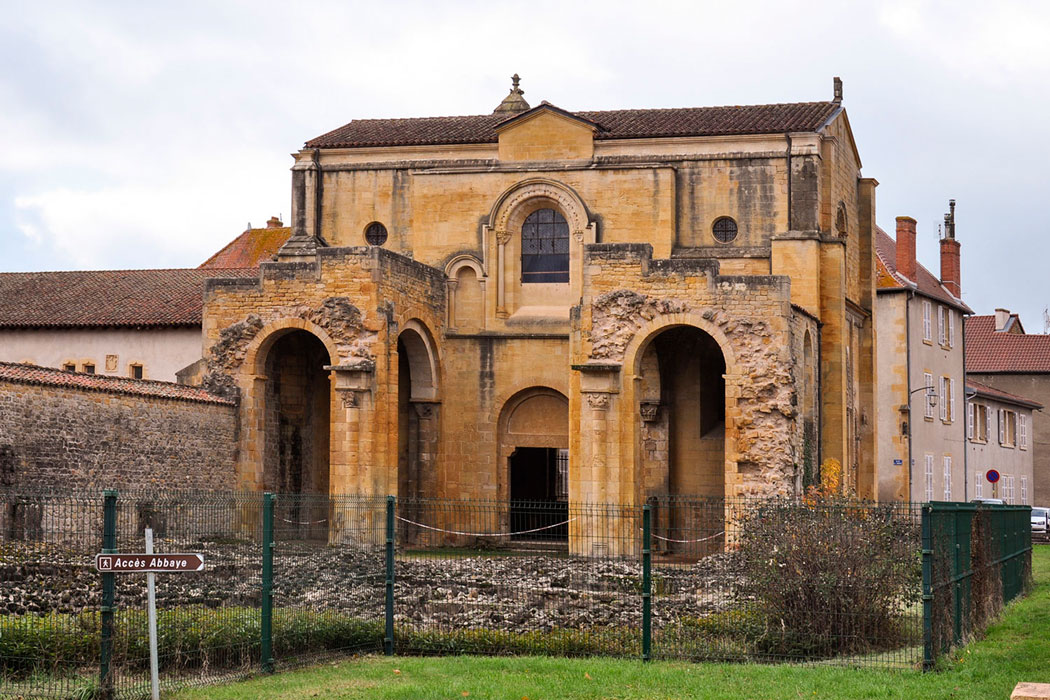


In 872, the bishop of Valence, Ratbert, and his brother Édouard founded the Benedictine abbey of Charlieu (Carus Locus), dedicated to Saints Stephen and Fortunatus. The latter, together with Felix and Achilleus, evangelisers of the Valence region, died a martyr in 212. The founders granted the new monastery uncultivated lands they owned. In the following year, 873, Pope John VIII confirmed its direct dependence on the Holy See. The first abbot was Gausmar.
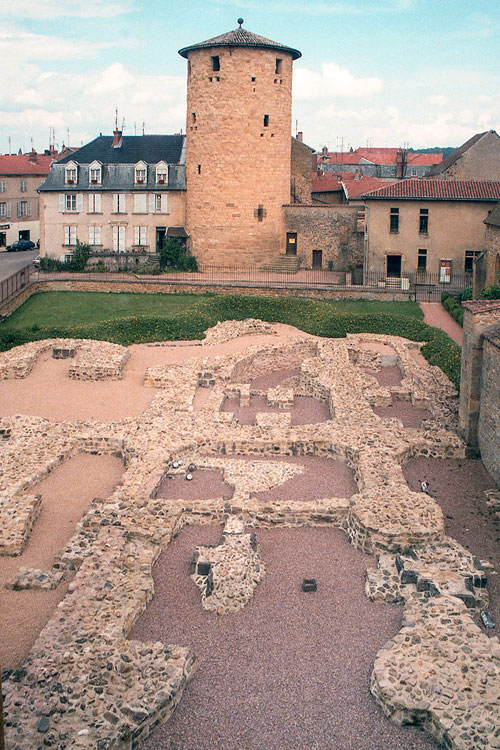
Remains of demolished churches
Boso (c. 844–887), king of Provence and brother-in-law of Charles the Bald, was a notable protector of Charlieu and contributed actively to its development; among other donations, in 879 he granted it the monastery of Saint-Martin de Régny. The favours received from Boso and other figures gave the abbey a certain prominence. In 932, during the rise of the Abbey of Cluny (Saône-et-Loire), Pope John XI incorporated Charlieu into that monastery, upon which it came to depend and from which it received protection. This incorporation meant that it acquired the status of a priory.
The link with Cluny also made possible the construction of a new church during the 11th century, consecrated around 1094. In the following century a narthex was built, which is still preserved. In 1280, the Franciscans settled on lands belonging to the abbey, leading to disagreements between the two communities. At the same time, during the 13th century the monastery was fortified; a large round tower from those works still survives.
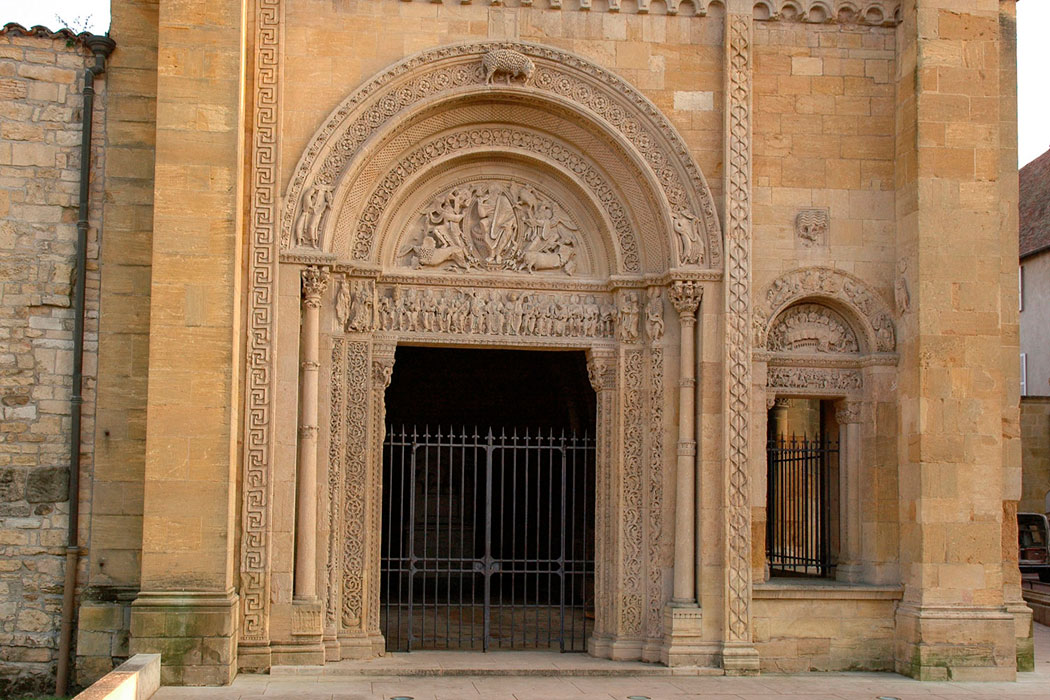
North portal of the narthex
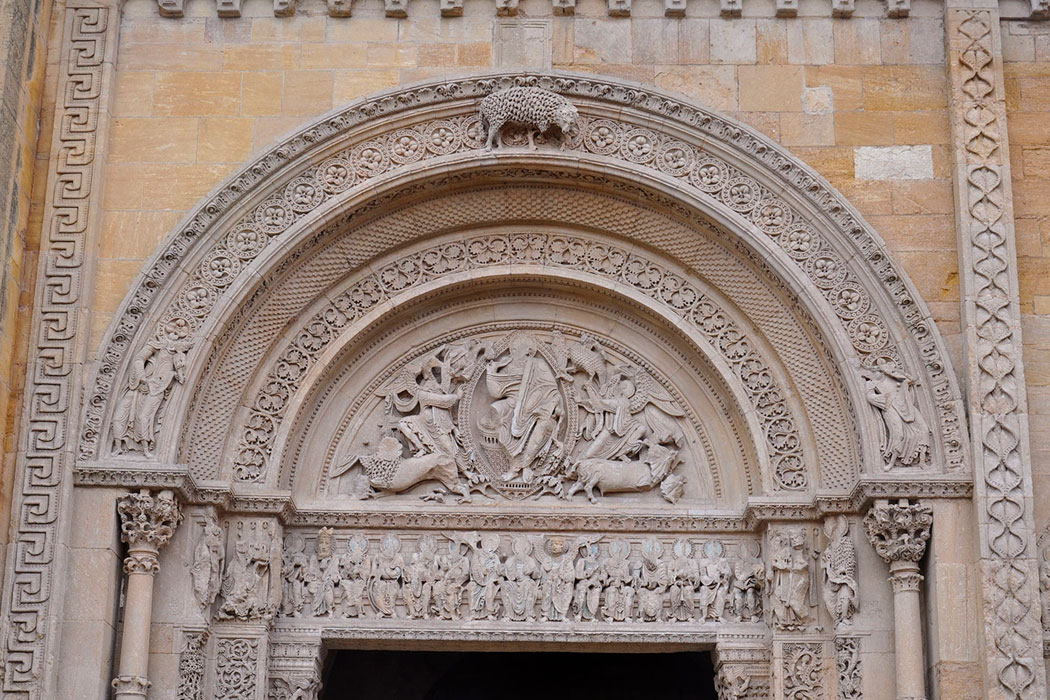
Christ and tetramorph
Later, important works were carried out on the conventual buildings, including the cloister and the chapter house. The monastery was closed shortly before the French Revolution, because the community refused to accept the reforms imposed from Cluny. Although it did not suffer direct suppression during the Revolution, it did endure its consequences: in 1792 the site was invaded and set on fire, which resulted, among other losses, in the destruction of the archives.
Subsequently, the church was put up for sale and divided: while the naves were demolished in 1800, the narthex was preserved. In the mid-19th century part of the remaining stretch of the nave was lost, while the atrium was protected; it retains remarkable sculptural decoration, with capitals and two decorated portals, in addition to the doorway of the church. Despite the disappearance of the refectory, an important part of the abbey buildings is still preserved. In the 20th century the houses built over the space of the naves were demolished, which made it possible to uncover the foundations of the church, corresponding to various stages of its construction.
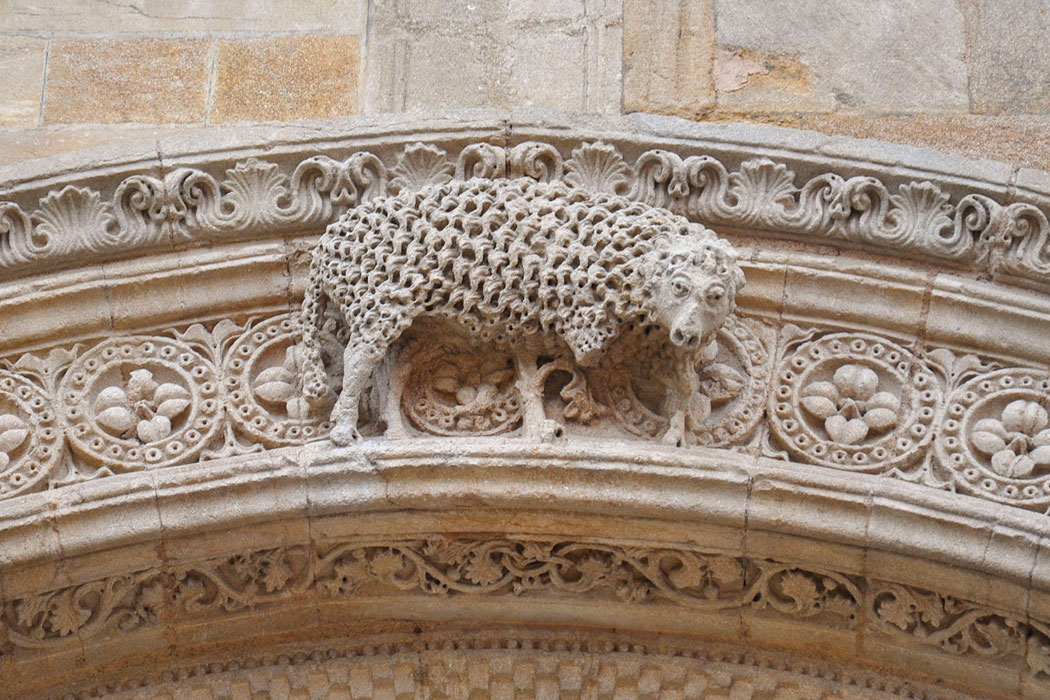
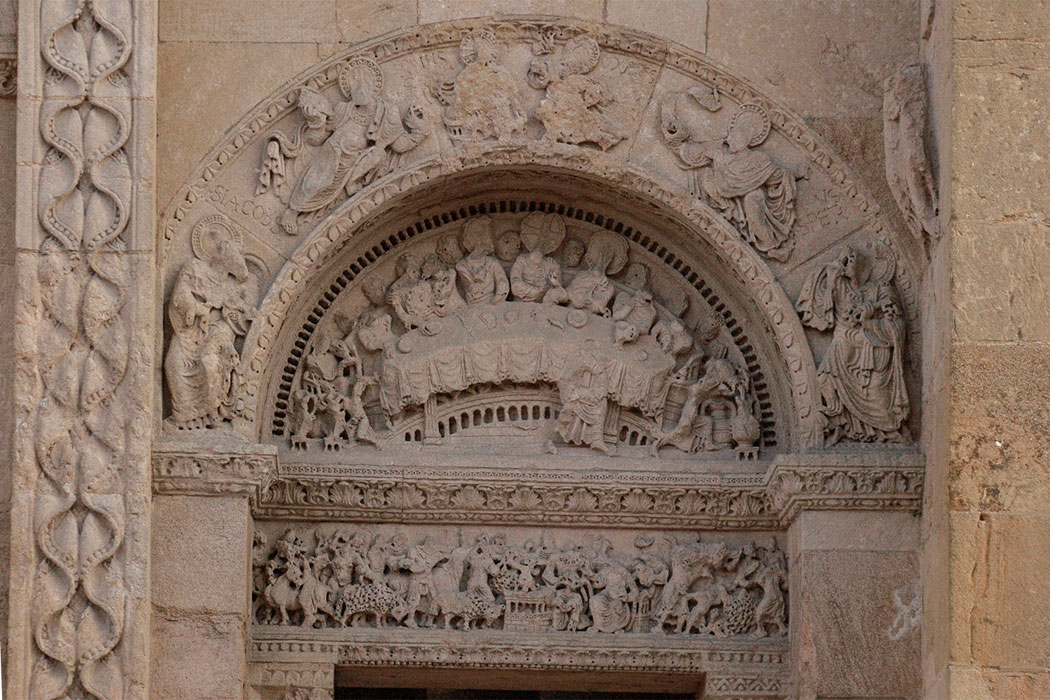
Great portal
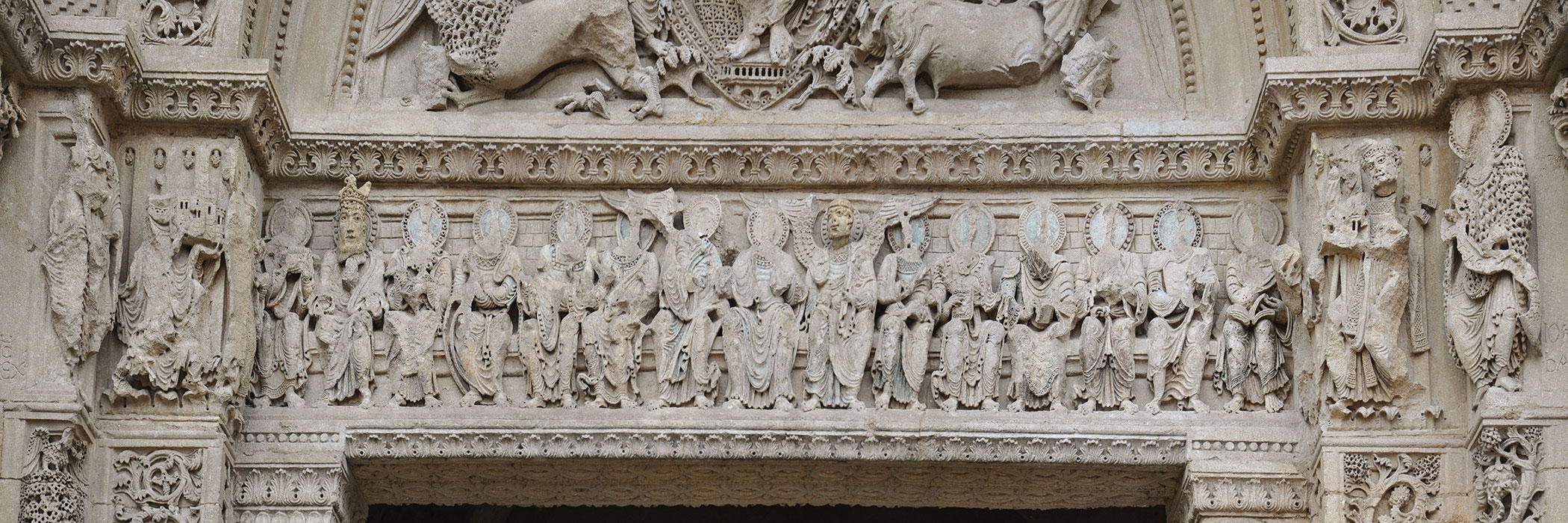
Great portal. Lintel with the apostles
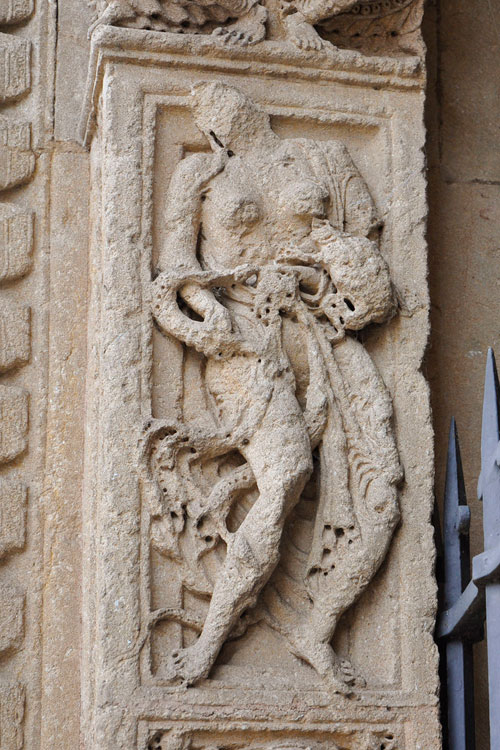
Great portal
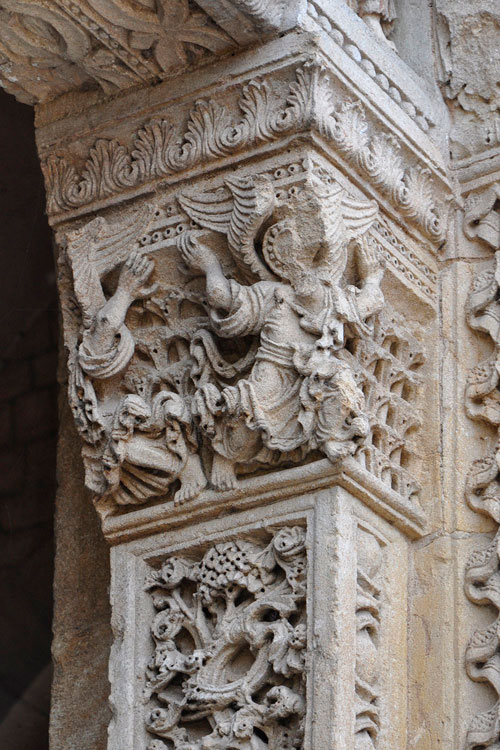
Great portal
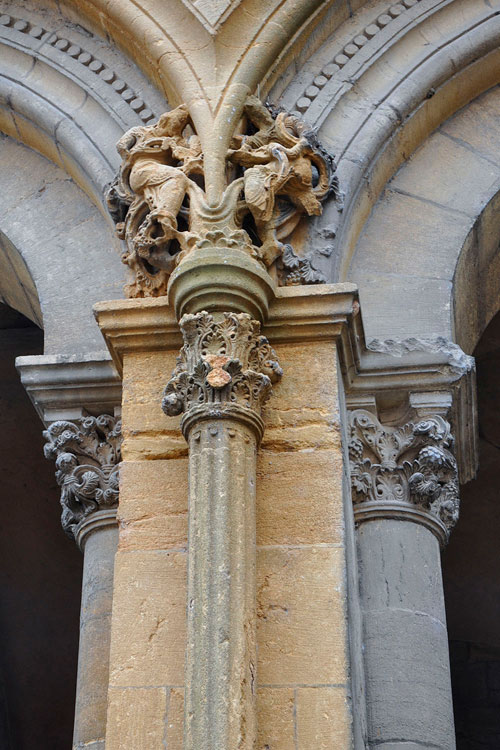
Portal petit
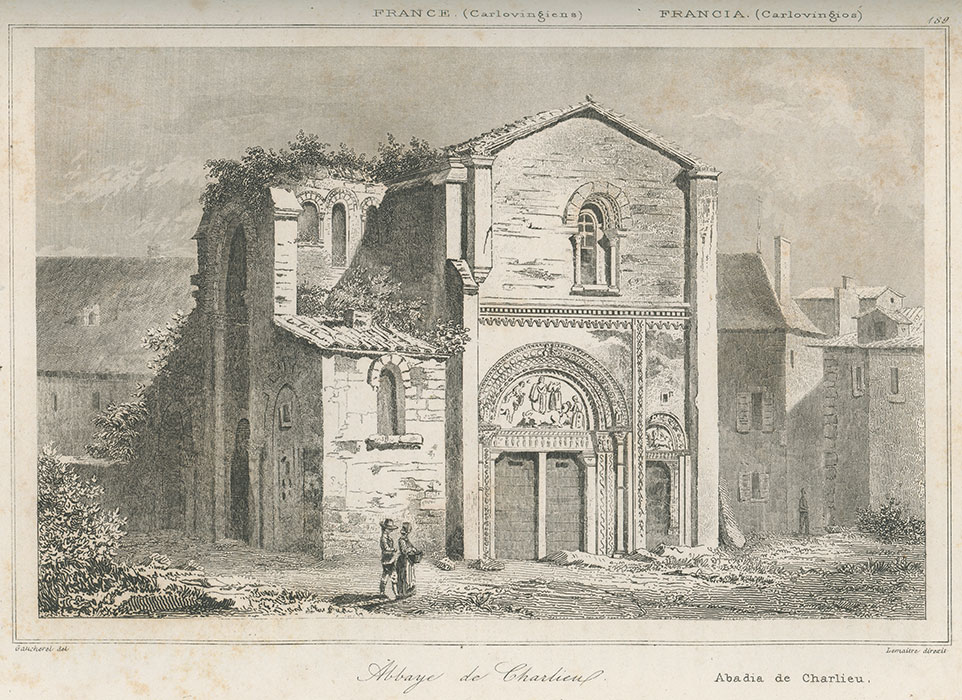
Illustration from Historia de la Francia (1841)
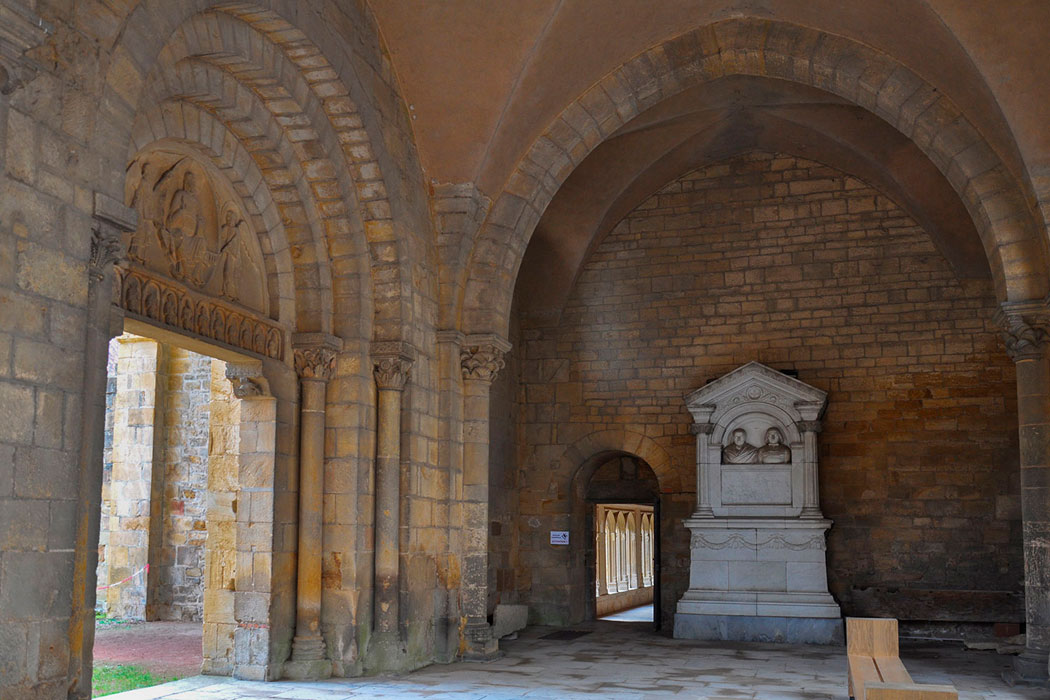
Narthex with the church portal
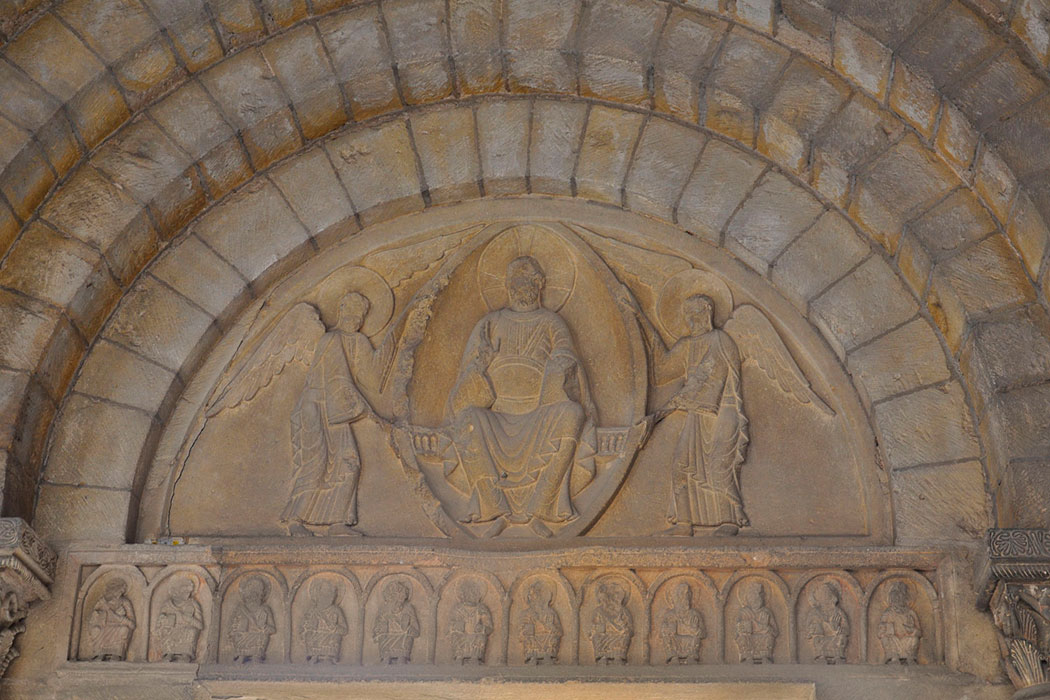
Tympanum of the church portal
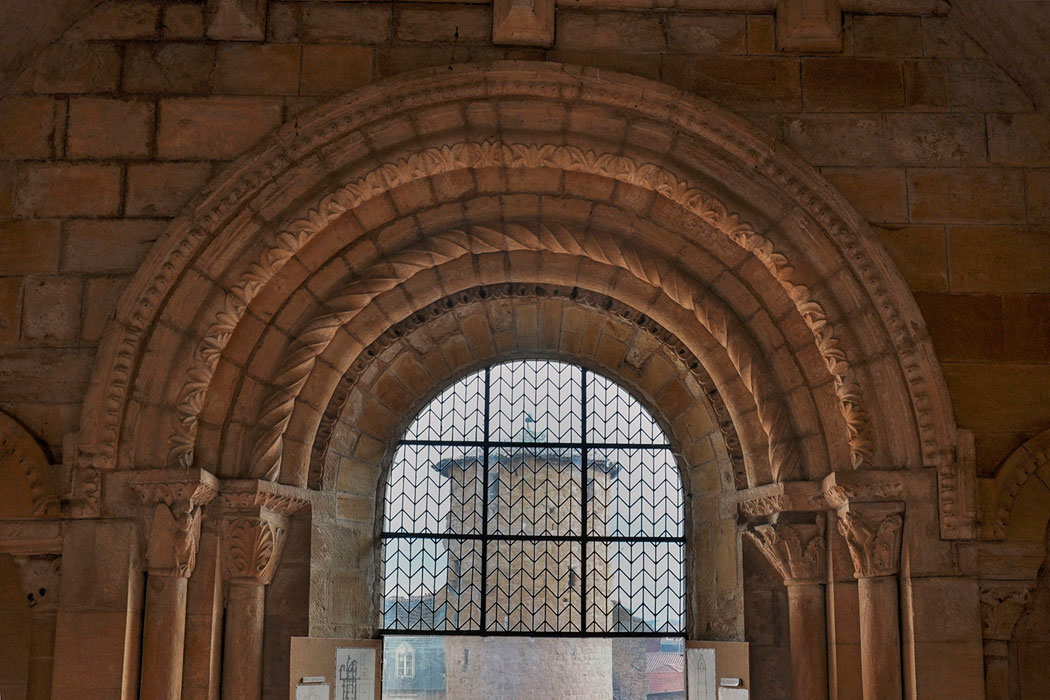
Narthex window

Narthex window
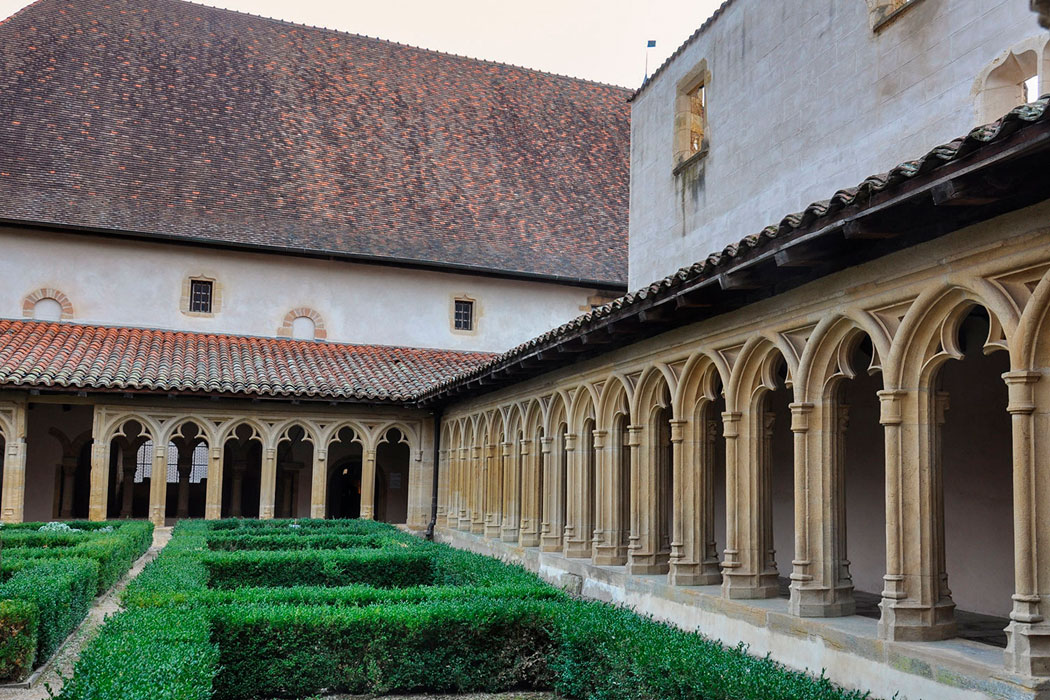
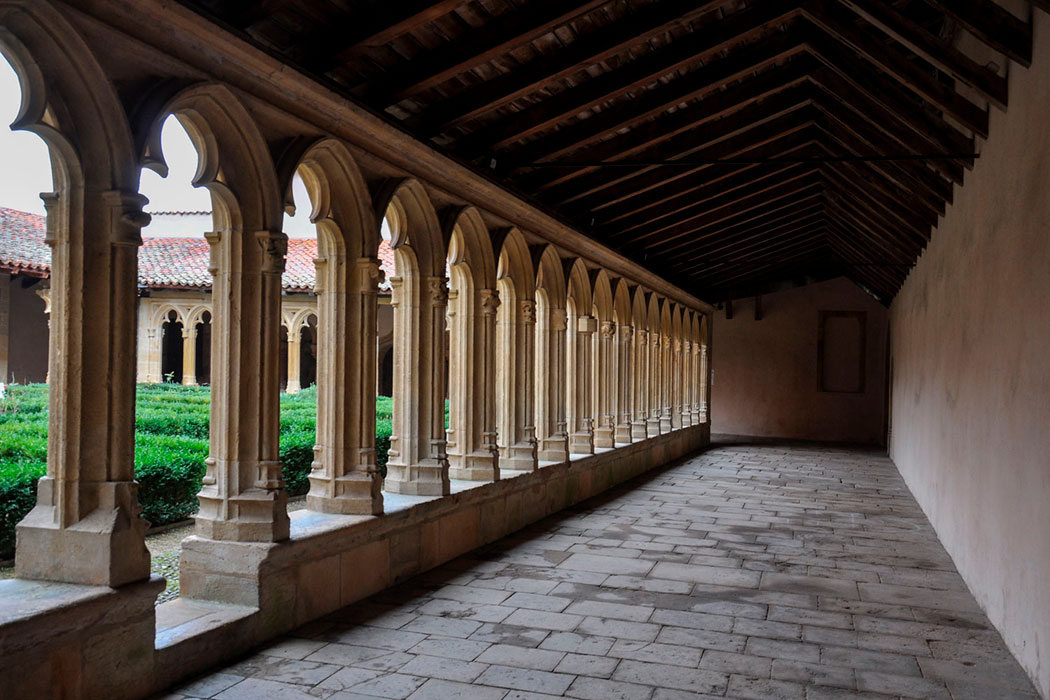
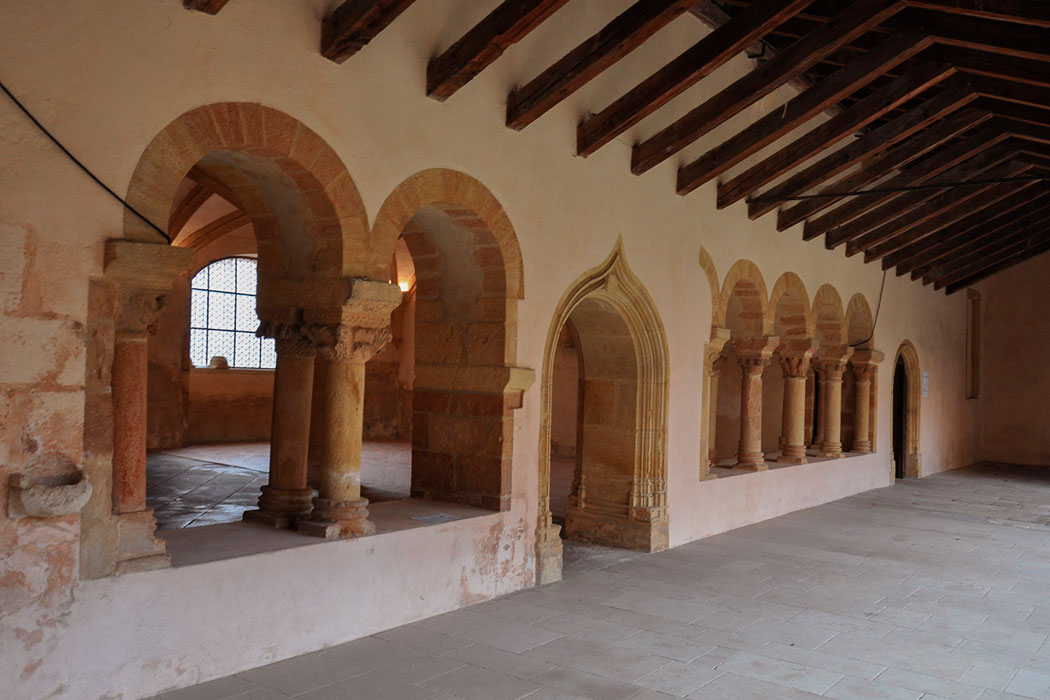
Facade of the chapter house
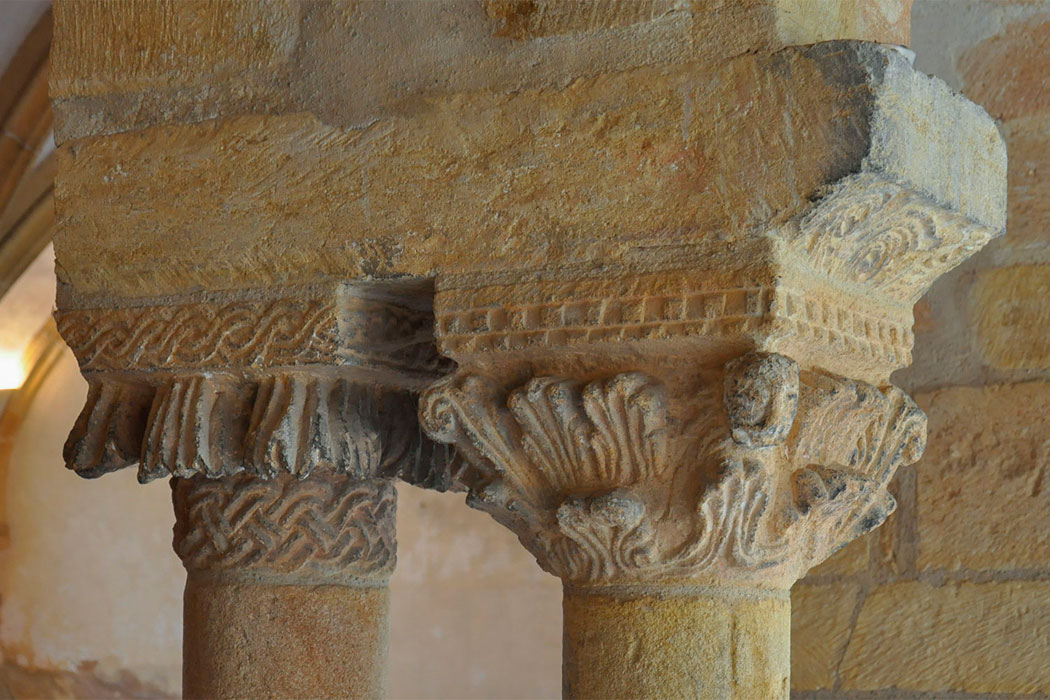
Capitals of the chapter house
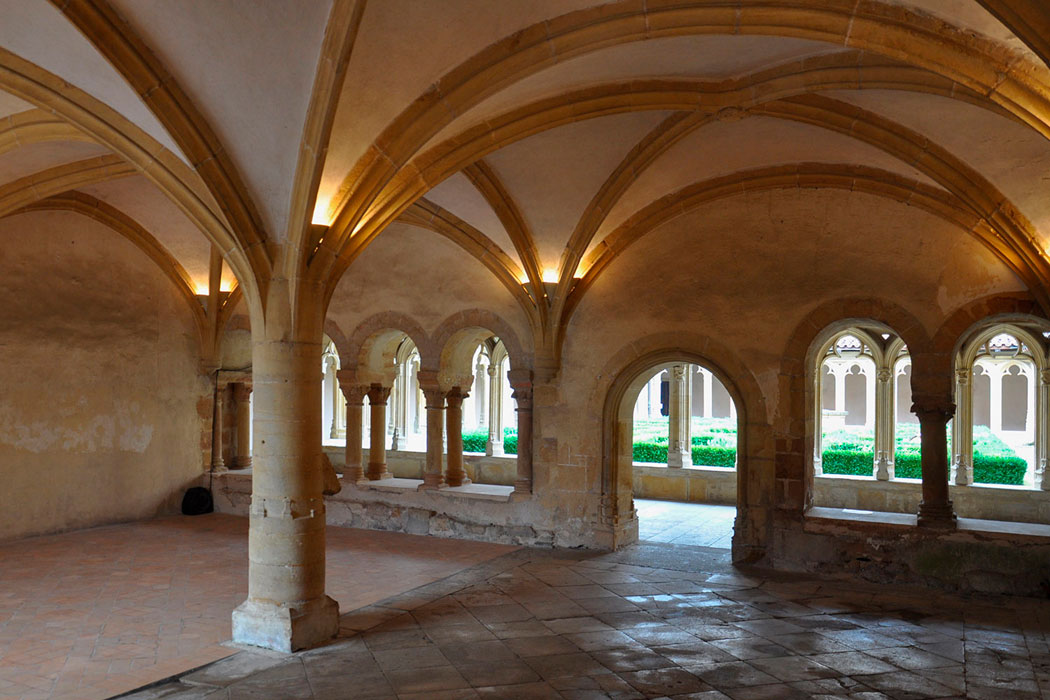
Chapter house

Chapter house

Chapel
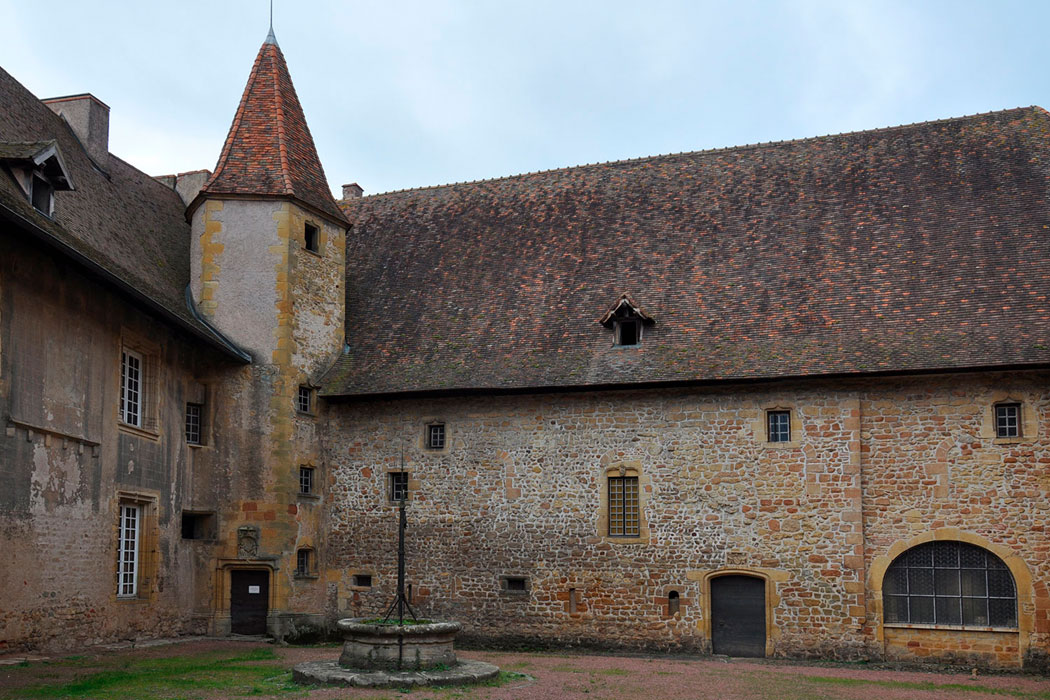
Prior residence

Defense tower
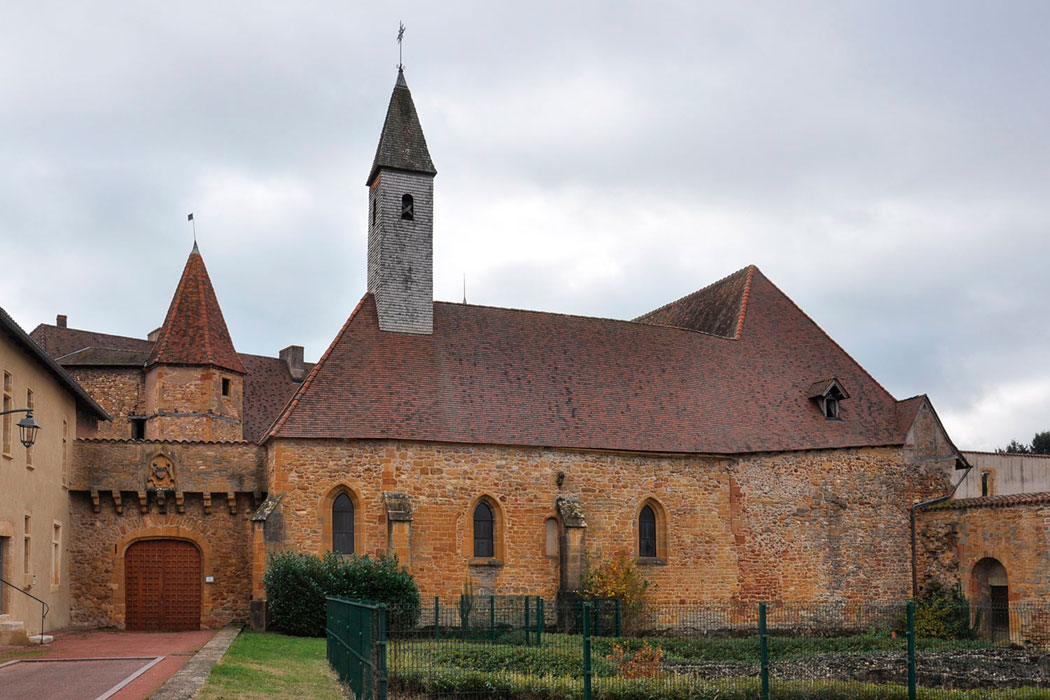
Chapel
- BAUDRILLART, Alfred (1953). Dictionnaire d'histoire et de géographie ecclésiastiques. Vol. 12. París: Letouzey et Ané
- COTTINEAU, Laurent-Henri (1936). Répertoire topo-bibliographique des abbayes et prieurés. Vol. 1. Mâcon: Protat
- DÉCHELETTE, Joseph (1901). Église et cloître de Charlieu. Inventaire général des richesses d'art de la France. Province, monuments religieux. Tome 3. París: Plon
- DESEVELINGES, J.-B. (1856). Histoire de la ville de Charlieu : depuis son origine jusqu'en 1789. Roanne: Durand
- DURAND, Vincent (1892). Abrégé de l'histoire de Charlieu. Montbrison: Brassart
- GUÉRIN, Paul (1888). Les Petits Bollandistes. Vies des saints. Vol. 4. París: Bloud et Barral
- LE BAS, Philippe (1841). Historia de la Francia. Vol. 3. Barcelona: Imp. Nacional
- RHEIN, André (1916). Charlieu. Congrès archéologique de France, 80 ss. Société française d'archéologie
- SAINT-MAUR, Congregació de (1725). Gallia Christiana in provincias ecclesiasticas distributa. Vol. 4. París: Typographia Regia
- SUNDERLAND, Elizabeth Read (1971). Charlieu à l’époque médiévale. Lyon : Lescuyer
- TERREBASSE, Alfred de (1857). Appendice à l'histoire de Charlieu. Revue du Lyonnais, vol. 14. Lió
- TERRET, Victor (1929). Le portail roman du Narthex de Saint-Fortunat de Charlieu et sa sculpture décorative du XIIe siècle. Marburger Jahrbuch für Kunstwissenschaft
- THIOLLIER, Félix ; i altres (1892). L'art roman à Charlieu et en Brionnais. Montbrison: Brassart
- THIOLLIER, Noël; i altres (1927). Fouilles à Charlieu sur l'emplacement de l'église Saint-Fortunat. Bulletin de la Diana, vol. 22
- VAIVRE, Jean-Bernard de (1983). Constructions adventices du XVe siècle aux prieurés de Charlieu et de Perrecy. Bulletin Monumental, vol. 141
- VALLERY-RADOT, Jean (1929). Les analogies des églises Saint-Fortunat de Charlieu et d'Anzy-le-Duc. Bulletin Monumental, vol. 88

Charlieu is situated in the north of the Loire department, near Roanne