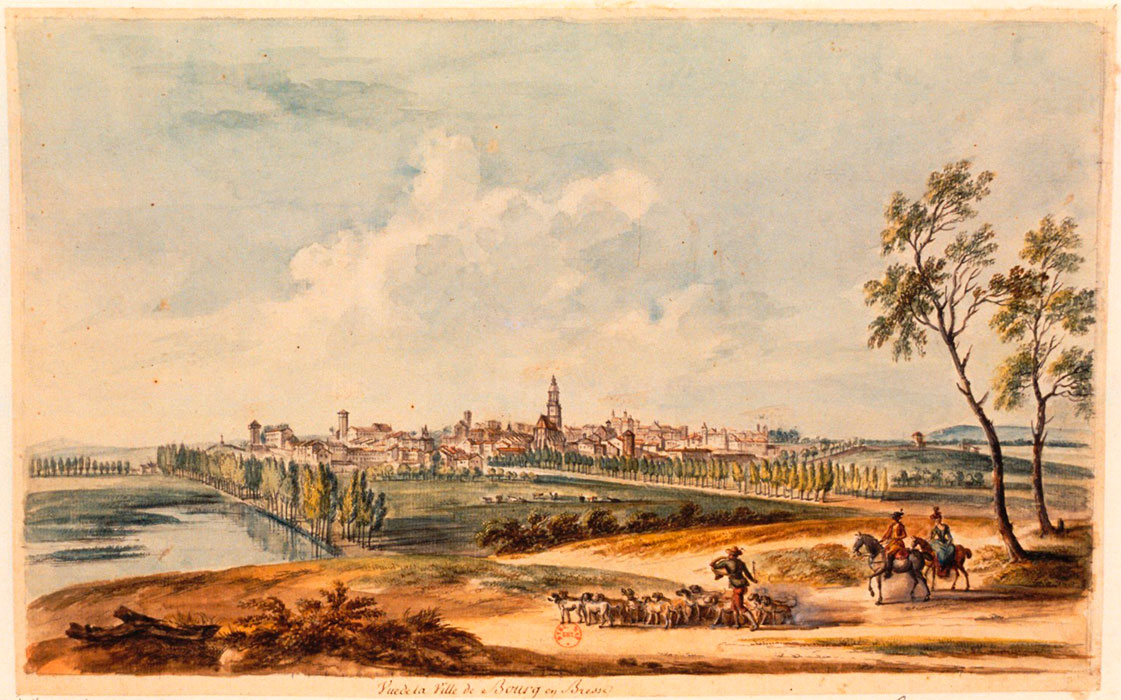
Jean-Baptiste Lallemand (19th century)
Bibliothèque nationale de France
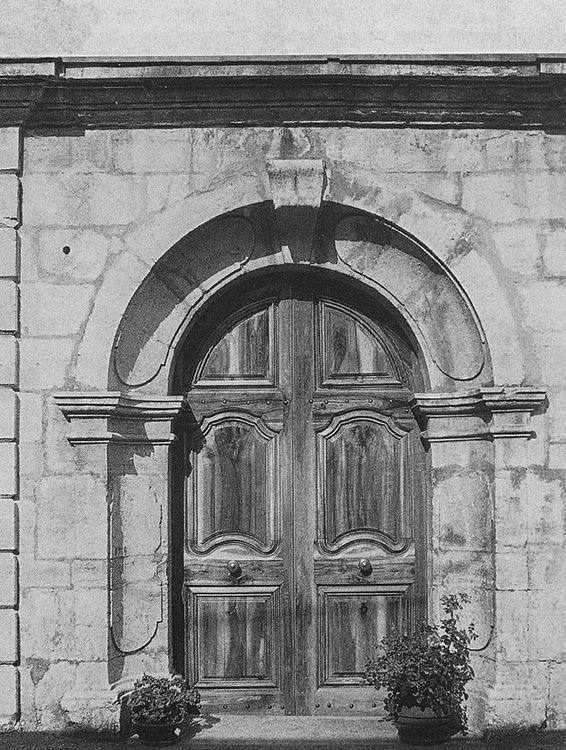
Portal of the abbot's residence
Illustration from Tamié et les Cisterciens en Savoie (1998)

Notre-Dame de Chézery was a Cistercian monastery founded in 1140 thanks to the initiative of Count Amadeus I of Geneva, although this has traditionally been attributed to Amadeus III of Savoy. To carry out the foundation, monks arrived from the Abbey of Fontenay (Côte-d’Or), led by Abbot Lambert, considered to have been the brother of Saint Peter of Tarentaise, Abbot of Tamié (Savoy).
Affiliation of Chézery
According to Originum Cisterciensium (L. Janauschek, 1877)In the 15th century it was going through a period of decline, which affected both its finances and the regular observance. It was suppressed during the Revolution, at a time when it had once again fallen into decline. The abbey was demolished and today only a few vestiges remain.
- BAUDRILLART, Alfred (1953). Dictionnaire d'histoire et de géographie ecclésiastiques. Vol. 12. París: Letouzey et Ané
- BENOÎT, Paul (1890). Histoire de l'abbaye et de la terre de Saint-Claude, vol. 1. París: Picard
- DEPÉRY, Jean-Irénée (1834). Notice sur saint Lambert et saint Roland, abbés de Chezery en Jura. Bourg: Bottier
- GUIGUE, Marie-Claude (1873). Topographie historique du département de l'Ain. Bourg-en-Bresse: Gromier Ainé
- JANAUSCHEK, Leopoldus (1877). Originum Cisterciensium. Vol. 1. Viena
- LANCEL, Ghislain (2020). L’abbaye de Chézery (Ain). Abbés et histoire. Monastère et dépendances. Champfromier: P.C.H.
- REGAT, Christian (1998). Tamié et les Cisterciens en Savoie : l'abbatiat d'Arsène de Jougla, 1707-1727. Annecy: Académie salésienne
- SAINT-MAUR, Congregació de (1865). Gallia Christiana in provincias ecclesiasticas distributa. Vol. 16. París: Firmin Didot

Armorial général de France (18th century)
Bibliothèque nationale de France
In 1145, before leaving for the Second Crusade, Étienne II de Villars († c. 1186) donated several properties at Chassagne to the Abbey of Saint-Sulpice (Ain), so that a new monastery could be founded there. The initiative did not succeed until 1162, after Étienne had returned, and the new establishment became a Cistercian abbey. In 1176, Pope Alexander III gave his approval and placed it under his protection.
Filiació de Chassagne
Segons Originum Cisterciensium (L. Janauschek, 1877)In the mid-14th century, it was fortified as protection against the mercenaries known as routiers, who were ravaging the region. In the mid-16th century, it adopted the commendatory regime, depriving the regularly elected abbot of his office. By the time of the Revolution the abbey was in steep decline; after being closed and sold (1794), almost all of its buildings gradually disappeared.
- BAUDRILLART, Alfred (1953). Dictionnaire d'histoire et de géographie ecclésiastiques. Vol. 12. París: Letouzey et Ané
- COTTINEAU, Laurent-Henri (1936). Répertoire topo-bibliographique des abbayes et prieurés. Vol. 1. Mâcon: Protat
- FISQUET, Honoré (1867). La France pontificale (Gallia christiana). Vol. 8. Lyon. París: E. Repos
- JANAUSCHEK, Leopoldus (1877). Originum Cisterciensium. Vol. 1. Viena
- MARCHAND, Frédéric (1885-1888). L’abbaye de Chassagne (1162-1791). Revue de la Société littéraire, historique et archéologique du département de l'Ain. Bourg
- SAINT-MAUR, Congregació de (1725). Gallia Christiana in provincias ecclesiasticas distributa. Vol. 4. París: Typographia Regia
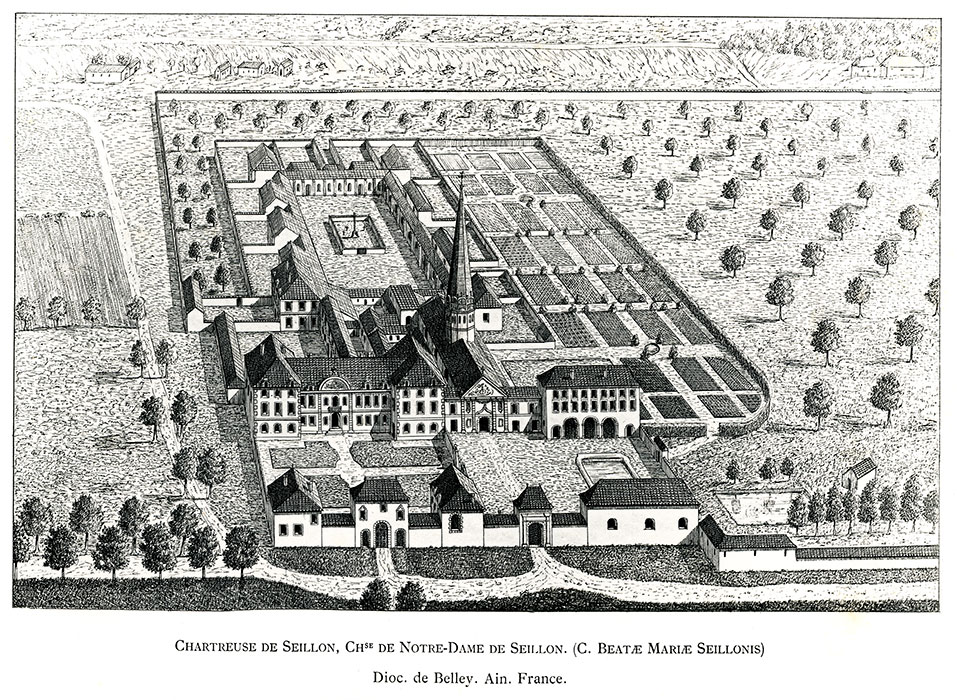
Illustration from Maisons de l'ordre des Chartreux

The Charterhouse of Seillon is located at Péronnas, near Bourg-en-Bresse, and the circumstances of its foundation are unclear. It has been claimed that it was established around 1178 from a Benedictine priory dependent on the vanished Abbey of Joug-Dieu (Ain), when the community decided to follow Carthusian customs. Another tradition links it to the Abbey of Ambronay (Ain). One of its promoters was Humbert de Bâgé, Archbishop of Lyon between 1148 and 1153, who retired as a Carthusian, perhaps at this very site.

Armorial général de France (18th century)
Bibliothèque nationale de France
In the early 13th century, it took part in the foundation of the Charterhouse of Sélignac (Ain). At that time, Humbert († 1215), a member of this community, was appointed Archbishop of Vienne. During the 15th century it went through a period of decline, partly due to outbreaks of plague, and in the following century it suffered from war, which left it in ruins. From the 17th century onwards, it recovered and was rebuilt. It was suppressed during the Revolution (1791) and almost entirely demolished; the site became an orphanage and is now occupied by a school. Only a few structures from the entrance pavilion of the charterhouse have survived.
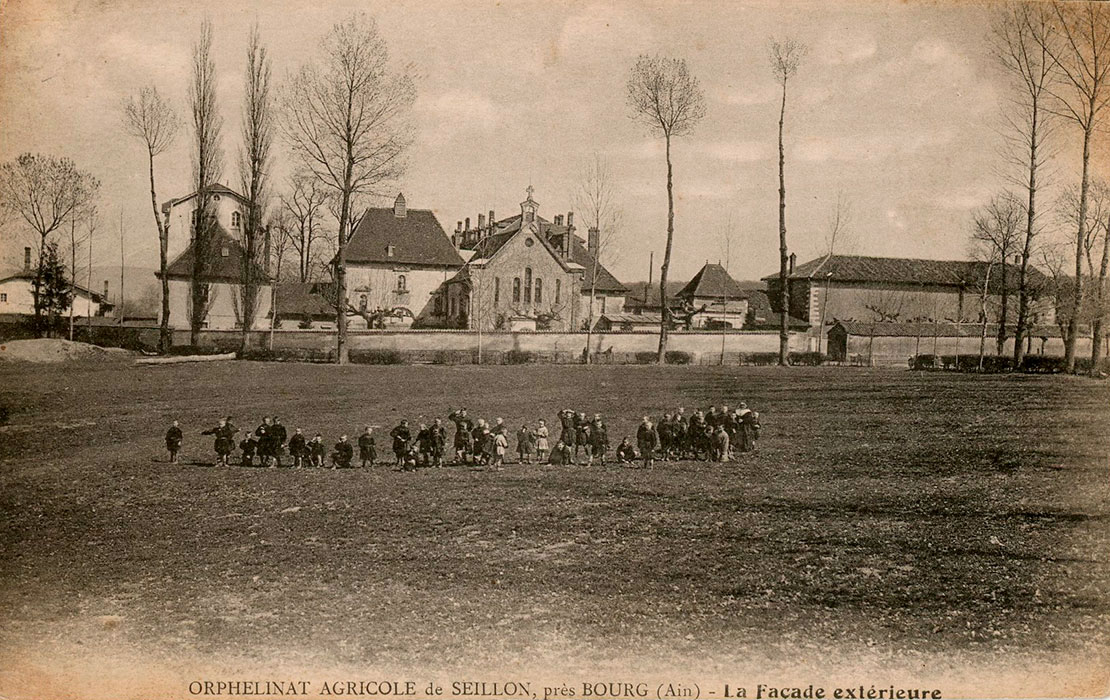
Old postcard, private collection

Old postcard, private collection
- BÉRARD, Alexandre (1887-1888). L'abbaye d'Ambronay. Annales de la Société d’Émulation de l’Ain. Bourg: Authier
- BEYSSAC, Jean (1927). Rapports de l’Église de Lyon et de l’ordre des chartreux. Bulletin de la Diana, vol. 22. Montbrison
- CARTOIXA DE PARKMINSTER (1915). Maisons de l'ordre des Chartreux. Vol. II. Chartreuse de Saint-Hughes (Sussex)
- COTTINEAU, Laurent-Henri (1939). Répertoire topo-bibliographique des abbayes et prieurés. Vol. 2. Mâcon: Protat
S. Sulpitius / Saint-Sulpice-le-Vieux / S.-Sulpice de Thézillieu
(Thézillieu, Ain)

Map of France (Cassini de Thury, 1759-62)
Bibliothèque nationale de France
From the early 12th century, there was a Cluniac priory here known as Saint-Sulpice-le-Vieux. Around 1120, Humbert, its prior, incorporated it into the Carthusian Order, but after his death it returned to Benedictine obedience. In 1130, at the initiative of Amadeus III of Savoy and with the intervention of Berlion, Bishop of Belley, it adopted the Cistercian observance and became dependent on the Abbey of Pontigny (Yonne).
Affiliation of Saint-Sulpice
According to Originum Cisterciensium (L. Janauschek, 1877)Abbey of Saint-Sulpice / 1133
Abbey of Santa Maria di Falleri (Lazio) / 1143
AAbbey of San Martino al Cimino (Lazio) / 1150
Abadia de Chassagne (Ain) / 1162
Abbey of San Sebastiano Fuori le Mura (Lazio) / 1171
Des d’aquesta casa es va fundar l’abadia de Chassagne (Ain), ara desapareguda, a més d’altres tres a Itàlia. Després de la Revolució, les restes arquitectòniques es van anar perdent i actualment només se’n conserven alguns vestigis.
- BAUDRILLART, Alfred (1953). Dictionnaire d'histoire et de géographie ecclésiastiques. Vol. 12. París: Letouzey et Ané
- BENOÎT, Paul (1890). Histoire de l'abbaye et de la terre de Saint-Claude, vol. 1. París: Picard
- DEPÉRY, Jean-Irénée (1834). Notice sur saint Lambert et saint Roland, abbés de Chezery en Jura. Bourg: Bottier
- GUIGUE, Marie-Claude (1873). Topographie historique du département de l'Ain. Bourg-en-Bresse: Gromier Ainé
- JANAUSCHEK, Leopoldus (1877). Originum Cisterciensium. Vol. 1. Viena
- LANCEL, Ghislain (2020). L’abbaye de Chézery (Ain). Abbés et histoire. Monastère et dépendances. Champfromier: P.C.H.
- REGAT, Christian (1998). Tamié et les Cisterciens en Savoie : l'abbatiat d'Arsène de Jougla, 1707-1727. Annecy: Académie salésienne
- SAINT-MAUR, Congregació de (1865). Gallia Christiana in provincias ecclesiasticas distributa. Vol. 16. París: Firmin Didot