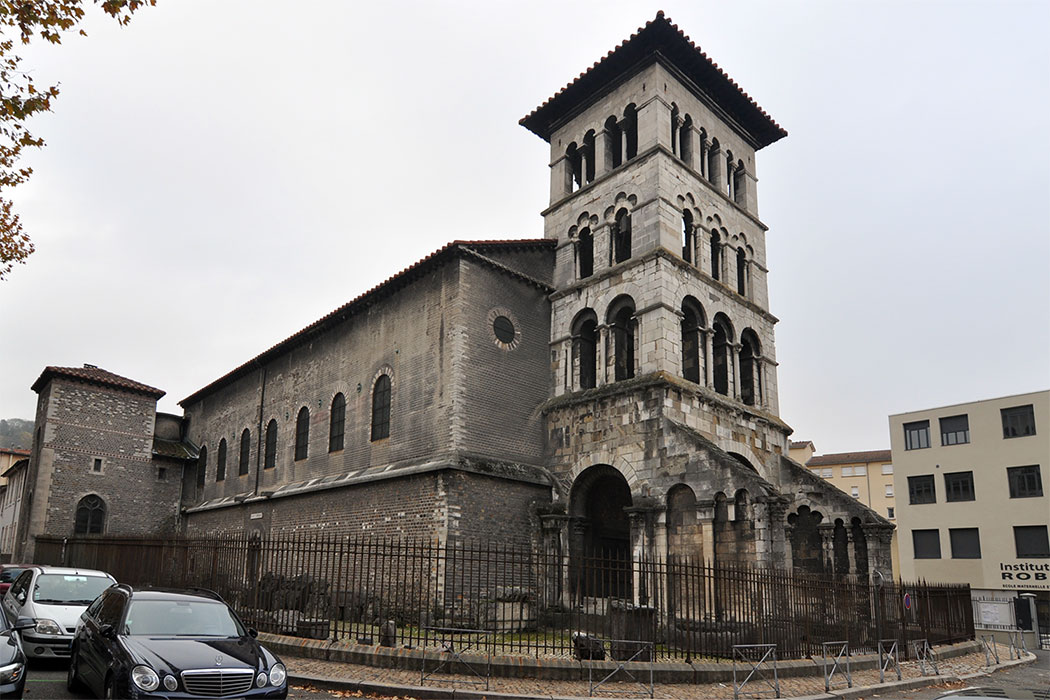


The Abbey of Saint-Pierre de Viena stands out for its great antiquity. Despite the passage of time and the numerous interventions, constructions, alterations and restorations, it remains a monument of primary importance in early Christian architecture, with origins dating back to the 6th century. After the Revolution, the building was converted into a lapidary museum, a function it maintained until recent times, although it is currently undergoing restructuring works.
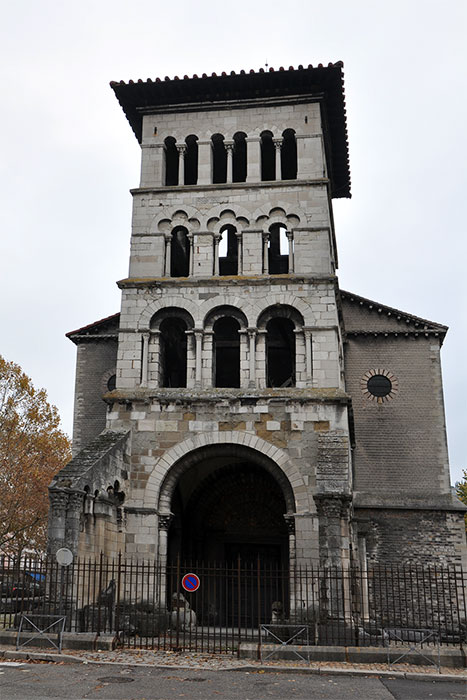
The church of Saint-Pierre is of very ancient origin, but its history remains obscure due to the scarcity of documentation. A first church was erected over a Roman necropolis; this construction has been associated with Saint Léonien († c. 518) and with an early monastery founded on this site. This figure, connected with Saint Eugend and the Fathers of the Jura, is said to have moved to Vienne in search of a place of retreat. There he would have founded the female monastery of Saint-André-le-Haut and another, for men, traditionally identified with this house, although it may in fact have been that of Saint-Marcel.
It is also recorded that the tomb of Léonien was located here, when the site was under the dedication of Saint Peter and Saint Paul. The place continued to serve as a necropolis, a prestigious burial ground where many bishops of Vienne were interred, from Saint Mamertus († c. 474) to Leodegare († 1070), several of whom were venerated as saints. This first monastic establishment is thought to have disappeared following the Saracen invasion (c. 725), and it is not until 863 that its reconstruction is documented, though it soon fell into ruin once again.
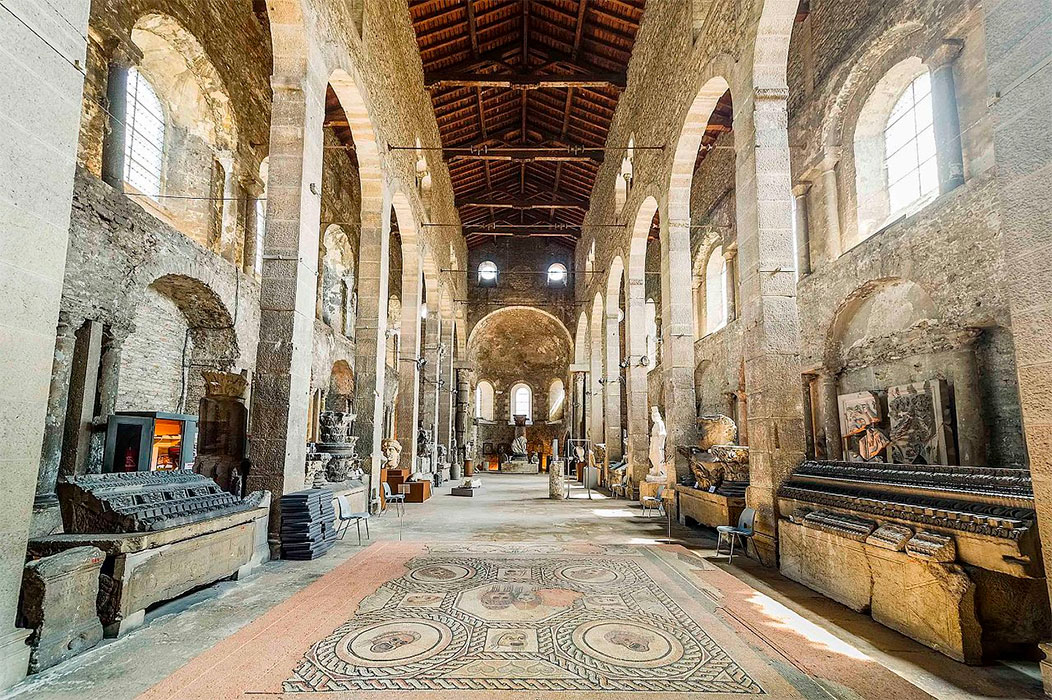
Interior, with the lapidary museum
Photo by Isere-culture, on Wikimedia
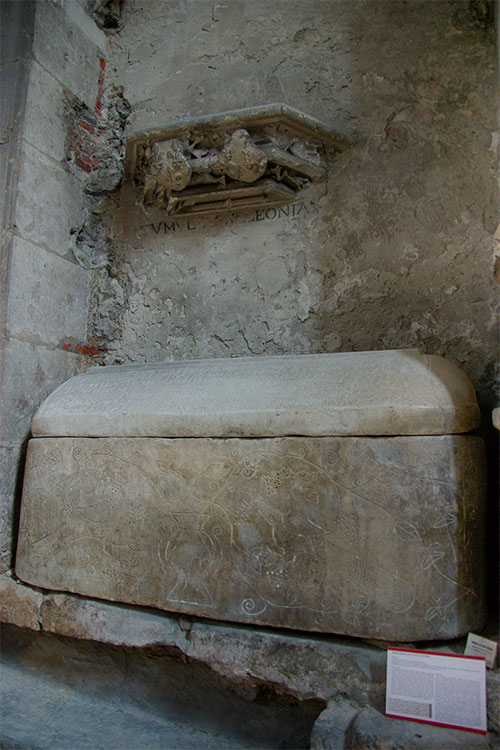
Sepulcher of Léonien
Photo by AlSepPhoenix, on Wikimedia
In 926, Hugh of Arles († 947) intervened in its restoration and, by the mid-10th century, the first known abbot, Adelelmus, is mentioned. By the end of that century, the monks of Saint-Pierre are recorded as following the Rule of Saint Benedict. The abbey later experienced a period of prosperity and, during the 12th century, important building works were undertaken, supported by its sound financial position; the bell tower was erected at that time. Thereafter a decline set in, although works and alterations continued to be carried out until the 16th century.
Between 1562 and 1567 the monastery was plundered during the Wars of Religion and never fully recovered. In 1612, Pope Paul V secularised it, converting it into a collegiate church. In 1780, the former Benedictine communities from the ancient monasteries of Saint-Chef and Saint-André-le-Bas, which had previously been secularised, were incorporated there. The lack of space made structural modifications to the church necessary.
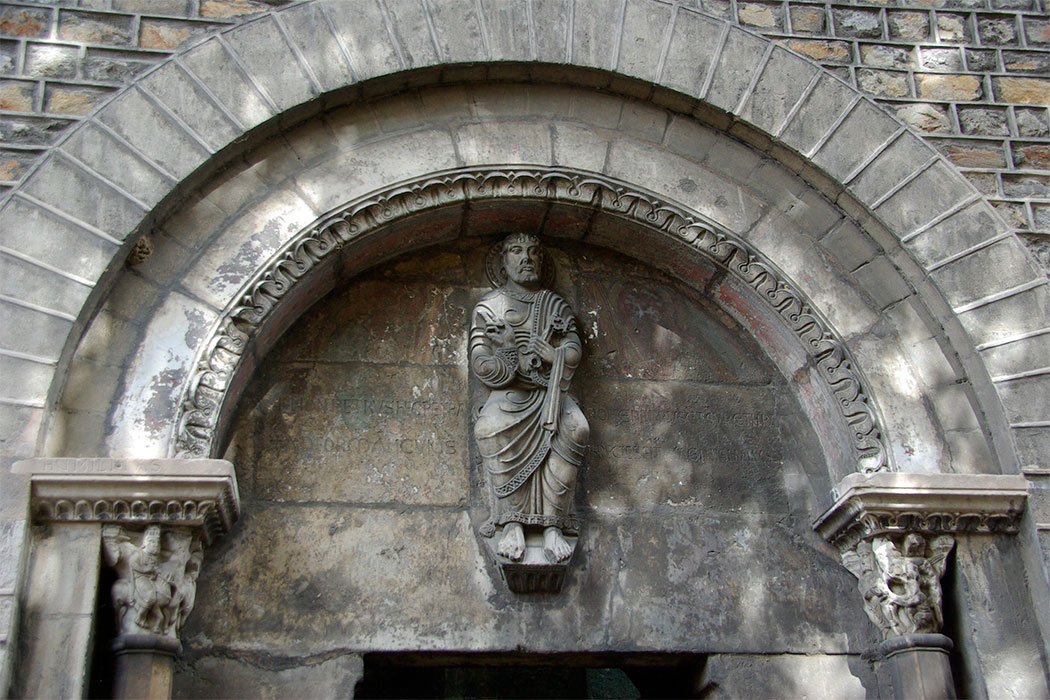
Church portal
Photo by AlSepPhoenix, on Wikimedia
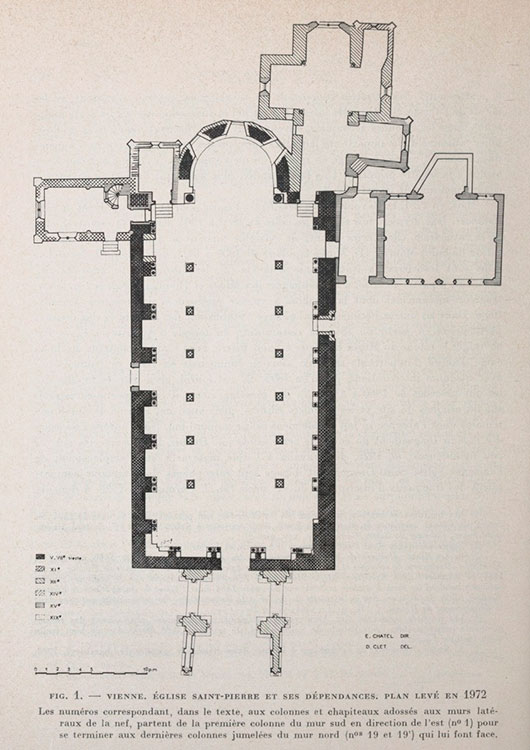
In dark, the structure of the primitive basilica
According to Abbaye de Saint-Pierre (1974)
The site was sold after the Revolution and used for various purposes before being converted into a lapidary museum. This transformation was accompanied by archaeological studies and excavations that brought to light a considerable number of ancient burials. Despite later alterations, the church still preserves the basilical structure of the original building. At the beginning of the 21st century, archaeological investigations were resumed, now complicated by the numerous previous interventions.
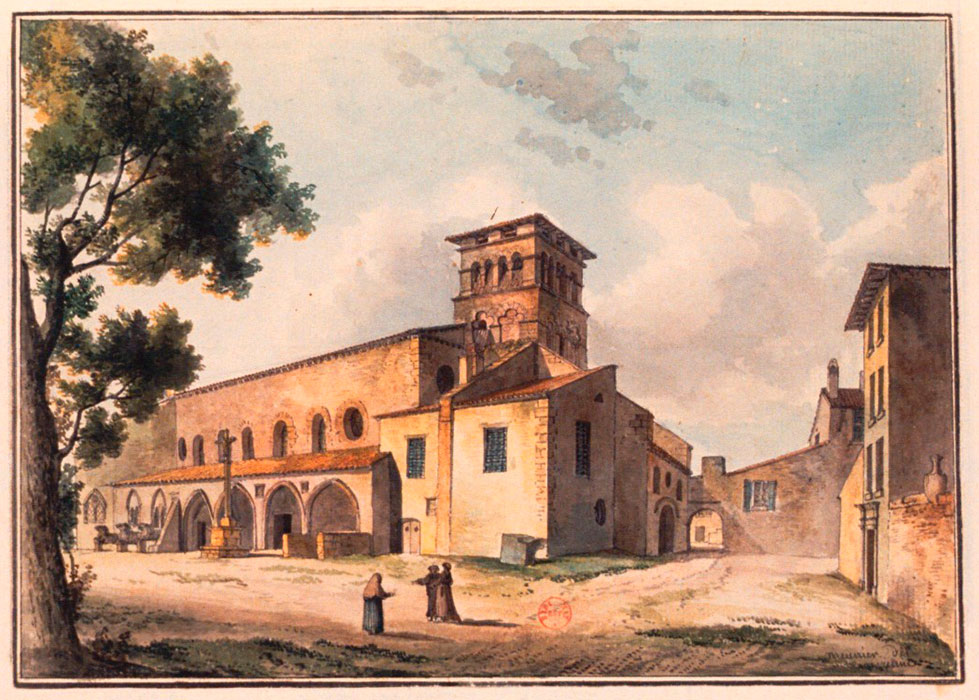
Antoine Meunier (18th century)
Bibliothèque nationale de France
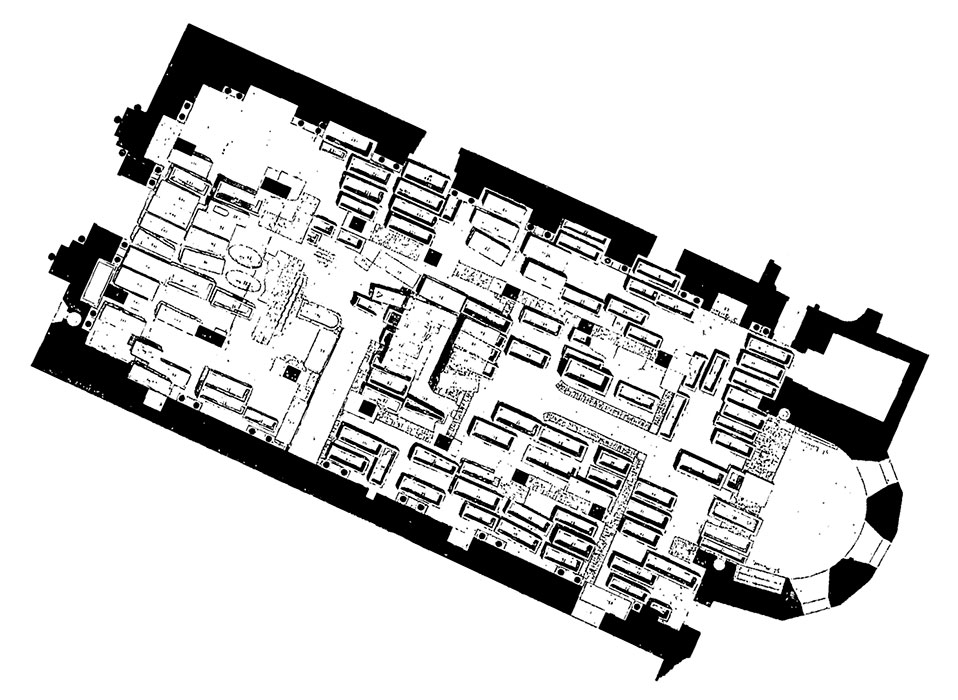
Excavations of 1860-1864
Illustration from Abbaye de Saint-Pierre (1925)
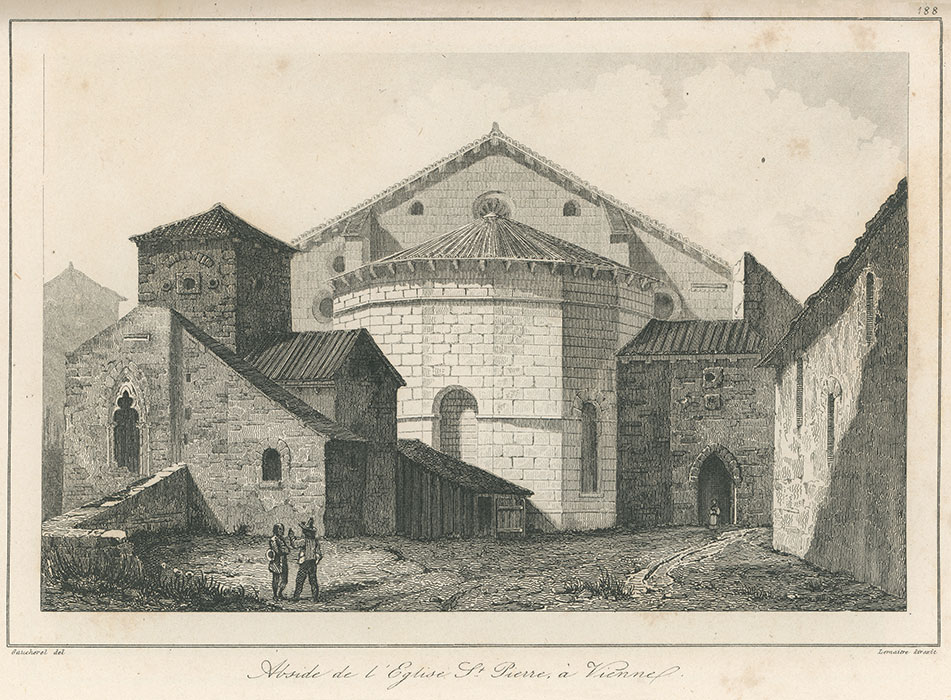
Apse of the church and chapel of Notre-Dame
Illustration from Historia de la Francia (1841)
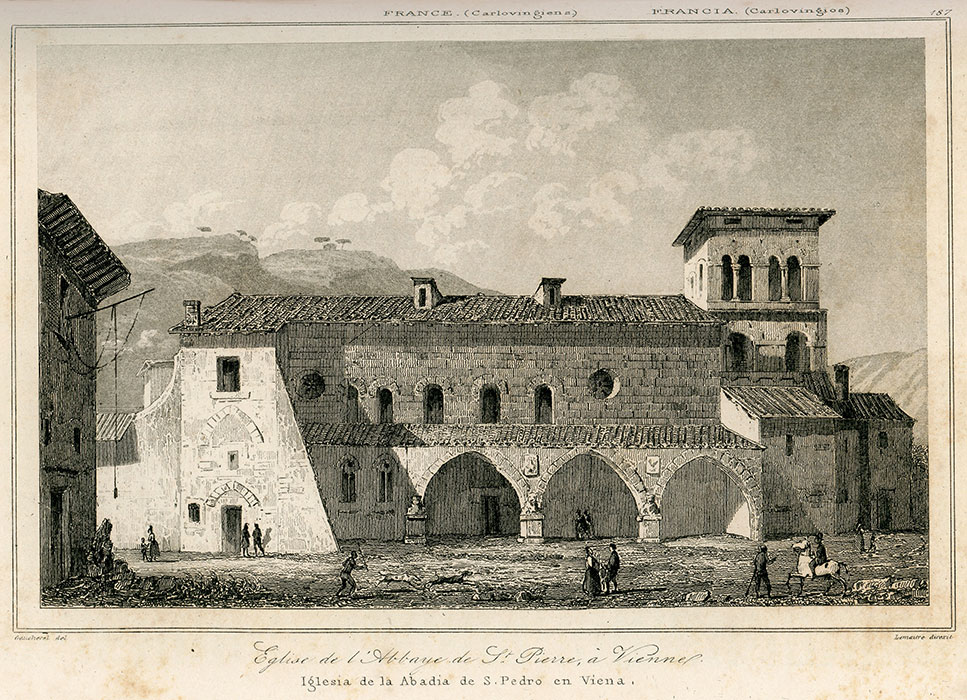
Illustration from Historia de la Francia (1841)
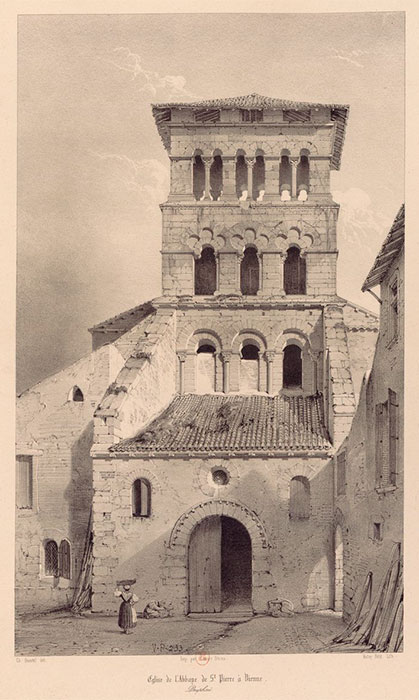
Illustration from Voyages pittoresques et romantiques dans l'ancienne France
Justin Taylor, 1854
Bibliothèque nationale de France
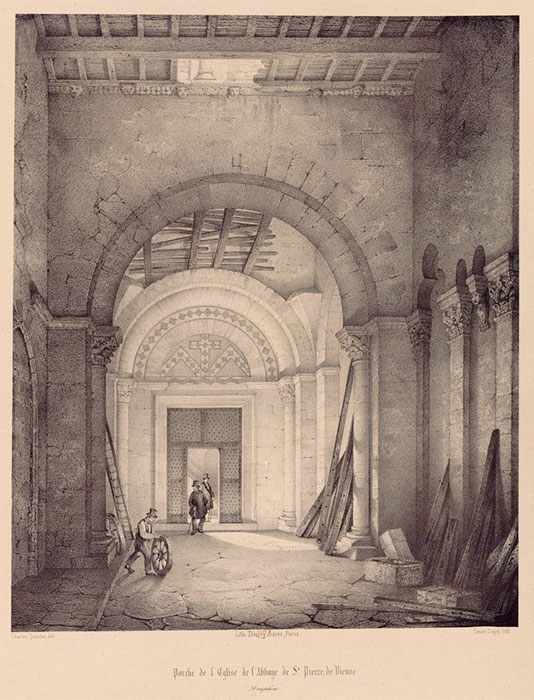
Entrance porch
Illustration from Voyages pittoresques et romantiques dans l'ancienne France
Justin Taylor, 1854
Bibliothèque nationale de France
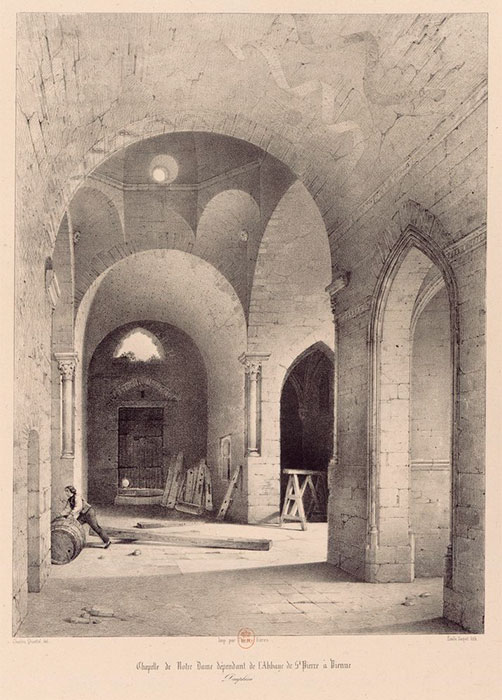
Chapel of Notre Dame
Illustration from Voyages pittoresques et romantiques dans l'ancienne France
Justin Taylor, 1854
Bibliothèque nationale de France
- BARRUOL, Guy (1992). Dauphiné roman. La Nuit des Temps, 77. Zodiaque
- BAUD, Anne i altres (2016). L’abbaye de Saint-André-le-Haut à Vienne. Origine et développement d’un monastère de moniales. Bulletin du centre d’études médiévales d’Auxerre. Hors-série n° 10
- BESSE, J.-M.; i altres (1939). Abbayes et prieurés de l'ancienne France. Vol. 9: Province ecclésiastique de Vienne. Abbaye de Ligugé
- CHATEL, Élisabeth (1974). Vienne, église Saint-Pierre. Congrès archéologique de France, 130 sess. Société française d'archéologie
- COTTINEAU, Laurent-Henri (1939). Répertoire topo-bibliographique des abbayes et prieurés. Vol. 2. Mâcon: Protat
- D’AGOSTINO, Laurent (2021). Vienne – Anciennes églises Saint-Pierre et Saint-Georges. ADLFI. Archéologie de la France
- FORMIGÉ, Jules (1925). Abbaye de Saint-Pierre. Congrès archéologique de France. París: Derache
- LAURIÈRE, Jules de (1880). Observations sur l'ancienne église Saint-Pierre de Vienne. Congrès archéologique de France. París: Champion
- LE BAS, Philippe (1841). Historia de la Francia. Barcelona: Imp. Nacional
- SAINT-MAUR, Congregació de (1865). Gallia Christiana in provincias ecclesiasticas distributa. Vol. 16. París: Firmin Didot
- TAYLOR, J.; i altres (1854). Voyages pittoresques et romantiques dans l'ancienne France. Dauphiné. París: Firmin Didot
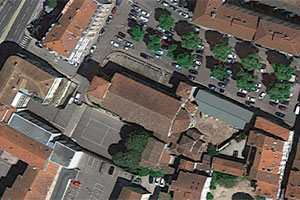
The church of Saint-Pierre stands in the historic centre of the city of Vienne, near the Rhône